The Motorcycle Coverage: Liability, Collision, and Custom Parts
Motorcycle ownership delivers unmatched freedom on open roads, yet that freedom carries inherent risks that demand thoughtful financial protection. Motorcycle insurance stands as the essential safeguard that shields riders from potentially devastating out-of-pocket expenses after an accident, theft, or damage. Unlike standard auto policies, motorcycle coverage is tailored to the unique vulnerabilities of two-wheeled vehicles, addressing everything from basic legal obligations to specialized protection for expensive aftermarket upgrades. This comprehensive guide explores the core elements of motorcycle insurance—liability, collision, comprehensive, and custom parts—while clarifying state requirements and valuable optional endorsements. By understanding these components, riders can confidently select policies that deliver peace of mind and long-term security.
Call Now for Expert Insulation & Sealing Service
Understanding the Fundamentals of Motorcycle Insurance
At its core, motorcycle insurance is a specialized form of vehicle coverage designed to protect the rider, the bike, and third parties from financial loss. Motorcycles face distinct challenges: higher vulnerability in collisions, greater susceptibility to theft due to their size and value, and the common practice of installing costly aftermarket accessories that standard policies often undervalue. A well-structured policy therefore combines mandatory and elective protections to create a complete safety net.
Most policies begin with the foundation of liability coverage, then layer on physical damage options such as collision and comprehensive, and finally address high-value modifications through custom parts endorsements. Optional add-ons further refine the protection. The result is a flexible framework that adapts to individual riding habits, bike value, and regional regulations. Riders who invest time in evaluating these elements typically experience fewer claim disputes and faster recoveries when the unexpected occurs.
Liability Coverage: The Mandatory Starting Point
Liability coverage forms the non-negotiable backbone of every motorcycle insurance policy. It pays for bodily injury and property damage that the rider causes to others in an accident. Because motorcycles can inflict significant harm in a crash—whether to pedestrians, other motorists, or surrounding property—states require minimum liability limits as a condition of legal operation.
These state requirements vary widely. Some jurisdictions mandate only modest figures such as $15,000 per person for bodily injury and $30,000 per accident, while others demand substantially higher thresholds. Property damage minimums likewise differ, often ranging from $5,000 to $25,000 or more. Riders must verify the exact figures applicable in their state of registration; operating without the required minimums exposes them to license suspension, fines, and personal liability for any excess damages.
Beyond the legal minimum, many experts recommend carrying higher liability limits. Medical costs and vehicle repairs escalate quickly, and an at-fault rider whose coverage falls short may face lawsuits that threaten personal assets. Liability coverage typically includes two primary components:
- Bodily injury liability – medical expenses, lost wages, and related costs for injured parties
- Property damage liability – repair or replacement of vehicles, fences, buildings, or other property damaged in the incident
Selecting adequate limits provides authoritative reassurance that the policy will respond fully when needed. Riders who underestimate this protection often discover too late that the risk of underinsurance outweighs the modest premium difference of higher limits.
Collision and Comprehensive: Guarding Against Physical Harm to the Motorcycle
While liability protects others, collision and comprehensive coverages focus on the motorcycle itself. Collision coverage pays to repair or replace the bike when damage results from an impact with another vehicle or object, regardless of fault. This protection proves invaluable after single-vehicle mishaps, multi-vehicle crashes, or encounters with road debris.
Comprehensive coverage, by contrast, addresses non-collision events. It typically responds to:
- Theft or attempted theft
- Vandalism
- Fire
- Weather-related damage such as hail, flood, or windstorm
- Animal strikes
- Falling objects
Together, these two coverages form a powerful shield against the most common sources of physical loss. Because motorcycles are frequently targeted by thieves and can suffer extensive cosmetic or structural harm from even minor incidents, many owners elect both options. Deductibles apply, allowing riders to balance premium cost against out-of-pocket exposure. Higher deductibles lower premiums but increase the amount paid at claim time; careful evaluation of personal risk tolerance guides the optimal choice.
An important distinction exists between actual cash value and replacement cost settlements. Most standard policies reimburse the depreciated market value of the motorcycle at the time of loss. Riders seeking stronger protection may explore endorsed options that more closely approximate the cost of acquiring a comparable replacement.
Custom Parts Coverage: Protecting Aftermarket Investments
Many motorcycles leave the factory as blank canvases that owners personalize with performance upgrades, aesthetic enhancements, and comfort modifications. Exhaust systems, custom seats, specialized lighting, performance engines, and distinctive paintwork can easily exceed the original equipment value. Standard policies usually limit recovery for these items to a modest allowance or exclude them entirely, creating a significant coverage gap.
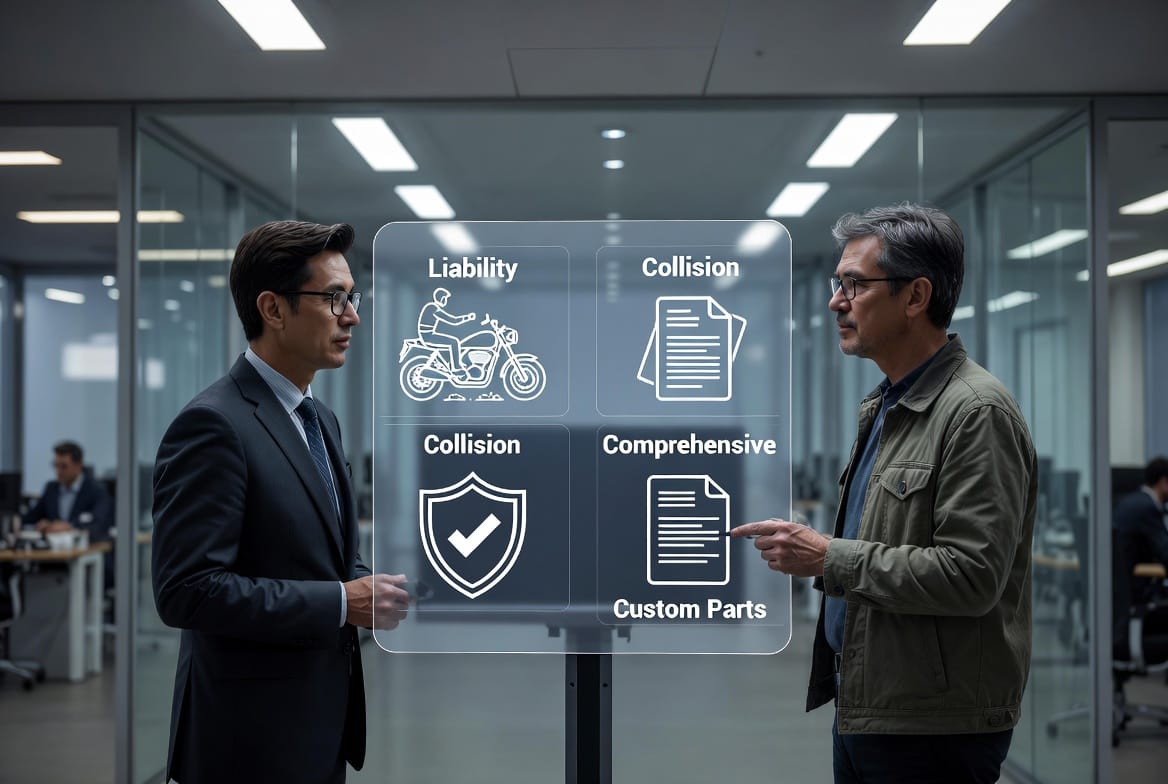
Custom parts coverage—sometimes called an aftermarket equipment or accessory endorsement—explicitly addresses this shortfall. It reimburses the cost of repairing or replacing listed aftermarket components after a covered loss. To activate the protection, owners typically provide receipts, photographs, or appraisals that document the installed parts and their value. The endorsement may be written on an actual cash value or agreed-value basis, the latter offering greater certainty of recovery.
Without this specialized protection, a total loss could leave the rider reimbursed only for the stock motorcycle while absorbing the full expense of lost customizations. Given the substantial investment many enthusiasts make, custom parts coverage transforms an incomplete policy into a truly comprehensive one. Riders should review their inventories regularly and update the endorsement whenever new accessories are added, ensuring continuous alignment between the policy and the bike’s actual configuration.
Optional Endorsements That Strengthen Protection
Beyond the core coverages, insurers offer a range of optional endorsements that further tailor the policy. Common additions include:
- Uninsured and underinsured motorist coverage – protects the rider when the at-fault party carries insufficient or no insurance
- Medical payments or personal injury protection – covers medical expenses for the rider and passengers regardless of fault
- Roadside assistance – provides towing, flat-tire service, and related help
- Accessory and equipment enhancements beyond basic custom parts limits
- Trip interruption benefits that reimburse lodging and transportation when a covered loss strands the rider away from home
Each endorsement addresses specific risks that standard policies may leave exposed. Selecting them thoughtfully allows riders to match coverage precisely to their riding patterns, geographic location, and personal priorities. An authoritative review of available options with a knowledgeable advisor often reveals cost-effective enhancements that deliver disproportionate peace of mind.
State Requirements and Practical Policy Selection
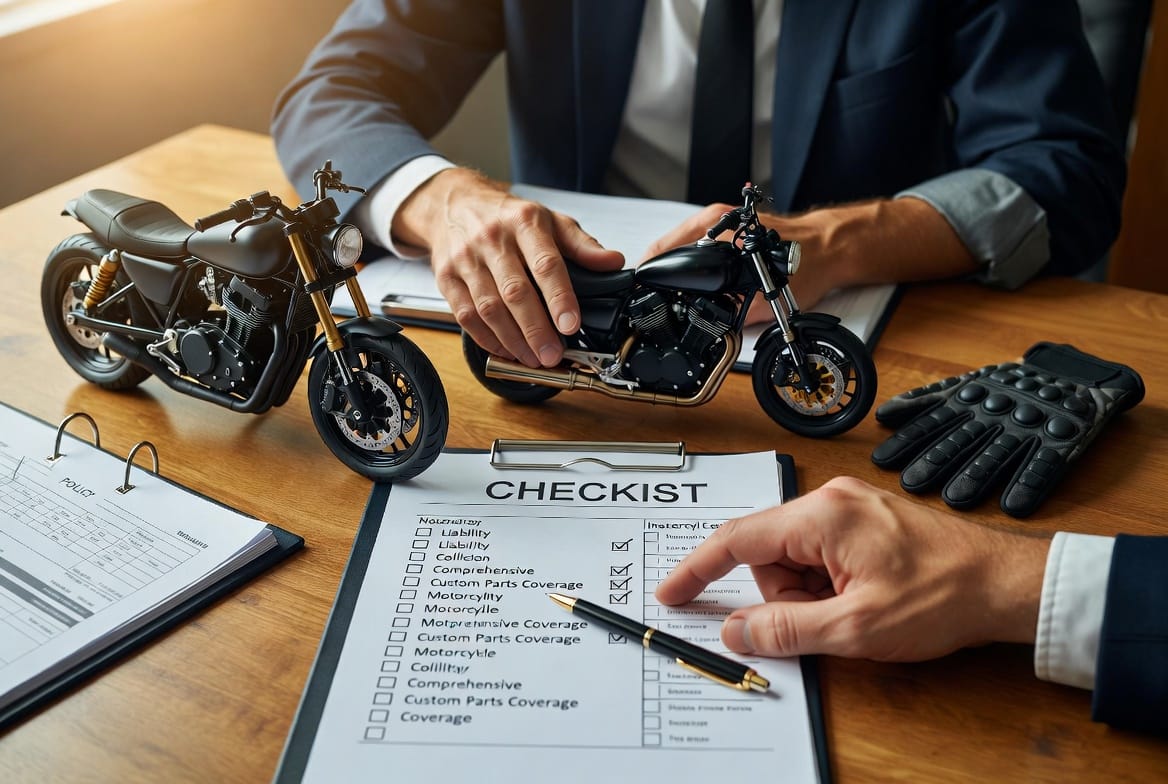
Because state requirements for minimum liability limits differ, the first step in securing proper coverage is confirming local regulations. Registration and licensing authorities publish current minimums, and reputable insurers automatically structure policies to satisfy them. Beyond compliance, riders should evaluate:
- The motorcycle’s current market and replacement value
- Frequency and distance of typical rides
- Presence and documented value of aftermarket parts
- Personal asset exposure and risk tolerance
- Desired deductible levels
Comparing multiple quotes remains essential, yet price alone should never dictate the decision. Coverage breadth, claim service reputation, and financial strength of the insurer carry equal weight. A slightly higher premium that delivers robust collision, comprehensive, and custom parts protection frequently proves more economical than a bare-minimum policy that fails when needed most.
Essential Practices for Long-Term Security
Maintaining continuous coverage, promptly reporting changes in equipment or usage, and storing the motorcycle securely all reduce both premiums and claim frequency. Photographing the bike and its accessories annually, retaining receipts, and reviewing the policy at each renewal keep protection aligned with reality. Riders who treat insurance as an active partnership rather than a passive requirement consistently achieve superior outcomes.
Final Guidance for Confident Riding
Proper motorcycle insurance is not merely a regulatory checkbox; it is the foundation that preserves financial stability and riding enjoyment. By securing adequate liability limits that meet or exceed state requirements, adding collision and comprehensive for physical protection, and including custom parts coverage for aftermarket investments, riders eliminate the most significant gaps. Optional endorsements further refine the safety net according to individual needs.
The most effective step any owner can take is to discuss specific circumstances with an experienced advisor who understands the nuances of motorcycle coverage. Insure your bike properly. A brief conversation can clarify options, reveal overlooked protections, and deliver the authoritative reassurance that every mile ahead remains financially secure.
Get Custom Parts & Liability Coverage Fast – Call Now!