The Motion Sensor Light: Passive Infrared vs. Microwave
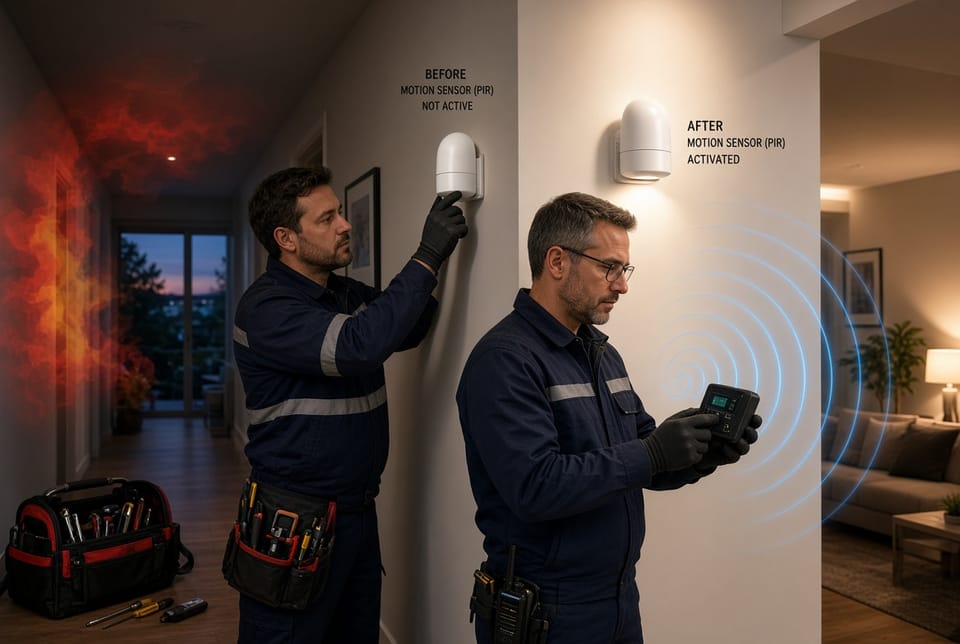
Choosing the right motion sensor light can dramatically improve home security, energy efficiency, and everyday convenience. Two dominant detection technologies power these systems: Passive Infrared (PIR) and microwave. Understanding the core differences between them allows homeowners and property managers to select the ideal solution for their unique needs. This comprehensive guide explores how each technology works, their strengths, limitations, and best-fit applications so you can make an informed decision with confidence.
Choose the Right Motion Sensor – Call Now for Expert Installation!
Understanding Passive Infrared (PIR) Technology
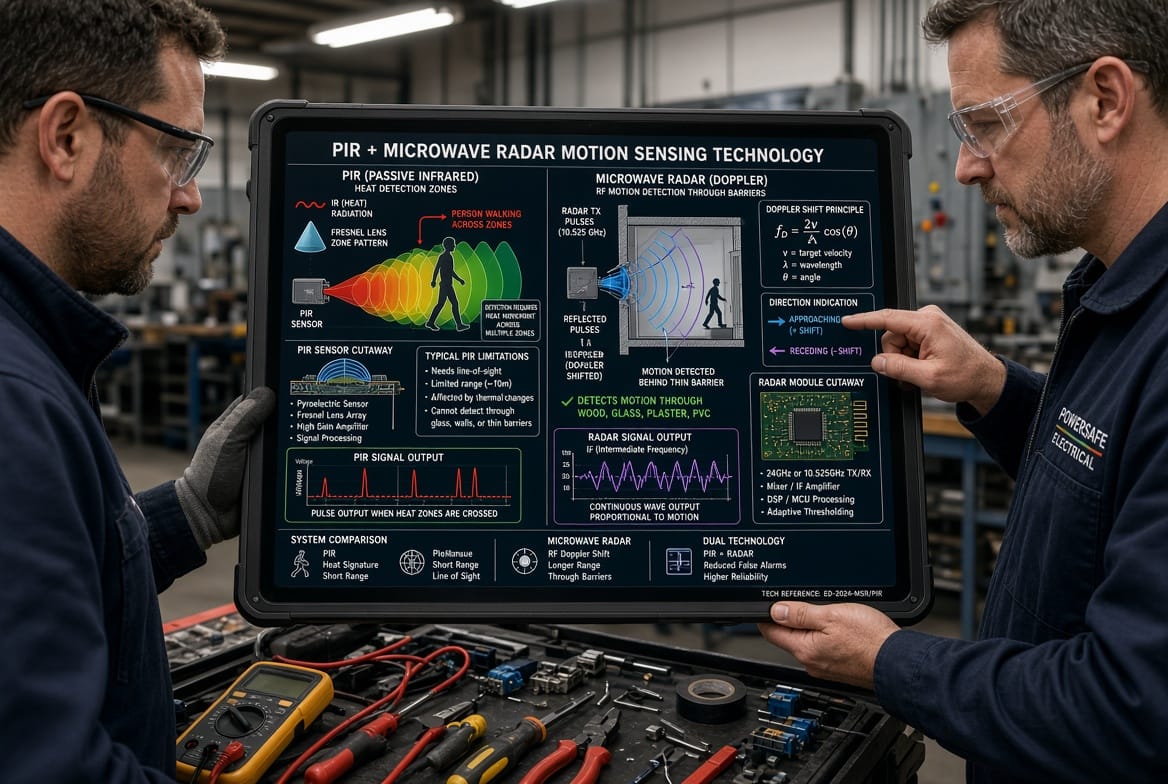
Passive Infrared, commonly known as PIR, detects motion by sensing changes in infrared radiation—essentially body heat—emitted by people or animals. Unlike active systems, a PIR sensor does not emit any energy of its own. It remains passive until a warm object moves across its field of view, creating a detectable shift in the thermal pattern.
The sensor contains a pyroelectric material that generates a small electrical signal when infrared levels change. Fresnel lenses focus this radiation into multiple zones, enabling the unit to distinguish genuine movement from gradual temperature shifts in the environment. Because it responds only to heat signatures, PIR technology produces fewer false triggers from moving curtains, falling leaves, or pets below a certain size threshold when properly calibrated.
Key advantages of PIR sensors include:
- Exceptional reliability in detecting human presence through heat differential
- Low power consumption, ideal for battery-operated or solar-powered outdoor lights
- Resistance to interference from radio frequencies or electromagnetic noise
- Cost-effective design that keeps overall system pricing accessible
- Proven track record in residential and commercial installations worldwide
These characteristics make PIR motion sensor lights a trusted choice for many everyday scenarios. They excel in environments where precise human detection matters more than maximum range or penetration.
Typical Applications for PIR Motion Sensors
Homeowners frequently install PIR-based lights in entryways, garages, and backyard pathways. The technology’s heat-focused detection ensures porch lights activate only when someone approaches the door, enhancing both security and energy savings. Indoor applications include hallways, bathrooms, and closets where automatic illumination improves convenience without constant manual switching.
Commercial properties benefit as well. Office corridors, stairwells, and storage areas equipped with PIR sensors reduce electricity waste by illuminating spaces only during occupancy. Because false triggers remain minimal, facility managers appreciate the predictable performance and reduced maintenance calls.
Outdoor security lighting around perimeter fences or garden areas also relies heavily on PIR. When paired with weather-resistant housings and adjustable sensitivity dials, these sensors deliver consistent results even in fluctuating temperatures, provided installers account for direct sunlight or reflective surfaces that might influence thermal readings.
Exploring Microwave Motion Detection
Microwave sensors operate on an entirely different principle. They actively emit low-power microwave pulses—similar to radar—and measure the reflection of those waves. Any movement within the detection zone alters the frequency or phase of the returning signal through the Doppler effect, triggering the light.
Because microwaves penetrate non-metallic materials such as drywall, thin wood, and certain plastics, these sensors can see through walls to a limited degree. This capability grants them greater coverage and heightened sensitivity compared with purely heat-based systems. Even small motions, such as a person sitting still and shifting slightly, can register if the sensitivity is set high.
The increased sensitivity, however, introduces a trade-off. Microwave units may respond to motion outside the intended area or to environmental factors like heavy rain, moving branches, or large appliances. Proper placement, shielding, and sensitivity adjustment become essential to maintain accuracy.
Notable strengths of microwave sensors include:
- Ability to detect motion through certain barriers for broader coverage
- Superior performance in detecting slow or subtle movements
- Effectiveness in larger open spaces or multi-room configurations
- Consistent operation regardless of ambient temperature extremes
- Compatibility with high-ceiling or warehouse-style installations
These features position microwave technology as a powerful option when maximum awareness and penetration are priorities.
Practical Uses for Microwave Motion Sensors
Large commercial warehouses and industrial facilities often prefer microwave motion sensor lights because the technology covers expansive floor areas and can sense activity behind temporary partitions. Retail backrooms and stock areas also benefit when staff move between rooms; the sensor’s ability to register presence through light barriers keeps pathways illuminated efficiently.
In residential settings, microwave units shine in multi-level homes or open-concept living spaces. A single well-placed sensor near a staircase can detect movement on both floors, activating lights in a coordinated sequence. Outdoor applications include large driveways or commercial parking lots where long-range detection and the capacity to monitor beyond immediate visual lines prove valuable.
Some advanced systems combine microwave with other technologies, yet standalone microwave sensors remain popular for their pure sensitivity and wall-penetrating reach when carefully configured.
Side-by-Side Performance Comparison
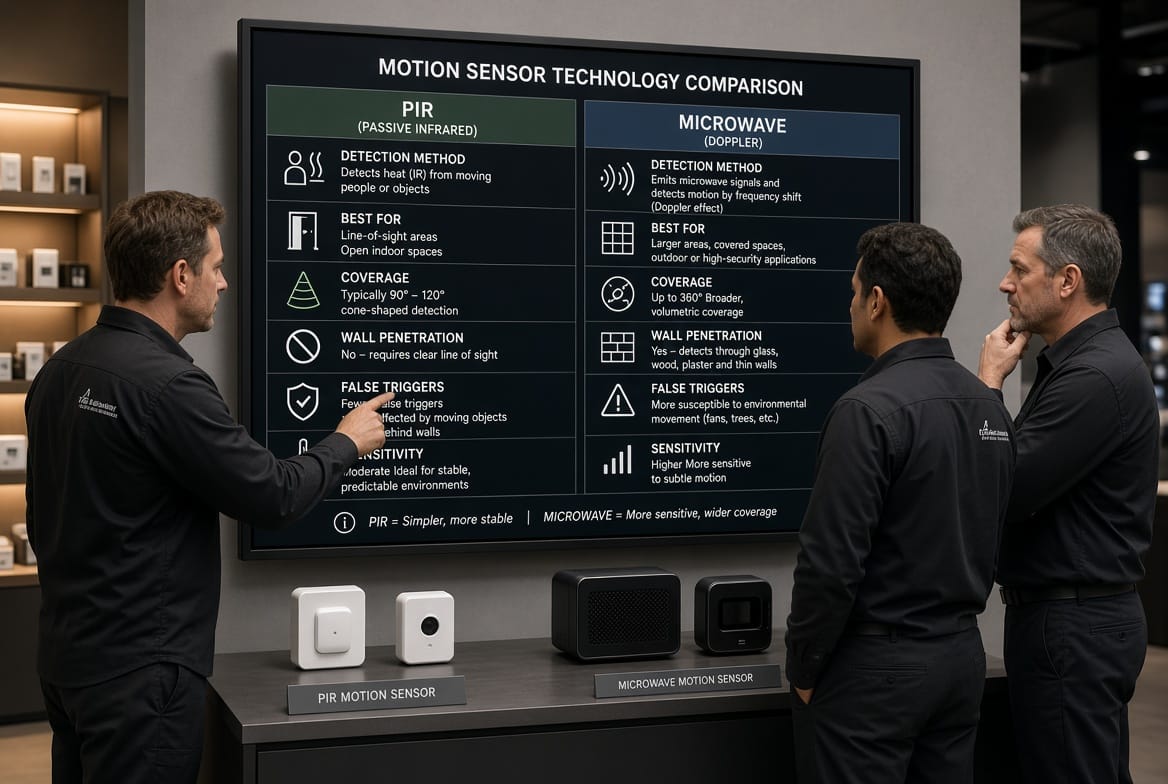
When evaluating PIR versus microwave, several practical factors emerge. Detection method stands as the clearest distinction: PIR relies exclusively on heat changes and therefore generates fewer false triggers from non-living motion, while microwave tracks any physical movement and can register activity through walls, resulting in higher overall sensitivity.
Range and coverage differ as well. Standard PIR sensors typically monitor 15–40 feet depending on lens design, with a conical or multi-zone pattern optimized for human-height movement. Microwave units often achieve longer distances and more spherical coverage patterns, making them suitable for irregularly shaped rooms.
Environmental tolerance also varies. PIR performance can decline in extreme heat or cold if the ambient temperature approaches body temperature, reducing the thermal contrast. Microwave sensors remain largely unaffected by temperature yet may struggle in environments with heavy metallic interference or continuous vibration.
Installation considerations further separate the two. PIR units require a clear line of sight and careful aiming to avoid direct sunlight or HVAC vents. Microwave sensors demand attention to surrounding materials that might allow unwanted penetration, plus precise power and sensitivity calibration to prevent over-triggering.
Energy efficiency favors PIR in most residential cases because of its lower standby draw and reduced false activations. Microwave systems may consume slightly more power due to continuous emission of pulses, although modern designs have narrowed this gap considerably.
Matching Technology to Specific Needs
Selecting between the two technologies depends on the primary goal. For standard residential exterior lighting focused on human approaches—front porches, side gates, or garage entrances—PIR delivers reliable results with minimal nuisance activations. The lower incidence of false triggers translates into longer bulb life and quieter operation.
When the requirement involves monitoring larger interiors, detecting motion behind light barriers, or covering multi-room layouts, microwave technology provides the necessary reach and sensitivity. Properties with thick foliage outside windows or complex floor plans often find microwave superior once sensitivity is dialed correctly.
Hybrid environments sometimes call for mixed installations. A homeowner might place PIR sensors at exterior doors for precise entry detection while using microwave units in the basement or attic where wall penetration aids whole-floor coverage. Professional assessment ensures each sensor type operates at peak effectiveness without conflicting signals.
Installation Best Practices and Long-Term Reliability
Correct mounting height, angle, and environmental shielding determine real-world success for either technology. PIR sensors perform optimally between 6 and 10 feet high, aimed slightly downward to capture torso-level heat signatures. Avoiding direct exposure to heating vents or reflective glass prevents temperature-related errors.
Microwave units benefit from central placement within the monitored zone and careful distance from large metal objects that could create multipath reflections. Adjustable pulse rates and range gates in higher-end models allow fine-tuning that further reduces unnecessary activations.
Regular testing after seasonal changes maintains accuracy. Simple walk-tests confirm coverage patterns, while sensitivity dials or companion apps enable quick recalibration. Quality fixtures from reputable manufacturers include surge protection and weather seals that extend service life in outdoor conditions.
Potential Challenges and How to Address Them
No detection technology is perfect. PIR systems may overlook very slow movement or fail temporarily when ambient temperatures match body heat. Solutions include dual-element sensors that require sequential zone crossings and models with temperature compensation circuitry.
Microwave units risk over-sensitivity leading to lights cycling on and off from distant traffic or pets. Shielding the rear and sides of the sensor, lowering the sensitivity threshold, and using pulse-count logic that demands multiple detections before activation resolve most issues.
Both technologies improve dramatically when installed by experienced professionals who understand local building materials, typical traffic patterns, and code requirements. Proper wiring, grounding, and integration with existing lighting circuits eliminate common performance complaints.
Energy Savings and Security Benefits Combined
Beyond convenience, the right motion sensor light delivers measurable reductions in electricity use. Lights remain off until needed, cutting waste during unoccupied hours. Security gains arrive simultaneously: sudden illumination deters potential intruders and alerts occupants to activity.
PIR systems often achieve the greatest savings in moderate climates and standard residential footprints because of their selective triggering. Microwave systems shine in larger commercial footprints where continuous coverage justifies the sensitivity. In either case, pairing sensors with LED fixtures multiplies efficiency while providing bright, instant illumination.
Making the Confident Choice
The decision between Passive Infrared and microwave ultimately rests on whether heat-based precision with fewer false triggers or motion-based reach that can see through walls better serves the space. Neither technology is universally superior; each excels in complementary situations. Evaluating room size, expected traffic, environmental conditions, and desired sensitivity level clarifies the optimal path.
Professional evaluation removes guesswork. Trained technicians assess sight lines, material composition, and usage patterns, then recommend and install the configuration that delivers reliable, long-lasting performance.
Warning: Selecting the incorrect motion sensor technology can lead to frequent false activations, incomplete coverage, or wasted energy. Choosing the right motion sensor ensures dependable lighting, enhanced security, and true peace of mind.
Experienced professionals stand ready to evaluate your property, recommend the ideal PIR or microwave solution, and complete the work with precision so your motion sensor lights perform exactly as intended for years to come.
Expert Advice on PIR vs. Microwave Sensors – Call Today!