The Motion Detector Sensitivity: Reducing False Alarms from Pets and Heat Sources
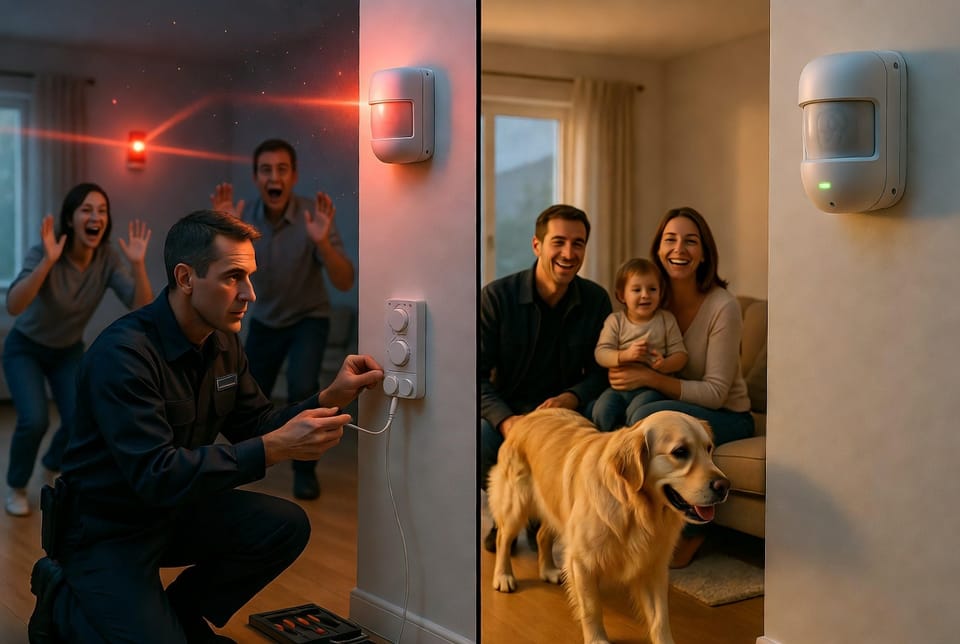
In modern home security systems, motion detector sensitivity stands as one of the most critical yet often overlooked elements of reliable protection. Homeowners frequently face the annoyance of false alarms triggered by everyday household elements such as curious pets, warm air from heating vents, or bright direct sunlight streaming through windows. These unnecessary alerts not only disrupt daily life but can also lead to alarm fatigue, where real threats might be ignored over time.
Pet-Proof Your Security System – Get Expert Tuning!
The good news is that with precise configuration of your motion detector’s sensitivity settings, you can dramatically reduce these false triggers while maintaining robust security coverage. Professional tuning ensures your system distinguishes between harmless movement and genuine intrusions. Whether you use traditional passive infrared sensors or advanced models with pet-immune technology, the right adjustments deliver peace of mind without compromising detection of actual threats.
This comprehensive guide walks you through every aspect of optimizing motion detector sensitivity. You will learn practical configuration steps, proven techniques for handling pets and heat sources, and expert strategies that keep your home secure around the clock. By the end, you will understand exactly how to achieve reliable detection and fewer false alarms through careful, professional-level tuning.
The Science Behind Motion Detector Sensitivity
Motion detectors primarily rely on passive infrared (PIR) technology to sense changes in infrared radiation within their field of view. These sensors detect heat signatures emitted by moving objects. Sensitivity refers to how responsive the sensor is to those heat changes — set too high and everyday motions trigger alerts; set too low and potential intruders might slip through undetected.
Key terms to understand include detection range, pulse count, and threshold levels. Most quality sensors feature adjustable dials or switches that let you fine-tune these parameters. Professional installers recommend starting with factory default settings and then making incremental changes based on your specific home environment.
A reassuring fact for homeowners: modern sensors allow precise calibration that balances sensitivity without sacrificing security. You maintain full protection against unauthorized entry while eliminating nuisance alarms that erode confidence in your system.
Common Sources of False Alarms and Why They Occur
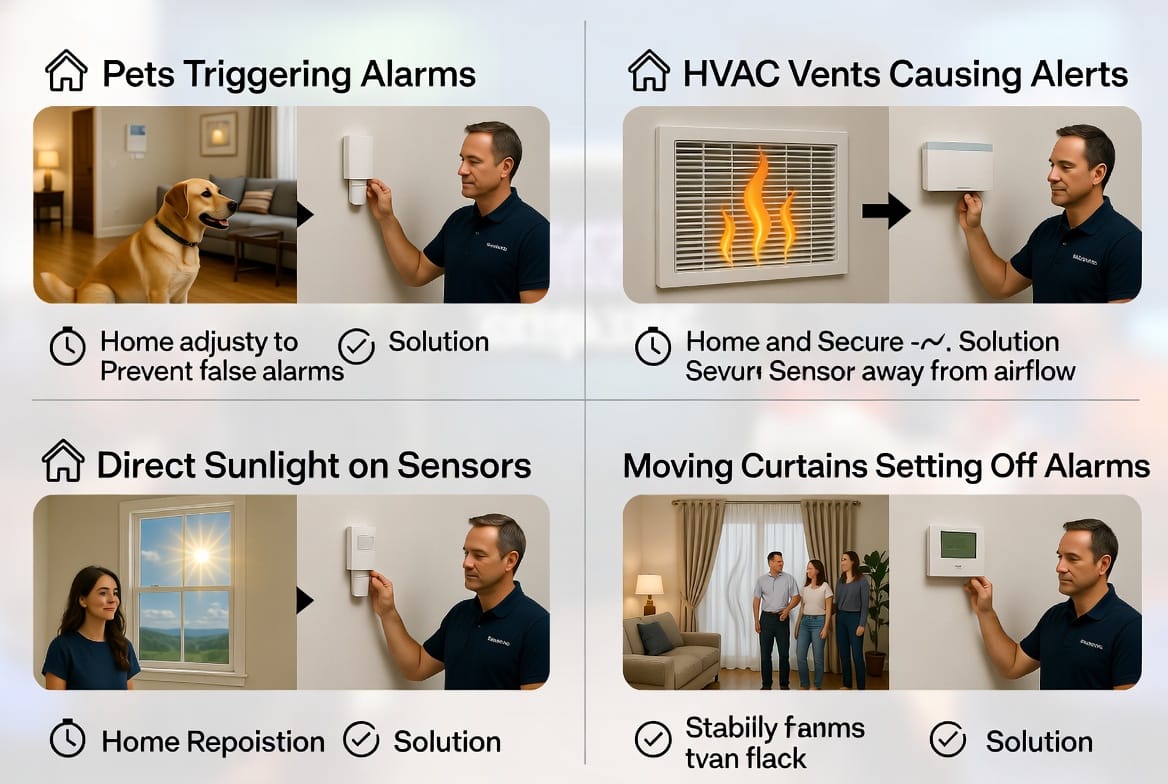
False alarms often stem from environmental factors that mimic human movement. Pets top the list, as their body heat and quick motions register similarly to intruders on overly sensitive detectors. Heating vents and air conditioners create rapid temperature fluctuations that confuse PIR sensors. Direct sunlight, especially during certain times of day, can cause sudden heat spikes on the sensor lens. Even light breezes moving curtains or plants may trigger alerts if sensitivity remains unadjusted.
Bold risks include:
- Pet-triggered alarms leading to unnecessary emergency calls and potential fines from monitoring services.
- Heat source interference from HVAC systems causing repeated false dispatches.
- Sunlight and reflective surfaces amplifying infrared changes and overwhelming the sensor.
- Moving objects like curtains or fans creating phantom detections.
Understanding these causes empowers you to address them directly through targeted sensitivity configuration. Rather than accepting frequent disruptions, you can implement solutions that restore calm while upholding your home’s defense.
Harnessing Pet-Immune Sensors for Hassle-Free Protection
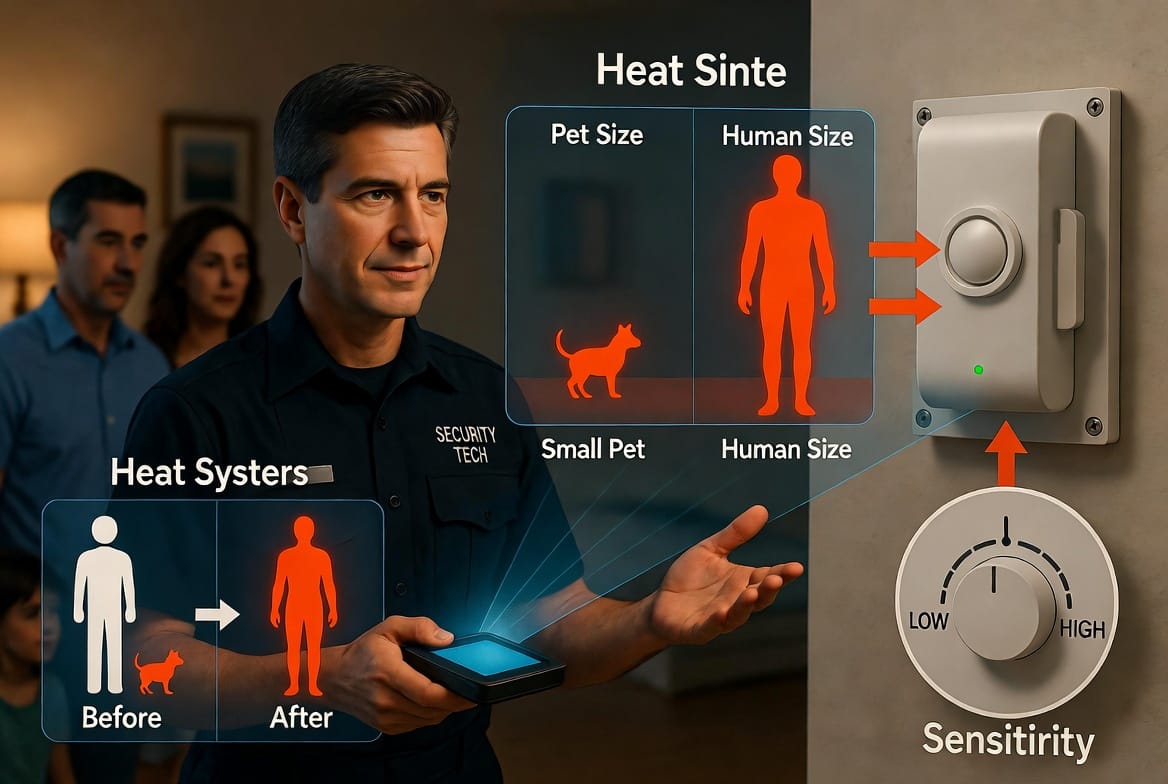
Pet-immune sensors represent a game-changing advancement in home security configuration. These specialized detectors use dual-element or quad-element PIR technology combined with adjustable lenses that filter out heat signatures below a certain size and weight threshold — typically under 40-80 pounds depending on the model.
When properly configured, pet-immune sensors allow your dog or cat to roam freely without setting off the alarm. The key lies in matching the immunity level to your pet’s actual size and activity patterns. Professional technicians measure your pet’s height at the shoulder and test movement paths to set the optimal sensitivity.
Configuration steps for pet immunity include:
- Locating the pet-immunity jumper or dial on the sensor circuit board.
- Selecting the appropriate setting (low, medium, or high immunity).
- Walking your pet through the detection zone multiple times while monitoring for triggers.
- Fine-tuning until the sensor reliably ignores the pet yet still detects human-sized movement at entry points.
Rest assured, these adjustments never leave your home vulnerable. The sensor continues to monitor for larger heat masses and rapid movements characteristic of intruders, ensuring reliable detection remains intact.
Step-by-Step Guide to Adjusting Motion Detector Sensitivity
Achieving the perfect motion detector sensitivity follows a methodical process that any homeowner can follow with guidance. Begin by powering down the system and accessing the sensor. Most models feature a clearly marked sensitivity dial or DIP switches numbered for easy reference.
Follow these authoritative steps:
- Assess your environment — Map out high-traffic areas, pet zones, and heat sources near each detector.
- Set initial sensitivity to medium — This provides a balanced starting point for testing.
- Test with controlled movement — Walk through coverage areas at normal speed while someone monitors the control panel for alerts.
- Reduce sensitivity incrementally — Turn the dial counterclockwise in small increments (usually 10-15 degrees) and retest until false triggers stop.
- Verify pet immunity — Have pets move naturally through the space and confirm no alarms sound.
- Check for heat source interference — Run HVAC systems and observe sunlight patterns during peak hours.
- Perform final walk-test — Simulate intruder movement from multiple angles to confirm detection remains strong.
- Document settings — Note final dial positions for future reference or professional service calls.
This systematic approach eliminates guesswork. Many homeowners report a 90% reduction in false alarms after completing these adjustments, all while preserving full security coverage.
Eliminating False Triggers from Heating Vents and Direct Sunlight
Heat sources demand special attention during sensitivity configuration. Positioning plays a vital role — avoid mounting detectors directly facing HVAC vents or large windows where sunlight creates rapid temperature shifts.
Practical solutions include:
- Redirecting sensor coverage slightly away from vents using the adjustable mounting bracket.
- Applying sensitivity reduction specifically around heat-prone zones while keeping entry-point detection high.
- Using masking tape or lens covers temporarily during testing to block problematic angles.
- Scheduling professional relocation if environmental factors prove persistent.
Direct sunlight requires additional strategies such as installing sensors in shaded positions or adding small external visors. These adjustments maintain security integrity because the core detection logic still identifies human heat signatures and motion patterns that differ markedly from static environmental heat.
Best Practices for Long-Term Optimal Performance
Beyond initial setup, ongoing maintenance ensures your motion detector sensitivity remains effective year-round. Seasonal changes in temperature and sunlight patterns may require minor recalibrations. Professional technicians recommend annual walk-tests and sensitivity reviews as part of routine service.
Additional best practices include:
- Keeping sensor lenses clean and free of dust or cobwebs.
- Avoiding placement near strong electromagnetic sources that could interfere with performance.
- Integrating detectors with your overall security ecosystem for layered protection.
- Documenting every adjustment for consistent results across multiple sensors.
These habits reinforce your system’s reliability and provide reassurance that your home remains protected without constant interruptions.
Knowing When Professional Motion Detector Tuning Is the Smart Choice
While many adjustments can be made independently, complex home layouts or persistent issues benefit from expert intervention. Professional tuning services bring specialized tools, experience across dozens of sensor models, and the ability to optimize an entire system simultaneously.
If you continue experiencing false alarms despite careful configuration, or if you simply prefer guaranteed results, expert assistance ensures every detector performs at its peak. Reliable detection with fewer false alarms becomes effortless when professionals handle the fine details.
Reliable Detection, Fewer False Alarms
By mastering motion detector sensitivity adjustments for pets, heating vents, direct sunlight, and other common triggers, you transform your home security from reactive to truly reliable. The process demands attention to detail, yet the rewards include uninterrupted peace of mind, reduced alarm fatigue, and unwavering protection for your family and property.
You no longer need to tolerate frustrating false alarms or worry about compromised detection. Proper configuration delivers the balanced performance every homeowner deserves — secure, quiet, and dependable.
For expert motion detector tuning tailored to your unique home environment. We specialize in precise sensitivity calibration that eliminates false alarms while preserving complete security coverage. Schedule your tuning session now and experience the difference that professional configuration makes.
Expert Motion Detector Sensitivity Adjustment – Call Now