The Modified Vehicle Insurance: Covering Custom Parts
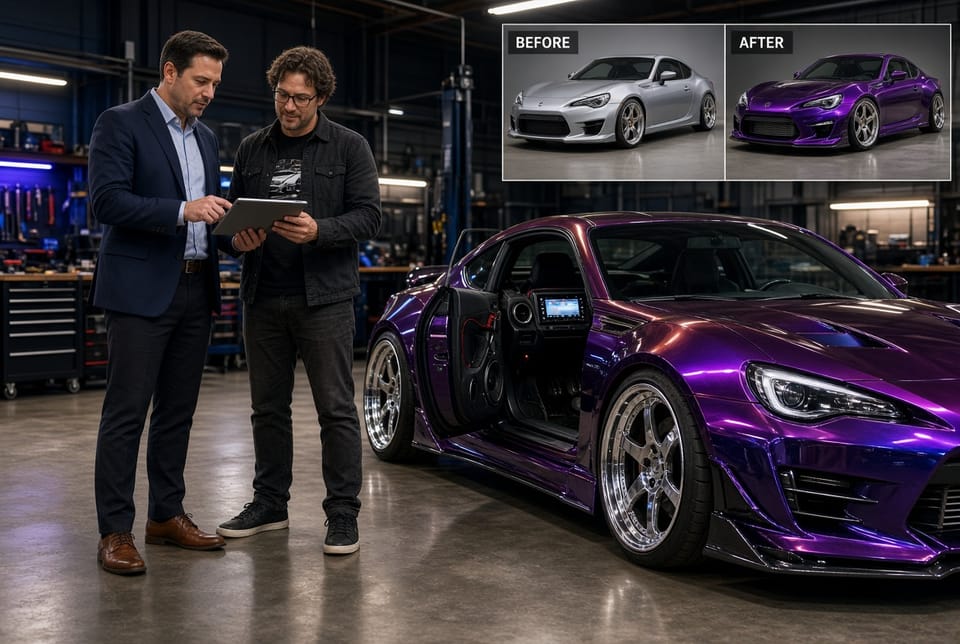
Car enthusiasts do not build ordinary cars. They invest time, skill, and money in custom wheels, aftermarket stereos, body kits, performance electronics, and other upgrades that change how a vehicle looks, sounds, and drives. Those upgrades also change how auto insurance should work. A standard policy is written for factory equipment. When a modified vehicle is damaged, stolen, or involved in a collision, unpaid custom parts can turn a manageable claim into a large out-of-pocket loss.
Call Now for Modified Vehicle Insurance
This guide explains, in practical terms, what modifications need coverage, how standard policies limit payouts, and how to add custom parts coverage. The goal is straightforward: protect the car you actually drive, not the car that left the assembly line.
Why Enthusiasts Need More Than a Basic Policy
Factory insurance language assumes original equipment manufacturer (OEM) parts. Tires, wheels, audio systems, bumpers, and trim are valued as they were when new from the dealer—or as depreciated replacements. Enthusiast builds sit outside that assumption.
A set of lightweight forged wheels can cost more than a month of many household budgets. A high-output stereo with amplifiers, processors, and custom enclosures can rival the value of the rest of the interior. A professionally fitted body kit changes panels, fascia, side skirts, and sometimes structural attachment points. If those items are not scheduled or endorsed, the insurer may treat them as unlisted aftermarket equipment.
That does not mean modified cars are uninsurable. It means coverage must be declared, documented, and endorsed. When that is done correctly, claims can restore the build rather than strip it back to stock.
What Modifications Typically Need Dedicated Coverage
Not every bolt-on accessory requires a separate rider, but high-value and non-factory items usually do. Enthusiasts should review the following categories with an agent who understands modified vehicle insurance.
Custom Wheels and Tires
- Forged, multi-piece, or oversized custom wheels
- Low-profile or competition tires that cost more than OEM sizes
- Wheel locks, spacers, and specialized hardware
- Finishes such as powder coat, polish, or custom paint on rims
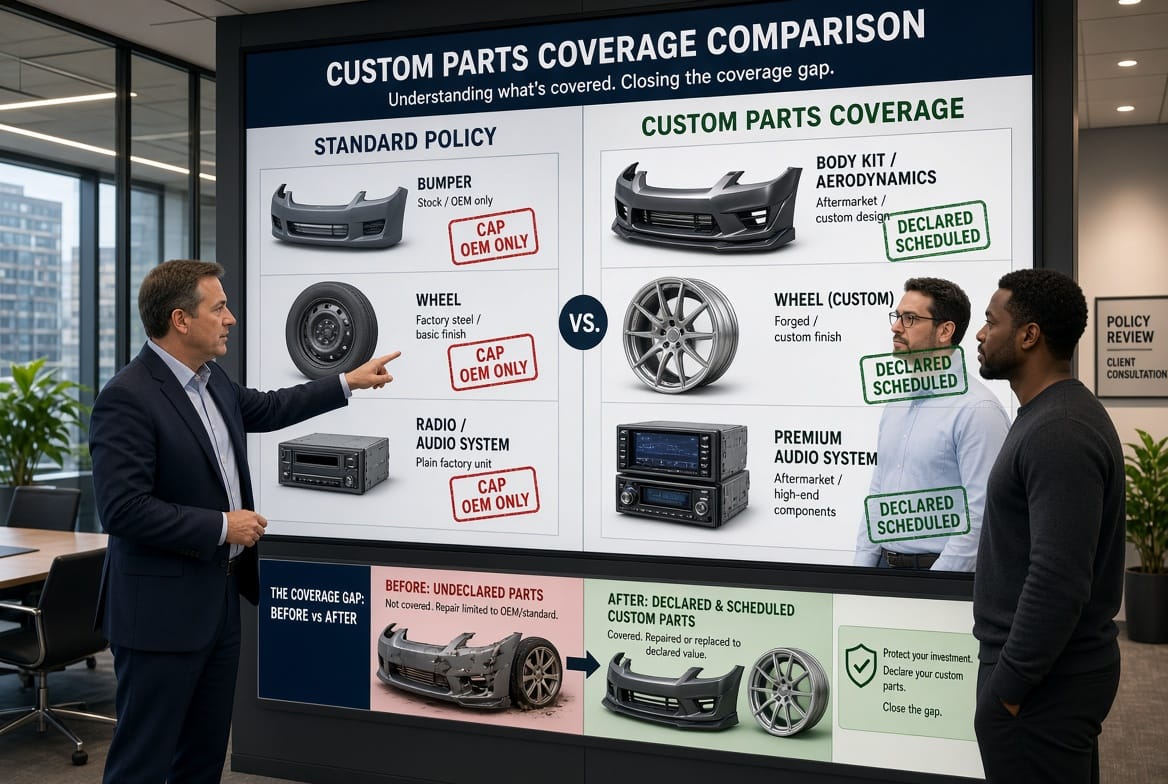
Wheels are frequent theft targets and are easily damaged in curb strikes and pothole events. A standard policy may cap wheel reimbursement at the cost of comparable factory rims.
Stereo and Interior Electronics
- Aftermarket head units, digital signal processors, and amplifiers
- Custom speaker arrays, subwoofers, and enclosures
- Wiring harnesses, capacitors, and sound-deadening packages
- Integrated screens, lighting controllers, and specialty interior trim tied to the audio build
Audio systems are often installed in stages. Insurers need a current inventory so the declared value matches the system in the car today, not last year’s starter kit.
Body Kits and Exterior Styling
- Full or partial body kits (front bumper, rear bumper, side skirts, fenders)
- Custom hoods, trunks, splitters, diffusers, and wings
- Widebody conversions and flared arches
- Specialty paint, wraps, and graphics applied over modified panels
Body kits affect both appearance and repair method. A damaged aftermarket bumper is not always interchangeable with a dealer part. Coverage should reflect replacement of the installed kit, not a generic OEM substitute.
Related Upgrades Often Overlooked
- Suspension kits and coilovers that alter ride height
- Exhaust systems visible in a theft or collision
- Lighting assemblies that are not DOT-stock replacements
- Engine cosmetics and bay dressings that add documented value
- Seats, harnesses, and roll equipment where legal and declared
If an item would be expensive to replace and is not on the original window sticker, assume it needs a conversation about custom parts coverage.
How Standard Policies Limit Coverage
Understanding the limits of a standard auto policy prevents surprise at claim time. The following restrictions appear often.
Aftermarket Parts Caps
Many policies include a modest allowance for aftermarket equipment—sometimes a few hundred to a couple of thousand dollars in total. That cap can be exhausted by a single wheel or a mid-tier amplifier. Anything above the cap may be unpaid unless you added an endorsement.
Like Kind and Quality vs. Specified Parts
Settlement language frequently promises like kind and quality. For a stock car, that means a comparable OEM or certified aftermarket part. For a modified car, “comparable” may be interpreted as a factory wheel, a basic stereo, or a dealer bumper. Your unique parts are not automatically “like kind.”
Depreciation and Actual Cash Value
Actual cash value (ACV) policies subtract depreciation. Custom parts can depreciate unevenly. A rare wheel design may hold value; an older head unit may not. Without stated value or agreed value treatment for listed parts, the check may not rebuild the same specification.
Undeclared Modifications and Underwriting
Failure to disclose major modifications can create a different problem: the insurer may argue the risk was not properly underwritten. That can affect premiums, eligibility, or, in serious cases, claim handling. Honest disclosure plus the right endorsement is the safer path.
Total Loss Calculations
In a total loss, the insurer values the vehicle as a whole. Hidden or undocumented upgrades may not increase the settlement. Documented, endorsed custom parts are more likely to be recognized in the valuation.
None of these limits mean enthusiasts are left without options. They mean the base contract is incomplete until custom parts coverage is added.
How to Add Custom Parts Coverage
Adding protection is a process, not a slogan. Follow a clear sequence so the file matches the car.
1. Inventory Every Non-Factory Item
Create a written list with:
- Description of the part
- Brand and model
- Purchase date
- Installed cost (parts and labor, if professional)
- Current estimated replacement cost
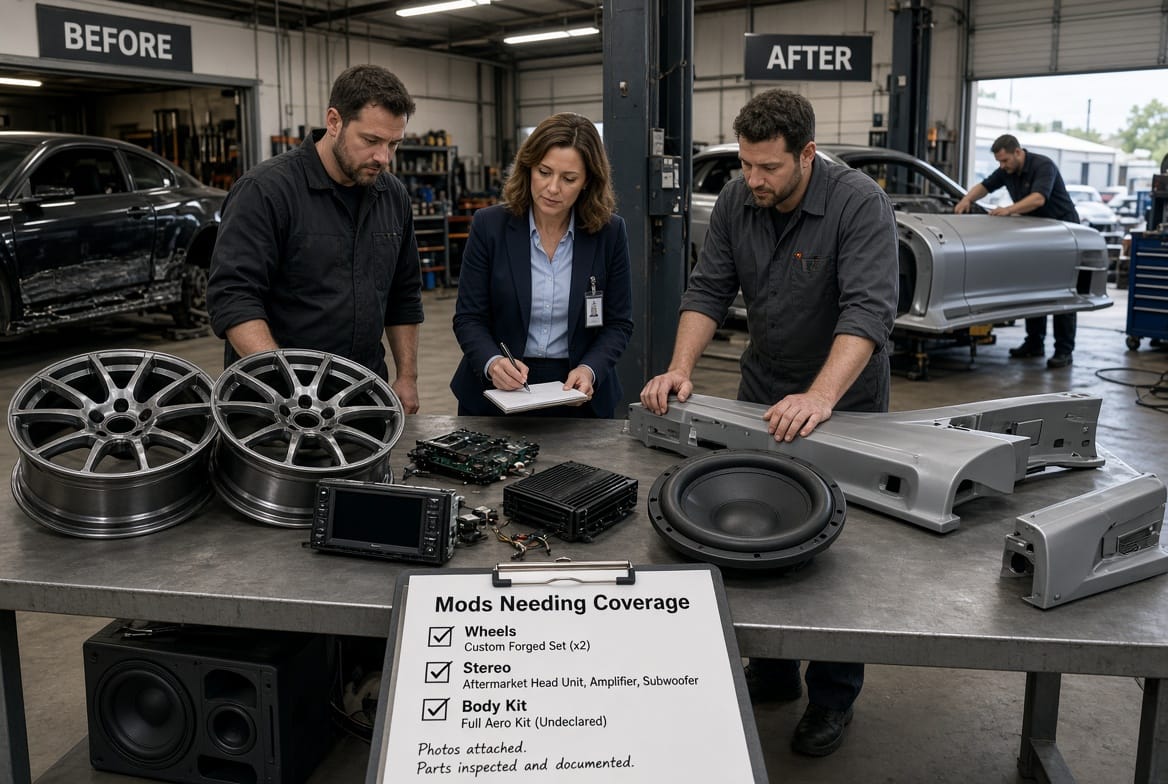
- Photos of the installed item and receipts
Photograph custom wheels, the stereo stack (including trunk amplifiers), and each body kit panel from multiple angles. Keep digital copies of invoices.
2. Separate “Cosmetic” from “Performance” When Asked
Some carriers price styling differently from mechanical changes. Be accurate. A body kit is styling. A stereo is equipment. Wheels can be both appearance and performance. Clear categories help underwriters assign the correct endorsement.
3. Ask for the Right Form, Not a Vague Promise
Request one or more of the following, depending on the carrier:
- Custom parts and equipment endorsement
- Additional custom equipment schedule
- Stated amount or agreed value for the vehicle plus listed parts
- Higher aftermarket equipment limits if a full agreed-value policy is not available
Get the endorsement number and the listed items on the declarations page. A verbal assurance is not a contract.
4. Match Coverage to How You Use the Car
Daily drivers, weekend show cars, and occasional track vehicles present different risks. Be truthful about use. Some programs combine street coverage with limited exhibition use. Misstating use can undermine an otherwise good policy.
5. Review Deductibles on Custom Items
Ask whether the same deductible applies to scheduled parts. In some programs you can adjust deductibles so a stolen wheel set does not leave you funding most of the replacement yourself.
6. Update After Every Major Build Stage
Coverage should change when the car changes. New wheels, a second-stage audio build, or a revised body kit should trigger an endorsement update. An outdated schedule is one of the most common reasons enthusiasts feel underpaid after a loss.
7. Confirm Repair Philosophy
Ask how the insurer handles repairs:
- Will they authorize the same specialty shop that installed the kit?
- Will they allow OEM-plus or replica kit parts if the original brand is discontinued?
- How are paint blend and wrap replacement treated on modified panels?
Clear answers before a claim reduce conflict after a claim.
Documenting Value Without Overstating It
Insurers protect insurable interest, not wishful pricing. Appraisals help when a build is extensive.
A qualified appraisal typically includes:
- Vehicle identification and mileage
- Itemized modifications
- Market notes on similar builds
- Photographs
- A stated figure the owner and insurer can consider for agreed value
Keep the appraisal current. A three-year-old report may not reflect new wheels or a redesigned front fascia.
Receipts remain essential even with an appraisal. They prove the parts existed and were installed on that vehicle.
Claims: What Enthusiasts Should Expect When Coverage Is in Place
When custom parts coverage is correctly added, a typical claim path looks like this:
- You report the loss and identify that scheduled equipment was involved.
- You provide the inventory, photos, and endorsement pages.
- The adjuster inspects stock structure and listed aftermarket items separately.
- Settlement for declared parts follows the endorsement—often replacement cost or the scheduled amount, subject to the policy form.
- You work with approved or agreed specialty vendors when the contract allows it.
When coverage was never added, the same loss may pay only for a factory-style wheel, a basic radio, or an OEM bumper. The difference is why the endorsement exists.
Risk Management Beyond the Policy
Insurance is the financial backstop. Enthusiasts can also reduce the chance of a claim:
- Use quality wheel locks and park with wheels visible to cameras when possible.
- Disconnect or conceal removable stereo components if the system is a known theft magnet.
- Choose reputable installers for body kits so fasteners and fitment do not create avoidable damage.
- Store build records off the vehicle as well as in the glove box.
- Photograph the car after every show or road trip.
These habits do not replace coverage. They support a clean claim if one occurs.
Common Mistakes That Leave Builds Exposed
- Assuming “full coverage” automatically includes aftermarket equipment
- Listing only the engine and ignoring wheels, audio, and aero
- Forgetting labor costs that are required to reinstall a kit or stereo
- Changing parts and never updating the schedule
- Using social media photos as the only proof of ownership
- Shopping price alone without reading the custom parts limit
Avoiding these mistakes is as important as choosing a carrier.
Choosing a Conversation That Fits the Build
Not every insurer is equally comfortable with modified vehicles. When you call, be ready to describe:
- Make, model, year, and primary use
- List of custom wheels, stereo equipment, and body kits
- Approximate invested amount
- Storage (garage, driveway, mixed)
- Any prior losses involving aftermarket parts
A professional discussion focuses on matching the contract to the car. Premiums reflect risk, but unpaid custom parts after a theft or collision are a greater long-term cost for many owners.
Final Advice: Insure Your Modifications Properly
A modified vehicle is a project and an asset. Custom wheels, aftermarket stereos, and body kits are not decorative extras in a claim file; they are property. A standard policy is a foundation. It is rarely the finished structure for an enthusiast build.
Inventory the parts. Photograph the install. Add a custom parts endorsement or an agreed-value arrangement that lists what you actually own. Update the file when the build changes. That is how coverage stays aligned with the car in the driveway.
Insure your modifications properly. A short, accurate conversation today is the difference between replacing your wheels, stereo, and kit—or settling for stock pieces that never matched the build.
Protect Custom Wheels, Stereo & Body Kits