The Microwave Turntable Motor: Why the Plate Stops Turning
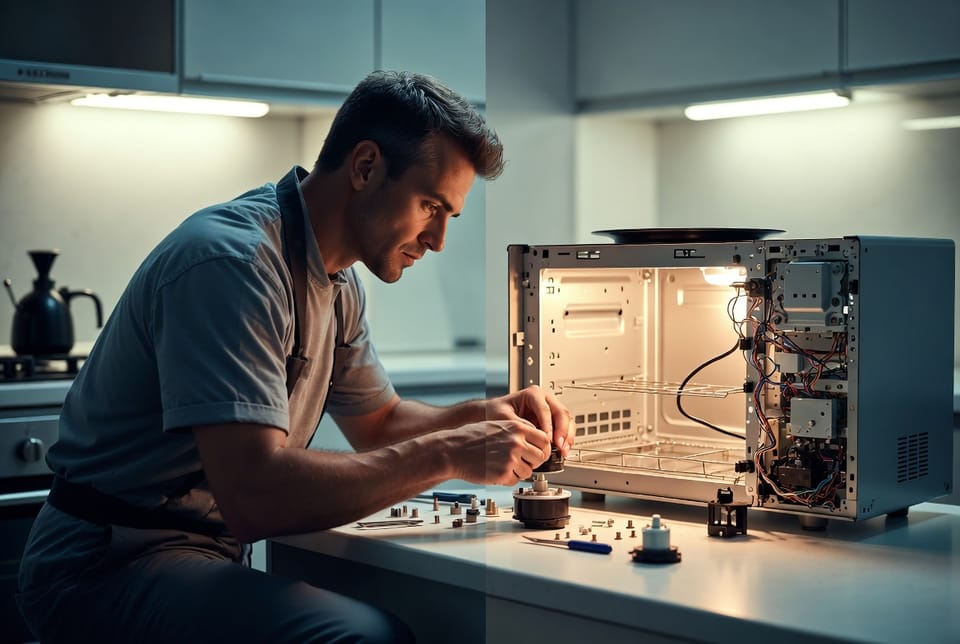
When the glass plate inside your microwave suddenly refuses to spin, everyday reheating and cooking routines can quickly become frustrating. Unevenly heated meals, cold spots in leftovers, and longer cook times are more than minor inconveniences—they signal that a critical component has likely failed. At the heart of this problem sits the turntable motor, a small yet essential part designed to keep food moving for consistent results. Understanding how this motor works, recognizing the clear warning signs of trouble, and knowing that replacement is often a straightforward process can restore confidence in your appliance and prevent further issues.
Get Your Plate Turning Again – Call for Expert Repair!
In the following sections we examine the precise function of the microwave turntable motor, the most common symptoms that appear when it begins to fail, and the practical steps involved in a simple motor swap. Throughout, the tone remains practical and reassuring: most turntable motor problems are solvable, and professional support is always available when needed.
What the Turntable Motor Actually Does
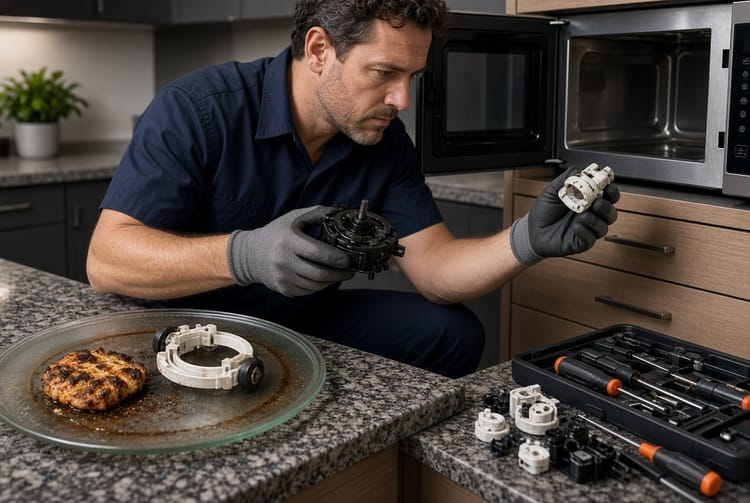
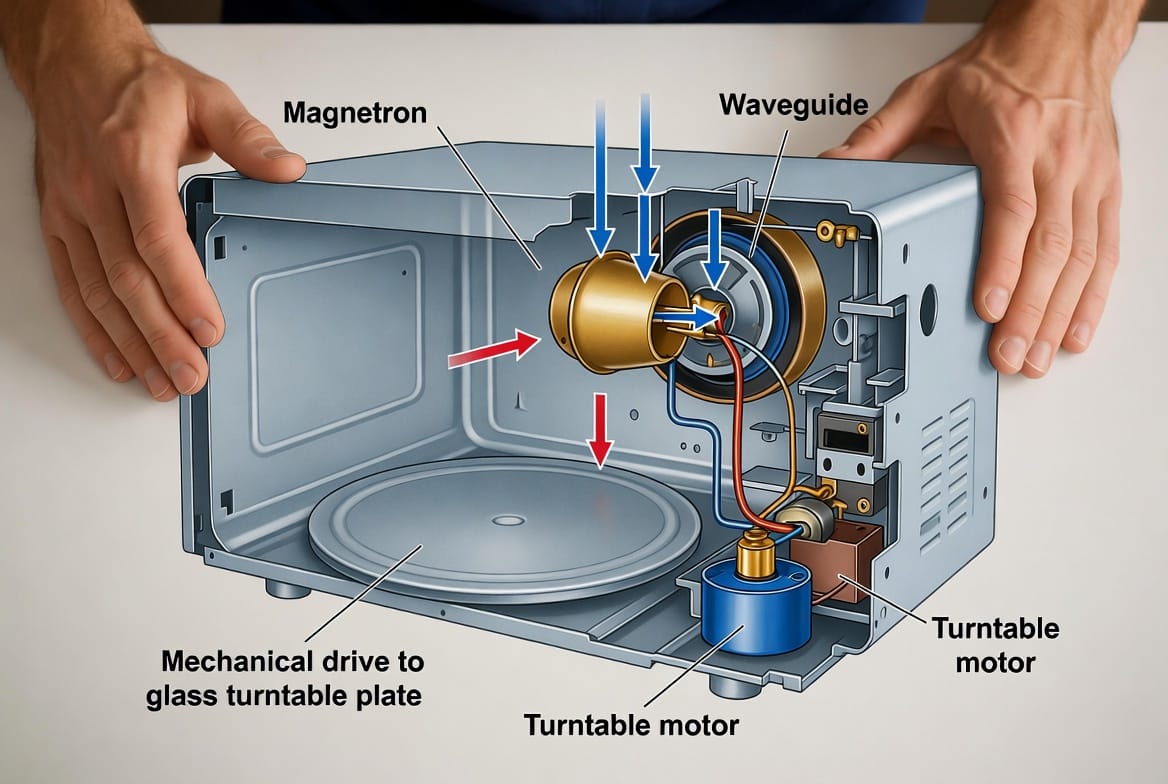
The turntable motor is a compact synchronous motor mounted beneath the microwave cavity floor. Its sole purpose is to rotate the glass cooking plate at a steady, controlled speed—typically around five to six revolutions per minute. This continuous motion ensures that microwaves generated by the magnetron reach every surface of the food evenly. Without rotation, energy concentrates in fixed zones, producing hot spots next to cold centers and compromising both food safety and taste.
Power reaches the motor through a simple electrical circuit that activates the moment the door is closed and the start button is pressed. A small drive coupling or roller guide transfers the motor’s torque to the glass plate above. Because the motor operates in a warm, occasionally humid environment and experiences constant start-stop cycles, it is subject to gradual mechanical wear. Over years of daily use the internal gears, windings, or bearings can degrade, eventually causing the plate to stop turning altogether.
Recognizing the importance of this component helps explain why a non-rotating plate is rarely a random glitch. It is almost always a direct result of motor performance declining to the point of failure. Addressing the issue promptly protects the rest of the appliance and returns the microwave to reliable service.
Clear Signs That the Turntable Motor Is Failing
Homeowners usually notice problems with the turntable motor through a handful of unmistakable indicators. Paying attention to these early warnings can prevent the need for more extensive repairs later.
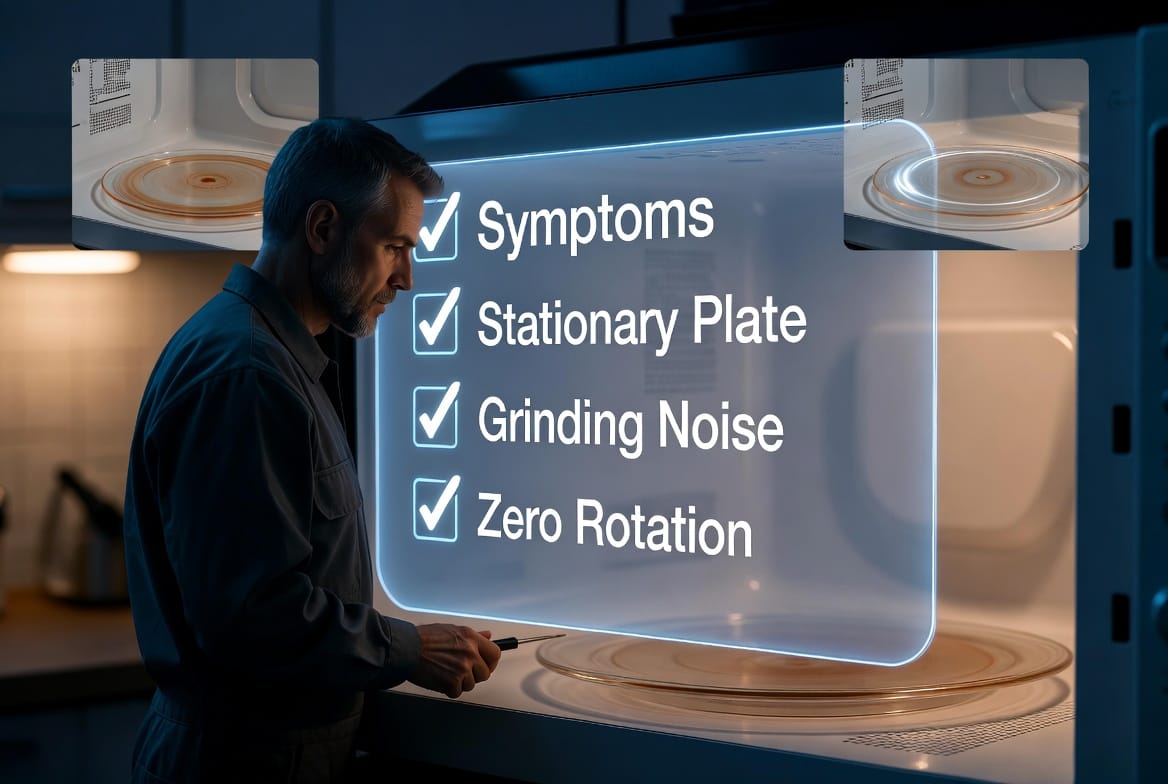
- The glass plate remains completely stationary while the microwave runs. Food sits in one position and heats unevenly.
- A distinct grinding, buzzing, or humming noise comes from the bottom of the unit each time the cycle begins. The sound often grows louder as the motor struggles.
- Rotation becomes intermittent—starting briefly, then stopping, or turning only a few degrees before stalling.
- The plate may rock or tilt slightly if the drive coupling has also begun to wear in tandem with the motor.
- In some cases the motor may run silently yet produce no movement because internal gears have stripped or seized.
Any combination of these symptoms points strongly toward a failing turntable motor. While other components such as the roller ring or the glass plate itself can occasionally contribute, the motor is statistically the most frequent culprit when rotation ceases.
Why Turntable Motors Eventually Fail
Several everyday factors accelerate wear on the turntable motor. Continuous thermal cycling causes expansion and contraction of plastic gears inside many modern motors. Food spills or moisture that seep through the cavity floor can corrode electrical contacts or swell internal components. Overloading the plate with heavy dishes places extra strain on the motor bearings. Even normal vibration over thousands of cycles gradually loosens mounting screws or fatigues the drive shaft.
Because the motor is relatively inexpensive and designed as a replaceable part, manufacturers expect it to outlast the warranty period yet still require eventual service. Understanding these normal wear patterns removes unnecessary worry: a non-turning plate does not mean the entire microwave is doomed. It simply means one small, accessible component has reached the end of its service life.
Confirming the Diagnosis Before Replacement
Before ordering a new motor, a few quick checks confirm that the turntable motor is indeed the source of the trouble. First, remove the glass plate and roller ring and inspect them for cracks or debris that might physically block rotation. Next, look underneath the microwave (after unplugging it) for any obvious damage to the motor housing or wiring. If the plate still refuses to turn when the motor is powered and the coupling is intact, the motor itself has almost certainly failed.
These simple visual and functional tests take only a few minutes and give clear direction. When the evidence points to the motor, the next step—replacement—is refreshingly straightforward compared with many other appliance repairs.
Replacing the Turntable Motor: A Simple Motor Swap
The great advantage of the turntable motor is that it is engineered for relatively easy access. Most models locate the motor on the underside of the unit, secured by a few screws and connected by a simple plug-in wiring harness. The replacement process follows a logical sequence that trained technicians perform daily.
Begin by unplugging the microwave and, if it is a built-in or over-the-range model, carefully supporting the unit so it can be lowered or accessed from below. Remove the bottom cover panel to expose the motor. Note the orientation of the old motor and the path of its wires. Disconnect the electrical connector, then remove the mounting screws. The old motor lifts free, often with the drive coupling still attached.
Transfer the coupling to the new motor if required, or install the new coupling that typically arrives with the replacement part. Position the new motor exactly as the old one sat, secure the screws firmly but without overtightening, and reconnect the wiring. Reinstall the cover panel, restore power, and test the rotation with an empty plate. In the vast majority of cases the plate begins turning smoothly again within seconds.
Because the procedure involves only basic hand tools and no complex calibration, it qualifies as a true “simple motor swap.” Still, safety remains paramount: always disconnect power, avoid forcing any component, and never operate the microwave with the cover removed. When these precautions are observed, the repair restores full function quickly and reliably.
Safety Considerations During Diagnosis and Repair
Working with any microwave requires respect for residual electrical energy and the presence of a high-voltage capacitor in some models. Always unplug the unit and wait several minutes before beginning work. If the microwave is hard-wired, switch off the dedicated circuit breaker. Never attempt to discharge components unless properly trained. These simple habits keep the repair process safe and uneventful.
Additionally, confirm that the replacement motor matches the original part number or is listed as a compatible equivalent. Using an incorrect motor can lead to improper speed, excess noise, or premature failure. Professional technicians maintain extensive cross-reference data to guarantee the correct match every time.
Long-Term Benefits of Addressing a Faulty Turntable Motor
Restoring proper plate rotation delivers immediate and lasting advantages. Food heats evenly, cook times become predictable again, and the risk of undercooked portions decreases. The rest of the microwave—magnetron, control board, and door switches—experiences less stress because the appliance no longer compensates for uneven energy distribution. Owners often notice quieter operation and renewed confidence in daily use.
Regular cleaning of the cavity floor and prompt attention to spills further extend the life of the new motor. Simple habits such as wiping the interior after messy reheating sessions prevent moisture from reaching the motor compartment and keep the drive system free of debris.
When Professional Service Provides the Best Outcome
While many homeowners successfully complete a turntable motor replacement, certain situations favor calling an experienced technician. Built-in or over-the-range microwaves may require specialized mounting hardware or two-person handling. Units still under extended warranty, or those with additional symptoms such as error codes or unusual odors, benefit from a full diagnostic. Technicians also carry the correct motors on their trucks, eliminating delays associated with ordering parts.
A single phone call brings trained help directly to the kitchen. The technician arrives equipped to confirm the diagnosis, perform the motor swap cleanly, and verify that every related component functions correctly. The result is a fully restored appliance without the uncertainty that sometimes accompanies first-time DIY efforts.
Maintaining Reliable Microwave Performance Going Forward
Once the new turntable motor is in place, a few ongoing practices help protect the investment. Avoid placing extremely heavy cookware on the plate for extended periods. Keep the roller ring and cavity floor free of food particles. Listen for any return of grinding sounds and address them promptly rather than waiting for complete stoppage. These modest steps maximize the lifespan of both the motor and the entire microwave.
In the broader context of home appliance care, the turntable motor exemplifies how a single, inexpensive component can influence overall performance. Treating it with timely attention keeps the microwave dependable for years of daily service.
Final Thoughts and Next Steps
A bad turntable motor stops turntable rotation and quickly turns a convenient appliance into a source of uneven meals and wasted time. Fortunately, the solution is both well understood and readily achievable through a simple motor swap. Whether the repair is performed independently or entrusted to a professional, the outcome is the same: restored even heating, quieter operation, and renewed confidence every time the start button is pressed.
When the plate refuses to turn, grinding noises appear, or rotation becomes unreliable, decisive action prevents further inconvenience. For expert diagnosis and prompt replacement service. Skilled technicians are ready to restore full function quickly, safely, and with lasting results.
Professional Microwave Repair Experts – Call Now!