The Microwave Door Switch: Safety Interlock Failure and Replacement
When your microwave suddenly stops working or behaves unpredictably, the issue often traces back to a small but vital component: the microwave door switch, also known as the door interlock switch. This critical safety mechanism ensures your appliance operates only when the door is securely closed, protecting you and your family from potential hazards.
Fix Your Microwave Door Switch Safely – Call Now!
At our appliance repair service, we handle these issues daily with expertise and care. Understanding the role of these switches helps homeowners recognize problems early and seek professional help promptly. In this comprehensive guide, we explore how door interlock switches function, common signs of failure, the risks involved, and why expert replacement is the safest choice.
Why the Microwave Door Switch Matters for Your Safety
Bold key fact: The door interlock system is not just a convenience feature — it is a fundamental safety interlock designed to prevent microwave radiation from escaping while the appliance is running. Microwaves generate high-energy waves to heat food, and without proper door confirmation, those waves could leak into your kitchen, posing serious health risks.
Modern microwaves incorporate multiple redundant switches to create a fail-safe environment. This layered protection gives homeowners peace of mind, knowing the appliance will not operate under unsafe conditions. When these switches function correctly, you can use your microwave confidently every day.
Professional technicians emphasize that ignoring early warning signs can turn a minor issue into a major safety concern. Our team always prioritizes thorough diagnosis to restore both performance and protection.
Understanding the Microwave Door Interlock System
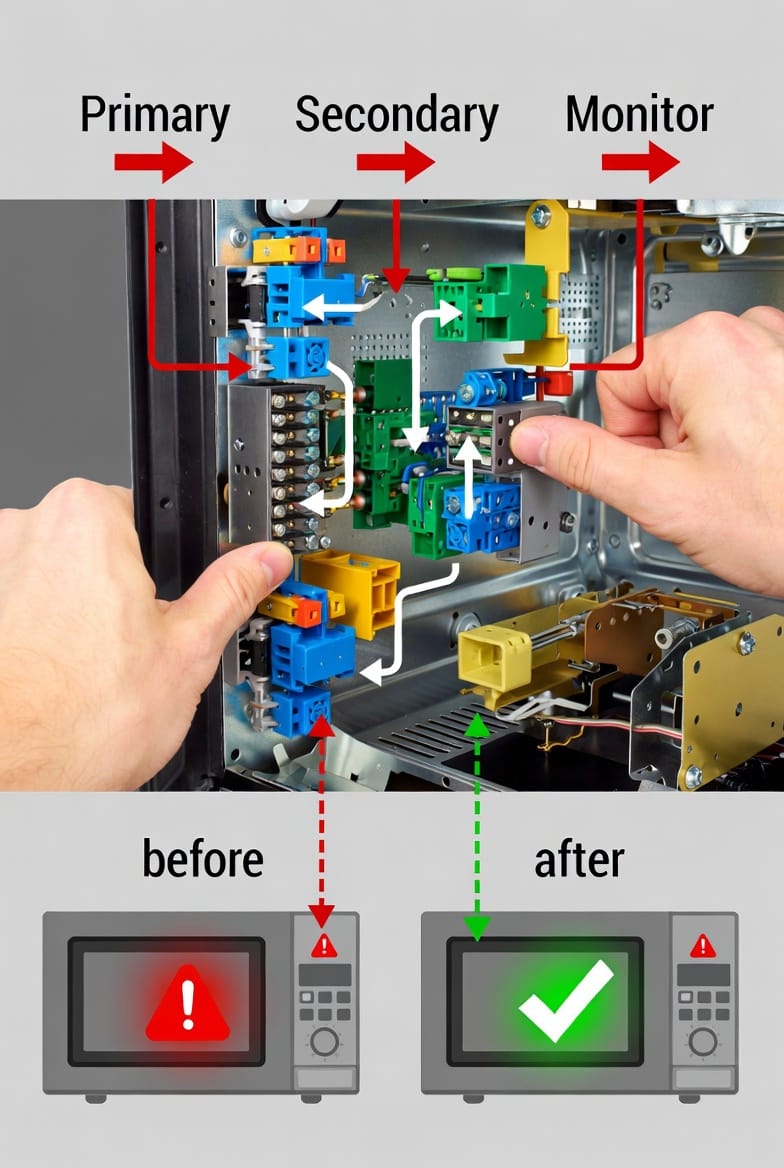
The microwave door interlock typically consists of three microswitches working in harmony:
- Primary Interlock Switch: Acts as the main gatekeeper, allowing power to flow to the high-voltage components only when the door is fully closed.
- Secondary Interlock Switch: Serves as a backup to the primary switch, adding an extra layer of confirmation that the door is secure.
- Monitor Switch: Functions as the ultimate safety monitor. In normal operation, it remains open when the door is closed. If the primary or secondary switches fail (for example, by sticking closed), the monitor switch activates a short circuit that blows the fuse, cutting power entirely and preventing dangerous operation.
This clever design ensures that the switches must activate in a precise sequence. When you close the door, the door hooks or latches physically press the actuator arms on the switches, changing their electrical state. Only the correct combination allows the control board to energize the magnetron — the part that produces microwave energy.
Why three switches? Redundancy is key in high-voltage appliances. A single switch failure could otherwise allow the unit to run with the door open. The monitor switch turns that potential failure into a protective shutdown instead.
Over time, repeated door openings and closings cause mechanical wear on these switches. Springs weaken, contacts pit or burn, and alignment can shift due to door sagging or impact. That's when problems begin.
Common Signs of Microwave Door Switch Failure
Recognizing failure early can prevent bigger headaches. Here are the most frequent indicators we see in service calls:
- Microwave runs with the door open — This is one of the most dangerous symptoms and demands immediate attention.
- Microwave won't start at all, even when the door is closed and latched properly.
- Intermittent operation — The unit works sometimes but fails other times, especially if you apply slight pressure to the door.
- Error messages such as "door" or "open door" appearing repeatedly on the display.
- Fuse blowing repeatedly when opening or closing the door.
- Unusual noises like clicking, buzzing, or the turntable/fan activating unexpectedly with the door ajar.
- Light and fan operating while the microwave fails to heat food.
Important reminder: Any of these signs points to a compromised safety interlock system. Continuing to use the appliance in this condition increases risk unnecessarily.
The Hidden Risks of a Faulty Door Interlock
A failing microwave door switch is more than an inconvenience — it is a genuine safety hazard.
If the primary and secondary switches stick or fail to open properly, microwave energy could theoretically generate while the door is not fully sealed. Even brief exposure carries risks, and prolonged issues could lead to more severe electrical problems, including fire hazards from short circuits.
The monitor switch is engineered to protect against exactly this scenario by forcing a fuse blow. However, repeated fuse replacements without addressing the root cause can damage wiring or other components, leading to costly repairs or complete appliance failure.
Homeowners sometimes attempt DIY fixes by bypassing switches or forcing alignment. We strongly advise against this. Improper handling of high-voltage circuits inside a microwave can result in severe electric shock, even when the unit is unplugged, due to stored charge in the capacitor.
Our experienced technicians follow strict safety protocols, including proper discharge procedures and precise realignment, ensuring the interlock system works exactly as the manufacturer intended.
When Professional Replacement Becomes Essential
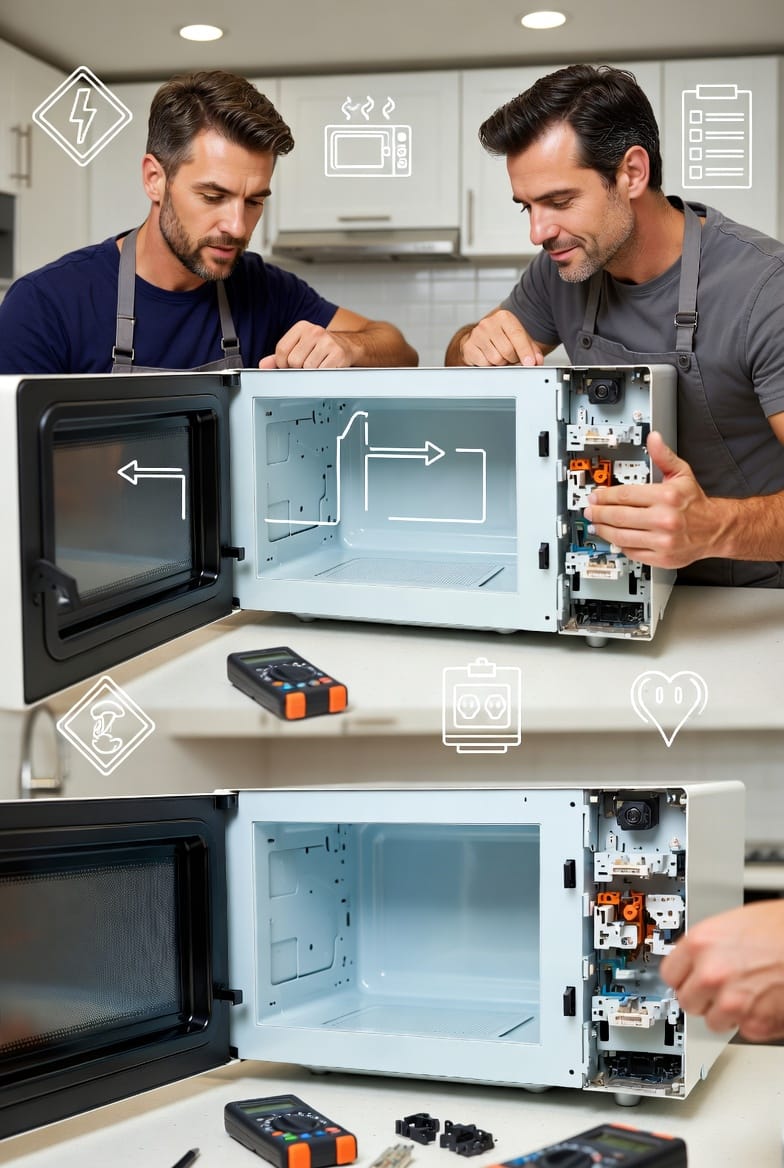
Replacing a microwave door interlock switch requires more than just swapping parts. Technicians must:
- Safely discharge the high-voltage capacitor.
- Remove the outer cabinet with care.
- Access the switch assembly behind the control panel or at the door latch area.
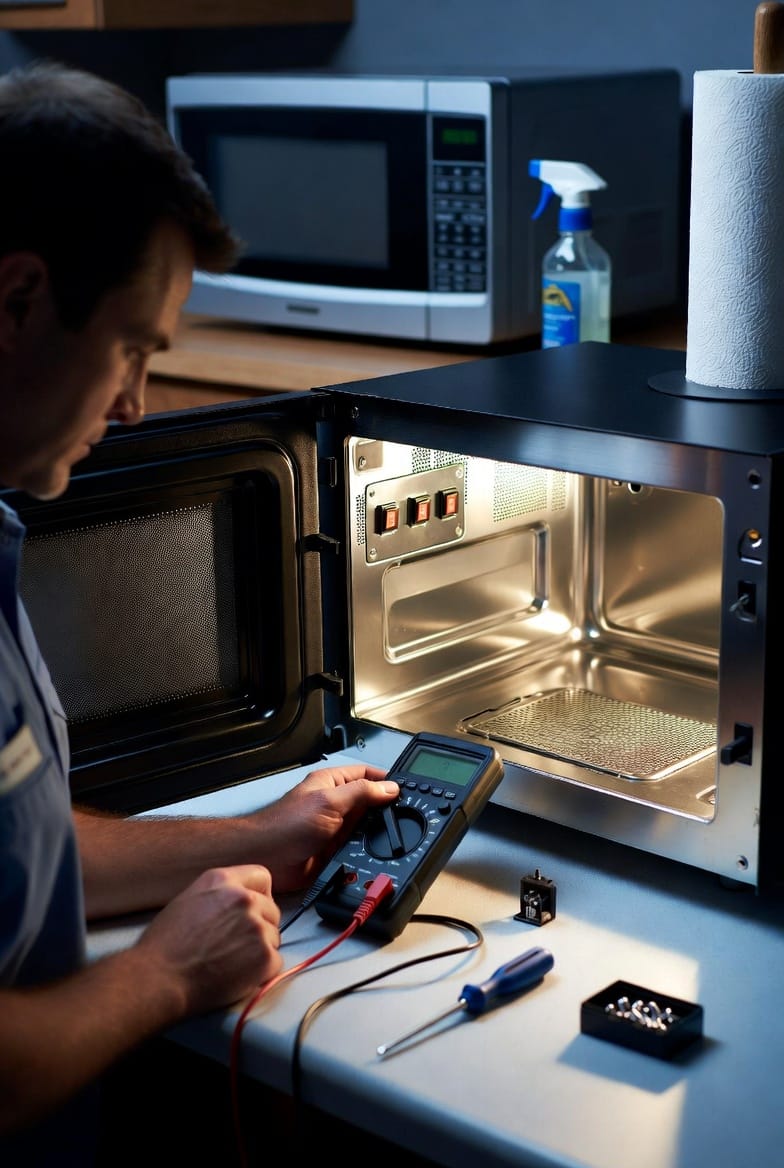
- Test each switch individually with a multimeter for continuity in both open and closed positions.
- Install exact OEM or high-quality compatible switches.
- Verify proper mechanical alignment so the door hooks engage all switches in the correct sequence.
- Perform a full operational test, checking for proper start/stop behavior and no unexpected operation with the door open.
This level of precision ensures long-term reliability and maintains the original safety certifications of your appliance.
Attempting replacement without proper training and tools often leads to misaligned switches, persistent fuse blowing, or incomplete safety restoration. Professional service eliminates these worries.
Step-by-Step Professional Repair Process
When you call us for microwave door switch replacement, here's what you can expect:
- Initial Assessment — We listen to your description of the symptoms and perform a visual inspection.
- Safety First — The unit is unplugged and fully discharged.
- Diagnostic Testing — Each interlock switch is tested for proper function.
- Precise Replacement — Faulty switches are replaced with new ones, ensuring correct orientation.
- Reassembly and Alignment — The door mechanism is checked and adjusted for smooth operation.
- Comprehensive Testing — Multiple cycles confirm the microwave starts only when the door is securely closed and stops immediately when opened.
- Final Safety Check — We verify no radiation leakage risks and educate you on proper usage.
This methodical approach restores your microwave to safe, efficient performance.
Common Causes of Door Switch Failure
Several factors contribute to premature wear of the microwave safety interlock:
- Frequent Use — Households that rely heavily on their microwave experience faster mechanical fatigue.
- Door Slamming — Habitual forceful closing stresses the latch and switch actuators.
- Misalignment Over Time — Normal wear on door hinges causes the hooks to engage switches unevenly.
- Manufacturing Defects or Age — Switches in older units naturally degrade after years of service.
- Power Surges — Electrical fluctuations can damage sensitive contacts.
- Moisture or Food Debris — Buildup inside the door area can interfere with switch movement.
Understanding these causes helps prevent future issues. Simple habits like gently closing the door and keeping the seal area clean extend the life of your appliance.
Choosing Reliable Replacement Parts
Not all switches are created equal. We recommend using switches that match the exact specifications for your microwave model. Generic or low-quality parts may fit physically but fail to provide the same safety margins or longevity.
Professional repair services source high-quality components and maintain detailed records of compatible parts for popular brands. This attention to detail ensures your repaired microwave meets or exceeds original performance standards.
Maintaining Your Microwave for Long-Term Safety
After successful door switch replacement, follow these best practices:
- Always press the stop/cancel button before opening the door during operation.
- Close the door gently rather than slamming it.
- Keep the door seal and latch area clean and free of food residue.
- Schedule periodic professional inspections for older appliances.
- Never attempt to bypass any safety features.
- Pay attention to unusual sounds or behaviors and address them promptly.
These simple steps, combined with expert service when needed, keep your microwave functioning safely for years.
The Reassuring Benefits of Professional Service
Choosing a qualified technician for your microwave repair offers multiple advantages:
- Expert Diagnosis that identifies related issues you might miss.
- Proper Tools and Safety Equipment to handle high-voltage components confidently.
- Warranty on Parts and Labor providing peace of mind.
- Time Savings — Get back to normal quickly without trial-and-error.
- Safety Assurance — Verified restoration of all interlock functions.
We take pride in delivering reliable repairs that homeowners can trust. Our focus remains on your family's safety and the longevity of your appliances.
Addressing Common Homeowner Concerns
Many customers ask: "Is it worth repairing, or should I just buy a new microwave?"
For most cases involving door switch failure, professional replacement is significantly more cost-effective than purchasing a new unit. The repair restores full functionality while preserving the appliance you already know and trust.
Another frequent question involves DIY feasibility. While some mechanically inclined individuals feel comfortable with basic appliance repairs, the high-voltage nature of microwaves makes professional service the wiser choice for safety interlock work.
We also hear concerns about recurring problems. When the entire switch assembly is properly aligned and tested, repeat failures become rare. Our technicians often replace all three switches as a set during service to ensure balanced performance.
Real-World Examples from Our Service Calls
In one recent case, a family noticed their microwave fan running with the door slightly ajar. Upon inspection, the secondary interlock switch had worn contacts, and the monitor switch was beginning to show stress. After precise replacement and alignment, the unit operated flawlessly, restoring confidence for daily use.
Another household experienced repeated fuse blowing whenever the door was opened during cooking. The primary switch had developed inconsistent contact. Our team replaced the full set, performed calibration, and provided usage tips that prevented future issues.
These examples highlight how early professional intervention resolves problems efficiently and safely.
Why Safety Should Always Come First
Faulty door switches represent a preventable safety hazard. The potential for microwave radiation exposure or electrical complications makes timely repair essential. Delaying service in hopes that the problem will resolve itself is never recommended.
Our authoritative recommendation remains clear: if you observe any signs of door interlock failure, discontinue use immediately and contact a qualified technician.
Final Thoughts and Next Steps
The microwave door switch plays a silent but crucial role in your daily routine. When it fails, the risks far outweigh any temporary inconvenience of seeking repair.
By understanding how the safety interlock system works and recognizing early warning signs, you empower yourself to act responsibly. Professional replacement ensures the job is done correctly, restoring both performance and protection.
Faulty door switches are a safety hazard. Do not take chances with your family's well-being.
We are here to help with expert diagnosis, quality parts, and reassuring service that gets your kitchen back to normal safely and efficiently.
Professional Microwave Interlock Repair – Call Now