The Maple Flooring Durability: Understanding Janka Hardness
Choosing the right hardwood flooring for your home or commercial space requires more than simply admiring the grain or color. Durability stands as the single most important performance factor that determines how well your floors will withstand daily life for decades. Among all the metrics used to evaluate wood strength, one stands out as the industry standard: the Janka hardness rating. This key performance metric provides a clear, measurable way to understand a wood’s resistance to denting and surface damage.
Call Now for Expert Maple Flooring Options
Hard maple consistently ranks among the most reliable choices for high-traffic environments precisely because of its impressive Janka hardness score of 1450. In the following guide, we explore exactly what this number means, how it is determined, how maple compares to other popular species, and why it remains a preferred solution for homeowners and facility managers who demand long-lasting performance.
What Janka Hardness Actually Measures
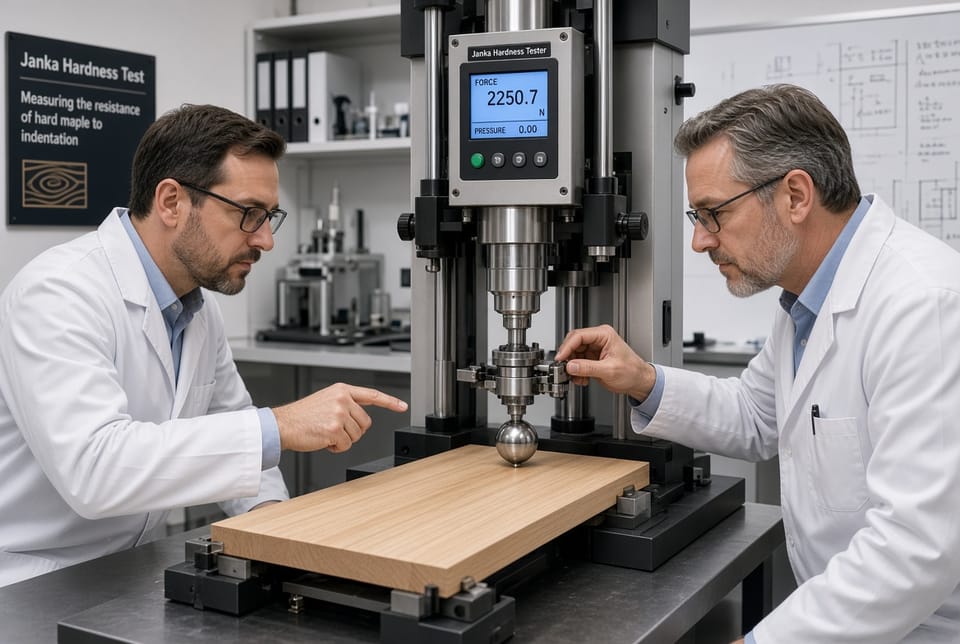
The Janka hardness test quantifies a wood species’ resistance to denting and wear. Developed more than a century ago, the method remains the most widely accepted standard in the flooring industry. In practical terms, the test measures the force required to embed a steel ball with a diameter of 0.444 inches exactly halfway into a sample of wood. The resulting number, expressed in pounds-force (lbf), becomes the official Janka hardness rating.
A higher rating indicates greater resistance to indentation from furniture legs, dropped objects, pet claws, and foot traffic. It does not measure every aspect of durability—such as resistance to scratching from grit or moisture-related movement—but it remains the most reliable single indicator of how well a floor will hold up under normal mechanical stress.
When you see a Janka hardness value listed for any hardwood, you are looking at a controlled laboratory measurement that allows direct comparison between species. This standardization removes guesswork and helps you match the right wood to the right application.
How the Janka Test Is Performed
The procedure follows strict protocols. A clear sample of kiln-dried wood is placed under a hydraulic or mechanical press fitted with the standardized steel ball. Force is applied gradually until the ball penetrates to a depth equal to half its diameter. The peak force recorded at that moment becomes the official rating. Multiple samples are typically tested and averaged to account for natural variation within a species.
Environmental conditions, moisture content, and the direction of the grain all influence the result, which is why reputable testing laboratories control these variables carefully. The final published number for each species represents the average performance under these standardized conditions.
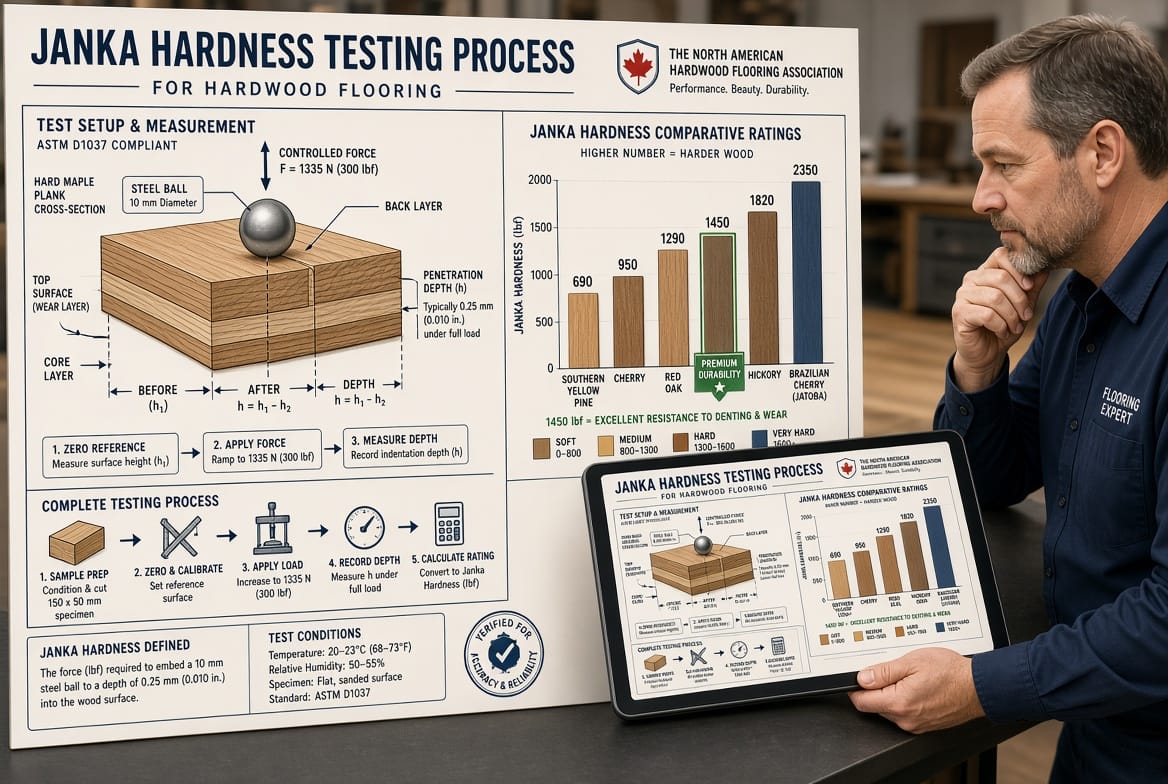
Hard Maple’s Janka Hardness Rating of 1450
Hard maple, also known as sugar maple or rock maple, carries a Janka hardness rating of 1450. This places it firmly in the upper tier of domestic hardwoods commonly used for flooring. The dense cellular structure of the wood, combined with its tight grain pattern, contributes directly to this strong performance.
Because the rating reflects resistance to denting, a floor made from hard maple will better resist the concentrated pressure of chair legs, rolling office chairs, or heavy appliances than softer species. In real-world terms, this means fewer visible marks over years of use and a surface that maintains its smooth appearance longer.
It is important to note that soft maple varieties score significantly lower—often in the 700–950 range—so specifying hard maple is essential when durability is the priority. Reputable manufacturers and installers clearly identify the species to ensure you receive the expected performance.
How Maple Compares to Other Popular Flooring Woods
Understanding relative rankings helps place maple’s 1450 rating in context. Consider these widely used species and their approximate Janka hardness values:
- Red oak: approximately 1290
- White oak: approximately 1360
- Hard maple: 1450
- Hickory: approximately 1820
- Brazilian cherry: approximately 2350
- Pine (various softwoods): typically 380–870
Maple sits comfortably above both red and white oak, the two most common traditional flooring choices in North America. This advantage becomes noticeable in households with active children, pets, or frequent gatherings. While hickory exceeds maple in pure hardness, its more dramatic grain and higher cost make it less suitable for many design preferences. Exotic species such as Brazilian cherry offer even greater hardness but often come with sustainability concerns, higher price points, and installation challenges related to dimensional stability.
For most residential and light-commercial applications, maple’s combination of 1450 hardness, consistent grain, and availability strikes an ideal balance. In gymnasiums and dance studios, hard maple has long been the preferred surface precisely because its rating delivers the necessary resistance to heavy foot traffic and equipment while providing a smooth, uniform playing surface.
Matching Hardness Ratings to Real-World Applications
Different spaces place different demands on flooring. A quiet bedroom experiences far less mechanical stress than a busy kitchen, entryway, or retail showroom. The Janka hardness rating helps guide these decisions:
- Low-traffic areas (bedrooms, formal living rooms) can perform well with woods rated above 1000.
- Medium-traffic zones (family rooms, hallways) benefit from ratings of 1200 and higher.
- High-traffic or commercial spaces (kitchens, offices, gyms) perform best with ratings of 1400 and above.
Hard maple’s 1450 rating positions it solidly in the high-traffic category. Homeowners who select maple for kitchens and main living areas frequently report fewer dents from dropped utensils, appliance movement, and daily activity compared with lower-rated oaks. In commercial settings such as retail stores or medical offices, the same rating contributes to lower long-term maintenance costs because the surface resists the cumulative effects of foot traffic and rolling carts.
Beyond pure hardness, maple offers additional advantages. Its fine, even grain accepts stains uniformly when a colored finish is desired, yet it also looks striking in natural clear finishes that showcase its light, creamy tone. This aesthetic flexibility allows the same durable species to serve both traditional and contemporary design schemes.
Factors That Influence Long-Term Durability Beyond the Janka Number
While the Janka hardness rating provides an excellent baseline, several other elements affect how a maple floor performs over time. Proper installation remains critical. A professional installation that includes correct acclimation, appropriate underlayment, and precise fastening or adhesive application ensures the wood can expand and contract without creating stress points that might later appear as surface damage.
Finish selection also plays a major role. Modern aluminum-oxide or ceramic-fortified polyurethane finishes add an extra layer of abrasion resistance that complements the wood’s inherent hardness. Regular maintenance—sweeping or vacuuming to remove grit, prompt cleanup of spills, and occasional refinishing—extends the life of any hardwood floor, including maple.
Moisture control is equally important. Maple, like all wood, responds to changes in relative humidity. Maintaining indoor humidity between 30 and 50 percent minimizes seasonal movement and helps preserve the tight surface that contributes to dent resistance.
When these best practices are followed, a hard maple floor rated at 1450 routinely delivers decades of reliable service.
Practical Benefits Homeowners and Facility Managers Appreciate
Selecting maple flooring based on its Janka hardness rating delivers tangible advantages:
- Reduced visible denting from everyday impacts
- Longer intervals between refinishing
- Consistent performance across large open areas
- Compatibility with radiant heating systems when properly installed
- Strong resale appeal due to proven durability
Many property owners also value the lighter natural color of maple, which helps interiors feel brighter and more spacious. When a darker appearance is preferred, professional staining techniques can achieve rich tones without sacrificing the underlying hardness of the wood.
Addressing Common Concerns About Maple Flooring
Some prospective buyers worry that harder woods may feel less forgiving underfoot or may be more difficult to install. In practice, modern installation methods and quality underlayments create a comfortable walking surface. Professional installers experienced with maple understand the specific fastening or gluing techniques required and complete the work efficiently.
Another occasional concern involves the availability of consistent material. Reputable suppliers maintain carefully graded inventories of hard maple, ensuring that the boards delivered to your project meet the expected Janka hardness performance and visual standards.
Making the Informed Choice for Lasting Performance
When durability ranks high among your priorities, the Janka hardness rating of 1450 for hard maple offers clear, evidence-based reassurance. This metric, combined with proper installation and routine care, produces floors that resist the ordinary challenges of daily life while retaining their beauty for years. Whether you are updating a family home, outfitting a commercial space, or specifying materials for a high-use athletic facility, maple provides a proven solution that balances performance, aesthetics, and value.

Choosing durable maple flooring is a decision that pays dividends in both appearance and longevity. The Janka hardness rating of 1450 confirms that hard maple stands ready to handle the demands of active households and busy commercial environments alike.
If you are ready to explore the full range of maple flooring options for your next project, our team is prepared to answer every question and guide you through the selection process.
Secure High-Durability Maple Floors – Call Now!