The Low-Voltage Landscape Lighting: Design, Installation, and Safety
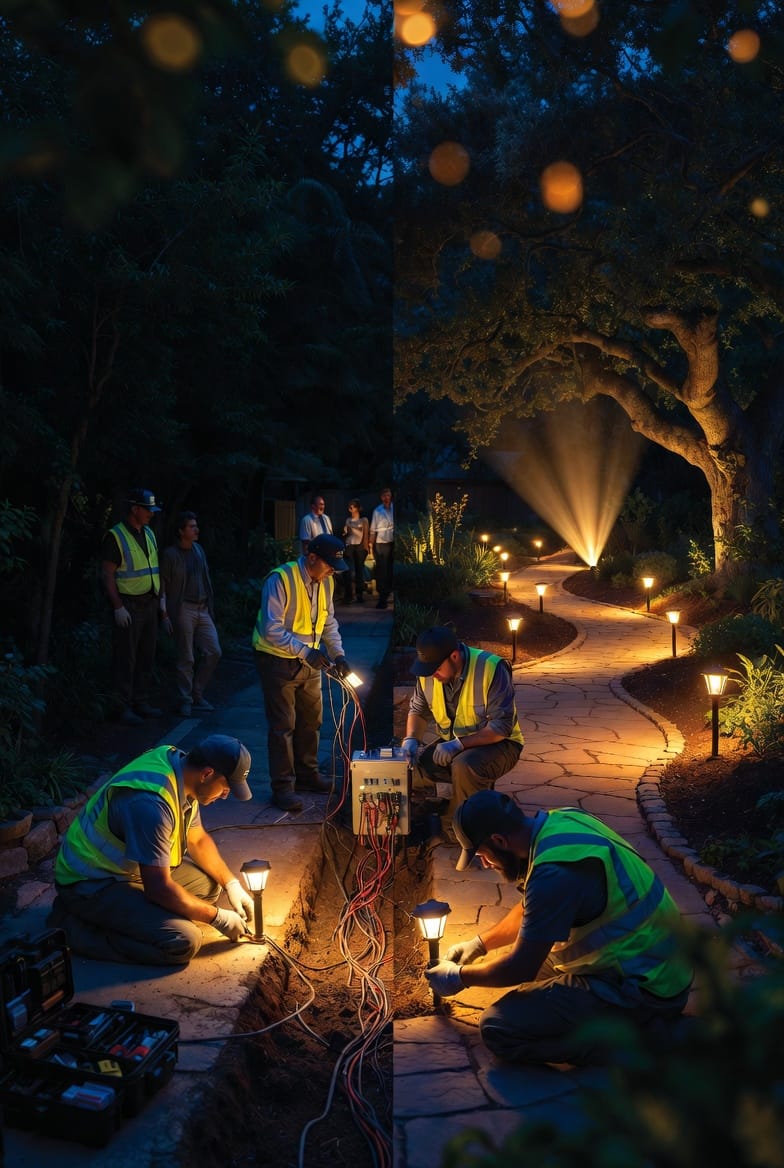
Creating the perfect outdoor ambiance is more than just adding lights — it’s about crafting an inviting, functional, and safe environment that extends your living space well into the evening. Low-voltage landscape lighting has become the gold standard for homeowners who want beautiful illumination without the hazards or complexity of traditional high-voltage systems. Whether you’re highlighting a garden path, accenting architectural features, or flooding a focal point with light, these systems deliver reliable performance while prioritizing safety and energy efficiency.
Call Today for Professional Low-Voltage Landscape Lighting
In this comprehensive guide, we explore everything you need to know about low-voltage landscape lighting — from design principles focused on outdoor ambiance to precise installation techniques and essential safety practices. With the right approach, you can achieve professional-grade results that enhance curb appeal, improve nighttime navigation, and create memorable evenings outdoors. Our expert insights ensure your project is both breathtaking and worry-free.
Why Choose Low-Voltage Systems for Outdoor Ambiance
Low-voltage landscape lighting operates at just 12 volts, transforming how we light outdoor spaces. Unlike standard 120-volt household systems, these setups use a transformer to step down power, delivering gentle, warm illumination that feels inviting rather than harsh. The result? A soft, layered glow that highlights textures, creates depth, and sets the perfect mood for entertaining or relaxing.
Homeowners love low-voltage landscape lighting because it’s incredibly versatile. It can subtly guide guests along pathways, dramatically uplight trees for a natural canopy effect, or wash walls with gentle downlighting. The lower voltage also means cooler-running fixtures, reducing the risk of burns or fire hazards near plants and landscaping materials.
Safety is the biggest advantage. With 12V systems, even if a wire is accidentally cut or exposed, the shock risk is minimal compared to 120V lines. This makes low-voltage landscape lighting ideal for families with children or pets who frequently use the yard after dark.
Understanding 12V vs. 120V Landscape Lighting
When comparing low-voltage landscape lighting options, the difference between 12V and 120V systems is night and day. A 120V system connects directly to your home’s electrical panel and requires licensed electricians for every run, conduit burial at specific depths, and GFCI protection at every outlet. Installation is labor-intensive, costly, and permanent.
In contrast, 12V low-voltage systems are transformer-based. A single weatherproof transformer plugs into a standard outdoor outlet and powers the entire layout. Wires are thin, flexible, and can be buried just a few inches deep — no heavy conduit required. This flexibility allows easy adjustments as your landscape matures.
12V systems also consume far less energy, lowering utility bills while delivering the same luminous output through efficient LED fixtures. Most importantly, they align with modern safety standards, giving homeowners peace of mind that their outdoor oasis meets the highest protection levels.
Planning Your Landscape Lighting Design for Maximum Ambiance
Successful low-voltage landscape lighting starts with thoughtful design. Begin by walking your property at dusk to identify key areas: entry paths, gathering spaces, architectural highlights, and garden focal points. The goal is layered lighting — combining functional path lights with artistic accent and flood options.
Consider fixture spacing carefully. Path lights work best every 6 to 10 feet along walkways for even coverage without glare. Accent lights should be positioned 4 to 6 feet from the base of trees or shrubs, angled upward for dramatic silhouettes. Flood lights provide broader washes for larger areas like driveways or retaining walls.
Design tip: Use a mix of light temperatures (warm 2700K for cozy ambiance, cooler 3000K for crisp highlights) to create visual interest. Always plan for future growth — plants expand, so leave room for fixtures to be relocated without rewiring.
Selecting the Right Fixture Types
Choosing fixtures is where your low-voltage landscape lighting vision truly comes alive. Here are the most popular options:
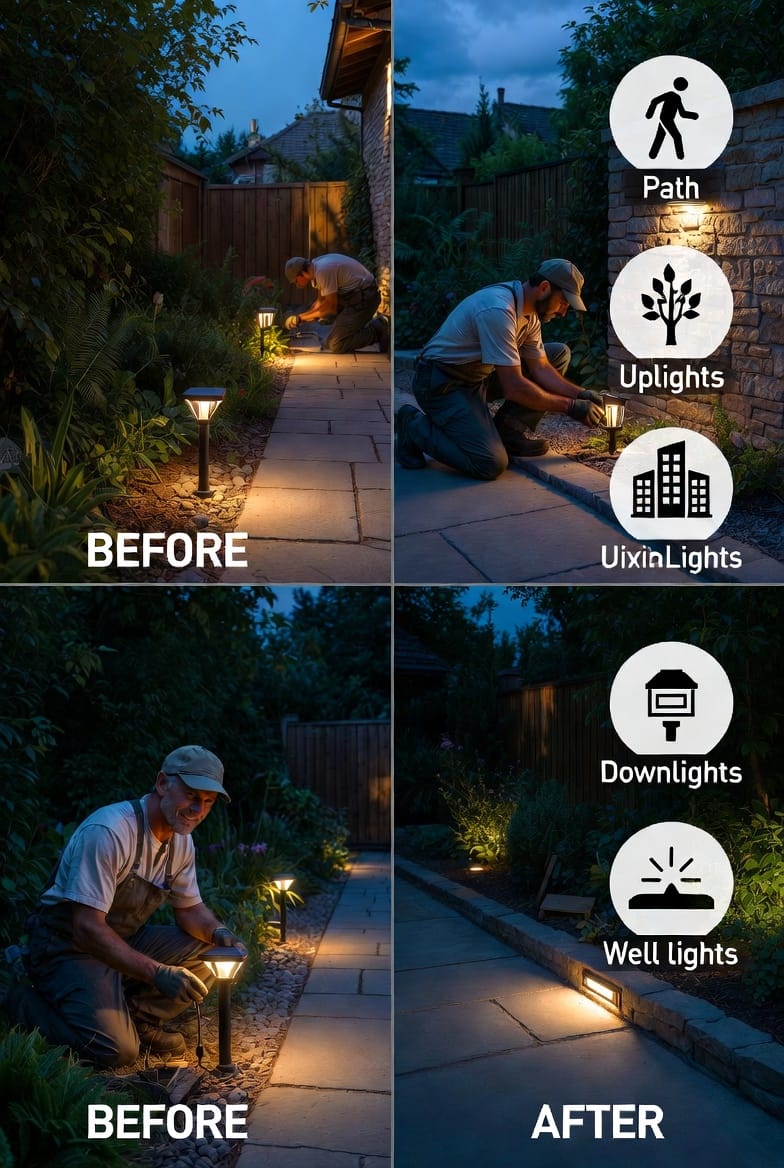
- Path lights: Ideal for guiding foot traffic along walkways and garden borders. They cast gentle downward illumination that prevents tripping while adding charm.
- Accent lights: Focused beams that spotlight trees, statues, or water features. Uplighting creates depth and drama against the night sky.
- Flood lights: Wider beams perfect for illuminating larger surfaces like fences, walls, or flowerbeds. They deliver even coverage for security and ambiance.
- Well lights: Recessed in-ground fixtures that provide upward glow without obstructing views — excellent for driveways and low-profile areas.
Each type uses durable materials like brass, copper, or composite to withstand weather. LED bulbs ensure long life and minimal maintenance, making your investment last for years.
Transformer Sizing and Wiring Essentials
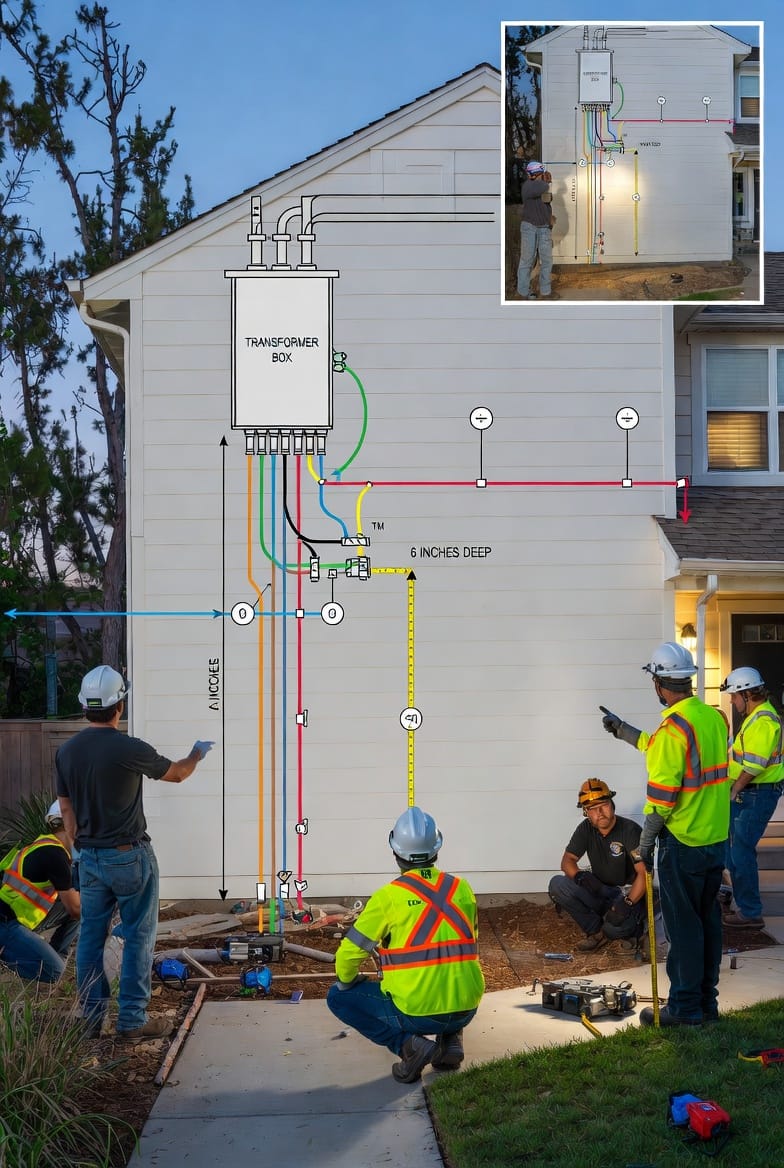
Proper transformer sizing is critical for reliable performance. Calculate total wattage by adding the wattage of every fixture, then choose a transformer rated at least 20% higher to handle peak loads and future additions. For example, ten 5-watt LED path lights require a minimum 60-watt transformer — we recommend an 84-watt model for safety margin.
Place the transformer within 10 feet of a GFCI-protected outdoor outlet, ideally hidden behind shrubs but accessible for maintenance. Use 12-gauge wire for runs under 100 feet and 10-gauge for longer distances to minimize voltage drop.
Key practice: Loop wiring through fixtures rather than daisy-chaining end-to-end. This ensures consistent brightness across the entire system and simplifies troubleshooting.
Step-by-Step Safe Installation Practices
Installing low-voltage landscape lighting is straightforward when you follow proven safety steps. Always turn off power at the outlet before connecting the transformer. Lay out all fixtures and wiring in their final positions before digging — this prevents costly rework.
Bury cable 6 inches deep using a flat shovel or cable plow. Secure fixtures with stakes and angle them precisely for the desired effect. Connect wires using waterproof gel-filled connectors that resist corrosion. Test the entire system at each stage to catch issues early.
Professional installers emphasize personal protective equipment and weatherproofing every connection. When done correctly, your system will operate flawlessly for decades with minimal upkeep.
Common Risks and How to Avoid Them
Even with low-voltage landscape lighting, certain risks exist if shortcuts are taken. Overloaded transformers can overheat and fail prematurely — always oversize by 20%. Poor wire connections lead to flickering or complete outages; use only marine-grade connectors.
Voltage drop across long runs dims distant fixtures — counter this with heavier gauge wire or multiple transformers. Water intrusion is another concern; ensure all junction points are sealed and elevated above potential flooding.
By partnering with experienced professionals, these risks are virtually eliminated. Expert teams bring calibrated tools, years of field knowledge, and a commitment to safety that DIY approaches simply cannot match.
Maintenance Tips for Long-Term Performance
Once installed, low-voltage landscape lighting requires little effort to stay beautiful. Inspect fixtures seasonally for dirt buildup or plant overgrowth. Replace LED bulbs only when needed — most last 50,000 hours. Check transformer connections annually and clear debris from vents.
Winter preparation includes unplugging the system in freezing climates or using weatherproof covers. These simple habits keep your outdoor ambiance glowing reliably year after year.
Elevating Your Outdoor Living Experience
Low-voltage landscape lighting does more than illuminate — it creates an extension of your home where memories are made. From intimate dinner parties under softly lit trees to safe navigation for late-night arrivals, the right design transforms any yard into a personal sanctuary.
When you invest in professional landscape lighting design and installation, you gain not just lights but confidence. Every connection is secure, every beam perfectly placed, and every safety standard exceeded.
Safe & Beautiful Landscape Lighting – Get Your Free Design Consultation