The Low-Mileage Discount: Saving Money When You Drive Less

In today’s evolving world of remote work, flexible schedules, and changing lifestyles, many drivers find themselves behind the wheel far less often than in previous years. Yet a surprising number of policyholders continue to pay insurance premiums calculated on higher annual mileage assumptions. This is where the low-mileage discount becomes one of the most practical and underutilized tools for reducing auto insurance costs. Understanding how this common discount works, the mileage thresholds insurers typically recognize, the typical savings available, and the exact steps required to qualify can put meaningful money back into your pocket without sacrificing essential coverage.
Unlock Your Low-Mileage Discount – Call Now!
The principle is straightforward and reassuring: insurance companies price policies partly according to risk exposure. The more miles a vehicle travels, the greater the statistical likelihood of an accident, claim, or liability event. When you drive significantly less, that risk profile improves. Forward-thinking insurers respond by offering low-mileage discounts that reward safer, lower-usage patterns. These discounts are not obscure loopholes or temporary promotions; they are established rating factors built into many modern underwriting models.
How Insurers Structure Low-Mileage Discounts
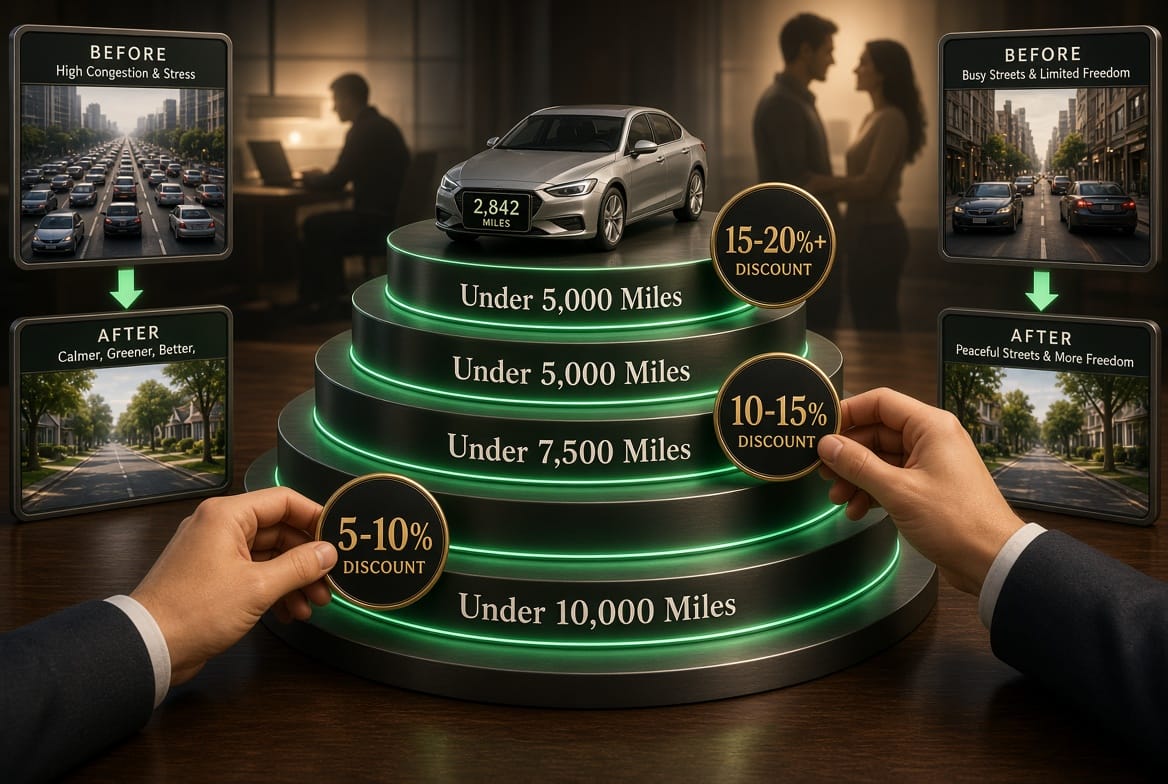
Most major carriers evaluate annual mileage in clearly defined tiers. The two most frequently referenced thresholds are under 7,500 miles per year and under 5,000 miles per year. Some companies introduce an intermediate band around 7,500 to 10,000 miles, while others reserve their strongest discounts for the lowest usage category. The exact cutoffs and percentage reductions vary by insurer, state regulations, and individual risk characteristics, yet the core logic remains consistent across the industry.
Drivers who keep annual mileage under 7,500 commonly see premium reductions in the range of 5 percent to 15 percent on the liability and collision portions of their policy. Those who stay under 5,000 miles often unlock higher savings, frequently reaching 10 percent to 20 percent or more, depending on the carrier’s specific program. In certain competitive markets and for preferred-risk profiles, combined discounts can climb even higher when low mileage is paired with other favorable factors such as a clean driving record or multi-policy bundling.
These figures represent typical savings observed across standard personal auto policies. Actual dollar amounts depend on your base premium. A driver currently paying $1,800 annually might save between $90 and $360 simply by documenting lower usage. For households with multiple vehicles, the cumulative effect can become substantial. The key point is reassuring: you are not required to eliminate driving entirely. Moderate, intentional reductions in annual miles are often enough to cross a meaningful threshold.
Qualifying for the Low-Mileage Discount
Eligibility rests on two practical requirements: accurate verification of mileage and timely policy updates. Insurers do not rely solely on self-reported estimates. They employ several reliable methods to confirm actual usage.
- Odometer readings submitted at policy inception or renewal
- Periodic photo or video documentation of the dashboard mileage
- Telematics devices or mobile apps that track real-world driving data
- Service records or annual inspection reports that note odometer figures
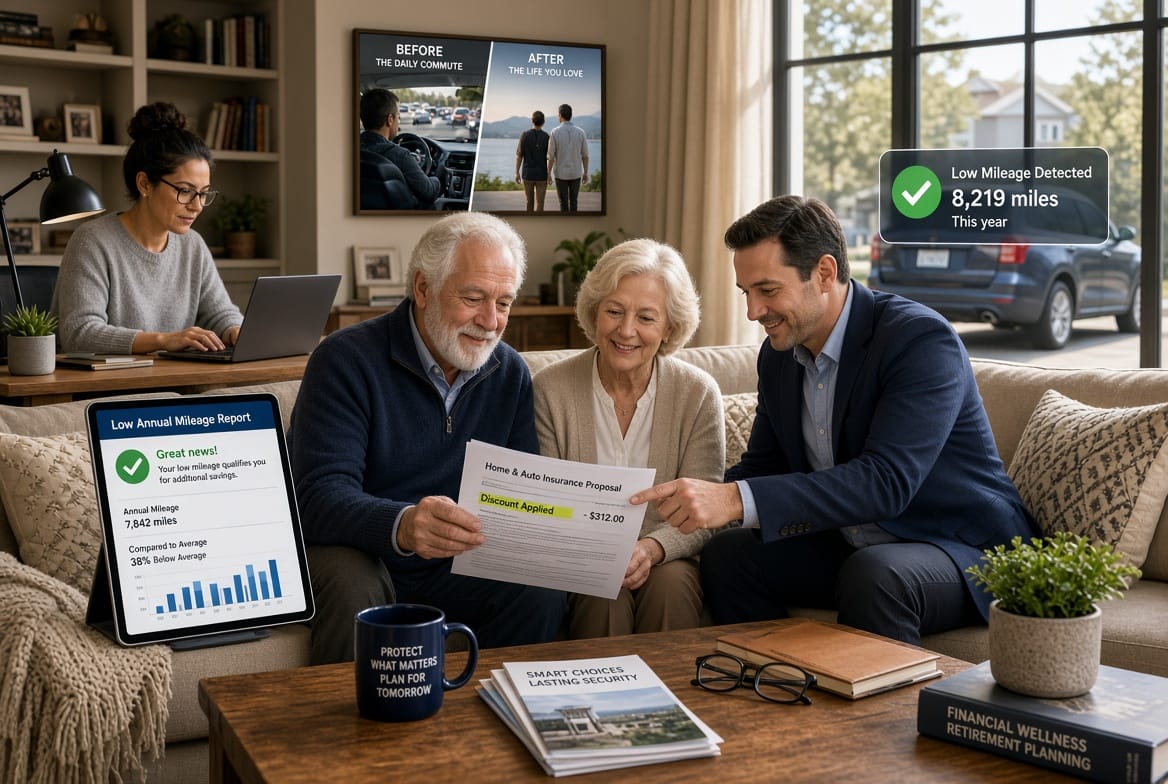
The most common and accessible approach begins with a simple conversation. Contact your insurance representative, request a review of your current mileage classification, and provide supporting evidence. Many carriers will accept a clear photograph of the odometer taken on a specific date, accompanied by a signed statement of estimated annual miles. Others may ask for a short observation period using an app or plug-in device. Once verified, the low-mileage discount is applied at the next renewal or, in many cases, mid-term with a corresponding premium adjustment and refund of any overpaid amount.
Updating your policy is equally important. Life changes—switching to remote work, retiring, relocating closer to essential services, or simply driving less by choice—should trigger an immediate review. Leaving an outdated high-mileage rating in place means continuing to subsidize risk you no longer present. A proactive update ensures the premium accurately reflects current reality.
Situations That Commonly Qualify for Lower Mileage Ratings
Certain life circumstances naturally produce lower annual driving totals and therefore align well with low-mileage discount criteria. Recognizing these situations helps policyholders identify opportunities they may have overlooked.
- Remote or hybrid work arrangements: Employees who no longer commute daily frequently drop from 12,000–15,000 miles per year into the under-7,500 or under-5,000 range.
- Retirement: Many retirees shift from daily work travel to occasional leisure or errand driving, resulting in substantial mileage reductions.
- Multiple-vehicle households: When a family maintains more cars than active daily drivers, individual vehicles often accumulate fewer miles; insurers may evaluate each vehicle separately.
- Urban living with strong public transit or walkability: Residents who rely on alternative transportation for routine trips keep personal vehicle usage low.
- Seasonal or secondary vehicles: Cars used primarily for weekends, vacations, or specific seasons can qualify for reduced-mileage rating if annual totals stay below the threshold.
In each of these cases the underlying risk reduction is genuine. Insurers respond accordingly when the lower usage is properly documented. The process remains transparent and policyholder-friendly: provide the evidence, request the adjustment, and receive the corresponding rate credit.
Additional Considerations and Best Practices
While the low-mileage discount is powerful, it functions within a broader pricing framework. Insurers still evaluate driving record, vehicle type, location, coverage limits, and claims history. A clean record amplifies the value of the mileage credit; a recent at-fault claim may moderate it. Maintaining continuous coverage and avoiding gaps further strengthens eligibility for preferred rates.
Policyholders should also understand that mileage estimates are reviewed periodically. Significant increases in driving—returning to a full office commute, for example—should be reported promptly so the rating remains accurate and coverage stays properly aligned with risk. Honesty protects both the insured and the insurer and preserves long-term rate stability.
Telematics programs offered by many carriers provide an elegant modern solution. By voluntarily sharing driving data through a smartphone app or onboard device, policyholders often receive mileage-based discounts automatically, along with potential additional credits for safe habits such as smooth acceleration and limited nighttime driving. These programs remove much of the paperwork burden while delivering transparent, usage-based pricing.
The Financial and Practical Advantages
Beyond the immediate premium reduction, adopting a lower-mileage approach yields secondary benefits. Reduced wear on the vehicle extends its service life and lowers maintenance costs. Fewer miles generally correlate with fewer opportunities for accidents, supporting a stronger long-term claims history. Environmentally conscious drivers also appreciate the smaller carbon footprint that accompanies intentional reductions in travel.
From a pure financial perspective, the math is compelling. Over a five-year ownership period, consistent application of a 10–15 percent low-mileage discount can accumulate into four-figure savings for many households. Those savings can be redirected toward higher deductibles (further lowering premiums), enhanced coverage limits, or entirely different financial goals. The discount does not require lifestyle sacrifice; it simply ensures you are not charged for miles you no longer drive.
Taking the Next Step with Confidence
The process of securing a low-mileage discount is designed to be accessible and straightforward. Begin by gathering recent odometer evidence or enabling a telematics option if available. Then speak with a knowledgeable representative who can review your current classification and apply the appropriate adjustment. Most carriers complete the evaluation quickly, and any resulting credit appears on the next billing cycle or as a mid-term endorsement.
You do not need to become an insurance expert to benefit. The fundamental rule is simple and reassuring: accurate information about your actual driving habits produces fairer pricing. When annual mileage falls under 7,500 or especially under 5,000, the majority of competitive insurers stand ready to recognize that reduced exposure with a tangible rate reduction.
Do not continue paying for miles you do not drive. A brief conversation can confirm whether your current policy already reflects your lower usage or whether an update will unlock immediate savings. For personalized guidance on low-mileage discounts and a no-obligation review of your auto insurance options. Experienced advisors are prepared to walk you through verification steps, explain available tiers, and ensure your coverage remains both comprehensive and cost-effective.
In an era when many drivers have permanently altered their travel patterns, the low-mileage discount stands as a clear, practical response from the insurance industry. By verifying your actual annual miles, updating your policy, and claiming the credit you have earned, you align your premium with reality and keep more of your hard-earned money where it belongs—working for you.
Stop Paying for Miles You Don’t Drive – Call Now!