The Lighting Control Panel: Centralized Lighting Management
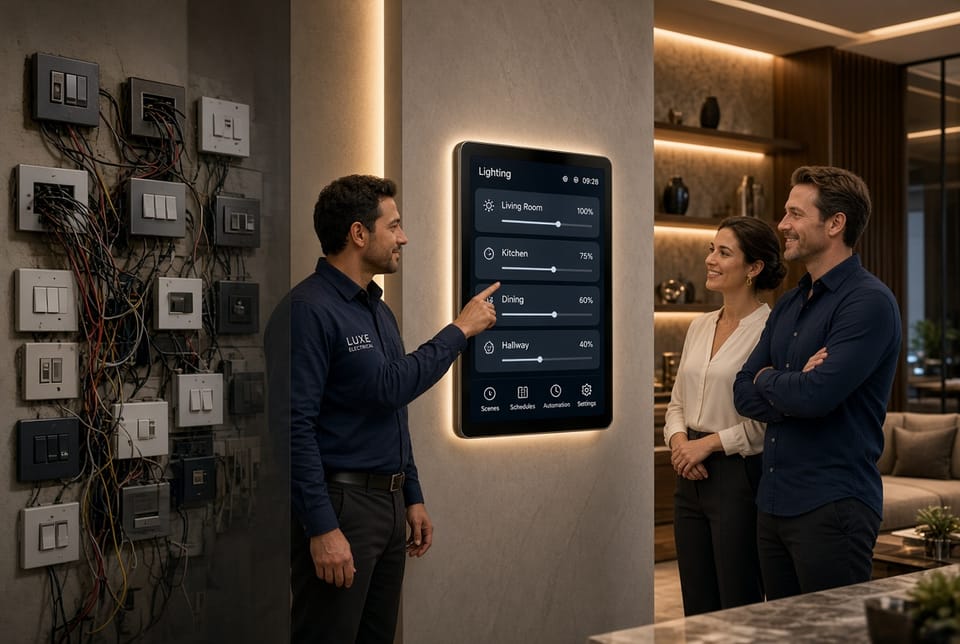
In today’s connected homes and commercial spaces, the ability to manage illumination with precision has moved far beyond simple on-off switches. A lighting control panel stands as a defining modern convenience, transforming how light is experienced, conserved, and secured. This centralized system gathers every lighting circuit under one intelligent hub, replacing scattered switches and timers with unified command. Homeowners and facility managers who adopt it gain effortless mastery over brightness, timing, and atmosphere while achieving measurable gains in efficiency and safety.
Get Centralized Lighting Installed Today – Call Now!
Understanding Centralized Control of Multiple Lighting Circuits
At its core, a lighting control panel centralizes control of multiple lighting circuits. Traditional setups require individual wall switches for each zone—kitchen, hallway, exterior, conference room—creating visual clutter and operational inefficiency. The panel consolidates these circuits into a single intelligent interface, typically wall-mounted or rack-mounted, that communicates with relays, dimmers, and smart modules throughout the building.
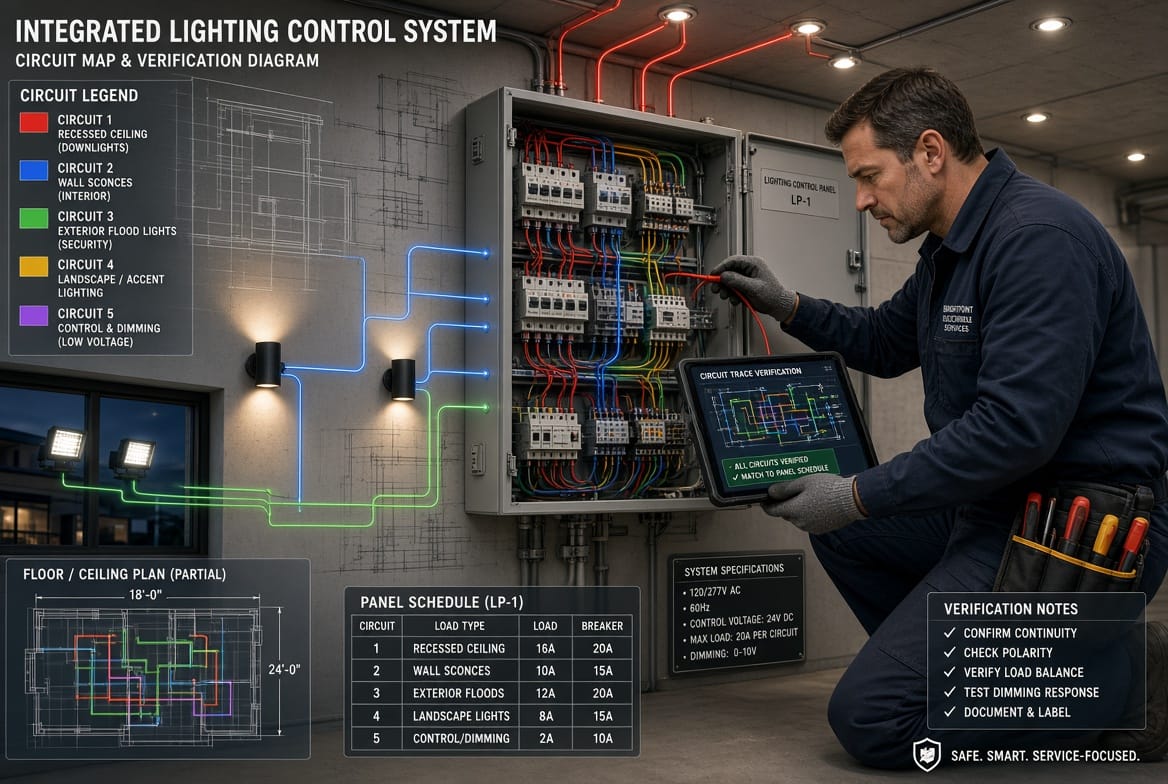
Electricians wire lighting loads back to the panel, where modular breakers or solid-state relays handle switching and modulation. The system then accepts input from a touchscreen, keypads, mobile apps, or voice assistants. Once configured, a single command can raise or lower dozens of fixtures simultaneously. This architecture eliminates the need to walk room to room, ensuring consistent illumination levels and reducing the risk of lights left on accidentally.
The technology supports both low-voltage control wiring and wireless protocols, allowing retrofit installation in existing structures as well as new construction. By treating lighting as an integrated network rather than isolated points, the panel becomes the nerve center of environmental management.
Essential Features That Define Modern Performance
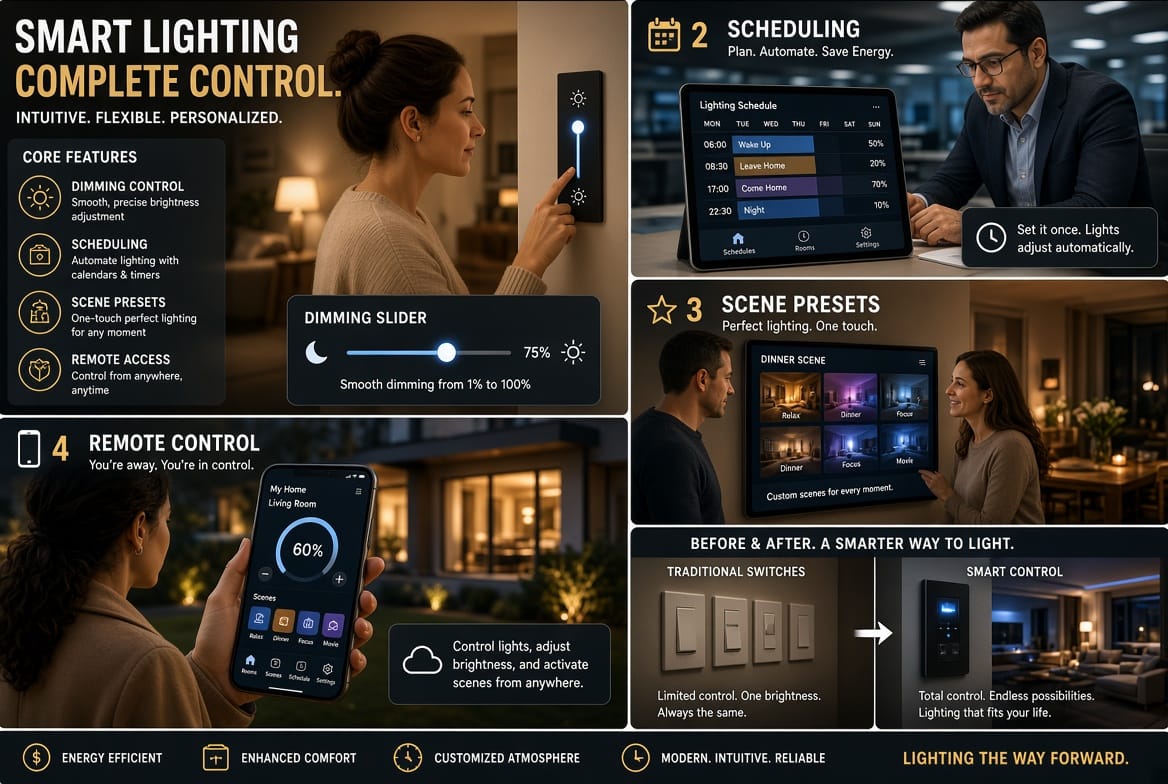
Contemporary lighting control panels incorporate a suite of sophisticated capabilities designed for both residential elegance and commercial reliability. Key among them are dimmers, scheduling, scenes, and remote access.
- Dimming control delivers smooth, continuous adjustment of light intensity. Advanced panels use trailing-edge or leading-edge dimming compatible with LED, halogen, and fluorescent loads, preventing flicker and extending lamp life. Users set precise percentages for task lighting, ambient glow, or energy-conserving night modes.
- Scheduling automates daily and seasonal patterns. Sunrise-to-sunset routines, occupancy-based triggers, and holiday overrides ensure lights activate only when needed. Astronomical clocks adjust automatically for changing daylight hours, removing the guesswork of manual timers.
- Scene programming creates instant atmospheres with a single press. A “Dinner” scene dims dining-area fixtures to 40 percent while raising accent lighting; a “Presentation” scene focuses conference-room spots and extinguishes peripheral sources; an “Away” scene simulates occupancy for security. Scenes store both intensity and color-temperature values where tunable-white or RGB fixtures are present.
- Remote control extends authority beyond the physical panel. Secure cloud or local-network apps allow adjustment from any smartphone or tablet. Integration with building-management systems further enables facility-wide oversight from a central desk.
Additional refinements include occupancy and daylight sensors that feed real-time data back to the panel, automatic load shedding during peak-demand periods, and diagnostic logging that alerts technicians to failing drivers or circuit faults before outages occur.
Tangible Benefits: Energy Savings, Convenience, and Security
The practical advantages of a lighting control panel extend well beyond novelty. Three primary benefits—energy savings, convenience, and security—deliver measurable return on investment and elevated quality of life.
Energy savings arise from precise control and automation. Studies of comparable installations consistently show 30–60 percent reductions in lighting electricity use once dimming, scheduling, and daylight harvesting are active. By lowering intensity during unoccupied periods and matching output to available natural light, the system avoids the waste inherent in all-or-nothing switching. Over a year, the cumulative kilowatt-hour reduction often offsets a substantial portion of the installation cost, particularly in commercial settings with long operating hours.
Convenience transforms daily interaction with the built environment. Residents no longer hunt for switches in dark rooms or remember to extinguish exterior lights at bedtime. Guests navigate illuminated pathways that activate automatically. Facility staff adjust an entire floor’s ambiance from a single interface rather than touring dozens of locations. The result is smoother workflows, reduced frustration, and a polished impression for visitors.
Security receives a quiet yet powerful upgrade. Programmable scenes that mimic normal occupancy patterns deter opportunistic intrusion when a property is vacant. Exterior lighting can be sequenced to eliminate dark zones without remaining fully illuminated all night, balancing visibility against energy use. Integration with alarm systems allows lights to flash or rise to full brightness upon detection of unauthorized entry, providing both deterrence and clearer surveillance footage.
These benefits compound over time. Lower energy bills free budget for other priorities, convenience encourages consistent use of the system’s full capabilities, and enhanced security contributes to peace of mind and potentially lower insurance premiums.
Installation Considerations and Professional Best Practices
Successful deployment begins with a thorough site assessment. A qualified electrician maps existing circuits, evaluates load capacities, and determines whether low-voltage control wiring or wireless nodes offer the most efficient path. In retrofit projects, wireless modules often minimize drywall disruption while still delivering full panel functionality.
Panel location matters. Placement near the main electrical distribution board shortens high-voltage runs, while a secondary touchscreen in a high-traffic area improves daily accessibility. Proper grounding, surge protection, and labeling of every circuit ensure long-term reliability and simplify future service.
Commissioning follows physical installation. Technicians program zones, calibrate dimming curves, set schedules, and create initial scenes tailored to the occupants’ routines. Training sessions familiarize users with the interface so the system’s potential is fully realized from day one. Ongoing firmware updates keep the panel compatible with evolving protocols and security standards.
Comparing Traditional Switching to Centralized Management
Older lighting architectures rely on individual mechanical switches and occasional plug-in timers. Each circuit operates in isolation, requiring physical presence for adjustment and offering no feedback on energy use or lamp health. Scaling such systems to larger properties quickly becomes cumbersome.
A lighting control panel replaces fragmentation with hierarchy. Every circuit reports status to the central unit; commands cascade instantly; analytics reveal usage patterns that guide further optimization. The difference is analogous to managing a fleet of vehicles with individual keys versus a unified fleet-management dashboard—clarity, efficiency, and foresight increase dramatically.
Real-World Applications Across Residential and Commercial Spaces
In residences, the panel elevates everyday living. Morning routines gradually brighten bedrooms and kitchens; evening scenes create inviting social environments; nighttime pathways guide safe movement without harsh overhead glare. Vacation homes benefit especially from remote scheduling that maintains the appearance of occupancy.
Commercial environments multiply these advantages. Office floors shift from bright task lighting during core hours to energy-sipping ambient levels after closing. Retail spaces highlight merchandise with dynamic scenes that change throughout the day. Hotels and restaurants craft signature atmospheres that reinforce brand identity while controlling utility costs. Educational and healthcare facilities use occupancy-based control to maintain appropriate illumination without constant manual oversight.
In each case the underlying principle remains identical: centralized intelligence applied to multiple lighting circuits yields superior outcomes.
Addressing Common Concerns with Authoritative Clarity
Prospective owners sometimes worry about complexity or reliability. Modern panels are engineered for intuitive operation; once scenes and schedules are set, daily use requires little more than a single button press or voice command. Redundant power supplies and local processing ensure continued function even if internet connectivity is interrupted. Professional installation further guarantees code compliance and long-term stability.
Cost is another frequent consideration. While the initial investment exceeds that of basic switches, the combination of energy savings, reduced maintenance, and enhanced property value typically produces a favorable payback period. Many jurisdictions also offer incentives or rebates for energy-efficient lighting upgrades, further improving economics.
Looking Ahead: The Evolving Role of Lighting Intelligence
As buildings become smarter, the lighting control panel continues to expand its role. Integration with HVAC, shading, and occupancy analytics creates holistic environmental systems that optimize comfort and consumption together. Artificial-intelligence modules already beginning to appear can learn usage patterns and suggest refinements automatically. The panel therefore serves not only as a present-day convenience but as a foundational platform for future innovation.
Final Recommendation and Call to Action
The transition from fragmented switches to a unified lighting control panel represents one of the most practical and rewarding upgrades available for any property. By centralizing control of multiple lighting circuits and unlocking features such as dimmers, scheduling, and scenes, owners secure lasting energy savings, unmatched convenience, and stronger security.
Warning: Continuing with outdated, decentralized lighting leaves energy waste, operational friction, and security gaps unaddressed. Upgrade to centralized lighting control before these inefficiencies compound.
Experienced technicians stand ready to design, install, and commission a system tailored precisely to your space, ensuring every circuit performs at its intelligent best.
Enjoy Energy Savings with a Lighting Control Panel – Call Today!