The Lawn Thatch Control: Dethatching Tools and Timing
Maintaining a thick, vibrant lawn is one of the most rewarding aspects of homeownership, yet many property owners overlook a silent threat that can quietly undermine all their hard work. Lawn thatch control stands as a critical management practice that separates average yards from truly exceptional ones. When executed with the right tools and precise timing, dethatching transforms struggling turf into resilient, lush green carpets that resist stress and invite outdoor enjoyment. This comprehensive guide walks you through every essential detail so you can approach the process with confidence and authority.
Get Professional Dethatching – Call Now!
Understanding Thatch: The Hidden Layer Beneath Your Grass
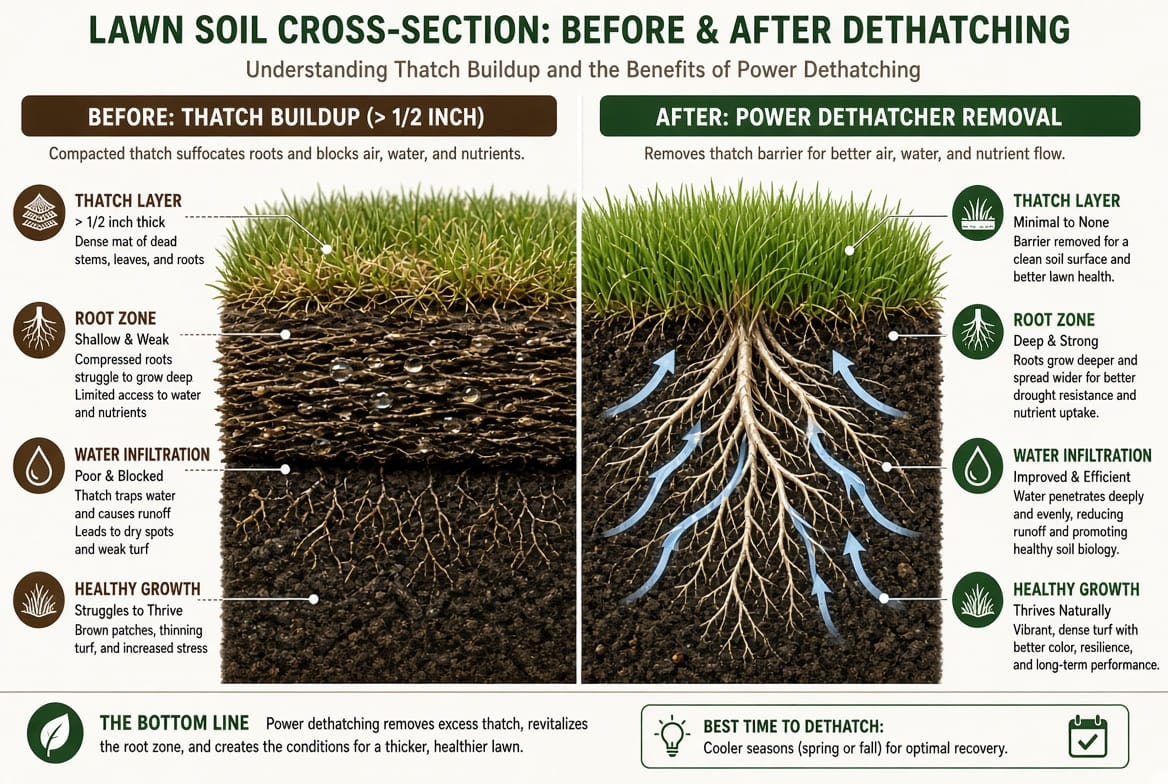
Thatch is a natural accumulation of dead grass stems, roots, and organic debris that settles between the green blades and the soil surface. In modest amounts, this layer can actually benefit the lawn by cushioning foot traffic and moderating soil temperature. However, when the balance tips, thatch shifts from helpful to harmful. Healthy microbial activity in the soil normally breaks down this material at roughly the same rate it forms. Problems arise when production outpaces decomposition, creating a dense, spongy mat that grows thicker over successive seasons.
Imagine a dense felt-like barrier forming just above the soil line. Water, air, and nutrients struggle to penetrate it. Roots stay shallow instead of anchoring deeply. Pests and diseases find ideal hiding places. The result is a lawn that looks acceptable on the surface yet fails under pressure. Recognizing thatch early allows you to intervene before irreversible damage sets in. Regular observation—simply pressing a shovel into the turf and examining the cross-section—reveals the true thickness and condition of this layer.
When Thatch Becomes a Serious Problem
A thatch layer becomes problematic once it exceeds one-half inch in depth. At this threshold, the mat starts blocking essential exchanges between the atmosphere and the root zone. Water from rainfall or irrigation beads on the surface or runs off instead of soaking in. Fertilizer granules sit uselessly on top rather than reaching the soil. Grass roots grow into the thatch itself, where they dry out rapidly during hot weather. The lawn develops a spongy feel underfoot, and mower wheels leave lasting ruts.
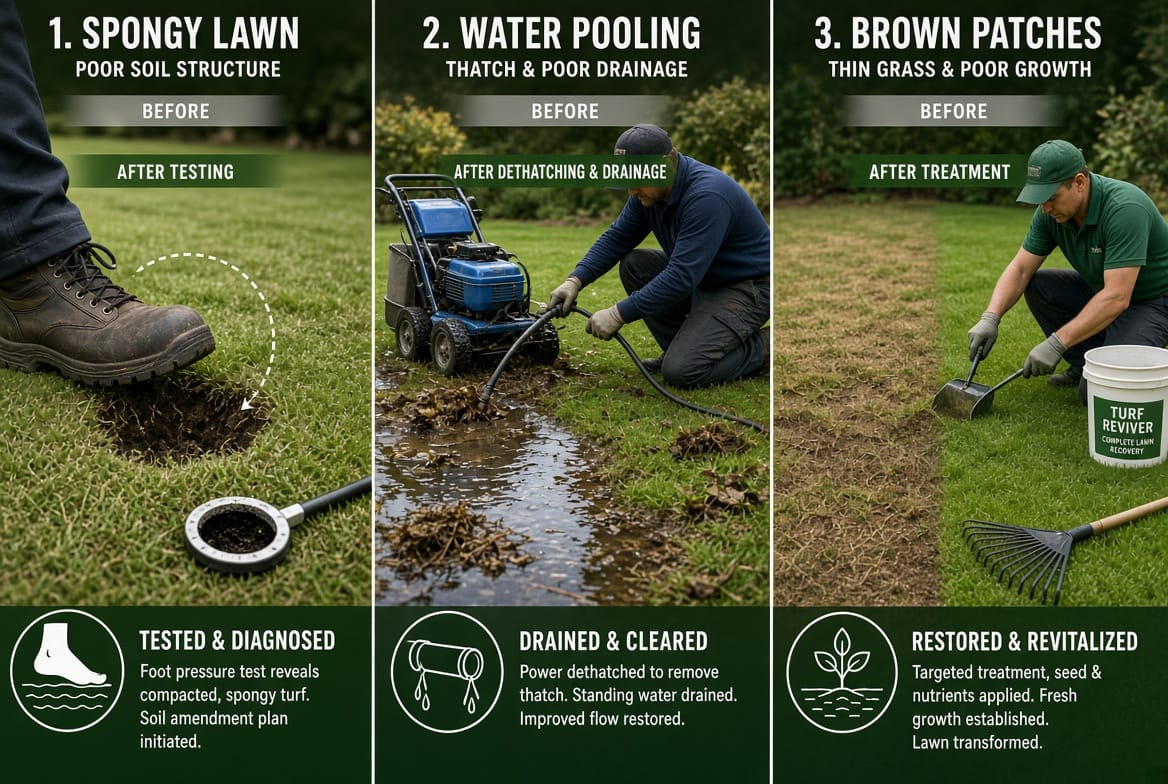
Additional warning signs include water pooling after light rains, irregular brown patches that refuse to green up even with proper watering, and an overall decline in density. Cool-season grasses such as Kentucky bluegrass and fine fescues are especially prone to thatch buildup because of their aggressive rhizome growth. Warm-season varieties like bermudagrass and zoysia can also accumulate thick layers when over-fertilized or mowed too high. Measuring thatch thickness twice a year—once in spring and once in fall—gives you clear data for deciding when action is required. Ignoring the problem only compounds stress during drought, heat, or heavy use, turning a manageable issue into an expensive renovation project.
The Clear Benefits of Effective Thatch Control
Removing excess thatch delivers immediate and long-term rewards. Improved water infiltration means less runoff and more efficient irrigation, reducing both water bills and the risk of fungal disease. Roots dive deeper into the soil, creating a stronger, more drought-tolerant stand. Fertilizer and soil amendments reach their intended targets, maximizing every dollar spent on nutrition. Air circulation around the crown of each plant increases, discouraging pests such as chinch bugs and sod webworms that thrive in thatchy environments.
A properly dethatched lawn recovers faster from wear and tear, whether from children playing, pets running, or occasional parties. Aesthetic appeal rises dramatically: the turf thickens, color deepens, and the surface becomes firm and inviting. Property values benefit as well, because curb appeal hinges heavily on a healthy, well-maintained lawn. By committing to lawn thatch control as a routine practice rather than an emergency response, homeowners protect their investment and enjoy outdoor spaces with far greater peace of mind.
Choosing the Right Dethatching Tools for Every Situation
Selecting the appropriate tool depends on lawn size, thatch severity, and available time. Three primary methods dominate professional and homeowner approaches: manual raking, power dethatching, and vertical mowing. Each offers distinct advantages when matched correctly to the job.
Manual Raking for Light Buildup
A sturdy thatch rake—also called a cavex rake—features sharp, curved tines designed to pull dead material upward without tearing healthy roots. This method suits small lawns or areas with thatch just approaching the half-inch mark. Work in overlapping passes, first in one direction and then perpendicular to the first, lifting the debris into piles for easy collection. Manual raking provides excellent control and costs almost nothing beyond the initial tool purchase. It also doubles as excellent physical exercise. For larger properties or thicker layers, however, the labor becomes exhausting and inefficient. Reserve this technique for touch-ups between heavier mechanical sessions.
Power Dethatchers for Efficient, Thorough Removal
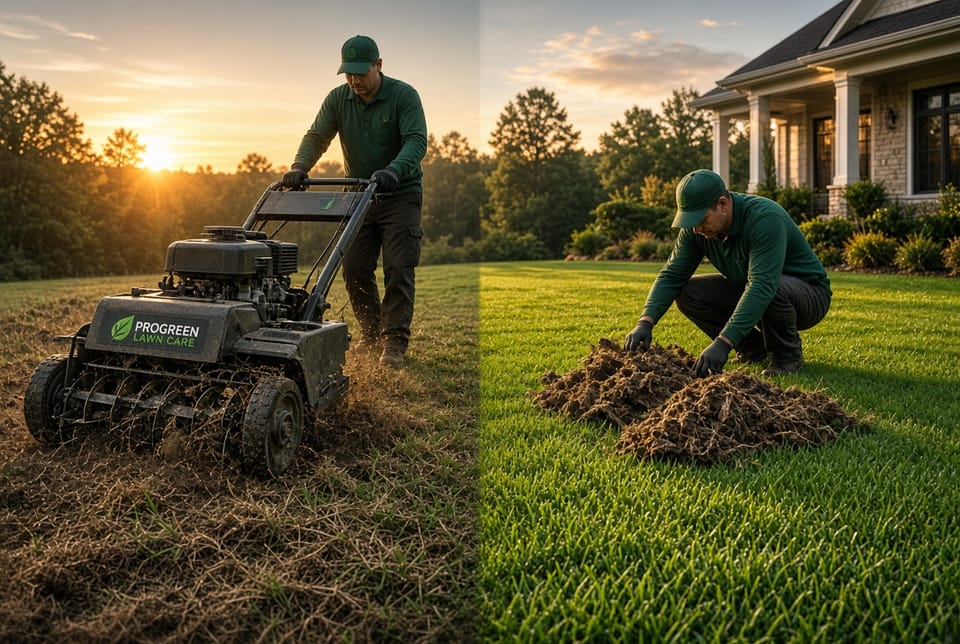
A power dethatcher, sometimes called a thatch remover or scarifier, uses a rotating drum fitted with spring tines or flail blades. These machines slice through the thatch layer and fling the material onto the surface for raking or bagging. Available in both electric and gas-powered models, power dethatchers handle medium to large lawns with impressive speed. Adjustable depth settings prevent excessive damage to living grass while still extracting the unwanted mat. Many units feature collection bags, reducing cleanup time. Operators should make two or three passes in different directions for complete coverage. The result is a dramatically cleaner soil surface ready for recovery.
Vertical Mowers for Heavy-Duty Situations
When thatch exceeds three-quarters of an inch or covers extensive areas, a vertical mower—also known as a verticutter—delivers the most aggressive solution. This machine employs rigid vertical blades that cut straight down through the thatch and into the soil surface, slicing rhizomes and stolons while extracting organic debris. The process simultaneously prepares the lawn for overseeding by creating ideal seed-to-soil contact. Vertical mowing requires greater skill and caution; improper depth settings can scar the turf excessively. Professional operators often follow with thorough cleanup and immediate fertilization to support rapid recovery. For homeowners, renting a vertical mower for a weekend project can transform even the most neglected lawns, provided timing and aftercare are carefully managed.
Perfect Timing: Early Spring or Fall for Optimal Results
Timing determines success more than any other single factor. The ideal windows for dethatching fall in early spring just as grass begins active growth, or in early to mid-fall while temperatures remain moderate and moisture is reliable. During these periods the turf possesses enough energy reserves to recover quickly from the mechanical stress of thatch removal. Cool-season grasses respond best in early spring before the first major growth surge, or in September through early October. Warm-season grasses prefer late spring after full green-up or early fall before dormancy approaches.
Avoid dethatching during the heat of summer or the depths of winter. High temperatures combined with the open wounds left by dethatching equipment invite disease and drought stress. Frozen ground makes the process ineffective and potentially damaging. Always check the soil moisture: slightly damp conditions allow tines to penetrate cleanly without tearing large clumps. Extremely dry soil resists the tools and stresses the plants; overly wet soil leads to compaction and messy debris. Monitoring local weather forecasts for several days of mild temperatures and possible light rain after the procedure further supports healthy regrowth.
Step-by-Step Process for Successful Dethatching
Preparation sets the stage for clean results. Mow the lawn slightly lower than usual two or three days beforehand, then water lightly if the soil feels dry. Mark irrigation heads, shallow utility lines, and other obstacles to avoid costly accidents. Choose a day with moderate temperatures and calm winds so debris stays manageable.
Begin with the selected tool, adjusting depth so the tines or blades just reach the soil surface without digging deeply. Overlap each pass by several inches and change direction with successive runs. Collect and remove the extracted thatch promptly; leaving it on the surface defeats the purpose and can smother recovering grass. After mechanical work, rake thoroughly by hand to capture remaining fragments. Apply a balanced fertilizer formulated for your grass type, followed by a light topdressing of quality compost if the soil appears compacted. Water gently to settle the area, then resume normal mowing once the turf shows new growth—usually within two to three weeks.
Overseeding immediately after dethatching fills any thin spots and capitalizes on the freshly prepared soil surface. Choose high-quality seed matched to existing varieties, spread evenly, and keep the area consistently moist until seedlings establish. This combination of thatch removal and renewal produces denser, more uniform coverage than either practice alone.
Aftercare Practices That Lock In Long-Term Health
The weeks following dethatching demand attentive care. Maintain consistent moisture without creating soggy conditions. Raise mowing height slightly to allow the grass to rebuild energy reserves. Avoid heavy foot traffic until the lawn firms up. A follow-up application of slow-release nitrogen supports recovery without encouraging excessive top growth that could generate new thatch too quickly.
Monitor for any signs of stress and address them promptly. In subsequent seasons, adopt cultural practices that minimize future buildup: mow regularly at the correct height, return clippings only when they are short and finely shredded, fertilize according to soil test recommendations rather than fixed schedules, and aerate annually to improve microbial activity. These habits keep thatch levels naturally in check and reduce the frequency of intensive mechanical interventions.
Common Mistakes and How to Avoid Them
Even well-intentioned efforts can go wrong without proper knowledge. Dethatching too aggressively removes living crowns and leaves the lawn vulnerable. Using the wrong tool for the severity of the problem wastes time and energy. Ignoring soil tests leads to fertilizer regimens that accelerate thatch formation. Performing the work at the wrong time of year invites prolonged recovery or permanent damage. Skipping cleanup allows debris to re-form a barrier almost immediately.
The remedy lies in measured, informed action. Start conservatively, evaluate results, and adjust. When in doubt, consult experienced professionals who understand local soil types, grass species, and climate patterns. Their equipment and expertise often produce superior outcomes with less risk to the turf.
Integrating Thatch Control into a Complete Lawn Care Program
Lawn thatch control never stands alone. Pair it with core aeration to relieve compaction, proper irrigation scheduling to avoid excess moisture, and balanced nutrition to support microbial breakdown of organic matter. Regular soil testing every two to three years guides precise amendments that keep the entire system in equilibrium. Mulching leaves in fall instead of allowing thick layers to smother the grass further prevents unnecessary organic accumulation.
Homeowners who view dethatching as one element within a thoughtful annual calendar enjoy consistently superior results. Spring tasks might include early dethatching followed by overseeding and fertilization. Summer focuses on smart watering and pest monitoring. Fall returns to aeration, possible light dethatching, and winterization. This rhythm creates resilient turf that requires fewer emergency interventions and delivers greater enjoyment year after year.
Recognizing the Signs That Demand Immediate Attention
Beyond simple thickness measurements, several visual and tactile clues signal the need for prompt dethatching. A spongy lawn that sinks underfoot indicates excessive organic matter. Water pooling in low spots after ordinary rainfall reveals blocked infiltration. Brown patches that expand despite adequate moisture and fertility often trace back to shallow roots trapped in thatch. Increased insect activity, especially in summer, frequently correlates with the protective cover thatch provides. Addressing these symptoms early prevents cascading problems that become far more expensive to correct later.
Professional Support for Lasting Results
While many homeowners successfully manage light thatch with rented equipment, heavier infestations or large properties benefit from professional service. Trained technicians arrive with commercial-grade machines calibrated for precise depth control and efficient debris removal. They understand regional grass varieties and seasonal windows better than most DIY resources. The investment often pays for itself through faster recovery, reduced risk of damage, and the simple convenience of reclaiming weekend time.
When selecting a service provider, look for companies that emphasize education alongside execution. Clear explanations of the process, realistic timelines for recovery, and transparent pricing build trust. Ongoing maintenance programs that include periodic thatch monitoring keep the lawn in peak condition without sudden crises.
Building Confidence Through Knowledge and Action
Mastering lawn thatch control begins with understanding the biology of your turf and ends with consistent, well-timed action. The tools—whether a simple rake, a versatile power dethatcher, or a robust vertical mower—become extensions of informed decision-making. Timing in early spring or fall maximizes recovery potential and minimizes stress. Combined with sound cultural practices, these efforts produce a lawn that not only looks beautiful but functions as a healthy living system.
Every property is unique, yet the principles remain universal. Measure thickness regularly, choose the method matched to the severity, respect the calendar, and support recovery with proper aftercare. The reward is a resilient, inviting outdoor space that enhances daily life and stands up to the challenges of weather and use.
Control thatch for a healthier lawn.
Achieve a Healthier Lawn – Call Today!