The Gutter Downspout Bracket: Securing Downspouts to Your Home
A complete gutter system does far more than collect rainwater from the roof. It must also move that water safely down the side of the house and away from the foundation. The component that makes this possible is the gutter downspout bracket. These specialized fasteners hold the downspout tightly against the wall so it cannot sway, pull away, or detach during storms. When brackets perform correctly, the entire drainage system stays aligned and functional. When they fail, even a well-designed gutter can become a source of water damage, staining, and structural stress.
Stop Loose Gutters Before They Fail – Call Now
This guide focuses exclusively on the downspout bracket—the small but essential hardware that keeps downspouts locked in place. You will learn exactly what these brackets do, how to recognize the signs of failure, why proper spacing of every 4-6 feet matters, and how timely replacement protects your home. The information is presented in a clear, practical format so you can make informed decisions with confidence.
What Downspout Brackets Actually Do
A downspout is a vertical pipe that carries water from the horizontal gutter trough to the ground or a drainage extension. Without support, that pipe would hang freely and move with every gust of wind or surge of water. Downspout brackets solve this problem by creating a rigid connection between the pipe and the exterior wall.
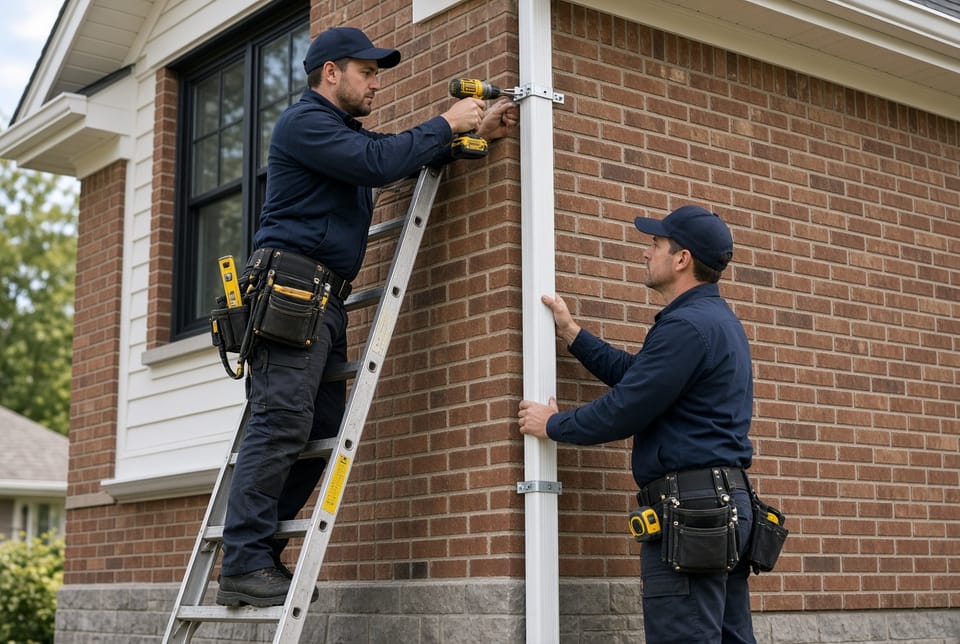
Each bracket typically consists of a metal strap or clamp that wraps around the downspout and a mounting plate or screw holes that attach directly to the siding, brick, or fascia. Once fastened, the bracket prevents three dangerous movements:
- Lateral swaying caused by wind
- Outward pulling caused by the weight of water and ice
- Vertical shifting caused by thermal expansion and contraction
The result is a downspout that remains straight, sealed at the joints, and directed exactly where it should discharge. A securely bracketed downspout also reduces noise, vibration, and premature wear on the elbows and seams.
Why Secure Attachment Protects the Entire Home
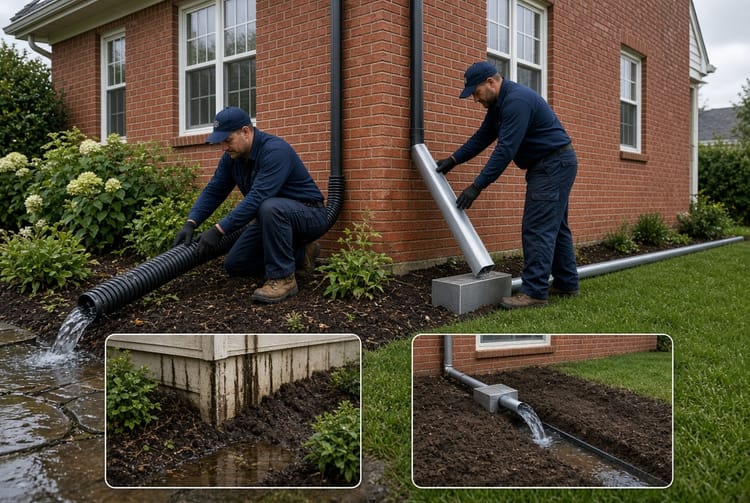
Water is persistent. When a downspout pulls even a few inches away from the wall, water can splash against siding, soak into mortar, or pool at the foundation. Over time these small leaks produce visible staining, rotting wood, eroded soil, and in severe cases basement seepage. The risk is highest during heavy rain or freeze-thaw cycles, when the extra weight of ice or debris multiplies the force on weak brackets.
Properly installed brackets eliminate that vulnerability. They keep the downspout flush against the wall so water stays inside the pipe until it reaches the designated discharge point. This simple mechanical function is one of the most cost-effective ways to protect siding, landscaping, and the structural integrity of the house.
Common Signs That Brackets Are Failing
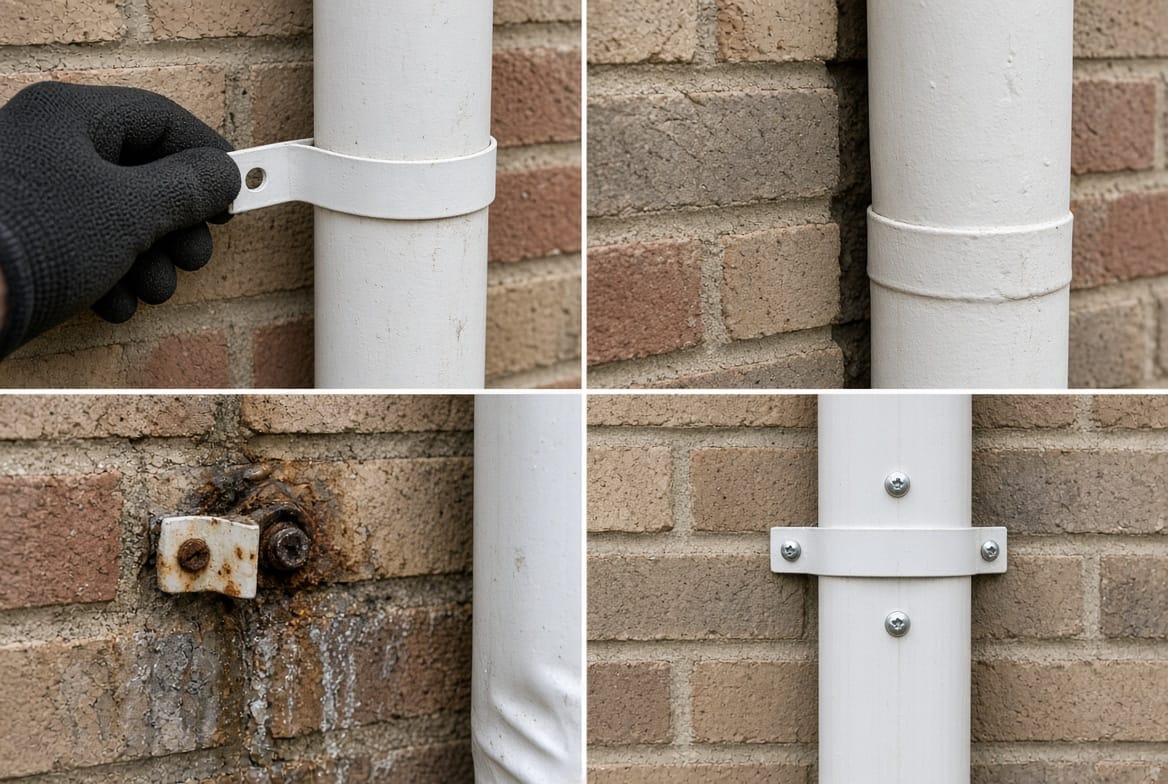
Brackets do not last forever. Corrosion, loose screws, impact from ladders, and the constant cycle of wet-dry weather eventually weaken them. Homeowners who inspect their downspouts regularly can catch problems early. Watch for these clear warning signs:
- The downspout feels loose when gently pushed
- The pipe is pulling away from the wall at one or more points
- Visible gaps appear between the downspout and the siding
- Rust or white oxidation covers the bracket metal
- Screws have backed out or holes have enlarged
- The downspout rattles or vibrates during wind or rain
- Water stains form on the wall directly behind or beside the pipe
Any one of these indicators means the bracket is no longer doing its job. Ignoring the issue allows movement to increase, joints to separate, and water to escape where it should not.
Correct Spacing: Why Every 4-6 Feet Matters
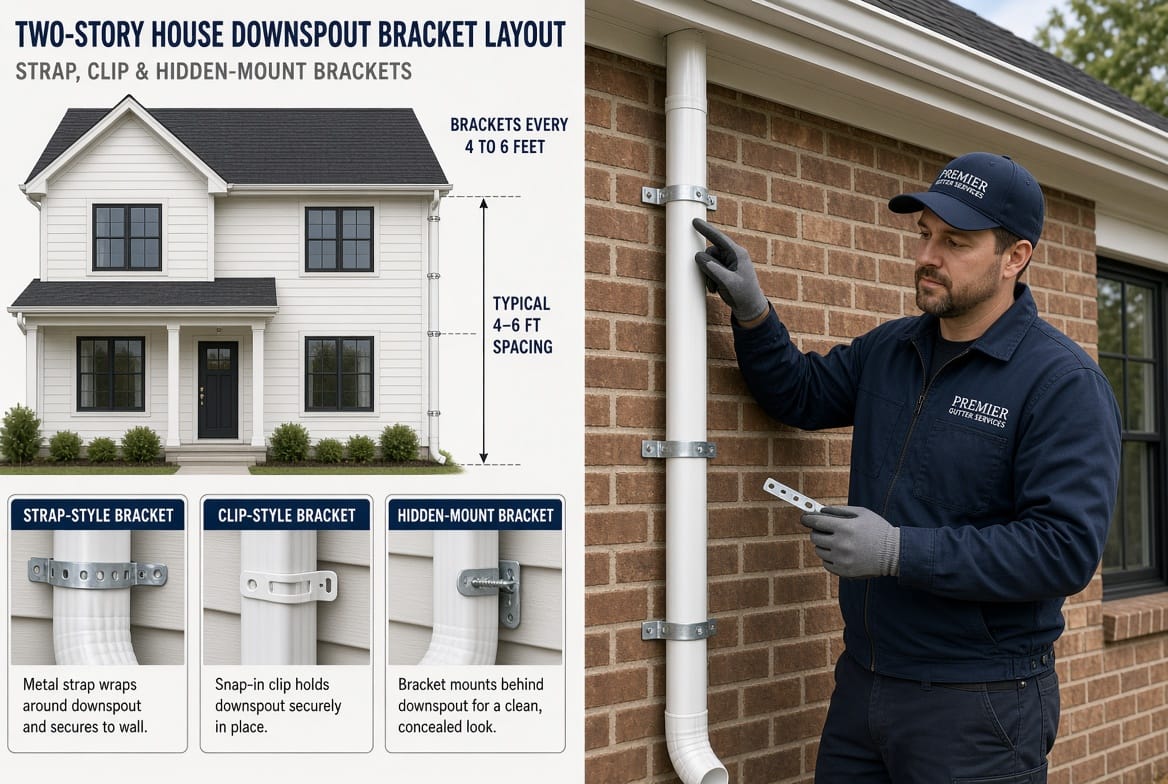
Industry practice and manufacturer recommendations call for a bracket every 4-6 feet of vertical downspout run. This interval is not arbitrary. It balances three engineering needs:
- Sufficient support to resist wind loads
- Enough flexibility to allow slight thermal movement
- Minimal visual interruption on the wall
A typical two-story home with a 20-foot downspout therefore requires four to five brackets, plus an additional strap at the top elbow and another near the bottom outlet. Homes in high-wind regions or those with extra-long downspouts often benefit from the closer 4-foot spacing. Undersized or widely spaced brackets allow the pipe to flex in the middle, creating the exact loose and pulling-away conditions described earlier.
When replacing brackets, always measure from the existing top connection downward and mark locations at consistent 4-6 foot centers. Never rely on the old holes if they have become elongated or stripped.
Types of Downspout Brackets and Their Best Uses
Not every bracket is identical. Choosing the right style improves both performance and appearance.
- Strap brackets wrap completely around the downspout and screw into the wall on both sides. They offer the strongest hold and work well on brick, stone, or fiber-cement siding.
- Clip or saddle brackets snap or slide onto the back of the downspout and use a single mounting point. They are faster to install and less conspicuous on vinyl or wood siding.
- Hidden or low-profile brackets sit behind the downspout so only a thin metal edge is visible. These are preferred when curb appeal is a priority.
- Adjustable or wrap-around bands accommodate odd-sized or older downspouts that do not match modern dimensions.
Material also matters. Galvanized steel and aluminum resist rust in most climates, while stainless steel or powder-coated options last longest in coastal or high-moisture areas. Matching the bracket finish to the downspout color keeps the installation looking intentional rather than patched.
The Replacement Process: Straightforward but Precision-Dependent
Replacing failed brackets is a focused task that most experienced homeowners can complete with basic tools, yet precision determines long-term success. The sequence is simple:
- Support the downspout so it cannot drop when the old brackets are removed.
- Unscrew or pry off the deteriorated hardware.
- Clean the wall surface and inspect for hidden rot or insect damage.
- Position the new bracket at the marked 4-6 foot interval.
- Fasten with corrosion-resistant screws long enough to bite into solid framing or masonry anchors.
- Confirm the downspout sits flush with no visible gaps.
- Test by applying gentle pressure; the pipe should not move.
The most common mistakes are using screws that are too short, placing brackets on rotting wood, and failing to keep the downspout perfectly plumb. Any of these errors recreates the original problem within a single season.
Benefits of Timely Bracket Replacement
Replacing weak brackets before they fail completely delivers several measurable advantages. Water is directed exactly where the original design intended, reducing splash-back on siding and soil erosion at the foundation. The downspout stays quiet in wind, joints remain sealed, and the overall gutter system lasts years longer. Homeowners also avoid the higher cost of repairing water-damaged walls or replacing an entire downspout that has been bent or dented by uncontrolled movement.
From a maintenance standpoint, new brackets make future inspections easier. A tight, well-spaced installation is simple to check visually from the ground, so small issues can be spotted before they become expensive.
Professional Service Versus Do-It-Yourself
Many homeowners successfully replace a few brackets themselves. However, multi-story homes, masonry walls that require specialized anchors, or downspouts that have already pulled several inches away often benefit from professional attention. Trained technicians bring the correct fasteners, safety equipment, and experience to restore alignment without damaging siding or creating new leaks at the gutter-to-downspout connection.
A professional inspection also reveals related issues—clogged outlets, undersized downspouts, or missing extensions—that a homeowner focused only on brackets might overlook. The result is a complete, reliable system rather than a partial fix.
Simple Maintenance Habits That Extend Bracket Life
Once new brackets are in place, a few easy habits keep them performing for years:
- Inspect the entire downspout after the first heavy rain of each season.
- Gently test for movement twice a year.
- Clear leaves and debris from the top of the downspout so water does not overflow and add extra weight.
- Touch up any scratched coating on metal brackets to slow corrosion.
- Keep shrubs and vines trimmed so they cannot push against the pipe.
These steps take only minutes yet prevent the majority of premature failures.
Protecting Your Home Starts with Secure Downspouts
The gutter downspout bracket is a modest piece of hardware, yet its job is indispensable. By holding the downspout firmly against the wall at intervals of every 4-6 feet, it prevents the loose, pulling-away, and visible-gap conditions that allow water to escape and damage the house. Recognizing the early signs of failure and replacing worn brackets promptly is one of the simplest, most effective ways to safeguard siding, foundation, and landscaping.
A well-secured downspout works silently and reliably, giving you peace of mind every time rain falls. If your brackets show any of the warning signs described here, or if you simply want the reassurance of a professional evaluation, now is the time to act.
Secure your downspouts. A few well-placed brackets can protect your home for years to come.
Protect Your Home from Water Damage – Call Now