The Gutter Downspout Extension: Flexible vs. Rigid Options
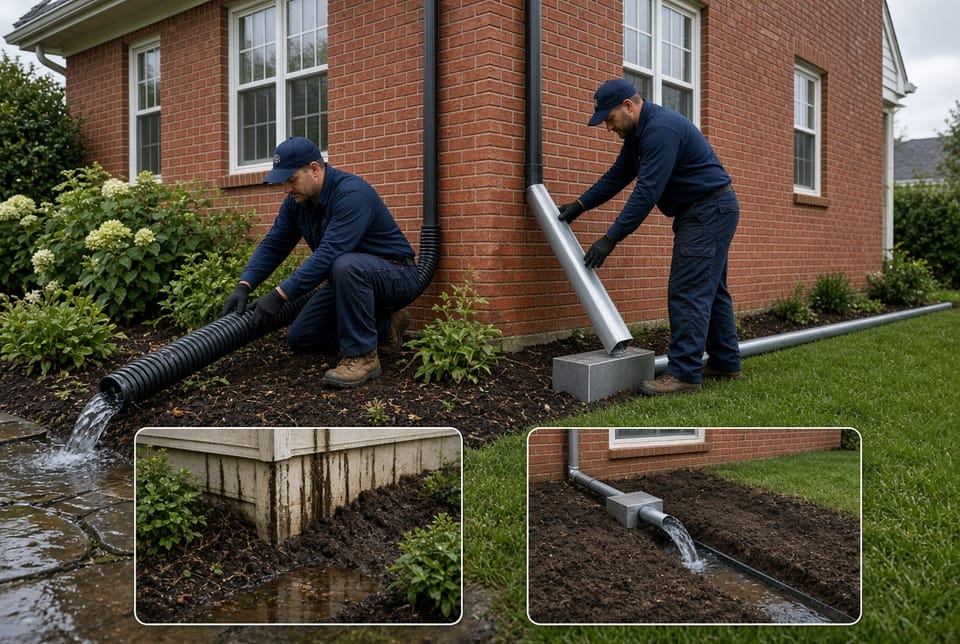
A gutter downspout extension is one of the simplest yet most important upgrades you can add to a home’s drainage system. Gutters collect rainwater from the roof. Downspouts carry that water to ground level. The extension then moves the water far enough from the foundation so it cannot soak the soil, undermine footings, or seep into a basement. Choosing between a flexible downspout extension and a rigid downspout extension determines how well that last step works for years to come.
Flexible or Rigid? Get Expert Advice – Call Now
This guide compares both types in clear, practical terms. You will see how each performs, where each belongs, what each costs, and how to decide with confidence. The goal is straightforward: keep water moving away from your house so the structure stays dry and the landscape stays intact.
Why Downspout Extensions Matter
Rain that leaves the roof must travel well beyond the foundation. When it does not, several problems follow quickly.
- Foundation damage — Saturated soil expands and contracts, creating cracks and settlement.
- Basement or crawl-space moisture — Water finds the path of least resistance through walls and floors.
- Soil erosion — Concentrated flow carves channels in lawns and flower beds.
- Ice buildup — Standing water freezes, lifts pavers, and stresses downspouts.
- Mosquito habitat and mold risk — Pooled water lingers after storms.
A properly chosen extension solves these issues by carrying water four to six feet or more from the wall. Both flexible and rigid products can do the job. They simply do it in different ways and for different lengths of time.
Flexible Downspout Extensions: Easy to Move, Less Durable
A flexible downspout extension is usually made of corrugated plastic or vinyl. The accordion-style ridges let the tube bend, stretch, and coil. Most homeowners can attach one in minutes with a simple adapter that slips over the existing downspout outlet.
Advantages of flexible extensions
- Fast, tool-light installation.
- Easy to relocate when you mow, plant, or change the yard layout.
- Inexpensive to replace if damaged.
- Useful for seasonal needs — stretch it out in spring, coil it for winter storage.
- Works well on rental properties or homes that may be sold soon.
Limitations of flexible extensions
- The thin plastic walls crack under repeated foot traffic, lawn-mower strikes, or freeze-thaw cycles.
- Corrugations collect leaves, twigs, and sediment, raising the chance of clogs.
- Ultraviolet light and temperature swings make the material brittle within a few seasons.
- Animals sometimes chew the tube.
- The finished look is utilitarian rather than architectural.
Flexible extensions shine when the drainage path must change. A homeowner who gardens in different beds each year, or who wants a temporary solution while planning a larger landscape project, benefits from the ability to pick the tube up and set it down elsewhere. They are also practical in mild climates where heavy ice and intense sun are less common.
Typical applications for flexible extensions
- Temporary protection during construction or renovation.
- Properties with frequently rearranged patios or play areas.
- Budget-conscious first-time installations.
- Homes in regions with short, moderate rainy seasons.
Expect a service life of two to five years with average care. After that the plastic often splits or collapses, and water begins to leak near the foundation again.
Rigid Downspout Extensions: Permanent and More Durable
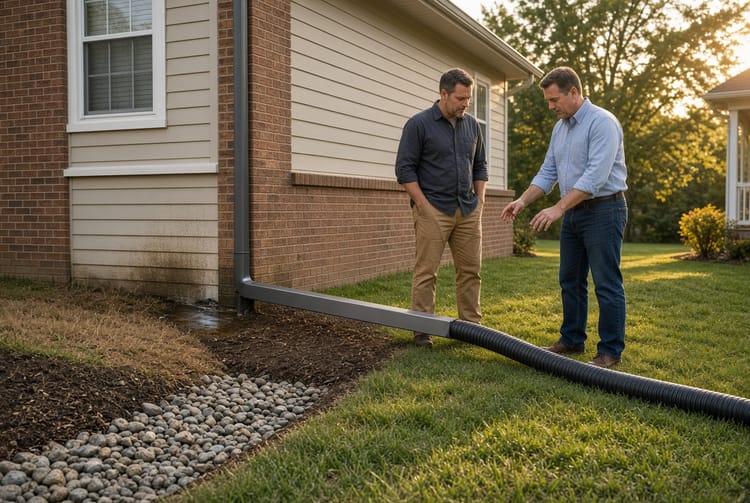
A rigid downspout extension is formed from PVC, aluminum, galvanized steel, or copper. The pieces lock together with fittings or are buried as a continuous run. Once installed, the path stays fixed.
Advantages of rigid extensions
- Thick walls resist crushing, UV damage, and temperature extremes.
- Smooth interior surfaces shed debris more readily than corrugated tubes.
- Professional appearance that complements siding and landscaping.
- Can be routed underground to a pop-up emitter, dry well, or storm drain.
- Longer service life — often ten to twenty years or more.
Limitations of rigid extensions
- Higher material and labor cost.
- Permanent placement means planning the exact route before installation.
- Changes later require cutting and re-fitting.
- Improper slope or poor joints can still allow standing water.
Rigid systems reward homeowners who want a “set it and forget it” solution. They handle high-volume storms, sloped lots, and properties where appearance matters. When paired with a buried line, they disappear from view while still moving water a safe distance from the house.
Typical applications for rigid extensions
- Permanent landscaping and hardscape projects.
- Homes in heavy-rain or freeze-thaw climates.
- Properties with walkways, driveways, or play areas that cannot be blocked by a loose tube.
- Commercial buildings and multi-unit residences that need consistent performance.
Aluminum and PVC are the most common residential choices. Aluminum resists rust and looks clean. PVC is lighter and easier to cut. Steel and copper appear on higher-end or historic homes.
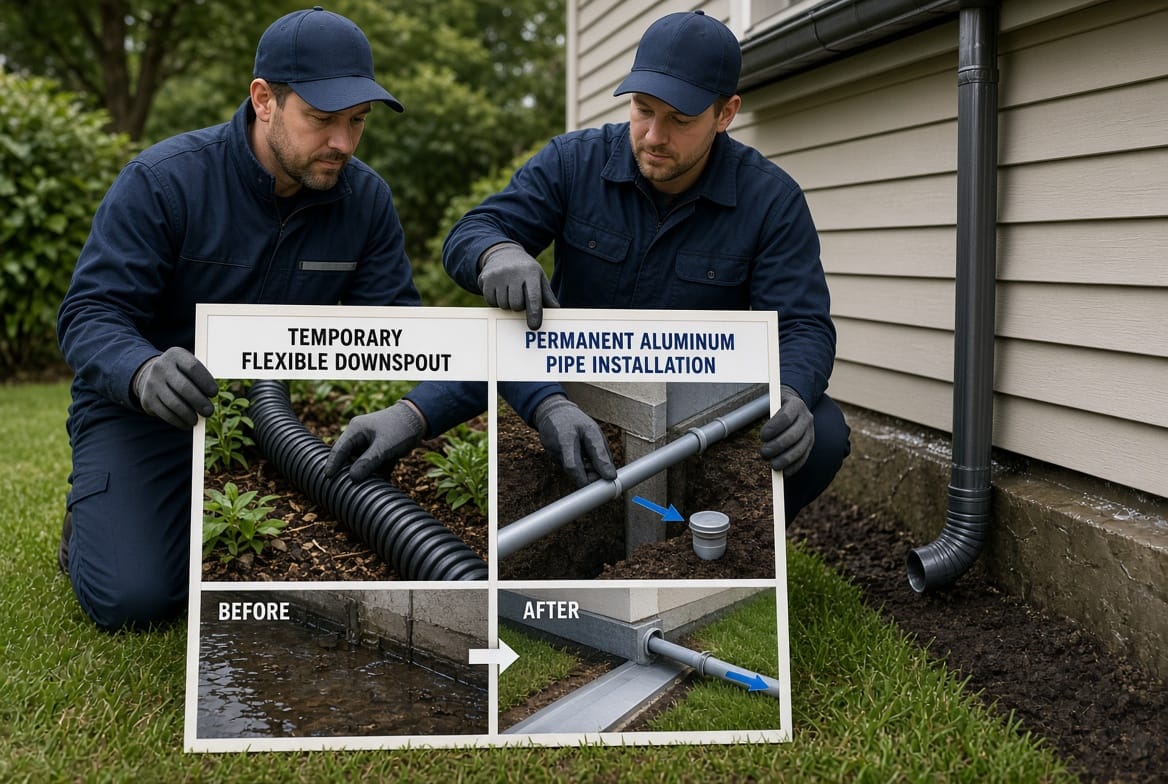
Side-by-Side Comparison
The choice is not simply “cheap versus expensive.” It is about matching the product to how the property is used and how long the owner plans to stay.
- Mobility — Flexible wins. Rigid stays put.
- Durability — Rigid wins by a wide margin.
- Appearance — Rigid looks finished; flexible looks temporary.
- Clog resistance — Rigid interiors stay cleaner.
- Installation speed — Flexible is faster for a homeowner; rigid often benefits from professional fitting.
- Winter performance — Rigid handles ice better if sloped correctly; flexible can flatten or split.
- Repair cost — Flexible is inexpensive to replace; rigid repairs are more involved but less frequent.
Both types fail if they dump water too close to the foundation or if they are left clogged. The extension itself is only as good as the distance it creates and the maintenance it receives.
Cost Comparison
Prices vary by length, diameter, and material, yet the ranges stay consistent enough for planning.
Flexible extensions
- Four- to eight-foot kits typically cost $10–$30.
- Adapters and extra sections add a few dollars.
- Most homeowners install them themselves, so labor is zero.
Rigid extensions
- Above-ground PVC or aluminum runs of similar length cost $25–$80.
- Buried systems with fittings, pop-up emitters, and trenching raise the total to $150–$400 or more depending on distance and soil.
- Professional installation adds labor but usually includes proper slope and secure joints.
Over a ten-year period the flexible option may need two or three replacements. The rigid option often needs none. When replacement labor and the risk of water damage are counted, the rigid system frequently becomes the lower lifetime cost for a home that will stay in the same family.
Climate and lot conditions also affect value. In a region with frequent freeze-thaw cycles or intense summer sun, the extra durability of rigid material pays for itself sooner. In a mild climate where the homeowner enjoys rearranging the yard, the flexible tube remains the economical choice.
How to Choose the Right Extension
Ask four practical questions.
- How long will you live in the house?
Short-term owners or renters often prefer flexible. Long-term owners gain more from rigid. - Does the yard layout change?
Frequent planting, new patios, or children’s play equipment favor flexible. Finished landscaping favors rigid. - What is the local weather?
Heavy rain, snow, and temperature swings favor rigid. Moderate conditions allow either. - How important is appearance?
Visible front-yard downspouts look cleaner with rigid pipe. Rear or side yards can accept flexible tubing.
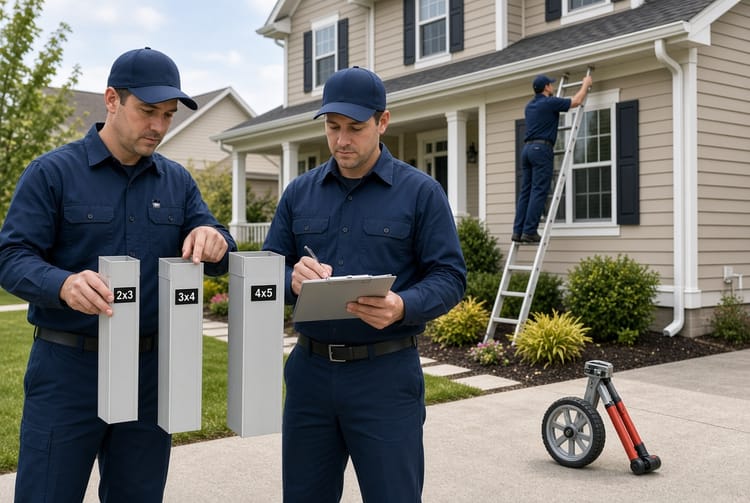
Measure the distance from the downspout to a safe discharge point — at least four to six feet on level ground, more on a slope toward the house. Check local codes; some communities restrict where water may be released. Confirm that the chosen product matches the downspout diameter (usually 2×3 or 3×4 inches).
If the decision still feels uncertain, a professional inspection removes the guesswork. A technician can evaluate soil grade, existing gutter capacity, and hidden drainage problems in a single visit.
Installation and Maintenance Basics
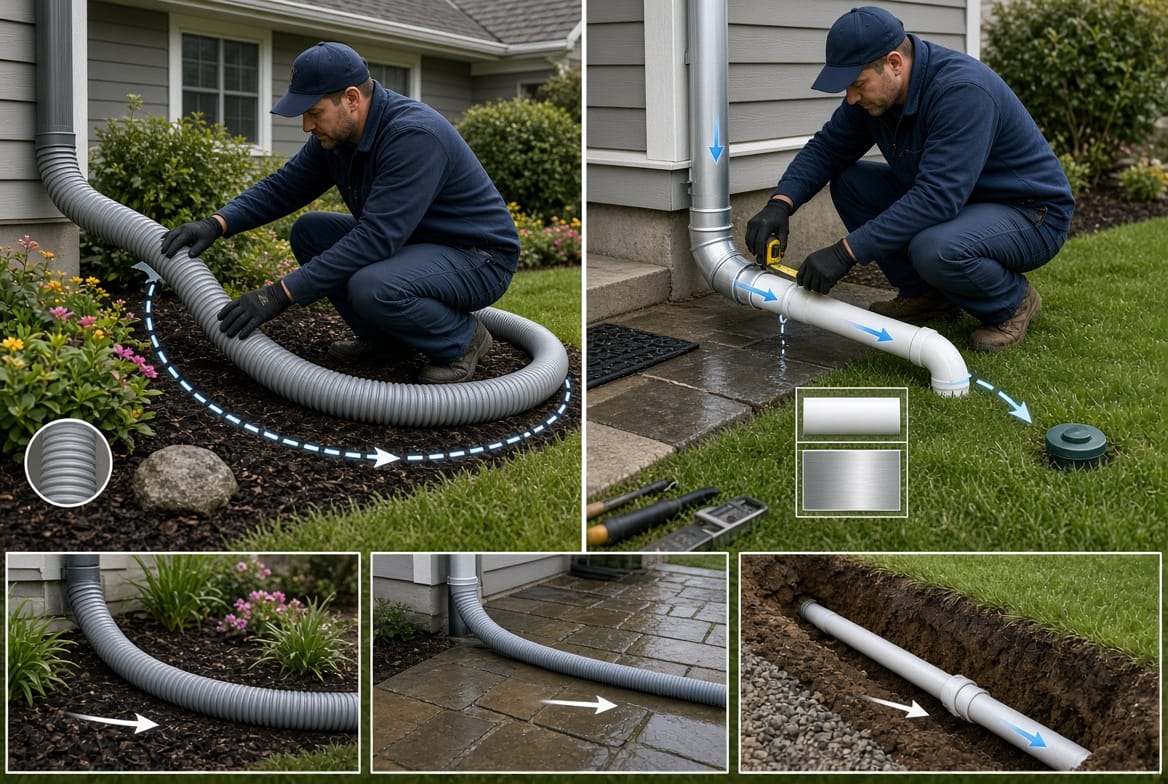
Flexible installation
Slip the adapter onto the downspout, extend the tube to the desired spot, and secure the far end with a stake or weight so it cannot blow away. Keep the path as straight as possible to reduce clogs.
Rigid installation
Cut sections to length, dry-fit the run, confirm a slight downhill slope, then glue or clamp the joints. For buried lines, trench below frost depth where required and add a pop-up emitter at the end.
Shared maintenance
- Inspect after every major storm.
- Flush debris with a garden hose.
- Keep the discharge point clear of leaves and mulch.
- In winter, ensure water can still exit so ice does not back up into the downspout.
Neglect is the most common reason either type fails. A five-minute check twice a year prevents most problems.
Common Mistakes to Avoid
- Ending the extension too close to the foundation.
- Allowing the tube or pipe to create a trip hazard across a walkway.
- Ignoring clogs until water overflows at the gutter.
- Using a flexible tube in a high-traffic area where it will be crushed.
- Installing rigid pipe without proper slope, creating a hidden reservoir.
Each of these errors returns water to the exact place the extension was meant to protect. Correct them early and the system works as designed.
Protecting Your Investment
A downspout extension is inexpensive compared with foundation repair or basement waterproofing. Selecting the type that matches your property’s needs is the surest way to keep that small investment working. Flexible extensions give you mobility and low first cost. Rigid extensions give you durability and a finished look. Both succeed when they move water far from the house and receive basic care.
If you are unsure which option fits your roof, soil, and climate, professional help is available. A trained technician can measure flow, check existing gutters, and recommend the extension that will last.
Choose the right downspout extension.
Protect Your Foundation Today – Call for Gutters