The Gutter Material: Aluminum vs. Steel vs. Copper
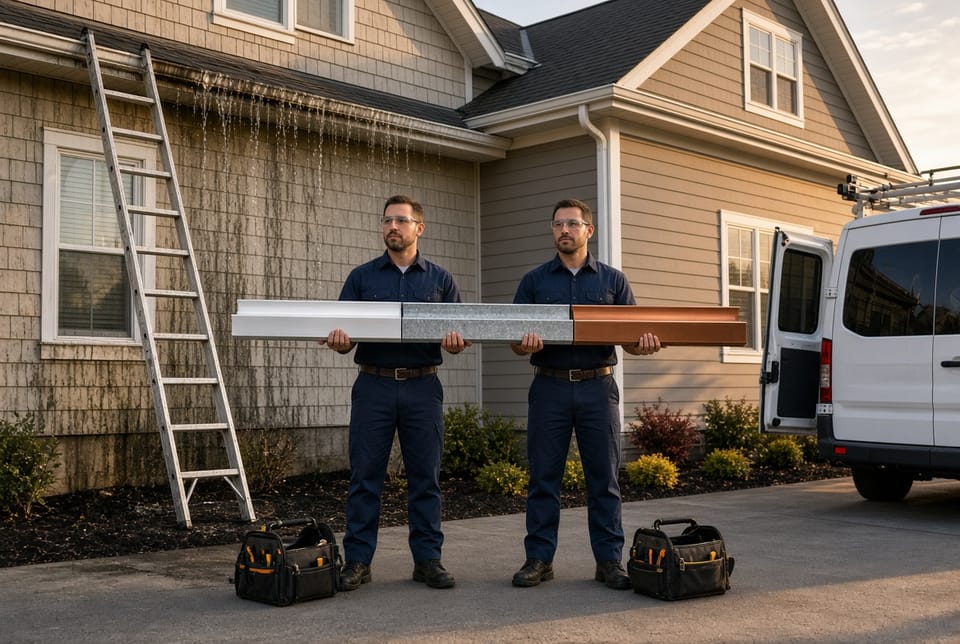
Selecting the correct gutter material is one of the most consequential decisions a homeowner makes for long-term property protection. Gutters do far more than collect rainwater; they direct thousands of gallons away from the foundation, siding, and landscaping every year. The wrong choice can lead to premature failure, hidden leaks, foundation settlement, and costly repairs. The three primary residential options—aluminum, steel, and copper—each deliver distinct performance, appearance, and value profiles. This guide examines how they compare in real-world use so you can match material to climate, budget, architecture, and expected longevity.
Get Expert Gutter Advice – Call for a Free Consultation
A professionally installed system, regardless of metal, only performs as well as the material itself and the quality of the seams, hangers, and downspouts. Understanding the inherent strengths and risks of each metal removes guesswork and protects both the structure and the investment.
Why Gutter Material Matters More Than Most Homeowners Realize
Water is persistent. Even a small overflow or sag can saturate soil against the foundation, rot fascia boards, stain brick, and invite pests. Material choice influences:
- Resistance to rust and corrosion
- Ability to handle ice, snow load, and high-volume storms
- Expansion and contraction through temperature swings
- Appearance as the home ages
- Total cost of ownership over decades
Aluminum remains the most specified residential product because it balances price and performance. Steel offers greater rigidity for demanding conditions. Copper occupies the premium tier, delivering both unmatched lifespan and a living finish that many architects specify for historic or high-end properties. None is universally “best.” The right selection depends on your roof size, local weather, maintenance willingness, and how long you intend to stay in the home.
Aluminum Gutters: The Common, Rust-Proof Workhorse
Aluminum dominates the residential market for good reason. It is lightweight, readily formed into seamless runs, and naturally develops a thin oxide layer that prevents the kind of rust that destroys ferrous metals. Factory-applied baked-on finishes come in dozens of colors that can match or complement siding and trim.
Key advantages of aluminum
- Inherently rust-proof in most environments
- Light weight reduces stress on fascia and hangers
- Seamless extrusion minimizes leak points
- Wide color selection and easy repair with matching coil stock
- Recyclable at end of life
Considerations and risks
- Softer metal can dent from ladders or falling branches
- Extreme temperature swings cause more noticeable expansion; proper expansion joints are essential
- Coastal salt air or industrial pollution can eventually dull or pit the finish if not rinsed
- Typical service life ranges from twenty to thirty-plus years with routine cleaning
Installed cost usually sits at the lower end of the market, making aluminum the default recommendation for most suburban and urban homes. When hangers are spaced correctly and the system is kept free of debris, aluminum delivers reliable, low-maintenance performance that satisfies the majority of homeowners.
Steel Gutters: Strength First, With a Rust Caveat
Steel gutters—most often galvanized or pre-painted galvanized—are chosen when structural rigidity matters. The heavier gauge resists denting and holds its shape under snow load or ice. Many commercial and some residential specifications still call for steel because of that inherent toughness.
Strengths
- Higher tensile strength and impact resistance than aluminum
- Excellent for long, unsupported spans or heavy-snow regions
- Can be formed into traditional profiles that some historic districts prefer
Risks that must be managed
- The protective zinc or paint coating is the only barrier against rust. Once scratched, cut, or worn through, oxidation begins and can spread
- Heavier weight demands more robust hangers and sound fascia
- Visible rust staining can appear at joints or cut edges if not properly sealed
- Lifespan varies widely—fifteen to forty years—depending on coating integrity and climate
Steel occupies the middle price band. It costs more than standard aluminum yet far less than copper. In dry inland climates with conscientious maintenance, steel can outlast aluminum. In humid, salty, or acidic-rain regions the rust risk rises and the material may require earlier replacement or more frequent inspection.
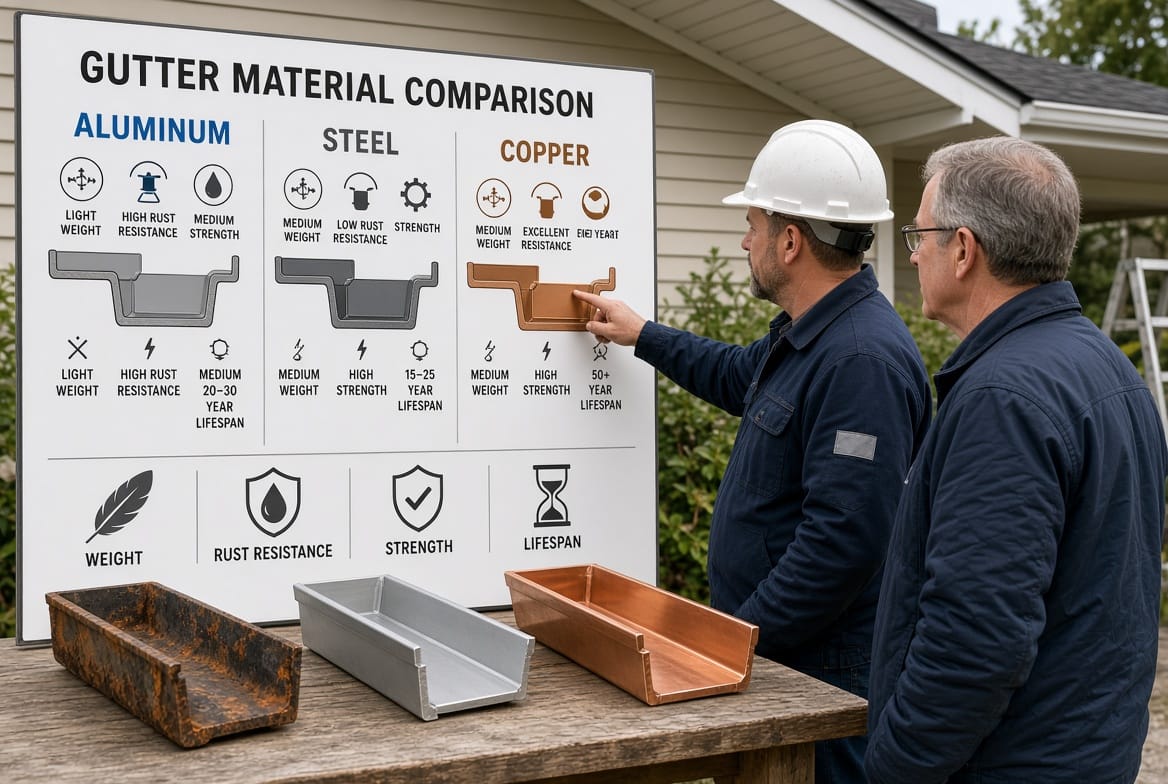
Copper Gutters: Premium Performance That Ages Beautifully
Copper is the material specified when both longevity and aesthetics are non-negotiable. It does not rust. Instead it develops a characteristic patina—first warm brown, then richer bronze, and eventually the familiar green verdigris—that many consider more attractive with time. Joints are typically soldered rather than sealed with caulk, creating a nearly monolithic system.
Premium characteristics
- Exceptional corrosion resistance; service life commonly fifty to one hundred years or more
- Natural antimicrobial properties and self-healing minor scratches through patina formation
- High scrap value and fully recyclable
- Distinctive appearance that increases perceived home value on period or luxury properties
Trade-offs
- Highest initial cost—often two to four times aluminum
- Requires specialized soldering skills; not every installer is qualified
- Soft enough to dent, though the thicker gauges used in quality copper systems mitigate this
- Color change is inevitable; homeowners who want a static appearance may prefer painted aluminum or coated steel
Copper’s long-term economics often surprise first-time buyers. Because replacement cycles are measured in generations rather than decades, the lifetime cost per year can undercut cheaper materials that must be swapped twice or three times. For homes intended as family heirlooms or high-end listings, copper frequently proves the rational luxury.
Cost Comparison: Up-Front Price Versus Lifetime Value
Installed pricing fluctuates with local labor, roof complexity, and current metal markets, yet relative positions remain consistent:
- Aluminum occupies the most accessible tier and remains the volume leader
- Steel sits in the mid-range, reflecting both material weight and extra hanger requirements
- Copper commands a clear premium that reflects both raw-metal cost and skilled-labor intensity
Smart buyers calculate more than the first invoice. Factor in:
- Expected replacement interval
- Potential water-damage repairs avoided by a longer-lasting system
- Energy and time spent on maintenance
- Resale perception—copper and well-kept steel often photograph and appraise more favorably
A twenty-year aluminum system that must be replaced twice can ultimately exceed the outlay of a single copper installation that still looks handsome at year sixty. Climate and maintenance habits tilt the equation; a meticulously cleaned steel system in a dry region may deliver excellent value, while the same steel in a rainy coastal zone may not.
Longevity, Durability, and Real-World Performance
Longevity is not a single number; it is the product of metal chemistry, coating (if any), installation quality, and owner care.
Aluminum’s oxide layer gives it dependable rust-proof behavior in typical suburban settings. Failures usually stem from physical damage, clogged outlets, or poorly designed expansion provisions rather than the metal itself.
Steel’s durability is conditional. Intact galvanizing or high-quality paint can protect for decades. Once the barrier is breached, rust accelerates, especially at hidden back sides and fastener holes. Regular inspection of cut edges and joints is therefore mandatory.
Copper’s longevity is the least conditional of the three. Properly soldered and supported, it routinely outlives the roof covering and even the homeowners who first installed it. The patina itself becomes a protective layer.
Ice dams, hanging branches, and ladder damage affect all three, but the consequences differ. A dented aluminum section is inexpensive to replace. A rusted steel run may require more extensive repair. Copper, while costly to patch, rarely needs replacement of entire elevations.
Maintenance Realities and Climate Suitability
All gutters require periodic cleaning. Material choice changes how unforgiving that schedule is.
Aluminum tolerates missed cleanings better than steel because it will not rust from standing water, though overflow still damages the house. Steel demands more vigilance; trapped moisture against a compromised coating starts oxidation quickly. Copper is the most forgiving of debris and standing water, yet the patina process can be uneven if acidic debris sits for long periods.
Coastal salt, industrial fallout, and freeze-thaw cycles magnify differences. Aluminum and copper generally handle salt air better than standard galvanized steel. In heavy-snow country the extra rigidity of steel or thicker-gauge copper can reduce sagging. In wildfire-prone regions, non-combustible metals of any type are preferable to vinyl, but copper and steel offer additional peace of mind.
Aesthetics, Curb Appeal, and Architectural Fit
Color-matched aluminum disappears into the roofline—an advantage for contemporary and production homes. Steel can be painted or left in a utilitarian galvanized finish. Copper makes a statement. Its evolving color complements brick, stone, cedar, and slate in ways painted metals cannot replicate. Many preservation guidelines and high-end builders specify copper precisely because it looks intentional rather than applied.
Homeowners should view samples in place, not just in a showroom. Morning and evening light change how each metal reads against the house. A copper system that appears bold at noon often feels warm and integrated at dusk.
Common Risks and How Professionals Mitigate Them
Every material carries identifiable risks:
- Aluminum: denting and thermal movement
- Steel: coating failure and subsequent rust
- Copper: higher theft risk on unoccupied sites and the need for specialized labor
Experienced installers address these through correct hanger spacing, expansion joints, proper soldering or sealing, and, when appropriate, hidden fastening systems. They also size the gutter and downspout network to the roof area and local rainfall intensity so the material itself is never asked to compensate for an undersized design.
Choosing an installer who understands all three metals—not merely the one they sell most often—reduces the chance of a mismatched recommendation.
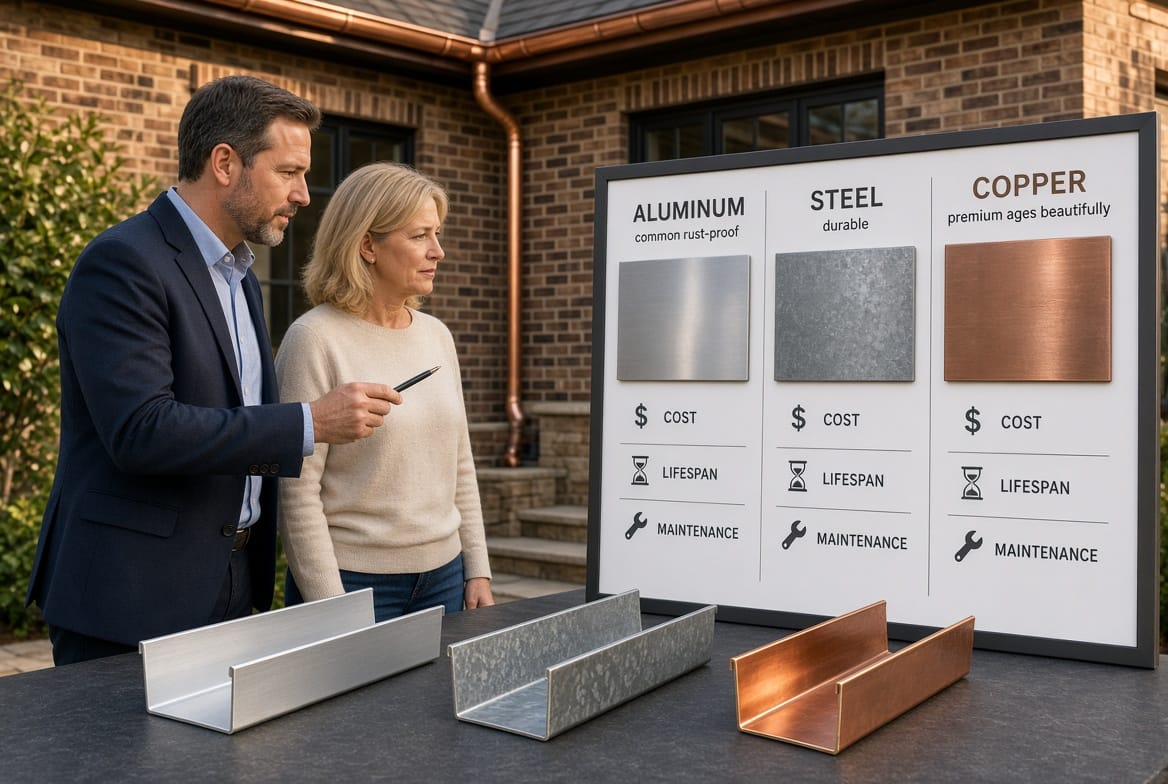
How to Choose the Right Gutter Material for Your Home
Begin with three questions:
- How long do you plan to own the property?
- What is the local climate’s primary stress—salt, snow, intense sun, or acid rain?
- Does the architecture call for a quiet, matching finish or a distinctive, evolving one?
If the answer to the first question is “less than fifteen years” and budget is tight, quality aluminum is usually sufficient. If the home is in a heavy-snow or high-wind zone and you accept inspection duties, steel deserves serious consideration. If the house is a long-term or multi-generational asset and the budget allows, copper frequently becomes the rational premium choice.
Request on-site samples, written lifespan expectations, and a clear scope that includes hanger type, seam method, and downspout placement. A trustworthy contractor will discuss risks openly rather than overselling any single metal.
The Value of Expert Consultation and Professional Installation
Material science only delivers results when hangers are correctly spaced, slopes are accurate, and outlets align with the roof’s drainage plane. Poor workmanship can make the most expensive copper leak and the most economical aluminum fail early. A qualified team evaluates fascia condition, roof edge details, and landscaping constraints before recommending a metal.
They also coordinate color, profile, and accessories so the finished system looks intentional rather than added-on. That combination of product knowledge and installation skill is what turns a comparison chart into decades of dry foundations and intact landscaping.
Choose the right gutter material with confidence rather than hope. A short conversation with an experienced specialist can prevent years of overflow, staining, and unexpected replacement. Bring your questions about climate, architecture, and budget; leave with a clear, customized recommendation that protects both the house and the investment for the long term.
Call Today to Compare Aluminum, Steel & Copper Gutters