The Landscaping Cleanup Dumpster: Branches, Leaves, and Grass
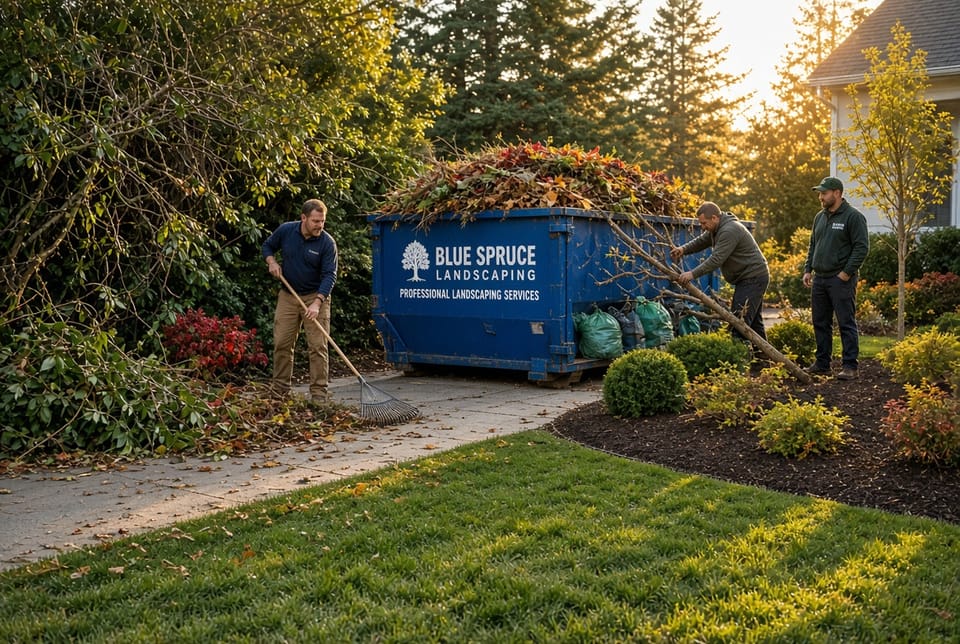
Seasonal landscape debris can quickly overwhelm even the most dedicated homeowner. Fallen branches, thick layers of leaves, overgrown shrubs, and mountains of grass clippings accumulate after storms, spring pruning, summer mowing, and autumn cleanup. When these materials pile up, they create more than an eyesore. They can block drainage, invite pests, and slow down your next gardening project. A landscaping cleanup dumpster offers a straightforward, professional solution that keeps your property safe, organized, and ready for the next season.
Book Your Landscaping Dumpster Today – Call Now!
This guide explains how homeowners use dumpsters for large-scale yard work, shares proven loading techniques, and outlines smart composting options so you can decide what belongs in the dumpster and what can stay on-site.
Understanding Seasonal Landscape Debris
Every season produces its own mix of organic waste. Spring brings storm-damaged limbs and last year’s leftover leaves. Summer generates constant grass clippings and hedge trimmings. Fall delivers the heaviest volume of leaves and dead branches. Winter storms can snap large limbs that must be removed before they become safety hazards.
Leaving this material on the ground for weeks creates several risks:
- Moisture trapped under piles encourages mold and insect activity.
- Heavy branches can damage lawns or crush young plants.
- Loose leaves blow into neighbors’ yards or clog storm drains.
- Overgrown debris becomes a fire hazard in dry weather.
A dedicated dumpster rental removes these concerns in a single, contained process. You gain control over the timeline instead of making repeated trips to a municipal yard-waste site.
How Homeowners Use Dumpsters for Landscaping Projects
Homeowners typically rent a dumpster when a project exceeds what they can haul in a pickup truck or when they want to finish the job in one weekend. Common scenarios include:
- Removing large fallen branches after a windstorm
- Clearing overgrown shrubs and hedges during a garden redesign
- Collecting weeks of yard waste after a major mowing and edging session
- Preparing a property for new sod, mulch, or hardscaping
The dumpster sits on your driveway or a designated area, allowing you to work at your own pace. Family members, hired landscapers, or weekend helpers can toss material in as they go. When the project ends, the dumpster is hauled away and the debris is processed according to local regulations.
This approach saves time, reduces physical strain, and keeps the work site tidy. You avoid the frustration of filling your vehicle multiple times and the uncertainty of whether the local dump accepts mixed yard waste.
Efficient Loading Tips for Maximum Capacity
Proper loading technique lets you fit more material into the same dumpster size and prevents shifting during transport. Follow these practical steps:
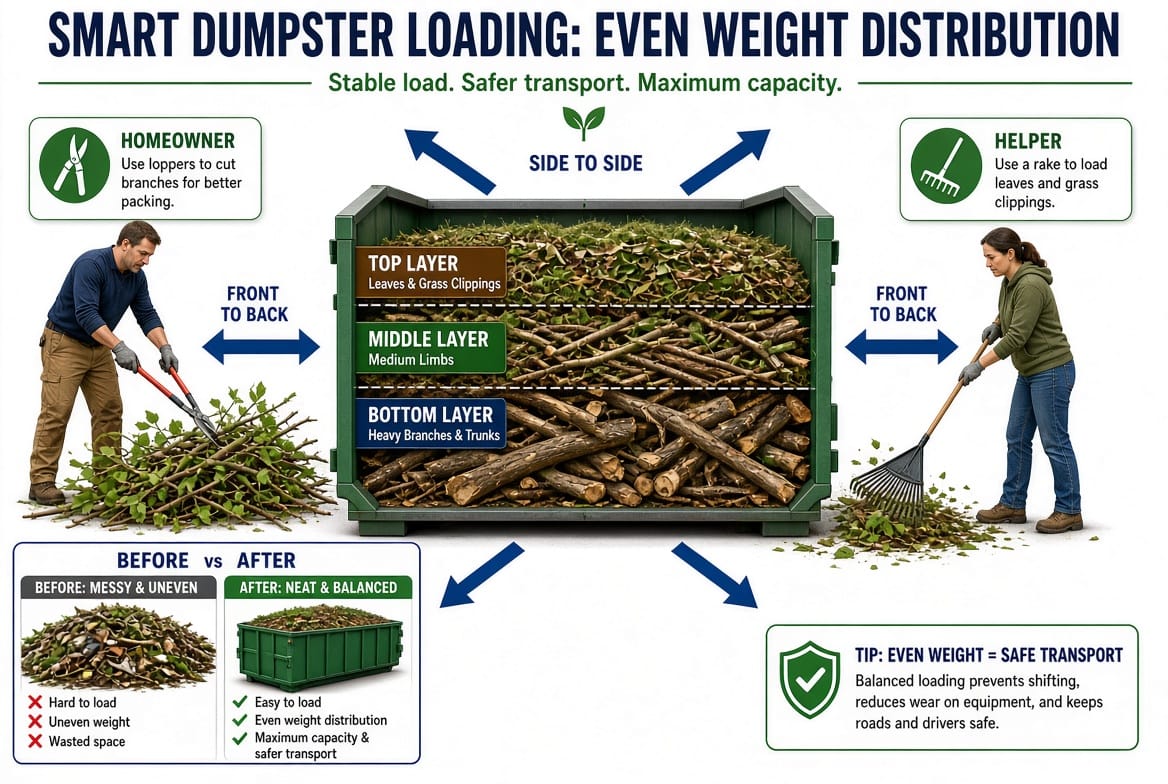
- Start with the heaviest items. Place large branches and thick shrub trunks at the bottom to create a stable base.
- Break or cut long limbs into shorter sections so they lie flat rather than forming air pockets.
- Layer leaves and grass clippings on top of the woody material. These lighter items fill gaps and add weight without wasting space.
- Avoid throwing loose soil or rocks unless the rental company specifically allows them; excess dirt can add unexpected weight.
- Keep the load below the top rail. Overfilling is a common risk that can result in extra fees or refusal of pickup.
- Distribute weight evenly from front to back and side to side.
Work from one end of the dumpster toward the other so you always have a clear path. If you have a helper, one person can cut and the other can load. This simple system keeps the project moving and reduces the chance of injury.
Composting Versus Dumpster Disposal
Not every piece of landscape debris needs to leave the property. Smart homeowners separate materials that can be composted from those that belong in the dumpster.
Compost-friendly items include:
- Small twigs and thin branches (under 1 inch diameter)
- Shredded leaves
- Fresh grass clippings (in thin layers to prevent matting)
- Spent annuals and vegetable-garden waste
These materials break down into nutrient-rich compost that improves soil structure and reduces the need for chemical fertilizers. A simple backyard compost bin or pile can handle a surprising volume if you turn it regularly and maintain the right carbon-to-nitrogen balance.
Items better suited for the dumpster include:
- Large, woody branches that take years to decompose
- Diseased plants or shrubs that could spread pathogens
- Thorny or invasive species you do not want to propagate
- Mixed debris that contains plastic ties, landscape fabric, or other contaminants
By sorting as you work, you keep the dumpster reserved for true waste while building a valuable soil amendment at home. This dual approach is both economical and environmentally responsible.
Safety Considerations and Common Risks
Landscaping cleanup involves physical labor and heavy materials. Protect yourself and others with these precautions:
- Wear sturdy gloves, eye protection, and closed-toe shoes when handling branches.
- Use proper lifting technique: bend at the knees, keep the load close to your body, and avoid twisting.
- Never stand inside the dumpster while it is being loaded or moved.
- Keep children and pets away from the work area.
- Watch for hidden hazards such as wasp nests inside dense shrubs or nails in old landscape timbers.
Overloading remains one of the most frequent risks. A dumpster that exceeds weight limits can damage the truck, the driveway, or the container itself. When in doubt, choose a slightly larger size or schedule a second pickup rather than forcing extra material into an already full container.
Choosing the Right Dumpster Size for Yard Projects
Dumpster sizes for landscaping typically range from 10-yard to 20-yard containers. A 10-yard unit works well for a single large tree removal or a modest spring cleanup. A 15- or 20-yard dumpster handles extensive hedge removal, multiple storm-damaged trees, or a full-property overhaul.
Consider these factors:
- Volume of leaves and grass (these compact more than woody material)
- Number of large branches
- Whether you will add soil or only organic debris
- Length of the rental period
Most companies allow several days on site, giving you flexibility to work around weather or family schedules. Confirm weight limits and prohibited items before the dumpster arrives so there are no surprises on pickup day.
Seasonal Strategies for Year-Round Success
Spring: Focus on storm cleanup and last year’s leftover leaves. Rent the dumpster early so you can plant as soon as the soil warms.
Summer: Schedule a mid-season pickup after major pruning and hedge trimming. Frequent small loads of grass clippings can be composted; save the dumpster for woody waste.
Fall: This is the peak season for leaf volume. A larger dumpster or two sequential rentals may be more efficient than trying to bag everything.
Winter: Address ice-damaged branches promptly to prevent further breakage and to keep walkways clear.
Planning ahead by season prevents last-minute scrambles and keeps your landscape looking cared-for throughout the year.
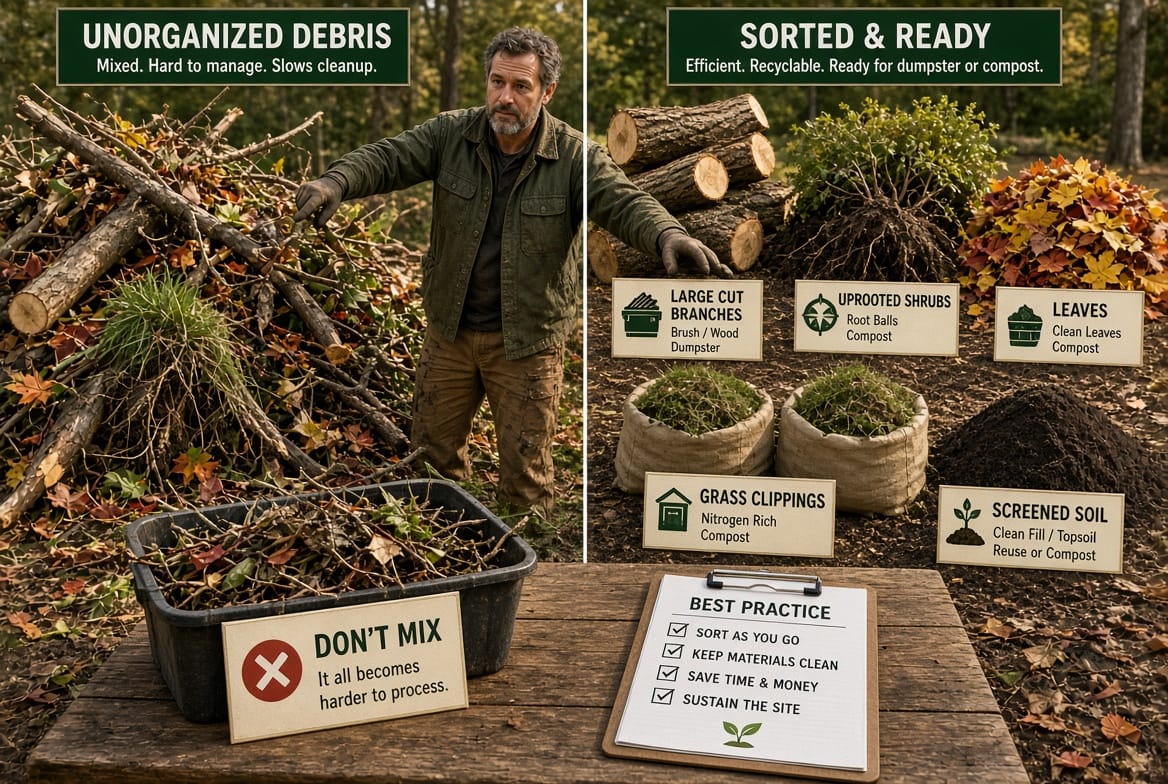
Best Practices for a Smooth Rental Experience
- Measure your driveway or placement area before ordering so the truck can deliver and pick up without obstruction.
- Inform the rental company about any low-hanging wires or tight turns.
- Keep the area around the dumpster clear so the driver can access it easily.
- Separate recyclable materials (clean wood, metal) if your local facility offers that option.
- Take “before” photos of your yard; they make the finished result even more satisfying.
These small steps reduce delays and extra charges while giving you a professional-looking result.
A landscaping cleanup dumpster turns an overwhelming pile of branches, leaves, and grass into a manageable, one-and-done project. You protect your property, stay on schedule, and reclaim your weekends instead of making endless trips to the dump.
Tackle big landscaping projects with a dumpster.
Clear Branches, Leaves & Grass – Call for a Dumpster