The Landscape Lighting Wire: Direct Burial vs. Conduit Installation
Selecting the correct landscape lighting wire is one of the most important decisions homeowners and property managers make when planning outdoor illumination. A well-designed lighting system enhances safety, security, and curb appeal, yet the hidden wiring beneath the soil determines how long that system will perform without costly interruptions. Two primary installation approaches dominate the industry: direct burial cable and conduit installation. Understanding the strengths, limitations, and ideal applications of each method allows property owners to invest confidently and avoid future headaches.
Call Now for Expert Direct Burial vs. Conduit Advice
This guide examines both options in detail, outlines practical recommendations based on real-world conditions, and highlights the role of local codes so that every project begins on solid ground. Whether you are illuminating a residential garden path or a commercial courtyard, the right wiring choice delivers lasting reliability and peace of mind.
Understanding Landscape Lighting Wiring Fundamentals
Most modern landscape lighting operates on low-voltage systems, typically 12 or 24 volts. These systems remain safer for outdoor use than line-voltage alternatives, yet they still require careful protection from moisture, physical damage, and environmental stress. The wire itself must carry consistent power from the transformer to each fixture while resisting corrosion, ultraviolet exposure, and mechanical interference from roots, rocks, or future landscaping work.
Two established methods address these demands. Direct burial cable is manufactured specifically for underground placement without additional covering. Conduit installation places standard or specialized cable inside protective tubing that is then buried. Each approach carries distinct cost, durability, and maintenance profiles. Choosing wisely depends on soil conditions, expected traffic, budget, and long-term service expectations.
Property owners who grasp these differences can discuss options knowledgeably with installers and ensure the finished system meets both aesthetic and functional goals for years to come.
Direct Burial Cable: Purpose-Built for Underground Service
Direct burial cable is engineered with robust insulation and jacketing that withstand direct contact with soil, moisture, and temperature fluctuations. Manufacturers design these cables to meet strict underground ratings, allowing them to be laid in trenches and backfilled without intermediate protection in many applications.
Key Advantages of Direct Burial Cable
- Lower material and labor costs compared with conduit systems
- Faster installation because no additional tubing is required
- Flexible routing around existing plants, hardscape, and obstacles
- Suitable for most residential low-voltage landscape lighting projects
The primary appeal of direct burial cable is economy. Because the cable itself provides the necessary protection, installers spend less time assembling and joining conduit sections. In stable soil free of heavy rock or aggressive root systems, this method delivers reliable performance at an attractive price point.
Important Limitations and Risks
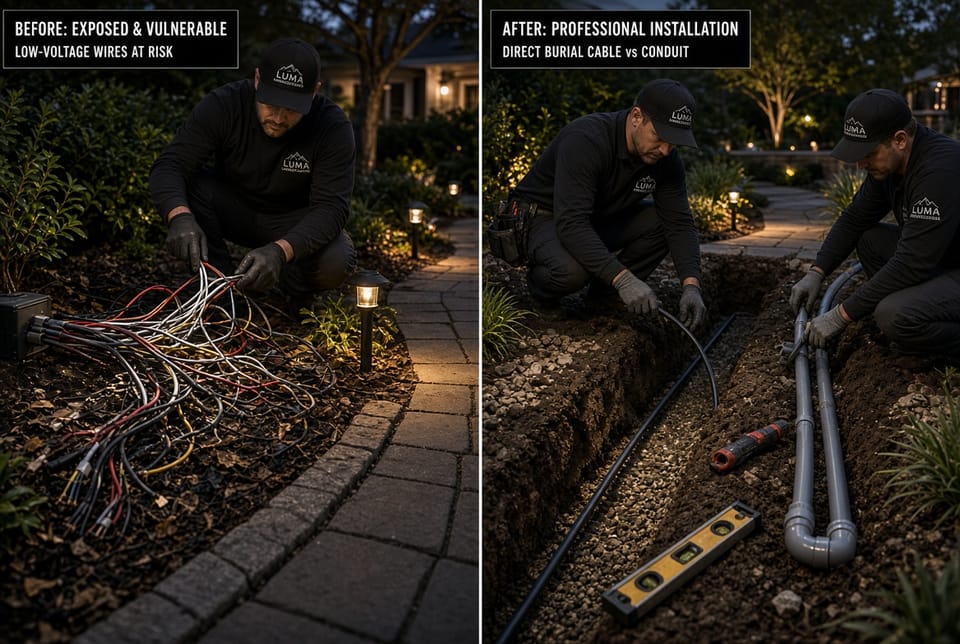
Despite its specialized construction, direct burial cable remains more vulnerable than conduit-protected wiring. Sharp rocks, shifting soil, lawn-aeration equipment, or future excavation can nick or sever the cable. Once damaged, locating and repairing the fault often requires digging multiple exploratory trenches. Moisture intrusion at any compromised point may also accelerate corrosion of conductors over time.
In high-traffic areas, commercial properties, or regions with expansive clay soils that move dramatically with moisture changes, the reduced physical protection of direct burial cable becomes a meaningful consideration. Property owners who anticipate frequent landscape renovations should weigh these risks carefully.
Conduit Installation: Superior Protection and Serviceability
Conduit installation places landscape lighting wire inside rigid or flexible tubing before burial. Common materials include PVC, polyethylene, or metal conduit rated for underground use. The conduit forms a continuous protective pathway from the transformer to each fixture or junction point.
Primary Benefits of Conduit
- Excellent defense against physical damage, roots, and soil movement
- Simplified future repairs or upgrades—cable can often be pulled and replaced without re-excavation
- Greater resistance to moisture when properly sealed
- Compliance advantages in jurisdictions that favor or require additional protection
Because the wire sits inside a durable sleeve, accidental damage during gardening, aeration, or construction is far less likely. Should a fixture need relocation or the system require expansion years later, technicians can often pull new cable through existing conduit runs, dramatically reducing disruption and cost.
Considerations and Trade-Offs
Conduit installation involves higher upfront material and labor expense. Installers must cut, join, and properly slope or drain the conduit to prevent water accumulation. In tightly landscaped spaces, routing rigid conduit around mature trees or intricate hardscape can prove more time-consuming. Flexible conduit options mitigate some of these challenges while retaining most protective benefits.
For properties where longevity and ease of maintenance outweigh initial cost, conduit remains the preferred professional choice.
Side-by-Side Comparison of Installation Methods
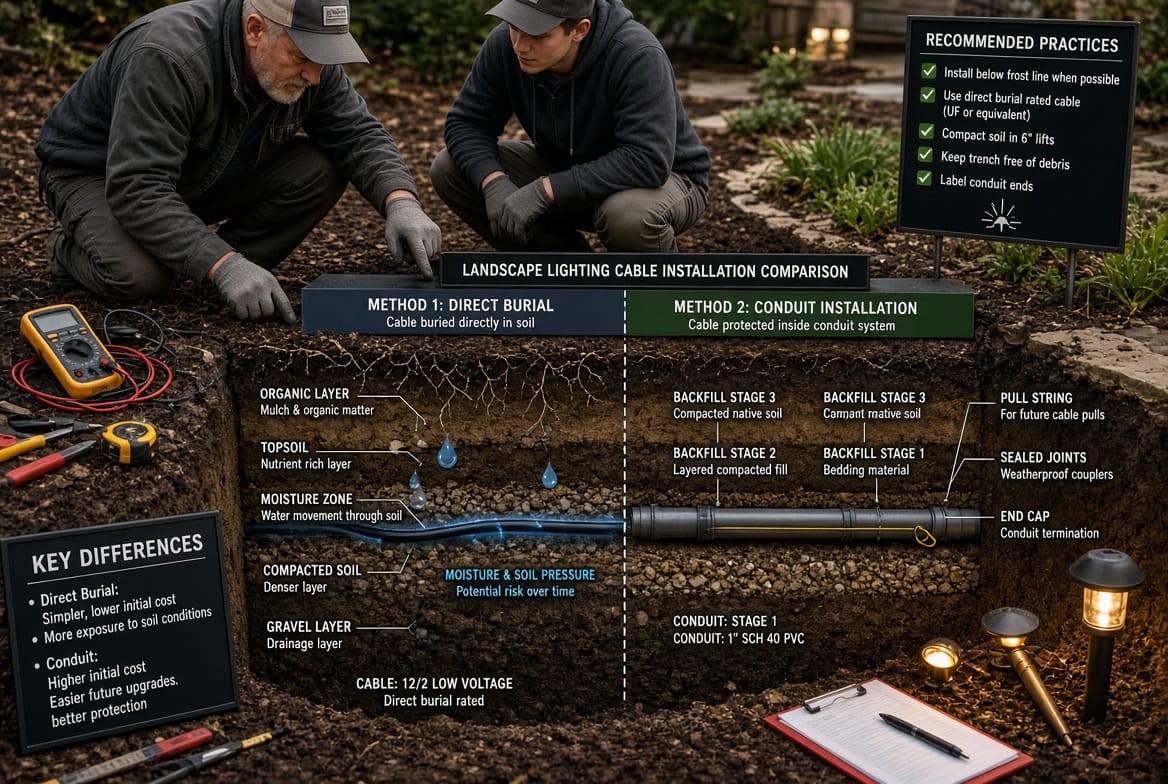
When evaluating direct burial cable against conduit, several practical factors guide the decision:
- Cost — Direct burial is typically less expensive in both materials and labor. Conduit adds cost but often reduces long-term service expenses.
- Protection Level — Conduit provides superior mechanical and environmental shielding. Direct burial relies solely on the cable jacket.
- Repair and Replacement — Conduit allows easier cable pulls and upgrades. Direct burial usually requires excavation to locate and replace damaged sections.
- Installation Speed — Direct burial proceeds more quickly in open areas. Conduit demands additional assembly time.
- Suitability for Future Changes — Properties likely to expand or reconfigure lighting benefit from conduit’s flexibility.
- Soil and Site Conditions — Rocky, root-dense, or unstable soils favor conduit. Stable, sandy, or loamy soils often support direct burial successfully.
These distinctions help match the method to the specific project rather than applying a one-size-fits-all approach.
Recommendations Based on Application
Residential Gardens and Pathways
For most single-family homes with moderate lighting needs and stable soil, direct burial cable offers an excellent balance of performance and value. When the landscape includes mature trees with aggressive root systems or areas subject to frequent digging (vegetable gardens, play zones), upgrading critical runs to conduit provides worthwhile insurance.
Commercial and High-Traffic Properties
Hotels, restaurants, office campuses, and public spaces benefit strongly from conduit installation. Higher foot traffic, maintenance equipment, and the need for uninterrupted operation justify the added protection and serviceability. Many commercial specifications and insurance guidelines also prefer or require conduit.
Challenging Soil Environments
Expansive clay, rocky terrain, coastal areas with high water tables, or regions experiencing freeze-thaw cycles increase the risk of cable damage. In these conditions, conduit delivers greater resilience and reduces the likelihood of unexpected failures.
Projects Anticipating Future Expansion
Homeowners planning phased lighting additions or commercial sites expecting renovations should lean toward conduit. The ability to pull additional or replacement conductors later preserves the original investment and minimizes landscape disruption.
Local Codes, Safety Standards, and Professional Best Practices
Electrical codes governing landscape lighting wire vary by municipality and region. Some jurisdictions accept properly rated direct burial cable for low-voltage systems when installed at required depths. Others mandate conduit for all underground runs or for specific locations such as under driveways and walkways. Depth requirements, burial markings, and transformer placement rules further influence the final design.
Professional installers stay current with local amendments to the National Electrical Code and any regional outdoor lighting ordinances. They also follow manufacturer guidelines for cable ratings, connector sealing, and transformer sizing. Adhering to these standards protects the investment, maintains insurance coverage, and ensures the system operates safely for its intended lifespan.
Attempting complex underground work without proper knowledge of soil conditions, voltage drop calculations, and code requirements can lead to premature failures or safety concerns. Partnering with experienced technicians removes uncertainty and guarantees the chosen method—whether direct burial or conduit—meets every applicable requirement.
Long-Term Performance and Maintenance Considerations
A correctly installed landscape lighting wire system, regardless of method, requires minimal ongoing attention. Periodic visual checks of fixtures, connectors, and transformer output help identify issues early. Systems using conduit generally prove easier to diagnose and service because cable can be accessed or replaced with less invasive digging.
Property owners should document the installation layout, including trench locations and any conduit runs, for future reference. This simple step saves time and expense if modifications become necessary. In both direct burial and conduit installations, using high-quality, UV-resistant cable and waterproof connectors remains essential for durability.
Climate also influences longevity. In regions with extreme temperature swings or heavy rainfall, the added barrier of conduit can extend service life noticeably. Conversely, in mild climates with well-drained soil, carefully installed direct burial cable routinely provides decades of reliable service.
Making the Informed Choice for Your Property
The decision between direct burial cable and conduit installation ultimately rests on a clear assessment of site conditions, budget priorities, and expected system lifespan. Direct burial excels when economy and straightforward installation are primary goals in favorable soil. Conduit shines when protection, future flexibility, and reduced maintenance risk take precedence.
Neither method is universally superior; each serves distinct needs effectively when applied correctly. By evaluating the specific landscape, consulting local code requirements, and working with knowledgeable professionals, property owners achieve outdoor lighting that looks beautiful and performs dependably season after season.
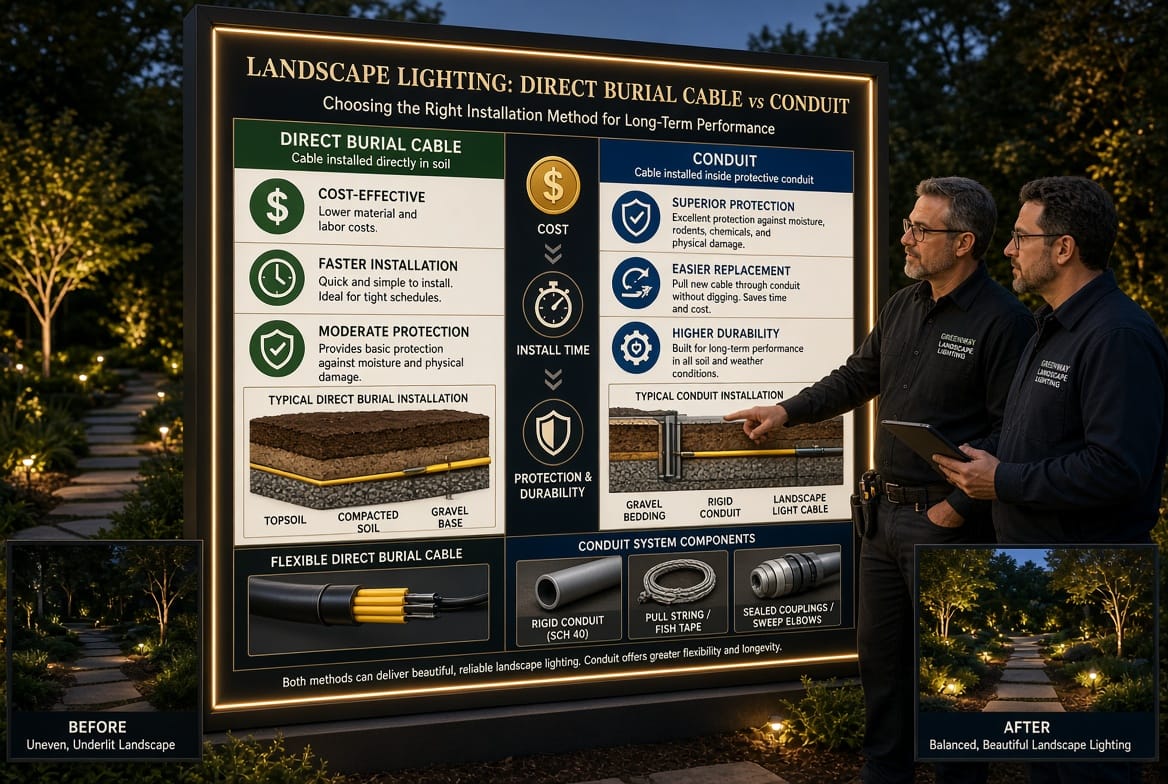
Choosing the proper landscape lighting wire method protects both the investment and the enjoyment of outdoor spaces. Whether the project calls for the practicality of direct burial cable or the reinforced security of conduit, informed selection and professional execution deliver results that stand the test of time.
Warning: Selecting the incorrect wiring approach can lead to premature failures, costly repairs, and unnecessary landscape disruption. Always match the method to site conditions and local requirements.
Protect Your Landscape Lighting System – Call for Installation!