The Landscape Lighting Transformer: Sizing, Placement, and Timer Options
When designing or upgrading an outdoor lighting system, the landscape lighting transformer serves as the essential power hub that delivers safe, low-voltage electricity to your fixtures. It steps down standard 120-volt household power to 12 or 24 volts, creating a secure and flexible solution for illuminating gardens, pathways, architectural details, and water features. Choosing the right landscape lighting transformer ensures consistent performance, energy efficiency, and longevity while preventing common problems such as flickering lights, overheating, or premature system failure.
Get Your Landscape Lighting Powered Right – Call Now!
A properly configured landscape lighting transformer not only powers your fixtures reliably but also supports future expansions and integrates seamlessly with automated controls. Whether you manage a modest backyard or an expansive estate, understanding wattage calculation, strategic placement considerations, and advanced timer options empowers you to create a professional-grade outdoor lighting system. This guide provides clear, step-by-step insights in a reassuring, authoritative manner so you can confidently power your landscape lighting correctly and enjoy breathtaking results night after night.
Why Your Landscape Lighting Transformer Matters for Outdoor Lighting Power
The landscape lighting transformer is more than a simple power converter — it is the foundation of safe, efficient low-voltage outdoor lighting. By reducing voltage to safer levels, it minimizes shock hazards and allows thinner, more flexible cabling that is easier to install and conceal. This design choice makes professional-grade landscape lighting accessible to homeowners while delivering the performance demanded by lighting designers.
Investing in the correct landscape lighting transformer delivers multiple benefits. You achieve even light distribution without voltage drop issues, lower energy consumption, and reduced maintenance costs. Modern transformers also include built-in protection features such as circuit breakers and thermal overload safeguards, providing peace of mind during storms or power surges. When sized, placed, and timed correctly, your system operates silently and efficiently for years, enhancing property value and creating inviting outdoor living spaces.
Homeowners often underestimate the transformer’s role until problems arise. Undersized units overheat, causing bulbs to dim or burn out quickly. Poorly placed units become inaccessible or exposed to moisture, leading to corrosion and failure. Without the right timer, lights stay on too long or fail to activate at dusk, wasting energy and compromising security. By focusing on these three pillars — sizing, placement, and timers — you eliminate risks and maximize enjoyment of your outdoor lighting investment.
How to Size Your Landscape Lighting Transformer: Accurate Wattage Calculation
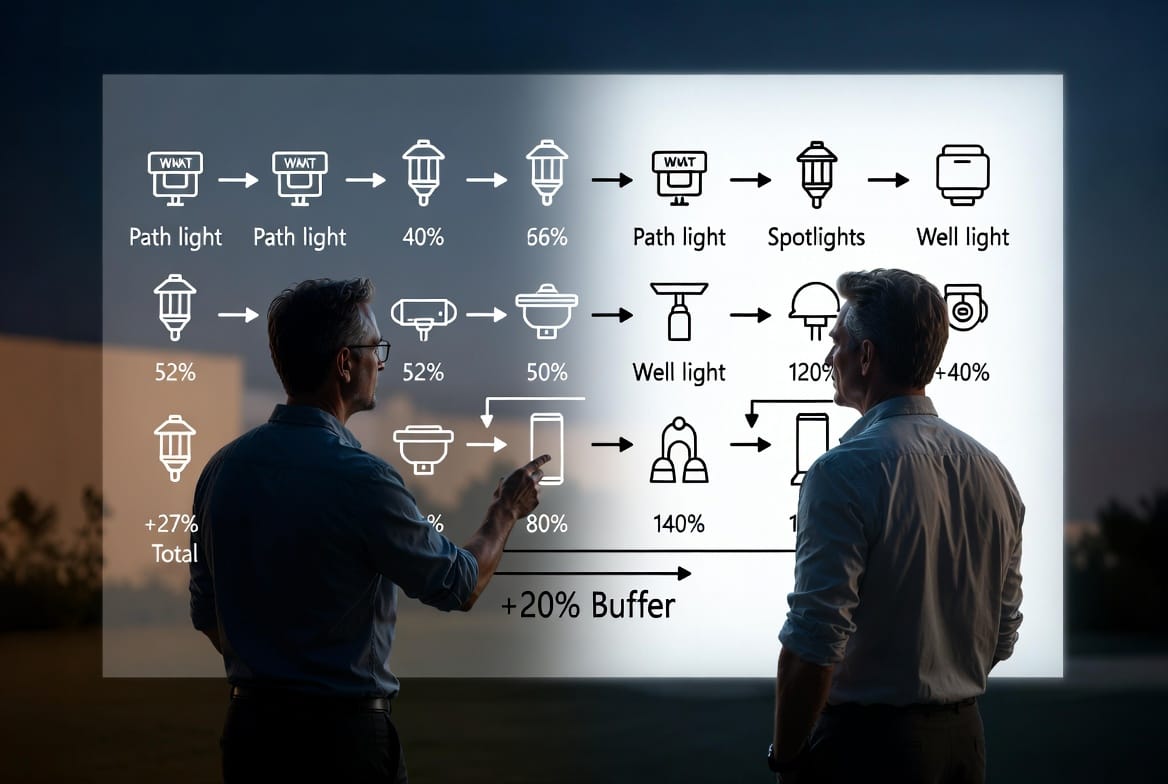
Transformer sizing begins with a straightforward yet precise wattage calculation that accounts for every fixture in your system. Start by listing each light and its rated wattage. Sum these values to determine your base load. Then apply a 20% buffer to protect the transformer, compensate for minor voltage drop along cable runs, and allow room for future additions.
Follow these steps for reliable results:
- Inventory every fixture — path lights, spotlights, well lights, deck lights, and any specialty fixtures.
- Add the individual wattages to obtain the total system load.
- Multiply by 1.20 to build in the recommended 20% buffer.
- Select the next standard transformer size above your buffered total. For example, a 144-watt buffered load calls for a 150-watt or 200-watt unit.
Consider this practical example: ten 7-watt path lights and six 20-watt accent spotlights yield 70 + 120 = 190 watts. Adding the 20% buffer brings the total to 228 watts. A 300-watt landscape lighting transformer provides ample headroom and future flexibility. Always choose a transformer rated for continuous duty and featuring multiple voltage taps if your runs exceed 50 feet, as these taps help counteract voltage drop and maintain bright, consistent illumination.
Undersizing creates immediate risks — excessive heat buildup, tripped internal breakers, and reduced fixture lifespan. Oversizing slightly, however, is perfectly safe and highly recommended. Quality transformers include thermal protection and are designed to run efficiently at 80–90 % of rated capacity. This approach ensures your outdoor lighting system remains cool, quiet, and dependable even during peak evening hours.
Multi-tap transformers offer additional versatility for larger properties. By selecting the appropriate output voltage tap, you compensate for longer cable distances and keep light output uniform across the entire installation. Professional installers routinely perform this calculation on-site to guarantee optimal performance from day one.
Optimal Placement Considerations for Maximum Efficiency and Safety
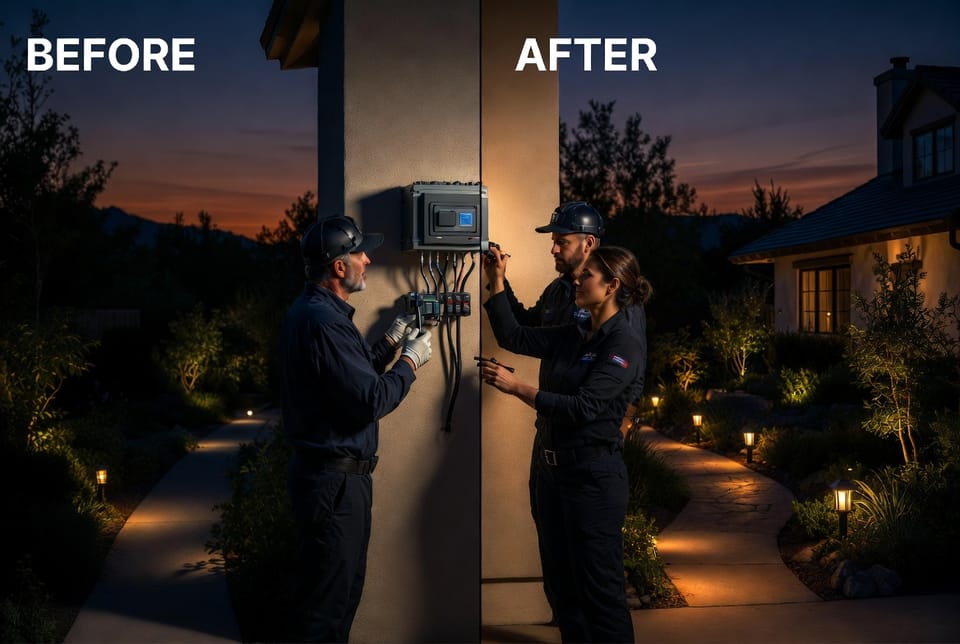
Placement considerations directly influence system reliability and ease of maintenance. Mount your landscape lighting transformer on a sturdy exterior wall near a dedicated GFCI-protected outlet. This location keeps cable runs short, reduces voltage drop, and keeps the unit accessible for seasonal adjustments or bulb changes.
Key guidelines include:
- Position the transformer at least 12–18 inches above ground level to avoid standing water or snow accumulation.
- Choose a sheltered spot away from direct sprinkler spray, downspouts, or heavy foliage that could trap moisture.
- Ensure the unit faces away from prevailing winds and receives some natural airflow to dissipate heat.
- Keep the transformer within 50 feet of the farthest fixture whenever possible to maintain full brightness.
- Use weatherproof conduit or direct-burial cable rated for low-voltage outdoor use for all connections.
Proper placement also enhances safety and convenience. An accessible location allows quick reset of circuit breakers if a fixture is accidentally damaged. It simplifies timer programming and future upgrades. Professional teams often secure the transformer with corrosion-resistant brackets and label each circuit clearly inside the enclosure — small details that prevent frustration years later.
Avoid placing the unit inside garages or sheds unless ventilation is excellent; enclosed spaces can trap heat and reduce efficiency. For coastal or high-humidity regions, select a fully weatherproof stainless-steel or composite housing to guard against salt air and condensation. When these placement considerations are respected, your landscape lighting transformer operates quietly and efficiently season after season, delivering the beautiful, consistent illumination you expect.
Choosing the Right Timer Options for Automated Landscape Lighting Control
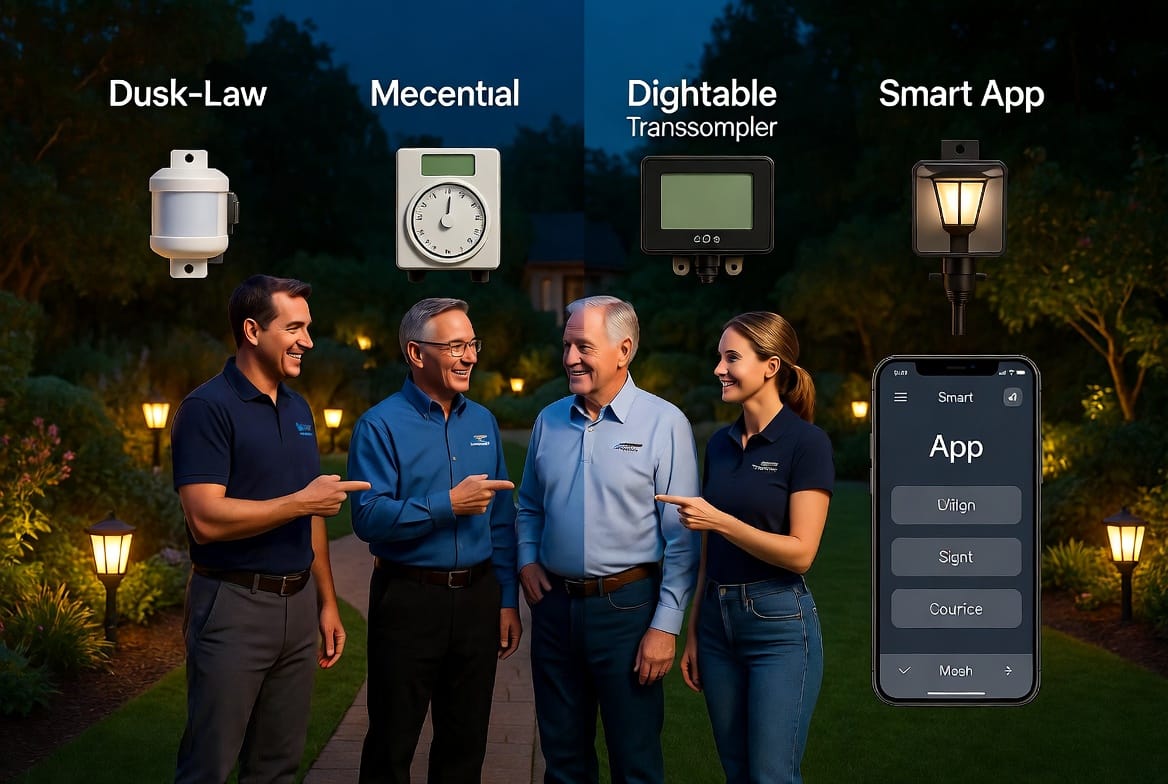
Timer options transform your landscape lighting transformer from a simple power supply into an intelligent, automated system. Four primary choices meet every need and budget, each offering distinct advantages for convenience, energy savings, and security.
- Photocell (dusk-to-dawn) automatically activates at sunset and deactivates at sunrise. It requires no programming and adjusts naturally to changing day length, making it the simplest energy-efficient solution.
- Mechanical timer uses a traditional clock-face dial with pins or tabs to set on/off times. Reliable and straightforward, it suits homeowners who prefer basic scheduling without digital complexity.
- Digital programmable timer allows multiple daily schedules, random modes for vacation security, and precise minute-level control. Its LCD screen and backup battery retain settings during power outages.
- Smart app-controlled timer connects via Wi-Fi to your smartphone, enabling remote scheduling, voice commands, and integration with home automation platforms. Real-time alerts and energy usage reports provide complete control from anywhere.
Selecting the ideal timer depends on your lifestyle. Families seeking simplicity often choose photocell or mechanical models. Tech-savvy homeowners appreciate the flexibility and reporting capabilities of digital or smart timers. All four types connect directly to the landscape lighting transformer and are compatible with most low-voltage systems.
Common Mistakes to Avoid and Professional Maintenance Tips
Even experienced DIYers occasionally overlook critical details. Common mistakes include ignoring the 20% buffer, mounting the transformer too close to irrigation lines, or pairing an incompatible timer. These errors lead to flickering, premature burnout, or complete shutdowns. A quick professional review during installation prevents these issues and ensures long-term reliability.
Routine maintenance keeps your system performing at its best. Inspect connections annually for corrosion, test the timer schedule seasonally, and clear debris from around the transformer housing. Replace any damaged low-voltage cable promptly to maintain safety and efficiency. With minimal care, a quality landscape lighting transformer will deliver consistent, beautiful illumination for a decade or more.
The Lasting Benefits of a Correctly Powered Outdoor Lighting System
A well-designed landscape lighting transformer setup enhances security, increases property value, and creates memorable evening environments for family and guests. Energy-efficient timers reduce electricity costs while automated controls provide peace of mind when you are away. The combination of precise sizing, thoughtful placement, and intelligent timing delivers professional results that homeowners can enjoy with confidence.
Power Your Landscape Lighting Correctly
Warning: An incorrectly sized, poorly placed, or improperly timed landscape lighting transformer can lead to overheating, electrical faults, and costly repairs. Protect your investment and your property by ensuring every detail is handled correctly.
Our experienced team will calculate the perfect transformer size, select the ideal placement, and install the timer option that best matches your lifestyle — delivering safe, stunning outdoor lighting you can trust for years to come.
Let Our Experts Size & Install Your Transformer – Call Today