The Laminate Floor Flood: Why Swelling Means Replacement
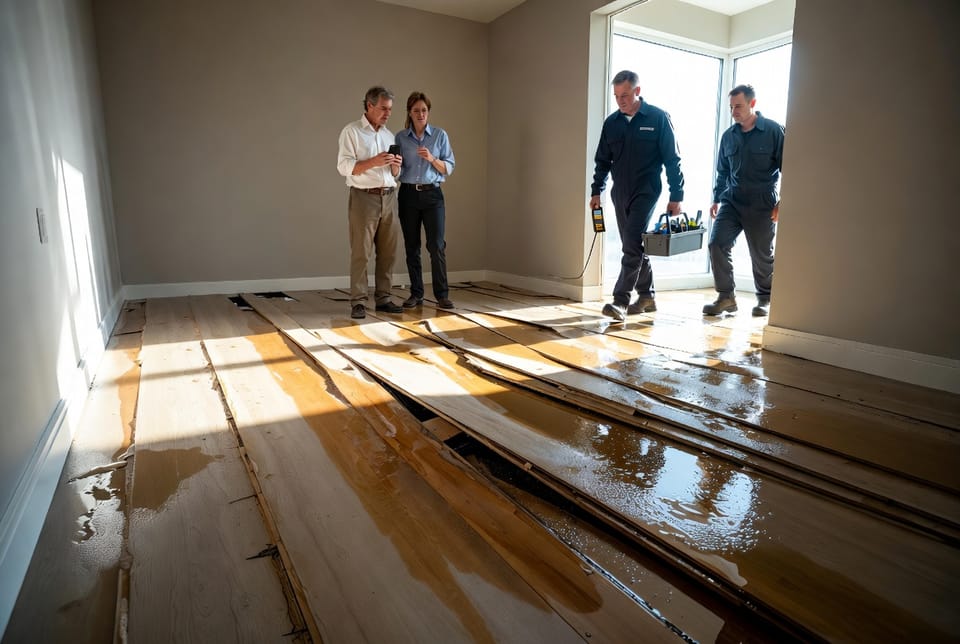
When water meets laminate flooring, the results can be devastating. What many homeowners initially view as a minor spill or leak quickly turns into a major restoration challenge. Laminate’s convenient beauty hides a vulnerable secret: its core construction makes it highly susceptible to permanent damage from moisture.
Protect Your Home from Hidden Mold – Call for Laminate Assessment
At first glance, laminate appears durable and stylish. Yet once water penetrates, the damage is rarely reversible. Understanding why swollen laminate almost always requires replacement helps protect your home’s value and your family’s health.
Laminate + water = replacement. This simple equation guides every professional water damage response involving this popular flooring type.
Understanding Laminate Flooring Construction
Laminate flooring consists of multiple layers designed for affordability and aesthetics. The top wear layer provides scratch resistance and the printed design layer delivers the wood or stone appearance. However, the real story lies beneath.
The core of most laminate planks is high-density fiberboard (HDF) or particle board made from compressed wood fibers and resins. This core gives laminate its stability and click-lock installation capability but reacts dramatically with water.
Unlike solid hardwood or luxury vinyl plank (LVP), laminate lacks natural water resistance throughout its structure. When liquid reaches the core, the fibers absorb moisture rapidly and expand.
Key risk: This expansion is permanent. Once the core swells, the planks lose their structural integrity, even after complete drying.
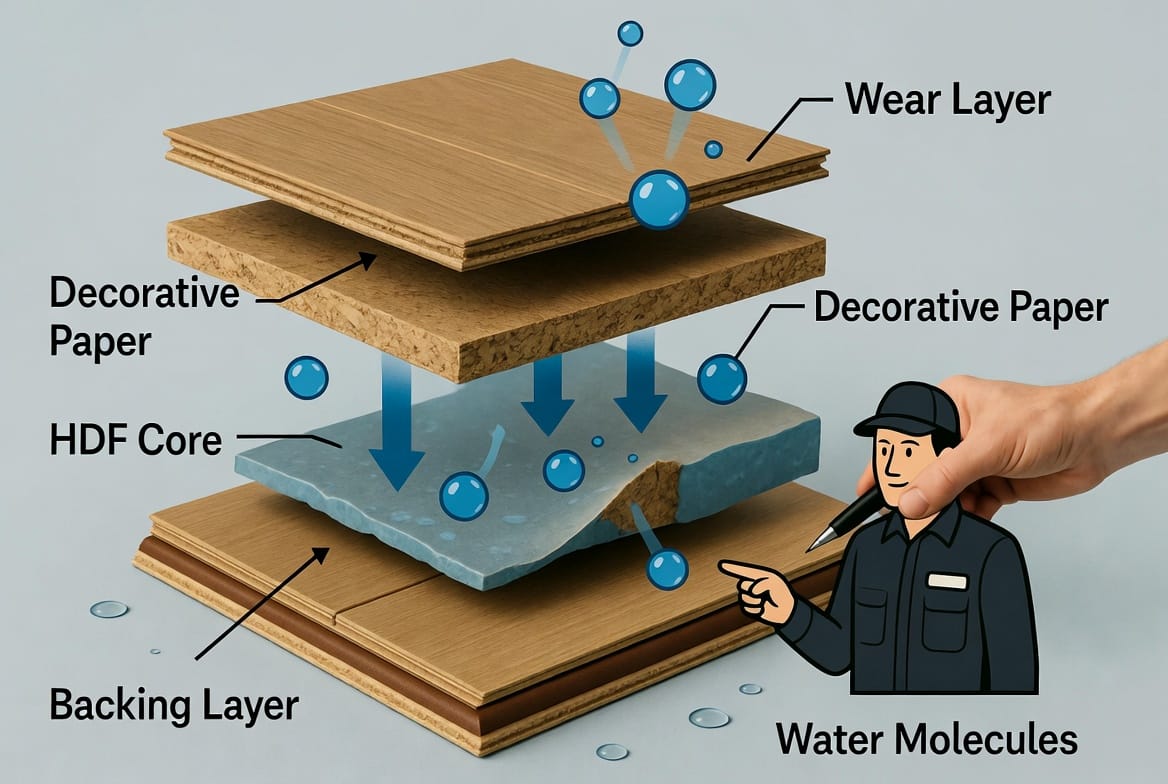
The Science Behind Irreversible Swelling
Water damage in laminate triggers a chain reaction. The absorbent core expands as fibers separate and resins break down. This creates the classic cupping, buckling, and peaking effects homeowners notice within hours of exposure.
Even small amounts of water can cause significant issues because laminate edges are particularly vulnerable at the click-lock joints. Once moisture enters these seams, it travels horizontally beneath the surface, affecting large areas far from the original spill.
Professional restoration teams emphasize that attempting to dry and salvage swollen laminate rarely succeeds long-term. The expanded core does not return to its original dimensions. Attempting to force planks flat often leads to cracking, gaps, and uneven surfaces.
Bold truth: Dried swollen laminate remains structurally compromised. It will continue to telegraph every footstep with creaking and softness, reducing both comfort and property value.
Why You Should Never Try to Save Water-Damaged Laminate
Many homeowners understandably want to minimize costs and disruption. However, saving compromised laminate introduces serious risks:
- Mold and mildew growth within the core material
- Delamination of the decorative top layer
- Bacterial contamination in hidden areas
- Ongoing off-gassing of compromised resins
- Structural weakness leading to trip hazards
The particle board or MDF core acts like a sponge. Once saturated, it creates an ideal environment for hidden microbial growth. Surface drying may make the floor appear better, but the internal damage continues.
Health consideration: Mold spores from water-damaged laminate can affect indoor air quality, particularly concerning for families with children, elderly members, or respiratory conditions.
Professional assessment always prioritizes safety. Visible mold may represent only a fraction of potential contamination hidden within the flooring system and subfloor.
Recognizing the Warning Signs
Early identification of laminate water damage helps limit spread. Look for these indicators:
- Visible swelling or cupping along plank edges
- Soft or spongy feel when walking
- Gaps appearing between planks
- Discoloration or staining on the surface
- Musty odors even after initial cleanup
- Difficulty locking replacement planks during repairs
If you notice any of these symptoms after a flood, leak, or even heavy cleaning mishap, immediate action prevents escalation.
Pro tip: Document the damage thoroughly with photos and videos before any removal begins. This documentation supports insurance claims and helps restoration professionals develop the most effective response plan.
The Professional Replacement Process
Replacing water-damaged laminate requires systematic execution. Here’s what the process typically involves:
Step 1: Assessment and Containment
Certified technicians evaluate the full extent of damage using moisture meters and thermal imaging. They establish containment barriers to prevent cross-contamination to unaffected areas.
Step 2: Safe Removal
Damaged planks are carefully removed and disposed of according to local regulations. Technicians inspect and treat the subfloor for residual moisture and potential microbial issues.
Step 3: Subfloor Restoration
The subfloor must return to proper dryness and structural soundness before new flooring installation. This may include applying antimicrobial treatments or installing vapor barriers.
Step 4: New Laminate Installation
Quality replacement laminate with enhanced moisture resistance features gets installed following manufacturer specifications. Proper underlayment and expansion gaps ensure long-term performance.
Step 5: Final Testing and Cleanup
Moisture levels are re-tested, and the area receives thorough cleaning. Technicians walk through the completed work with homeowners, answering questions and providing maintenance guidance.
The entire process typically takes several days, depending on the affected area size and drying requirements.
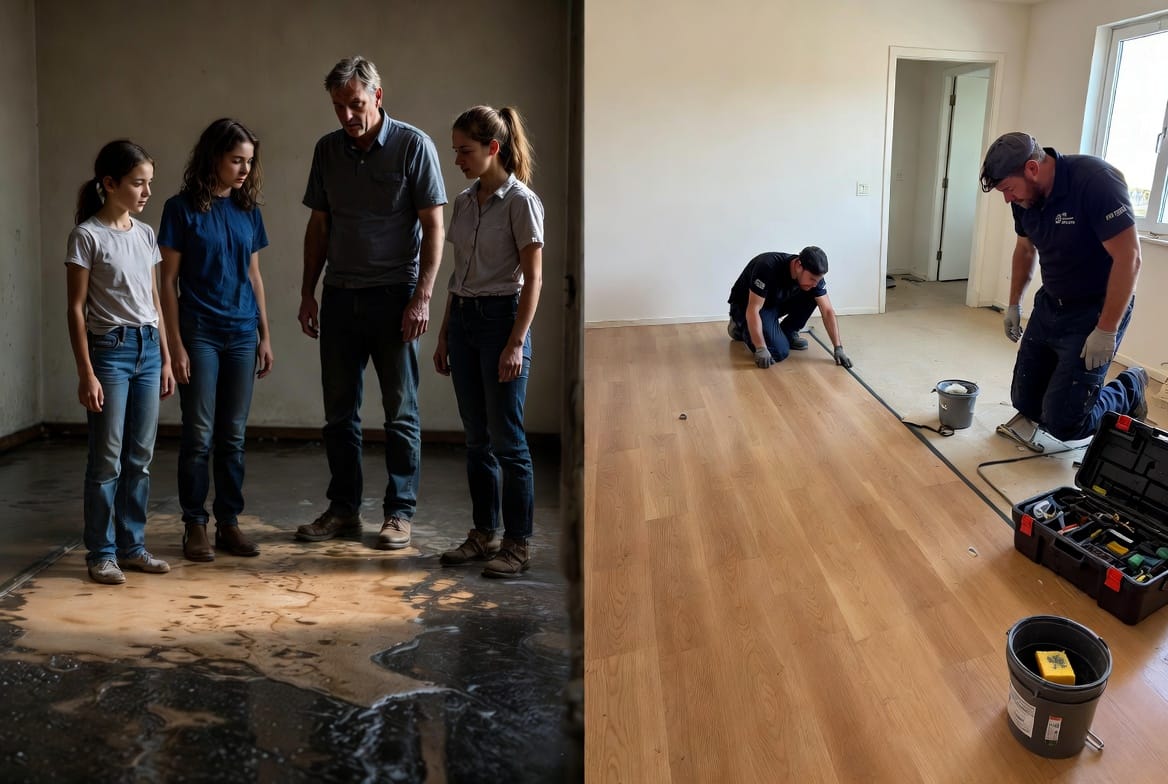
Benefits of Professional Replacement
Choosing professional replacement over DIY attempts delivers multiple advantages:
- Warranty protection on both materials and labor
- Proper moisture management preventing recurrence
- Improved indoor air quality through thorough remediation
- Enhanced property value with updated flooring
- Peace of mind knowing the job was done correctly
Modern laminate options now include better water-resistant cores and click systems, offering improved performance compared to older generations.
Preventing Future Laminate Water Damage
While accidents happen, several strategies reduce risk:
- Address leaks immediately
- Use proper moisture barriers during installation
- Maintain appropriate indoor humidity levels
- Avoid excessive water when cleaning
- Consider area rugs in high-risk zones
- Install water detection sensors near appliances
Regular maintenance and vigilance protect your investment effectively.
When to Call Water Damage Experts
Not every spill requires professional intervention. However, significant leaks, flooding, or widespread swelling demand immediate expert response.
Emergency CTA: Laminate + water = replacement. Don’t risk mold growth or structural issues by attempting to salvage compromised flooring. Call for a professional water damage assessment today at (855) 321-3350.
Our experienced team provides rapid response, thorough assessment, and complete restoration services. We handle everything from initial water removal through final laminate replacement with care and expertise.
Making the Right Choice for Your Home
Water damage creates stress, but understanding the realities of laminate flooring helps you make informed decisions. Swollen laminate rarely recovers its original condition, making professional replacement the safest, most cost-effective long-term solution.
The investment in proper restoration protects your family’s health, preserves your home’s value, and restores beauty and functionality to your living spaces.
Don’t wait for hidden damage to worsen. Contact water damage professionals who understand laminate’s unique vulnerabilities and deliver reliable results.
Your floors—and your family—deserve the best possible care after water intrusion.
Water Damaged Floors? We Replace Laminate Fast – Call Now