The HVAC Return Air Filter Grille: Why Filter Location Matters for System Protection
In today’s homes, reliable HVAC performance is essential for year-round comfort, energy efficiency, and indoor air quality. Yet one critical detail often goes unnoticed: the HVAC return air filter grille and exactly where your filter is placed. Proper filter location is not a minor convenience—it directly protects your entire heating and cooling system from unnecessary strain, extends equipment life, and keeps energy bills in check.
Get Expert Filter Placement Advice – Call Now!
When homeowners understand the difference between filters installed at the return air grille versus the air handler, they avoid common pitfalls that can quietly undermine system performance. This comprehensive guide explains why filter placement matters, the risks of incorrect setups, and the best practices tailored to every system type. Rest assured, getting this right is straightforward and delivers measurable benefits for your home and wallet.
Understanding the HVAC Return Air Filter Grille
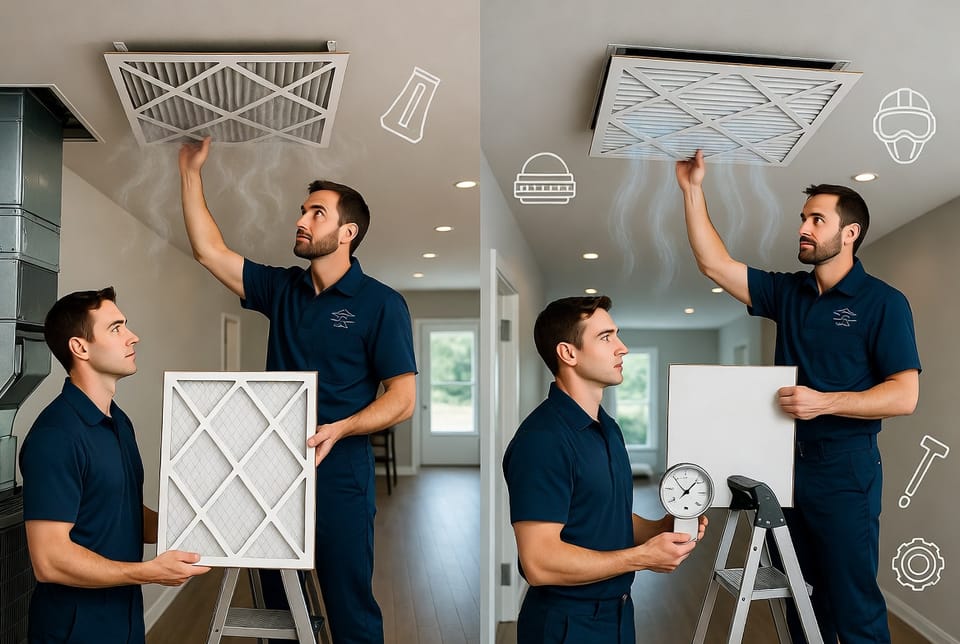
The return air filter grille serves as the primary entry point for indoor air to re-enter your HVAC system. Positioned in walls, ceilings, or floors, these grilles house the filter that captures dust, pollen, pet dander, and other particles before air cycles back through the blower, coils, and ducts.
A well-maintained return air filter grille acts as the first line of defense. When the filter sits correctly behind the grille, it ensures balanced airflow while trapping contaminants close to the living space. This placement is especially common in homes with central air systems because it simplifies monthly changes and keeps the filter accessible without entering mechanical rooms.
Filter Placement Options: Return Grille vs. Air Handler
HVAC systems offer two primary filter location choices, and each serves a distinct purpose.
- Return grille placement keeps the filter in the living area—easy to access, visible for routine checks, and effective at protecting the entire duct network from the start.
- Air handler or furnace cabinet placement positions the filter inside the mechanical unit itself, often in a dedicated slot near the blower motor.
Both locations clean the air, yet they are not interchangeable in every setup. The key lies in matching the filter to your specific equipment design. Using the wrong spot—or worse, using both—creates immediate performance issues.
Why You Cannot Use Filters in Both Locations
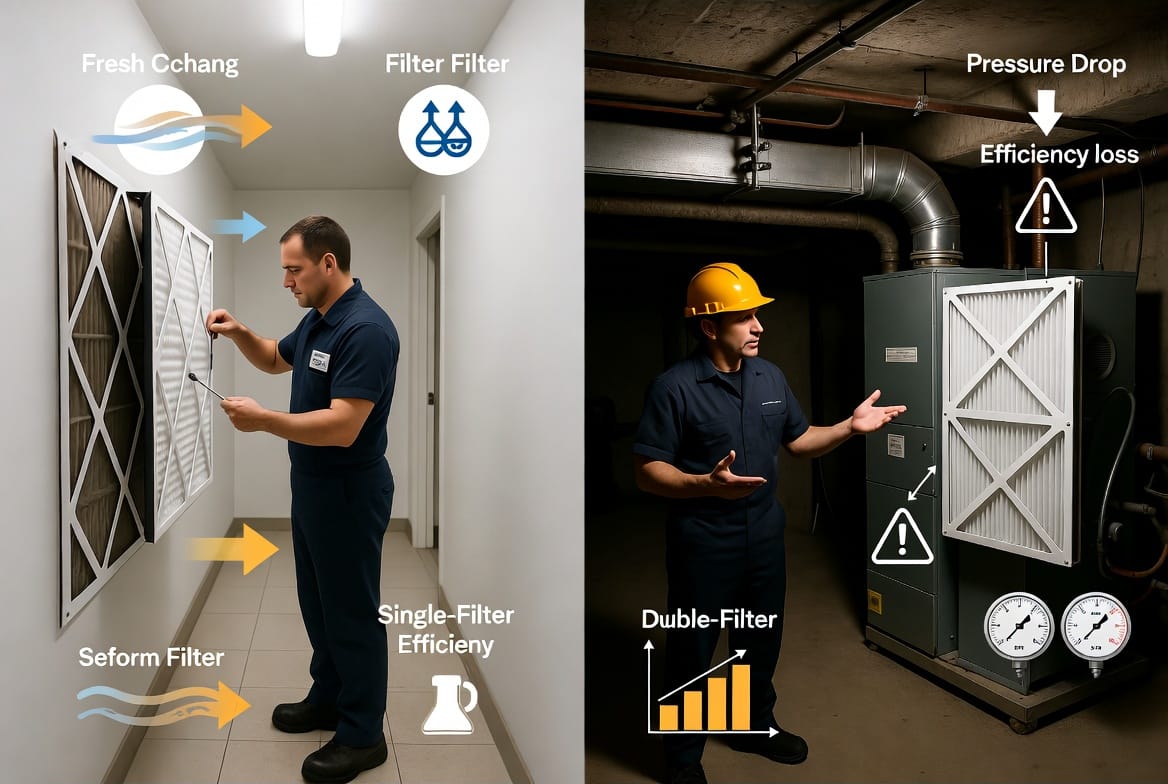
One of the most important rules in HVAC maintenance is this: never double-filter your system. Installing filters at both the return air grille and the air handler causes severe airflow restriction.
Restricted airflow forces the blower motor to work harder, raising energy consumption and risking overheating. Over time, this strain can damage the motor, reduce coil efficiency, and trigger safety shutoffs. In extreme cases, poor airflow leads to frozen evaporator coils in summer or cracked heat exchangers in winter—costly repairs that proper filter location easily prevents.
Manufacturers design systems around a single filter path for a reason. Double filtering may seem like extra protection, yet it actually reduces system capacity, lowers comfort levels, and shortens equipment lifespan. Trust the engineering: one correctly placed filter delivers optimal protection without compromising performance.
Proper Filter Location for Different System Types
Every HVAC configuration has an ideal filter placement strategy. Understanding your system type ensures you choose the right spot every time.
Central Air Conditioning and Heat Pump Systems
These units perform best with the filter located at the return air grille. This placement captures particles before they reach the ductwork and air handler, maintaining strong airflow across the evaporator coil.
Furnace and Forced-Air Heating Systems
Most modern furnaces include a built-in filter rack inside the air handler cabinet. Here, the air handler filter location is preferred because it protects the blower and heat exchanger directly while allowing larger filter sizes for better efficiency.
Ductless Mini-Split Systems
These systems typically rely on washable filters inside each indoor unit rather than a central grille. Focus on manufacturer guidelines to avoid unnecessary add-on filters that could restrict the compact fans.
Packaged Units and Rooftop Systems
Filter placement is usually inside the unit cabinet near the return plenum. Homeowners with these systems should never add a secondary grille filter, as the factory design already accounts for proper airflow.
By following equipment-specific recommendations, you guarantee balanced pressure, consistent temperatures, and long-term reliability.
The Hidden Benefits of Correct Filter Location
Choosing the right HVAC return air filter grille location delivers far more than clean air. Homeowners notice:
- Improved energy efficiency – Proper airflow lets your system run at designed capacity, cutting monthly utility costs by up to 15 percent in many cases.
- Extended equipment life – Reduced strain on motors, compressors, and heat exchangers can add years to your HVAC investment.
- Better indoor air quality – Filters placed early in the return path trap allergens before they circulate throughout the home.
- Fewer service calls – Correct placement prevents the most common causes of system failure, giving you peace of mind.
These advantages compound over time, making professional filter location guidance one of the smartest home maintenance decisions you can make.
Common Mistakes Homeowners Make – And How to Avoid Them
Even well-intentioned homeowners sometimes misplace filters. Watch for these frequent errors:
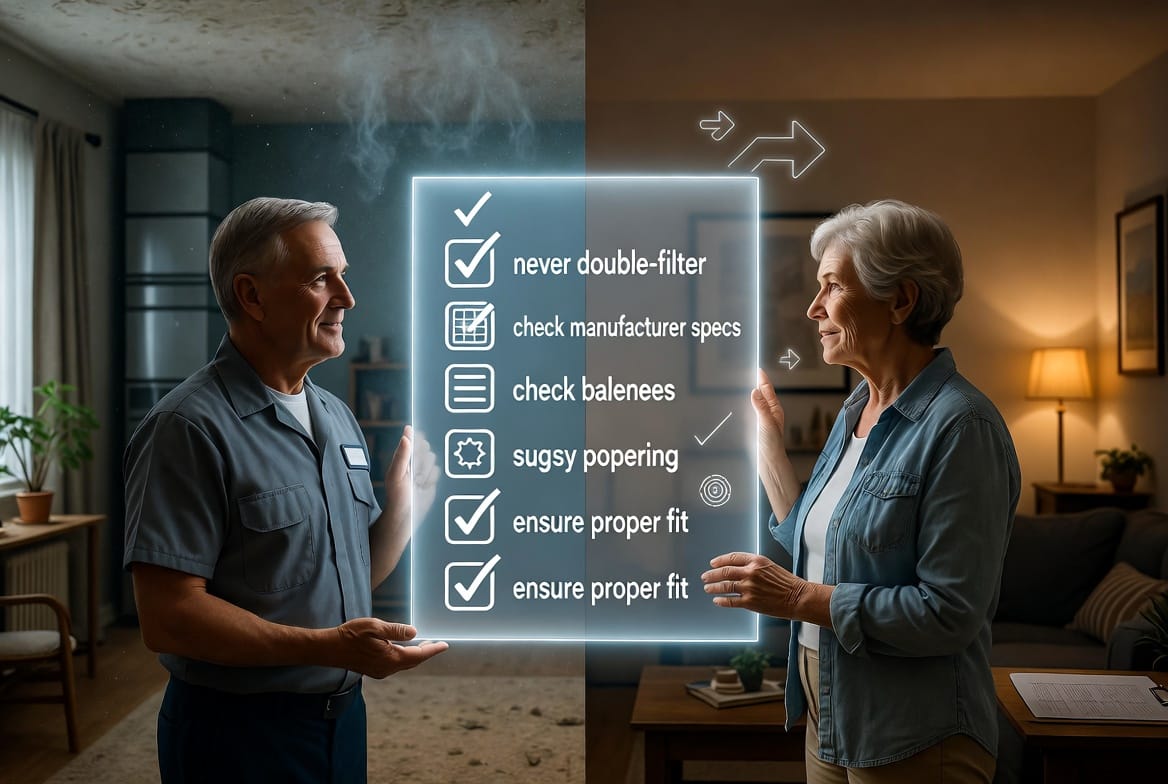
- Installing a filter where none is specified – Always verify your model’s requirements before adding extra media.
- Using the wrong size or MERV rating – Oversized filters or overly dense media create the same airflow restriction as double filtering.
- Forgetting to check manufacturer specs – Each unit is engineered for one primary location; ignoring the manual leads to inefficiency.
- Neglecting proper fit – Gaps around the filter allow unfiltered air to bypass the media entirely.
Avoid these pitfalls by scheduling a quick professional inspection. A certified technician can confirm the ideal filter location for your exact system and ensure a perfect seal every time.
Step-by-Step Guide to Checking and Maintaining Your Filter Placement
Maintaining correct filter location is simple when you follow these steps:
- Locate your primary return air grille or air handler filter slot.
- Turn the system off before removal to avoid pulling dust into the unit.
- Inspect the filter for proper seating—no gaps, no bending.
- Replace according to the schedule recommended by your equipment maker (typically every 1–3 months).
- Verify airflow feels strong at supply vents after reinstallation.
When in doubt, rely on a trusted HVAC professional. Their expertise ensures your return air filter grille works exactly as engineered.
Protecting Your Investment Starts with Smart Filter Placement
Your HVAC system is a significant investment in home comfort. By focusing on the HVAC return air filter grille and selecting the correct filter location, you safeguard performance, reduce energy waste, and enjoy cleaner air every day.
Remember, filter location affects airflow and efficiency. Our team is ready to ensure your filters are placed perfectly—protecting your system and delivering the reliable comfort you deserve.
Ensure Proper Filter Location & Maximum Efficiency – Call Now