The AC Contactor: Why This Electrical Switch Is the Most Common Failure Point
In the world of air conditioning systems, few components work harder—or fail more often—than the AC contactor. This small but critical electrical switch sits inside your outdoor condenser unit and acts as the gatekeeper for high-voltage power. When it stops working correctly, your entire AC system can shut down without warning, leaving you in uncomfortable heat.
Fix Your AC Contactor Today – Call Now!
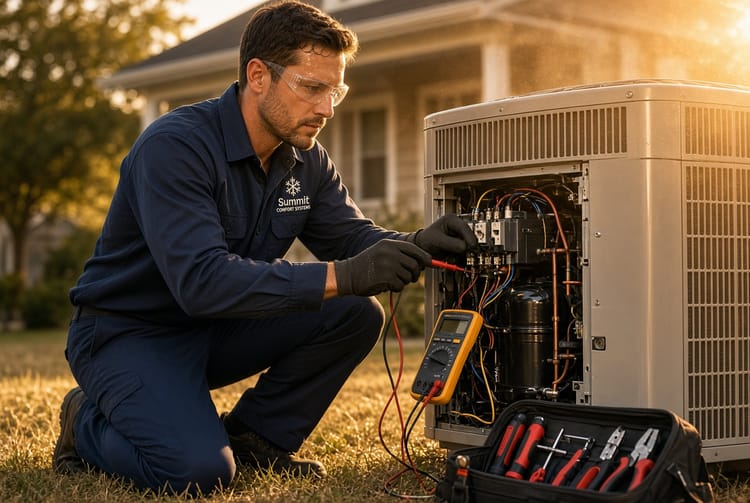
As experienced HVAC professionals, we see AC contactor failure more than almost any other repair. It accounts for the majority of “no cooling” service calls we handle each season. The good news? This is a straightforward, cost-effective fix when caught early. Understanding how the AC contactor works, recognizing the warning signs, and knowing when to replace it can save you from bigger headaches and higher repair bills.
In this comprehensive guide, we’ll walk you through everything you need to know about this vital part of your HVAC system. You’ll learn why the AC contactor is the most common failure point, what symptoms to watch for, and how a quick professional replacement restores comfort and peace of mind.
What Is an AC Contactor and Why Does It Matter?
The AC contactor is essentially a heavy-duty relay designed to handle the high amperage required by your compressor and condenser fan motor. Unlike ordinary light switches, it manages 240 volts and 20–60 amps of current depending on your system size.
When your thermostat calls for cooling, it sends a low-voltage signal (usually 24 volts) to the contactor coil. This energizes the coil, pulling the contact points together and allowing full power to flow to the compressor and fan. Once the cooling demand is satisfied, the signal stops, the contacts open, and power is cut. This on-off cycling happens hundreds of times every day during peak summer months.
Because the AC contactor controls the two largest power-hungry components in your system, any weakness here immediately affects performance. A healthy contactor ensures smooth, reliable operation. A failing one creates electrical chaos that can damage other expensive parts if left unchecked.
How the AC Contactor Operates – And Where Things Go Wrong
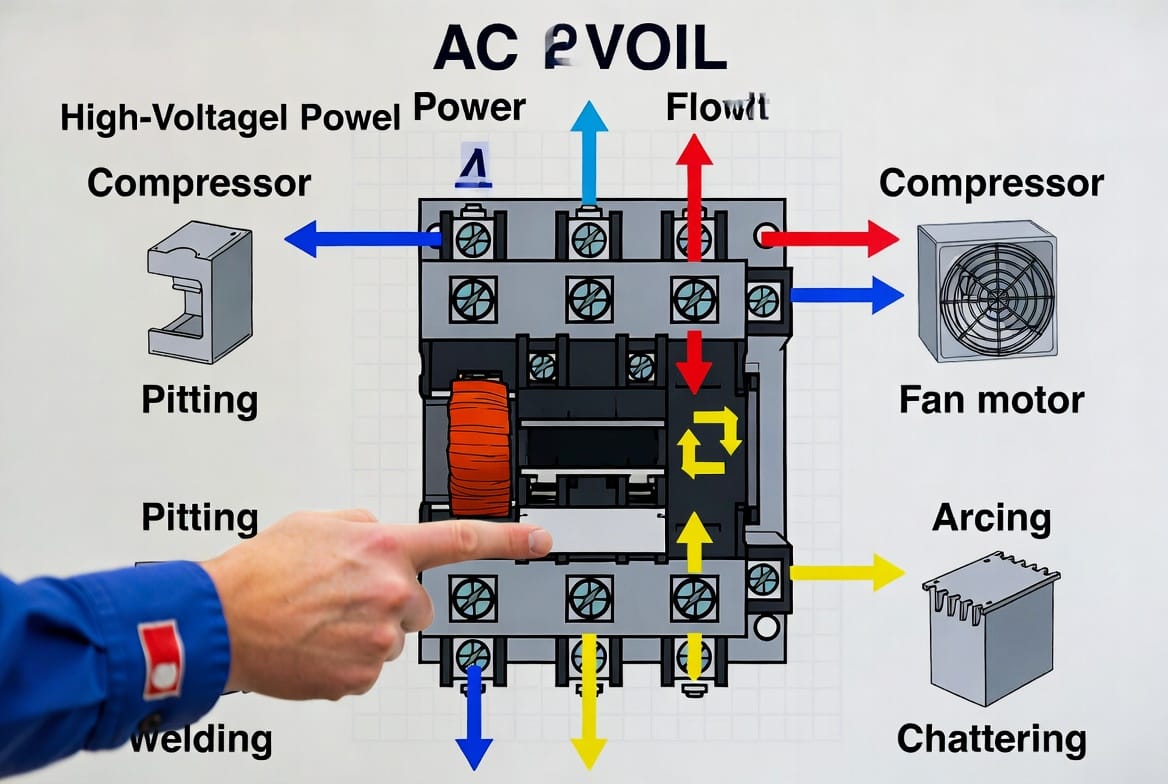
Inside the AC contactor are two sets of silver-alloy contact points, an electromagnetic coil, and a spring mechanism. When energized, the coil creates a magnetic field that snaps the movable contacts against the stationary ones, completing the circuit. The spring returns everything to the open position when the signal ends.
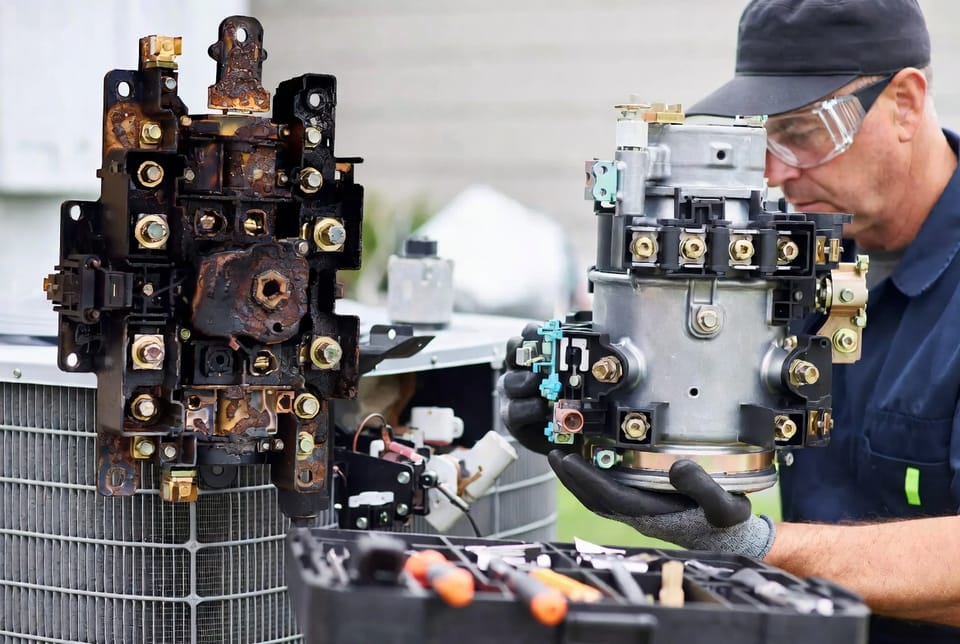
This simple design is rugged, but the constant arcing that occurs each time the contacts open and close slowly erodes the metal surfaces. Over time, this leads to pitting, carbon buildup, and eventually welded or stuck contacts. Outdoor exposure to dust, moisture, pollen, and extreme temperature swings accelerates the wear.
Key risks include:
- Burn marks and pitting on contact surfaces
- Welded contacts that refuse to open or close properly
- Chattering caused by a weakening coil
- Buzzing or humming without compressor startup
These issues don’t happen overnight, but they are inevitable in any system that runs regularly for several years.
Clear Warning Signs Your AC Contactor Is Failing
Recognizing AC contactor failure early can prevent a complete system breakdown. Here are the most common symptoms we encounter:
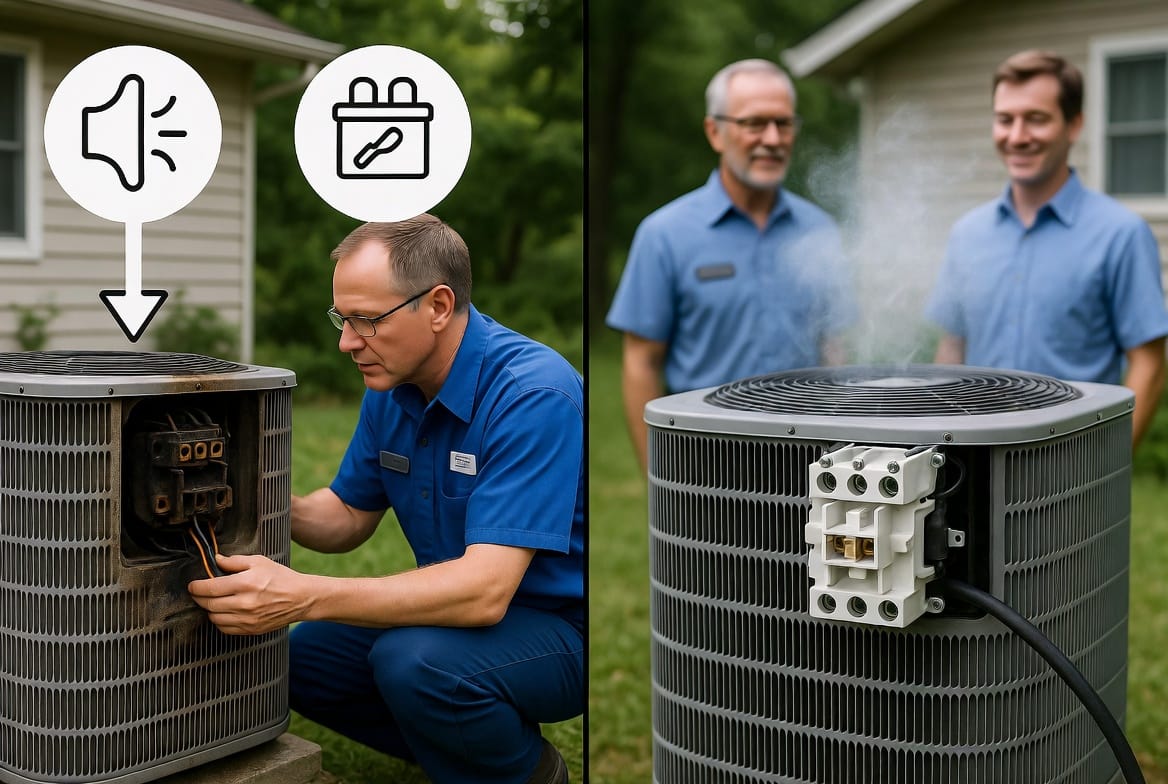
- Humming outdoor unit that won’t start: You hear the condenser fan trying to run, but the compressor stays silent.
- Chattering or buzzing noise: Rapid clicking or vibrating sound from the contactor as the weakened coil struggles to hold the contacts closed.
- No cooling despite thermostat setting: Indoor fan runs, but no cold air flows because the compressor never engages.
- Visible burn marks or pitting when the unit is safely inspected.
- Intermittent cooling: System works sometimes but fails unpredictably during peak heat.
- Tripped breakers or blown fuses repeatedly, indicating electrical arcing inside the contactor.
Bold reminder: Never attempt to open the electrical panel or test the contactor yourself. High voltage is present even when the unit is off. Always call a licensed technician for safety and accuracy.
If you notice any of these signs, schedule service promptly. Delaying can lead to compressor damage, capacitor burnout, or even a full system replacement—repairs that cost significantly more than a simple AC contactor replacement.
Why the AC Contactor Is the #1 Failure Point in Residential HVAC Systems
Several factors make the AC contactor uniquely vulnerable:
- Constant high-current cycling – It handles massive electrical loads thousands of times per season.
- Outdoor exposure – Located in the condenser unit, it battles weather, dirt, and debris without protection.
- Arcing during every cycle – Each make-and-break of the contacts creates a tiny electrical arc that erodes metal over time.
- Voltage spikes – Power surges from storms or grid fluctuations stress the coil and contacts.
- Age and wear – Most contactors last 5–10 years under normal conditions; heavy-use systems see failure sooner.
Industry data consistently shows contactor issues topping the list of outdoor unit repairs. The component is inexpensive and relatively easy to replace, yet its failure stops your entire AC system cold—literally.
When Should You Replace the AC Contactor?
Don’t wait for total failure. Professional technicians recommend replacement at the first signs of pitting, buzzing, or chattering. During routine maintenance, we often spot worn contactors before homeowners notice symptoms.
Replacement is recommended when:
- Contacts show visible pitting or burn marks
- The coil buzzes or fails to pull in consistently
- The unit has exceeded seven years of service in hot climates
- You’ve experienced repeated electrical faults traced to the contactor
Reassuring fact: A new AC contactor restores full system performance quickly and reliably. It’s one of the most affordable HVAC repairs available, typically completed in under an hour with minimal downtime.
The Professional AC Contactor Replacement Process
When you call for service, here’s exactly what to expect:
- Safety first – Technician shuts off power at the disconnect and breaker.
- Diagnosis – Visual inspection and electrical testing confirm the contactor as the culprit.
- Removal – Old unit is carefully disconnected and removed.
- Installation – Exact-match replacement is wired and secured.
- Testing – Full system startup and run test verify proper operation.
- Cleanup – All debris is removed and the unit is left spotless.
The entire process is clean, efficient, and designed to get your AC back online the same day. We use only manufacturer-approved parts for maximum reliability and longevity.
Preventive Maintenance Tips to Extend Contactor Life
While AC contactor failure is common, you can slow the process dramatically:
- Schedule annual HVAC tune-ups before peak cooling season.
- Keep the outdoor unit clear of debris, leaves, and overgrown vegetation.
- Change indoor air filters monthly to reduce overall system strain.
- Install surge protection to guard against voltage spikes.
- Never ignore unusual noises or cooling issues—early intervention saves money.
These simple steps keep your contactor healthier and your entire system running efficiently year after year.
The Bottom Line: Don’t Let a Small Switch Ruin Your Comfort
A failed contactor stops your AC cold, but the fix is fast, affordable, and highly effective when handled by professionals. Understanding this component empowers you to act quickly and avoid larger problems.
Whether your system is showing early warning signs or has already stopped cooling, our team is ready to diagnose and resolve the issue the same day.
Expert AC Contactor Replacement – Call Today!