The HVAC Refrigerant Types: R-22 vs. R-410A vs. R-32 Explained for Homeowners
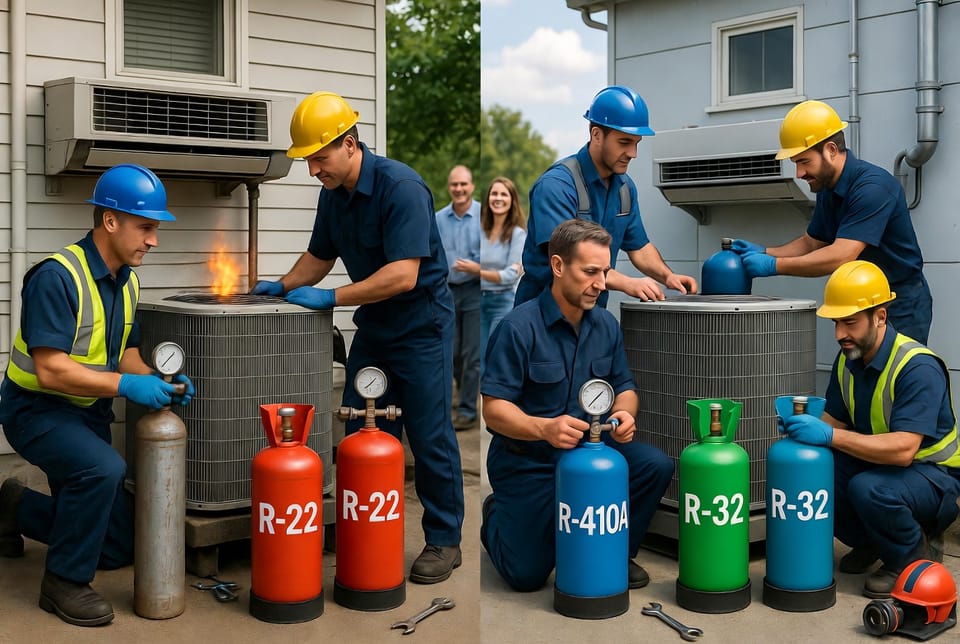
As a homeowner, your HVAC system is the backbone of year-round comfort. Yet few understand the vital role refrigerants play — until a repair quote arrives or regulations force a change. With phased-out refrigerants like R-22 becoming scarce and newer options like R-410A and R-32 taking center stage, staying informed protects your wallet and your home’s efficiency.
Understand Your Refrigerant – Call for Expert Guidance Now!
Rest assured, this guide breaks down everything in clear, practical terms. You’ll learn the real differences, how changing regulations affect repairs and replacements, and exactly what to consider before your next service call. Our expert team has helped thousands of families navigate these shifts confidently — and we’re here to do the same for you.
What Refrigerants Do and Why They Matter in Your Home
Refrigerants are the lifeblood of your air conditioner or heat pump. They absorb heat indoors and release it outside, creating the cool air you rely on. Without the right refrigerant, even the best system fails to perform.
Over decades, HVAC refrigerant types have evolved due to environmental science and global policy. Older formulas harmed the ozone layer. Today’s options prioritize both performance and planetary health. Understanding R-22 vs. R-410A vs. R-32 empowers you to avoid costly surprises and choose systems that deliver long-term savings and reliability.
The Legacy of R-22: A Phased-Out Standard
R-22, once known as Freon, powered millions of homes for decades. It was reliable and effective — but its ozone-depleting properties led to its gradual phase-out under the Montreal Protocol. Production of new R-22 ended in 2020 in the United States, and supplies now come only from reclaimed material.
Key risks for homeowners today:
- Extremely expensive recharges — a single top-off can cost hundreds more than with modern alternatives.
- Limited availability — technicians must source reclaimed refrigerant, driving up wait times and prices.
- Compatibility issues — older systems designed for R-22 cannot safely use newer blends without major retrofits.
If your system still uses R-22 and develops a leak, repair costs often exceed the value of a full replacement. Don’t panic — this is a common situation, and proactive planning turns it into an opportunity for a more efficient upgrade.
R-410A: The Current Standard You’ll Find in Most Homes
Introduced as a direct replacement for R-22, R-410A (often called Puron) became the industry standard in the early 2000s. It operates at higher pressures, requires stronger components, and delivers excellent cooling performance without harming the ozone layer.
Why R-410A remains the reliable choice:
- Widely available and fully supported by manufacturers.
- Proven track record in residential systems across North America.
- Balanced efficiency for both new installs and existing compatible units.
However, R-410A carries a global warming potential (GWP) of approximately 2,088. While far better for the ozone than R-22, it is now subject to HFC phasedown regulations under the American Innovation and Manufacturing (AIM) Act. Supplies remain plentiful today, but forward-thinking homeowners are already eyeing lower-GWP alternatives for future-proofing.
R-32: The Emerging Lower-GWP Refrigerant Leading the Future
R-32 represents the next generation. With a GWP of just 675 — roughly one-third that of R-410A — it significantly reduces environmental impact while offering superior energy efficiency. Many leading manufacturers now design new systems around R-32 because it requires less refrigerant charge and transfers heat more effectively.
Homeowner advantages of R-32 systems:
- Lower operating costs through improved energy efficiency.
- Easier servicing — it is a single-component refrigerant, simplifying recharges and recovery.
- Strong compliance with tightening environmental regulations expected through 2030 and beyond.
Transitioning to R-32 isn’t just eco-friendly; it’s smart economics. Newer units often qualify for utility rebates and tax incentives, offsetting upfront costs while delivering quieter operation and faster cooling.
Direct Comparison: R-22 vs. R-410A vs. R-32 at a Glance
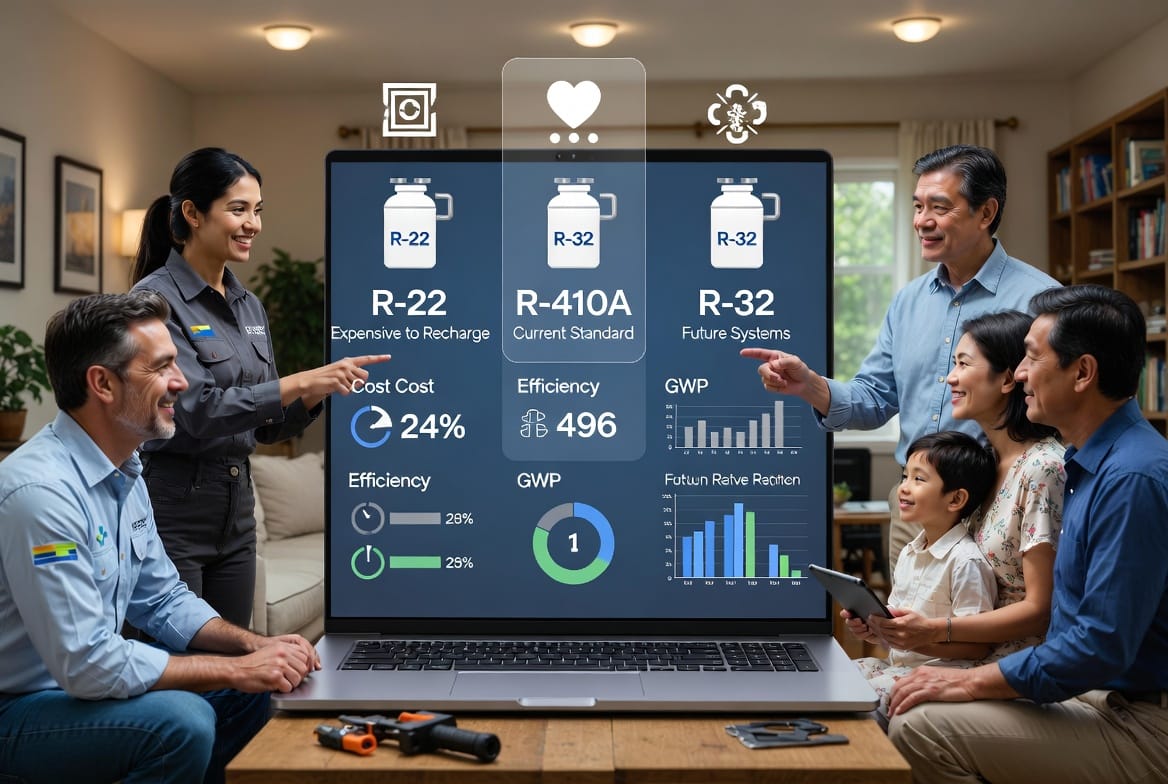
| Aspect | R-22 (Phased Out) | R-410A (Current Standard) | R-32 (Emerging Future) |
|---|---|---|---|
| Ozone Depletion | High | None | None |
| GWP | 1,810 | 2,088 | 675 |
| Efficiency | Moderate | Good | Excellent |
| Repair Cost | Very high (scarce supply) | Standard | Lower long-term |
| New System Use | No longer manufactured | Common | Increasingly standard |
| Regulatory Status | Production banned | Phasedown underway | Preferred low-GWP option |
This side-by-side view shows why many families are moving beyond R-410A when replacing older equipment.

How Changing Regulations Affect Your HVAC Decisions
Federal and state rules continue to tighten. The AIM Act mandates a 40% reduction in HFC production by 2024 and steeper cuts through 2029. This directly impacts R-410A availability and pricing in coming years.
What this means for you:
- R-22 systems face inevitable obsolescence.
- R-410A remains fully legal and serviceable today — but planning ahead prevents last-minute shortages.
- R-32 and similar low-GWP refrigerants enjoy regulatory favor, ensuring parts and training remain abundant.
Reassuring news: These changes ultimately benefit homeowners through more efficient, lower-maintenance systems. Early adopters often enjoy the lowest lifetime operating costs.
Repairing Your Current System vs. Investing in a New One
When your HVAC needs refrigerant, technicians first diagnose leaks — the real culprit behind most issues. Small leaks in R-410A systems can often be repaired affordably. Larger leaks in R-22 units frequently tip the scales toward replacement.
Practical considerations before deciding:
- Age of your system — units over 10–12 years rarely justify major refrigerant investment.
- Repair history — repeated service calls signal it’s time for an upgrade.
- Energy bills — newer R-32 systems can cut cooling costs by 20–30% in many homes.
Our team always provides transparent options: fix today or upgrade for tomorrow. You stay in control of the decision.
Choosing the Right Refrigerant for Your Home and Budget
Every home is different. Factors like square footage, climate, ductwork condition, and local utility incentives all influence the best choice. R-32 shines in new construction or full replacements. R-410A remains ideal for compatible mid-life systems. R-22 units are best retired gracefully.
Pro tip: Ask your technician about SEER2 ratings and inverter technology paired with modern refrigerants — these combinations maximize savings and comfort.
Maintenance Tips to Protect Your Refrigerant Investment
Proper care extends system life regardless of refrigerant type:
- Schedule annual professional tune-ups.
- Change air filters monthly during peak seasons.
- Keep outdoor units clear of debris.
- Monitor for unusual noises or temperature swings — early detection prevents refrigerant loss.
Bold reminder: Regular maintenance is the single most effective way to avoid emergency repairs and refrigerant-related headaches.
Future-Proofing Your Home Comfort
The HVAC industry moves quickly toward sustainability. Manufacturers have already committed to low-GWP refrigerants across their lines. By choosing wisely today, you invest in a system that complies with tomorrow’s standards and delivers quieter, more efficient performance for years ahead.
Final Thoughts: Make Confident, Informed Decisions
Understanding HVAC refrigerant types removes the mystery from repair quotes and upgrade conversations. Whether you have an older R-22 system facing high recharge costs, a dependable R-410A unit ready for maintenance, or you’re exploring efficient R-32 options for a new install, the right choice keeps your home comfortable, your energy bills lower, and your investment protected.
Stop Overpaying for R-22 Repairs – Get Expert Advice Today!