The HVAC Capacitor: How This Small Part Starts Your System and Why It Fails
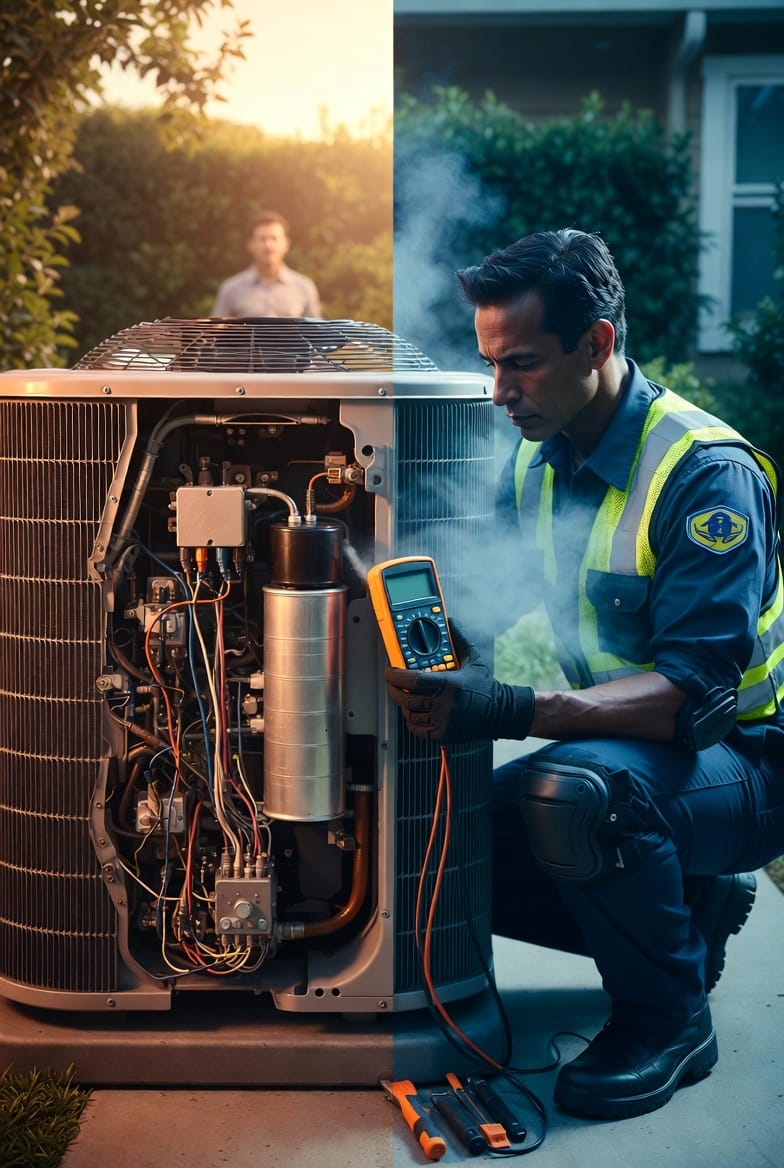
In every reliable HVAC system, there is a small but mighty component that quietly keeps everything running smoothly – the HVAC capacitor. Though it may look like a simple metal cylinder, this part plays a critical role in starting and operating the motors that power your air conditioner, heat pump, or furnace fan. When it works correctly, you enjoy consistent comfort without even noticing it. When it fails, however, your system can suddenly stop, leaving your home uncomfortable and your energy bills climbing.
Call Now for Fast HVAC Capacitor Diagnosis & Repair
At Domain Nest Pro, we’ve seen countless homeowners surprised by how a single failing HVAC capacitor can bring an entire system to a halt. The good news? Capacitor issues are common, highly diagnosable, and relatively straightforward to fix when addressed promptly by a qualified technician. In this comprehensive guide, we’ll walk you through exactly how start and run capacitors function, the clear warning signs of trouble, why these parts fail over time, and why timely professional replacement is the smartest move for your home’s comfort and your wallet.
Understanding your HVAC capacitor empowers you to act quickly rather than waiting for a complete breakdown. Let’s explore why this small component deserves your attention.
What Is an HVAC Capacitor and Why Does It Matter?
An HVAC capacitor is essentially an energy storage device designed specifically for alternating current (AC) motors in heating, ventilation, and air conditioning equipment. Unlike a battery that stores energy chemically, a capacitor stores electrical energy in an electric field between two conductive plates separated by an insulating material.
In your HVAC system, the capacitor provides the extra electrical “boost” needed to overcome inertia and get heavy-duty motors spinning. Without it, even a powerful compressor or fan motor may hum loudly but refuse to start, or it may run inefficiently once it does. This inefficiency not only wastes energy but also puts unnecessary strain on other expensive components.
Key benefits of a healthy HVAC capacitor include:
- Smooth motor startups that reduce wear and tear
- Improved energy efficiency leading to lower utility bills
- Consistent cooling or heating performance throughout your home
- Extended lifespan of the entire HVAC system
When this small part is functioning at its best, your system operates quietly and reliably. When it begins to weaken, the effects become noticeable fast.
Start Capacitors vs. Run Capacitors: Understanding the Difference
Most HVAC systems actually rely on two distinct types of capacitors, each with a specialized job.
Start capacitors deliver a powerful surge of energy for a very short time – usually just a few seconds – to help the motor overcome initial resistance and reach full speed. Once the motor is running, a centrifugal switch or relay disconnects the start capacitor from the circuit. These units typically have higher microfarad (µF) ratings and are built for high-torque, brief operation.
Run capacitors, on the other hand, stay connected throughout the entire operating cycle. They fine-tune the electrical phase between the motor’s main and auxiliary windings, improving running efficiency, reducing energy consumption, and helping the motor maintain consistent torque under varying loads. Run capacitors generally have lower µF ratings but are designed for continuous duty.
Some modern systems use a dual-run capacitor that combines both start and run functions into one compact unit, saving space while delivering reliable performance. Regardless of the configuration, every HVAC capacitor is precisely matched to your motor’s voltage and horsepower requirements. Using the wrong replacement can cause immediate failure or long-term damage.
How Capacitors Power Your HVAC System
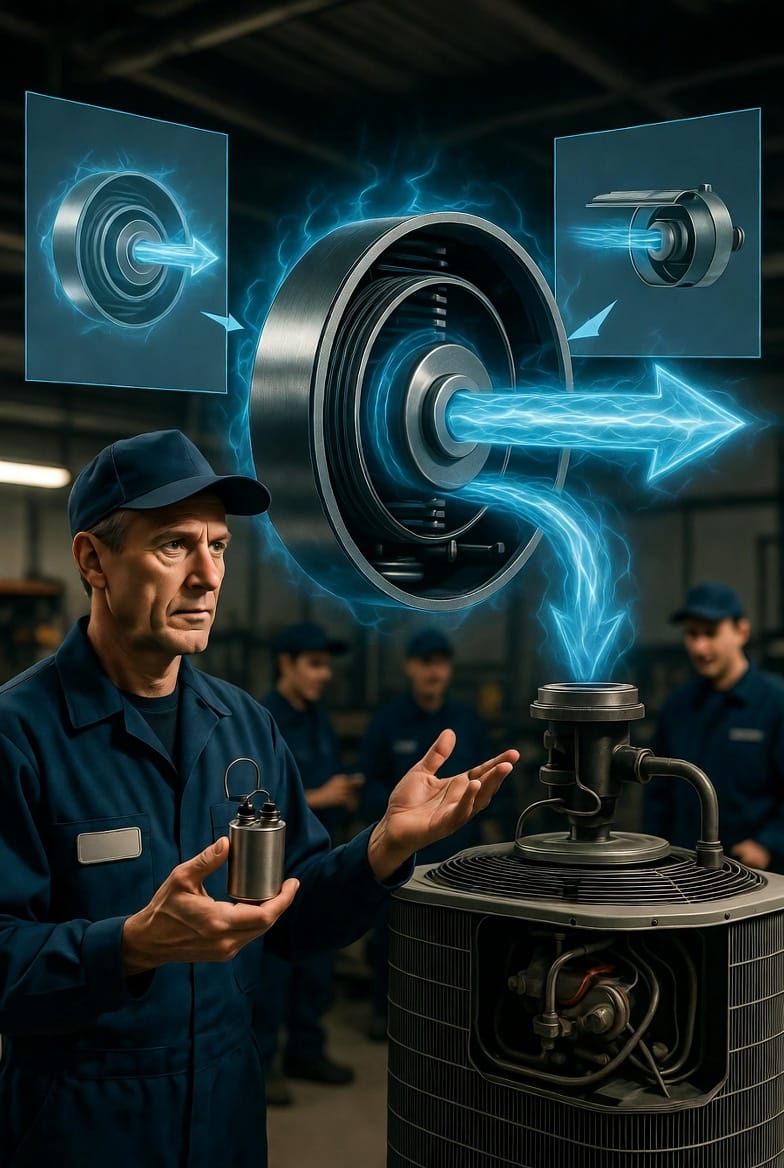
Here’s the simple science behind the magic. Your HVAC motor needs a rotating magnetic field to turn. The capacitor creates a phase shift in the electrical current supplied to the auxiliary winding, producing the necessary torque to start and keep the motor spinning efficiently.
Think of it like giving a heavy flywheel an initial push – the start capacitor supplies that powerful first push, while the run capacitor keeps the momentum smooth and steady. This process happens thousands of times every season, making the capacitor one of the hardest-working (and most failure-prone) parts in the entire system.
Common Signs Your HVAC Capacitor Is Failing
Recognizing HVAC capacitor failure early can save you from costly compressor damage or a complete system shutdown during the hottest or coldest days of the year. Watch for these authoritative warning signs:
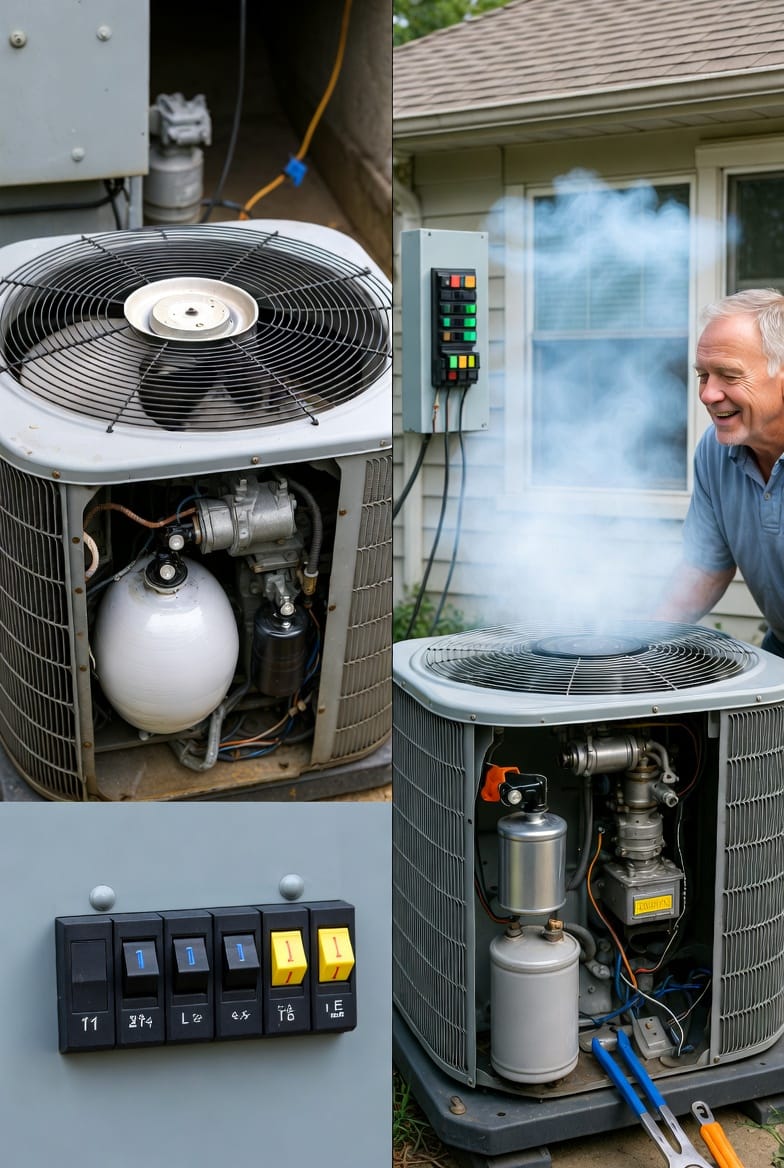
- Humming but not starting – The motor makes a distinct humming noise yet the fan or compressor refuses to spin
- Hard starting or intermittent clicking – The system struggles to start, often accompanied by repeated clicking sounds from the contactor
- Visible physical damage – A bulging, swollen, or leaking capacitor case is a clear red flag
- Frequent tripped breakers or blown fuses – The system draws excessive current trying to compensate for the failing capacitor
- Reduced airflow or inconsistent temperatures – Your home takes longer to reach the set temperature
- Higher than normal energy bills – The motor works harder and less efficiently
- Burning smell or unusual noises – Early indicators of electrical stress
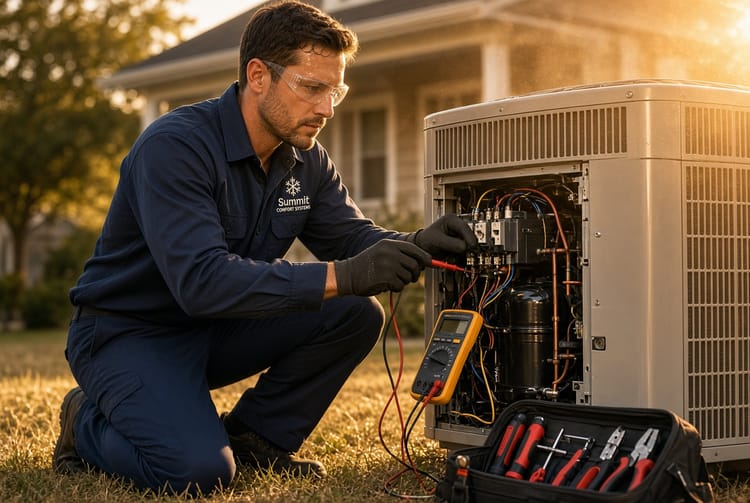
If you notice any of these symptoms, it’s time to stop guessing and get professional help. A quick diagnostic test with a reliable multimeter can confirm the capacitor’s microfarad value and determine whether replacement is needed.
Why HVAC Capacitors Fail Over Time
HVAC capacitors typically last between five and ten years, but several factors can shorten that lifespan dramatically:
- Constant exposure to extreme heat – Outdoor units endure summer temperatures that accelerate internal degradation
- Voltage spikes and power surges – Lightning strikes or grid fluctuations stress the dielectric material inside
- Age and normal wear – The insulating materials naturally break down over thousands of cycles
- Poor maintenance or dirt buildup – Blocked airflow causes the system to run hotter and longer
- Manufacturing variations or improper installation – Using an undersized or low-quality capacitor from the start
These stressors cause the capacitor’s internal electrolyte to break down, leading to reduced capacitance, increased internal resistance, and eventual failure.
The Hidden Risks of Ignoring a Failing Capacitor
A bad HVAC capacitor doesn’t just cause inconvenience – it creates a cascade of expensive problems. The motor can overheat and burn out, turning a $150 repair into a $2,000+ compressor replacement. Energy waste drives up monthly bills, and inconsistent performance affects indoor air quality and comfort.
Most importantly, waiting increases the chance of sudden total system failure at the worst possible time. Professional intervention prevents these risks and restores peace of mind.
The Importance of Prompt HVAC Capacitor Replacement
Replacing a failing HVAC capacitor is one of the most cost-effective maintenance tasks you can perform. A properly sized, high-quality replacement restores full starting torque and running efficiency, often improving overall system performance immediately.
Professional technicians match the exact voltage, microfarad rating, and tolerance your motor requires. They also perform a complete system check to ensure no other components have been damaged by the failing part. This thorough approach protects your investment and keeps your home comfortable year-round.
Professional Diagnosis and Replacement: What to Expect
When you call an experienced HVAC technician, the process is straightforward and reassuring. We begin with a thorough visual inspection and precise electrical testing using calibrated equipment. Once the faulty capacitor is confirmed, we select the correct OEM-spec replacement, safely discharge any residual voltage, install the new unit, and verify proper operation with real-time performance measurements.
The entire service usually takes less than an hour, and your system is back to peak performance the same day.
Expert HVAC Capacitor Replacement – Call Today