The HVAC Refrigerant Reclaim: Recycling Old Refrigerant Responsibly
In today’s world of advanced climate control systems, responsible management of refrigerants stands as a cornerstone of both environmental stewardship and professional excellence. Refrigerant reclaim represents far more than a technical procedure—it is a critical process that allows used refrigerant to be recovered, purified, and prepared for safe reuse. This practice directly supports environmental compliance, protects our atmosphere, and demonstrates the highest standards of care within the HVAC industry.
Reclaim Refrigerant Responsibly – Call Now!
When refrigerants escape into the air, they contribute to ozone depletion and global warming potential. Professional reclaim services interrupt that cycle. By capturing, cleaning, and recycling these substances, certified technicians prevent harmful releases while conserving valuable resources. This article explores exactly what refrigerant reclaim involves, why it remains essential for every property owner and facility manager, and how trained professionals execute the process with precision and integrity.
Understanding Refrigerant Reclaim: The Core Process
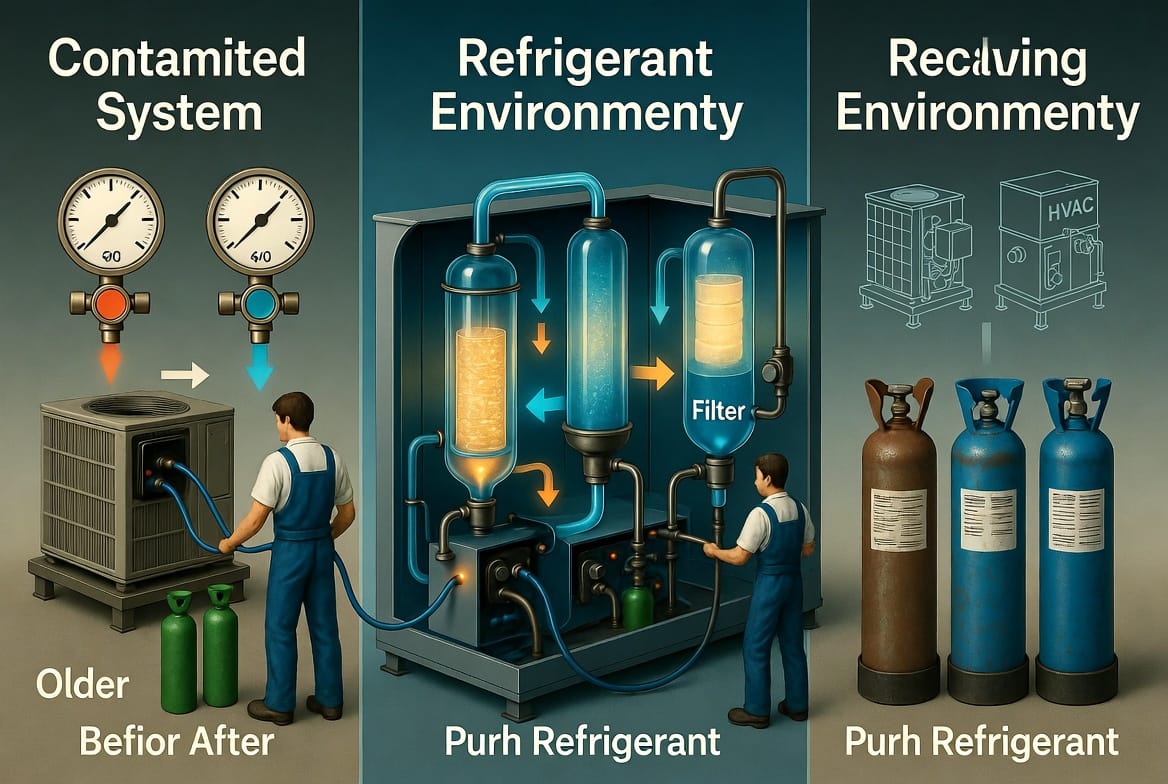
Refrigerant reclaim is the carefully controlled recovery of used refrigerant from air conditioning, refrigeration, and heat pump systems, followed by purification that restores the material to a standard suitable for reuse. Unlike simple recovery—which only removes the refrigerant—or recycling that performs basic cleaning, reclaim involves laboratory-grade processing to remove contaminants, moisture, and acid so the refrigerant meets original manufacturer specifications.
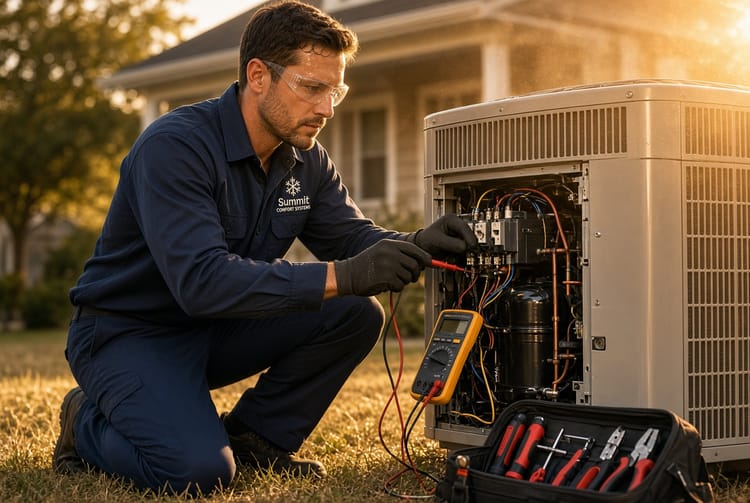
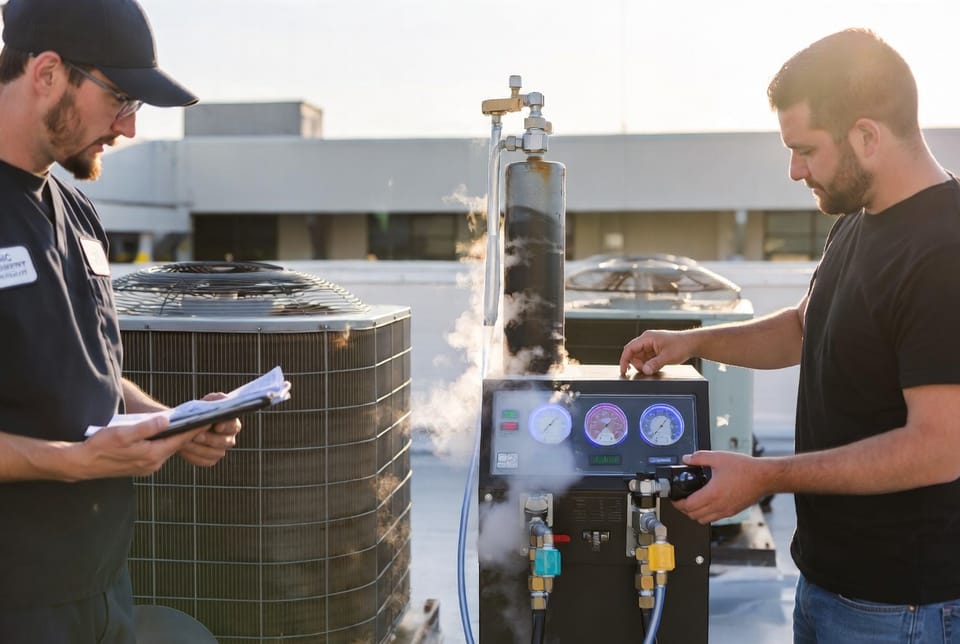
The process begins when a certified technician connects specialized recovery equipment to the HVAC system. Using a refrigerant reclaim machine, the technician extracts the refrigerant in liquid or vapor form under controlled pressure and temperature conditions. The extracted material then undergoes filtration, distillation, and chemical analysis. Contaminants are separated, and the purified refrigerant is stored in approved cylinders ready for return to service or proper redistribution.
This method ensures that valuable compounds such as R-410A, R-134a, and newer low-global-warming-potential blends are not discarded or vented. Instead, they re-enter the supply chain, reducing the need for newly manufactured refrigerants. Professional teams follow strict protocols set by environmental authorities, guaranteeing that every step prioritizes safety and environmental compliance.
Property owners benefit immediately. Systems that require refrigerant removal during repairs, replacements, or decommissioning no longer risk accidental release. The reclaim approach turns a potential liability into a responsible, resource-efficient solution.
Why Refrigerant Reclaim Matters for the Environment
The environmental stakes surrounding refrigerants are significant. Many traditional refrigerants possess high ozone depletion potential or substantial global warming potential. Even small releases accumulate over time, contributing to atmospheric damage that affects climate patterns and ecosystem health.
Refrigerant reclaim directly counters these risks. By preventing the venting of used refrigerant, the practice eliminates unnecessary emissions at the source. Each recovered pound of refrigerant kept out of the atmosphere represents measurable progress toward lower environmental impact. In addition, reclaiming reduces demand for virgin refrigerant production, which itself requires energy-intensive manufacturing processes and raw material extraction.
Beyond emissions reduction, reclaim conserves finite resources. The chemical compounds used in modern refrigerants are complex and costly to produce. Recycling them through professional reclaim operations extends their useful life and supports a circular approach within the HVAC sector. Facilities that adopt this practice demonstrate leadership in sustainability while simultaneously meeting increasingly strict regulatory expectations.
Environmental compliance is not optional. Federal and regional regulations mandate proper handling of refrigerants under the Clean Air Act and related frameworks. Non-compliance can result in substantial fines, legal exposure, and reputational harm. Certified reclaim services provide documented proof that every ounce of refrigerant was managed correctly, protecting both the environment and the responsible parties involved.
Consider the broader picture. When technicians reclaim refrigerant during routine service, system upgrades, or end-of-life equipment removal, they close the loop on potential pollution. The atmosphere stays cleaner, natural resources last longer, and the HVAC industry advances toward greater accountability. This is why forward-thinking property managers and business owners prioritize reclaim as standard practice rather than an afterthought.
How Certified Professionals Ensure Proper Handling
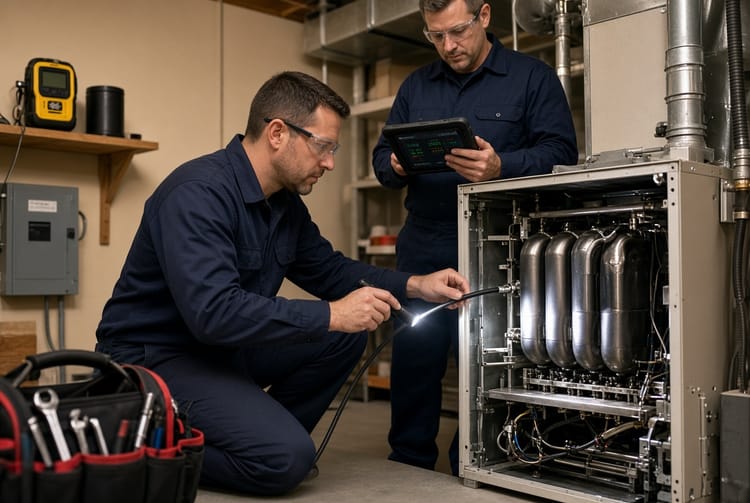
The difference between ordinary recovery and true refrigerant reclaim lies in the expertise, equipment, and documentation that certified technicians bring to every job. Professionals begin with a thorough system assessment. They identify the type and quantity of refrigerant, check for leaks, and evaluate system condition to determine the safest extraction method.
Specialized reclaim machines form the heart of the operation. These units feature high-capacity compressors, multi-stage filtration, moisture indicators, and real-time purity monitoring. Technicians connect the equipment using approved hoses and fittings, evacuate the system according to manufacturer and regulatory guidelines, and carefully transfer the refrigerant into recovery cylinders. Throughout the process they monitor pressures, temperatures, and flow rates to maintain system integrity and operator safety.
Once recovered, the refrigerant undergoes rigorous purification. Advanced machines remove oil, moisture, acid, and particulate matter. Laboratory testing or on-site analysis confirms that the cleaned refrigerant meets AHRI standards for reclaim. Only after verification is the material labeled and prepared for reuse or transfer to an approved reclamation facility.
Documentation remains equally important. Every reclaim operation generates records detailing the type and amount of refrigerant handled, equipment serial numbers, technician certification, and final disposition. These records provide transparent proof of environmental compliance and protect clients during audits or inspections.
Safety protocols never take second place. Technicians wear appropriate personal protective equipment, work in well-ventilated areas when required, and follow lock-out procedures. They also ensure that recovery cylinders remain within safe fill limits and are transported according to Department of Transportation regulations. This comprehensive approach eliminates guesswork and delivers consistent, reliable results.
Clients gain peace of mind knowing that every step—from initial connection to final cylinder storage—has been executed by trained specialists. Whether the job involves a residential split system, a large commercial chiller, or an industrial refrigeration plant, the same high standards apply. The result is clean refrigerant ready for responsible reuse and a clear audit trail that satisfies regulatory requirements.
Key Environmental Benefits of Responsible Reclaim
The advantages of professional refrigerant reclaim extend across multiple dimensions of environmental and operational performance. Consider the following core benefits:
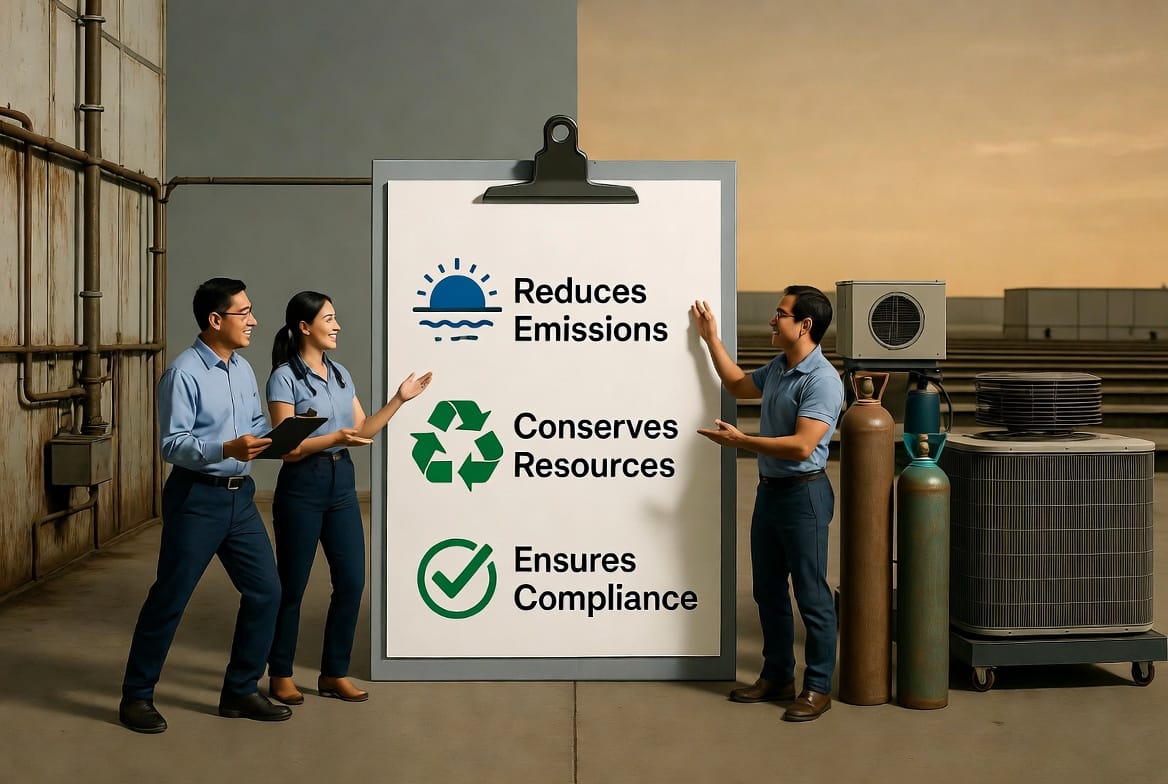
- Reduces emissions: Capturing refrigerant before it can escape prevents direct release of compounds with high global warming or ozone depletion potential.
- Conserves resources: Purified refrigerant returns to service, lowering the need for newly manufactured material and the associated energy and raw-material demands.
- Ensures compliance: Documented reclaim procedures meet or exceed federal and local environmental regulations, shielding property owners from penalties.
- Supports sustainability goals: Organizations pursuing green building certifications or corporate responsibility targets gain measurable progress through verified reclaim practices.
- Protects system performance: Proper removal and handling during service or replacement preserve the integrity of remaining components and prepare systems for optimal future operation.
- Promotes industry accountability: Widespread adoption of reclaim raises overall standards and encourages manufacturers and service providers to prioritize environmental responsibility.
These benefits compound over time. A single commercial building that reclaims refrigerant during multiple service events over a decade can prevent hundreds of pounds of potential atmospheric release. Multiplied across thousands of facilities, the cumulative impact becomes substantial. Property managers who choose certified reclaim partners actively contribute to cleaner air and a more sustainable built environment.
Regulatory Landscape and the Importance of Certification
Environmental compliance rests on a clear regulatory foundation. In the United States, Section 608 of the Clean Air Act establishes strict rules governing the handling, recovery, and disposal of refrigerants. Technicians must hold EPA Section 608 certification, and companies performing reclaim work must use approved equipment and maintain accurate records.
Additional state and local requirements often layer further obligations. Some jurisdictions mandate specific reporting thresholds or preferential use of reclaimed refrigerants. International agreements such as the Montreal Protocol and its Kigali Amendment continue to drive global phase-downs of high-impact refrigerants, making reclaim an even more valuable strategy for bridging transitions to newer, lower-impact alternatives.
Certified service providers stay current with these evolving standards. They invest in ongoing training, maintain calibrated equipment, and participate in recognized reclaim networks. When clients partner with such providers, they inherit this expertise and the accompanying documentation that proves due diligence.
Choosing non-certified or informal handling methods carries unnecessary risk. Improper venting, incomplete recovery, or undocumented disposal can trigger enforcement actions and undermine sustainability commitments. Professional reclaim eliminates those vulnerabilities while delivering tangible environmental gains.
Practical Considerations for Property Owners and Managers
Implementing refrigerant reclaim as standard practice requires only a few straightforward steps. First, select a service partner that holds current EPA certification and maintains a proven track record with reclaim operations. Second, schedule reclaim as part of any major repair, retrofit, or equipment replacement. Third, request complete documentation after every job so records remain available for future reference or audits.
Many organizations incorporate reclaim language into service contracts and sustainability policies. This formalizes expectations and ensures consistency across multiple sites or service events. Facility managers also find value in tracking the volume of refrigerant reclaimed each year, converting those figures into estimated emission reductions for internal reporting.
Cost considerations remain favorable. While reclaim involves specialized equipment and skilled labor, the long-term savings from avoided regulatory penalties, extended refrigerant usefulness, and protected corporate reputation far outweigh the investment. In many cases, the recovered refrigerant itself retains residual value that offsets a portion of the service expense.
Looking Ahead: The Future of Responsible Refrigerant Management
As the HVAC industry transitions toward next-generation refrigerants with lower global warming potential, the role of reclaim will only grow. Existing inventories of older refrigerants still require careful management, and reclaim provides the responsible pathway for handling them. Simultaneously, reclaim infrastructure supports the circular use of newer blends, ensuring that even advanced formulations are conserved rather than discarded.
Technological improvements continue to enhance reclaim efficiency. Modern machines achieve higher purity levels in less time, while digital tracking systems simplify compliance documentation. Technicians equipped with these tools deliver faster, more precise service that further reduces any residual environmental footprint.
Property owners who embrace refrigerant reclaim today position themselves as leaders in environmental responsibility. They protect the atmosphere, conserve resources, satisfy regulators, and demonstrate genuine commitment to sustainable operations. The process is proven, the benefits are clear, and the professional expertise required is readily available.
Ensure Compliance – Book Your Reclaim Service