The HVAC Refrigerant Lineset: Proper Installation for Longevity
In the world of HVAC systems, the refrigerant lineset serves as the vital lifeline connecting your indoor evaporator unit to the outdoor condenser. This seemingly simple pair of copper pipes carries the lifeblood of your cooling and heating system — the refrigerant itself. Yet, many homeowners underestimate its importance. A properly installed lineset is essential for peak efficiency, reduced energy costs, and long-term reliability.
Get Expert Lineset Installation Today – Call Now!
When installed correctly, your HVAC system delivers consistent comfort year after year. Poor installation, however, can lead to refrigerant leaks, decreased performance, higher utility bills, and even premature system failure. At Tradewinds Universal, we emphasize that investing in expert lineset installation pays dividends in comfort and savings.
This comprehensive guide explores everything you need to know about refrigerant linesets — from proper sizing to professional techniques that ensure maximum longevity.
Understanding the Role of Refrigerant Linesets
The lineset consists of two main copper lines: the larger suction line (which carries cool, low-pressure refrigerant vapor back to the compressor) and the smaller liquid line (which delivers high-pressure liquid refrigerant to the indoor coil). These lines bridge the gap between your indoor and outdoor HVAC components, often running through walls, attics, or along exterior surfaces.
Key risks of neglecting lineset quality include energy loss, compressor strain, and environmental harm from refrigerant escapes. A well-designed and installed lineset maintains proper pressure and temperature, allowing your system to operate at its engineered capacity.
Homeowners in areas with extreme temperatures or long line runs particularly benefit from expert attention to this critical component.
Proper Sizing: Matching Lineset to System Capacity
One of the foundational steps in lineset installation is correct sizing. The diameter of both the suction and liquid lines must match the tonnage (cooling capacity) of your HVAC unit.
- Undersized lines restrict refrigerant flow, forcing the compressor to work harder and potentially causing overheating or reduced cooling output.
- Oversized lines can lead to oil return issues and inefficient heat transfer.
For example, a 2-ton system typically requires specific line diameters recommended by the manufacturer — often 3/4-inch for the suction line and 3/8-inch for the liquid line on shorter runs. Longer distances may necessitate larger sizes to compensate for pressure drops.
Professional installers calculate the exact requirements based on total equivalent length, including bends and vertical rises. This attention to detail prevents performance bottlenecks and ensures your system runs smoothly for 15–20 years or more.
Critical Installation Techniques: Brazing and Nitrogen Purge
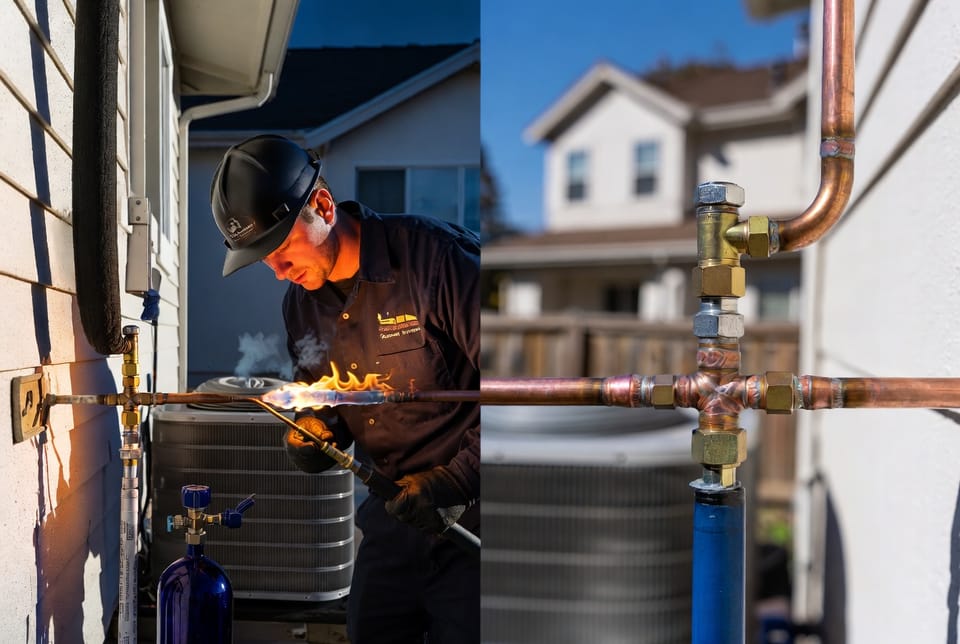
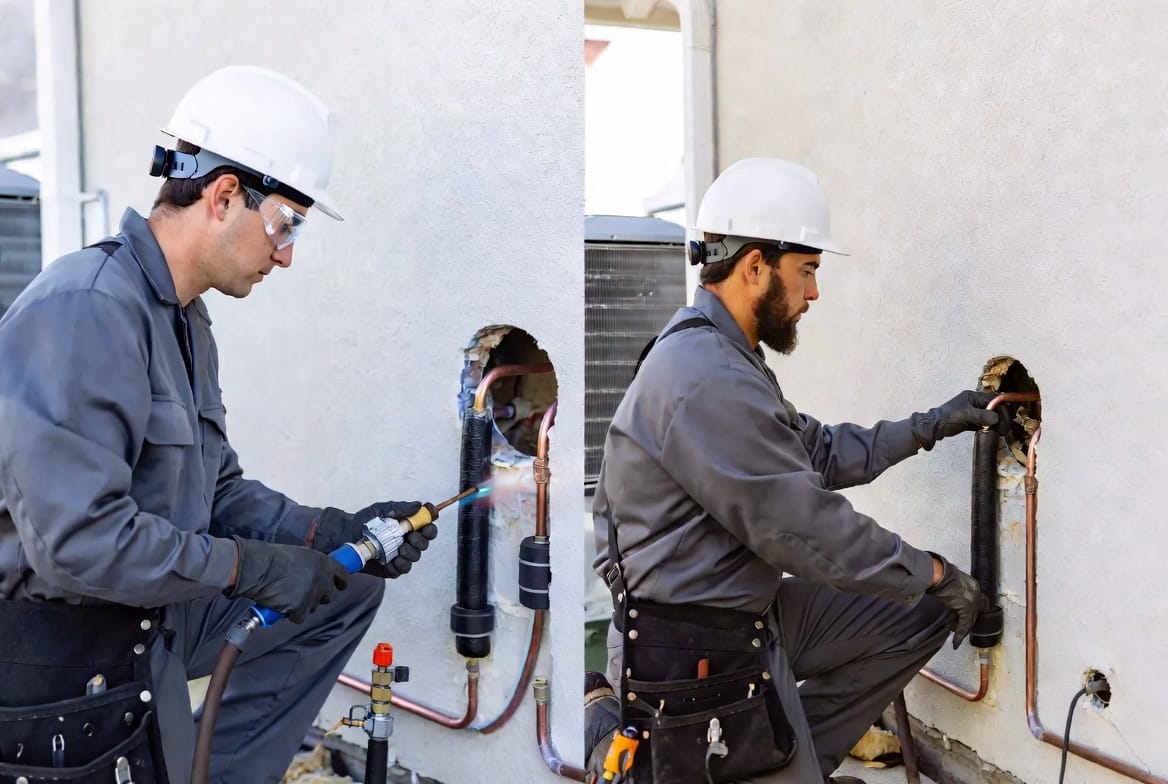
Proper brazing joins copper lines securely without introducing contaminants. Unlike soft soldering, brazing uses higher temperatures and silver-based alloys to create strong, leak-proof connections that withstand system pressures.
A nitrogen purge during brazing is non-negotiable. Flowing inert nitrogen gas through the lines displaces oxygen, preventing the formation of harmful copper oxide scale inside the pipes. This scale can circulate through the system, damaging the compressor and expansion valve over time.
Step-by-step best practices include:
- Thoroughly cleaning and deburring pipe ends before joining.
- Using a flow meter to maintain consistent nitrogen flow.
- Applying heat evenly around the joint for a uniform braze.
- Allowing proper cooling before pressure testing.
These techniques minimize oxidation risks and create durable connections that resist vibration and thermal cycling.
Insulation: Protecting the Suction Line
Insulation on the suction line is crucial for preventing energy loss and condensation. Without it, the cold refrigerant vapor absorbs unwanted heat from the surrounding air, reducing efficiency and potentially causing moisture buildup that leads to corrosion or mold.
Use high-quality, UV-resistant closed-cell foam insulation with proper thickness (typically 1/2-inch or more depending on climate). Seal all joints meticulously with compatible adhesive and weatherproof tape.
Benefits of proper insulation:
- Maintains refrigerant temperature for optimal heat exchange.
- Prevents condensation-related water damage.
- Enhances overall system energy efficiency.
- Extends the lifespan of the lineset itself.
In hot, humid climates, skipping this step can significantly impact performance and lead to costly repairs.
Supporting the Lineset: Vibration Isolators and Secure Routing
HVAC systems generate vibration that can stress linesets over time, leading to fatigue cracks or loosened fittings. Vibration isolators and proper supports are essential to absorb these movements.
Install linesets with:
- Padded clamps or hangers spaced appropriately (every 4–6 feet horizontally).
- Slight downward slope toward the outdoor unit for oil return.
- Protection from physical damage (e.g., conduit or guards where exposed).
- Avoidance of sharp kinks or tight bends that restrict flow.
Professional routing keeps linesets neat, accessible for future service, and aesthetically integrated with your home’s exterior.
Common Lineset Problems and How to Avoid Them
Many system failures trace back to installation shortcuts. Recognizing these issues helps homeowners appreciate the value of professional work.
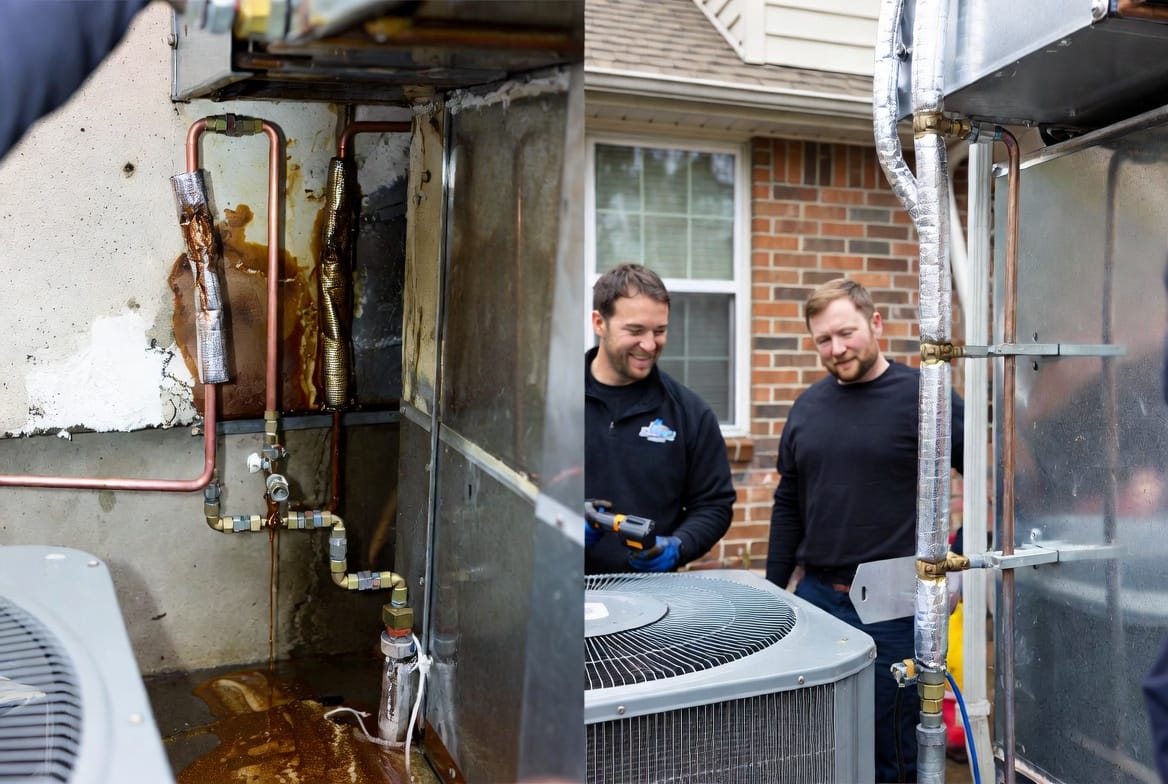
- Undersized lines: Cause high pressure drops and inefficient operation.
- Kinked or crushed tubing: Restricts flow and creates weak points prone to leaks.
- Uninsulated or poorly insulated lines: Lead to energy waste and condensation damage.
- Missing nitrogen purge: Results in internal contamination and early component failure.
- Inadequate supports: Accelerate wear from vibration and movement.
Addressing these proactively during installation avoids emergency repairs and maintains warranty coverage.
The Long-Term Benefits of Expert Installation
A meticulously installed refrigerant lineset contributes to:
- Lower energy consumption and reduced monthly bills.
- Quieter system operation with fewer vibrations.
- Extended equipment lifespan, protecting your significant HVAC investment.
- Improved indoor air quality through reliable temperature control.
- Compliance with manufacturer specifications and local codes.
Homeowners who choose quality installation experience fewer service calls and greater peace of mind during peak seasons.
Additional considerations for longevity include regular professional maintenance, such as annual inspections of connections, insulation integrity, and refrigerant levels. Early detection of minor issues prevents major breakdowns.
When to Call the Professionals
While some DIY enthusiasts attempt lineset work, the specialized skills, tools, and safety protocols involved make professional installation the smartest choice. Certified technicians ensure precise brazing, pressure testing, evacuation, and charging — steps critical for system integrity.
Proper lineset installation ensures system longevity. For expert HVAC service, including refrigerant lineset installation, repair, or replacement. Our experienced professionals deliver reliable solutions tailored to your home’s needs, helping you enjoy efficient, worry-free comfort for years to come.
Ensure Long-Lasting HVAC Performance – Call Now!