The HVAC Refrigerant Filter-Drier: Protecting the System from Moisture and Debris

In the intricate world of HVAC systems, every component plays a vital role in delivering reliable comfort to your home. Among these unsung heroes, the refrigerant filter-drier stands out as a critical guardian. This small but powerful device protects your expensive equipment from the damaging effects of moisture, acids, and debris that can infiltrate the refrigerant lines.
Replace Your Filter-Drier & Restore Peak Performance – Call Now
Ignoring issues with this component can lead to reduced efficiency, costly breakdowns, and even complete system failure. At our HVAC service, we emphasize proactive care because a well-maintained filter-drier ensures your system operates at peak performance year after year. Whether you're dealing with an aging unit or planning routine maintenance, understanding this part is essential for every Texas homeowner.
What Exactly Is a Refrigerant Filter-Drier?
The refrigerant filter-drier is a canister-like component installed in the liquid line of your air conditioning or heat pump system, typically between the condenser and the expansion valve. Its primary mission is straightforward yet indispensable: it filters out particulates and absorbs moisture from the refrigerant as it circulates.
Unlike simple strainers, a quality filter-drier combines mechanical filtration with chemical drying capabilities. It captures solid contaminants such as dirt, metal shavings from installation or wear, and sludge while neutralizing harmful acids that form when moisture mixes with refrigerant oil.
Key benefits include:
- Preventing clogging of delicate components like expansion valves and capillary tubes.
- Protecting the compressor—the heart of your HVAC system—from abrasive particles and corrosive acids.
- Maintaining optimal refrigerant flow for efficient cooling and heating.
In humid climates like Dallas-Fort Worth, where moisture intrusion risks are higher during service or minor leaks, this component becomes even more important. Professional installation and timely replacement can extend the lifespan of your entire system significantly.
How Does a Filter-Drier Work?
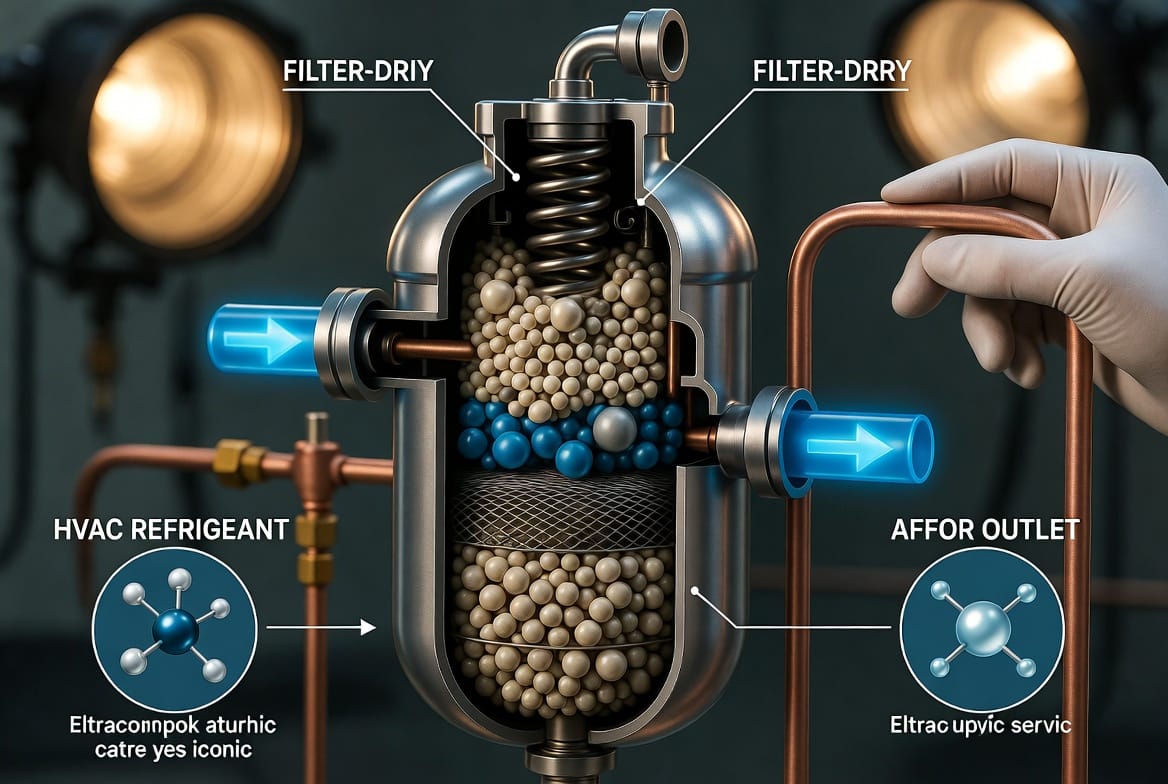
The operation of a filter-drier relies on two synergistic processes working seamlessly together.
First, the filtering mechanism uses screens and porous cores to physically trap solid debris. As refrigerant flows through, larger particles are caught immediately while finer contaminants are captured in subsequent layers.
Second, the drying process employs a desiccant core—typically made of molecular sieve or activated alumina beads. These materials have an exceptional affinity for water molecules. They absorb and hold moisture deep within their structure, preventing it from circulating and causing ice formation or acid creation.
Some advanced models also include activated carbon or other additives to neutralize acids. The entire assembly is housed in a durable steel or copper canister designed to withstand high system pressures.
When functioning correctly, the filter-drier keeps the refrigerant clean and dry, ensuring smooth operation. However, once saturated, it can no longer protect the system and may even contribute to restrictions.
Why Moisture and Debris Pose Serious Risks to Your HVAC System
Moisture is one of the biggest threats in a closed refrigeration system. Even tiny amounts—introduced during manufacturing, installation, or repairs—can cause major problems:
- Ice formation: Water freezes in the expansion device, restricting flow and reducing cooling capacity.
- Acid formation: Moisture reacts with oil and refrigerant to create acids that corrode metal parts, including the compressor windings.
- Sludge and varnish: These buildups coat components, decreasing efficiency and leading to premature failure.
Debris compounds these issues by abrading moving parts and clogging narrow passages. In extreme cases, unchecked contaminants lead to compressor burnout—one of the most expensive HVAC repairs.
Bold warning: A failing filter-drier doesn't just affect comfort; it accelerates wear across the entire system, potentially voiding warranties and increasing energy bills. Homeowners in Texas often notice higher utility costs as their units struggle against hidden restrictions.
Regular professional inspections catch these issues early, saving you time, money, and frustration.
Signs Your Filter-Drier Is Failing
Recognizing problems early can prevent a minor issue from becoming a major expense. Here are the most common indicators of a clogged or saturated filter-drier:
- High pressure drop across the device, detectable by technicians using gauges.
- Reduced cooling performance or inconsistent temperatures throughout your home.
- Unusual noises from the compressor or refrigerant lines.
- Frost or ice buildup on the liquid line near the filter-drier.
- Frequent short-cycling of the system as it struggles to maintain pressure.
- Moisture indicators (if equipped) changing color, signaling saturation.
- Eventual compressor failure due to acid damage or mechanical wear from debris.
If you observe any of these symptoms, it's time to call a qualified HVAC professional immediately. Delaying replacement can lead to cascading damage.

Why Replace the Filter-Drier During Any Major HVAC Repair?
Industry best practices strongly recommend replacing the refrigerant filter-drier whenever the system is opened for major service. Here's why this is non-negotiable:
- Contaminant introduction: Opening the system exposes it to air and moisture, which the old drier may not handle effectively.
- Saturation risk: Existing driers accumulate debris and moisture over time; a new one starts with full capacity.
- System protection: Fresh desiccant and filters safeguard newly installed or repaired components like compressors, valves, or coils.
- Warranty compliance: Many manufacturers require this step to maintain coverage.
- Long-term efficiency: Prevents repeat service calls and extends equipment life.
Skipping this step is a false economy that often leads to callbacks and higher overall costs. Professional technicians always include filter-drier replacement in quotes for repairs involving refrigerant evacuation or component swaps.
Choosing the Right Filter-Drier for Your System
Not all filter-driers are created equal. Factors to consider include:
- Capacity and size: Matched to your system's tonnage and refrigerant type (R-410A, R-32, etc.).
- Desiccant type: Molecular sieve for acid removal or activated alumina for higher water capacity.
- Pressure rating: Suitable for modern high-pressure systems.
- Features: Sight glasses, moisture indicators, or replaceable cores for larger commercial units.
Always trust certified professionals to select and install the correct model. At our service, we use premium components proven to deliver reliable performance in Texas conditions.
Maintenance Tips for Optimal Filter-Drier Performance
While the filter-drier itself is a replaceable item, supporting its longevity involves broader system care:
- Schedule annual professional HVAC tune-ups.
- Change air filters regularly to reduce overall debris load.
- Address leaks promptly to minimize moisture entry.
- Avoid DIY refrigerant handling, which can introduce contaminants.
- Monitor your system for early warning signs.
These simple steps, combined with timely replacements, keep your HVAC running efficiently and quietly.
The Long-Term Value of Proper Filter-Drier Care
Investing in a quality HVAC refrigerant filter-drier and professional service delivers peace of mind and tangible benefits. Lower energy bills, fewer breakdowns, improved indoor air quality, and a longer-lasting system all contribute to greater home comfort and value.
In Dallas and surrounding areas, where extreme temperatures test HVAC systems daily, this component helps maintain reliability when you need it most. Don't wait for failure—proactive protection is the smartest approach.
Protect your system with a proper filter-drier. Our experienced technicians are ready to inspect, replace, and optimize your HVAC components for years of dependable performance.
Expert Filter-Drier Service for Reliable Cooling – Call Today