The HVAC Maintenance Plan: Protecting Your System Year-Round
A well-designed HVAC maintenance plan is the single most effective way to keep heating and cooling equipment running reliably through every season. Rather than waiting for a sudden breakdown on the hottest or coldest day of the year, a proactive approach addresses small issues before they become expensive emergencies. Homeowners and property managers who invest in structured care enjoy quieter operation, steadier indoor temperatures, and greater peace of mind.
Call Now for Expert Insulation & Sealing Service
This article explains exactly what a professional HVAC maintenance plan includes, why those services matter, and how to select the right program for your home or building. The goal is straightforward: protect your investment and maintain comfortable indoor air quality all year.
Why a Proactive HVAC Maintenance Plan Matters
Heating and cooling systems work harder than almost any other mechanical equipment in a building. Dust, humidity, temperature swings, and normal wear gradually reduce efficiency. When filters clog or coils collect debris, the compressor and blower motor must labor longer to achieve the same result. That extra strain shortens component life and raises energy bills.
A proactive HVAC maintenance plan interrupts this cycle. Scheduled visits allow technicians to inspect, clean, and adjust the system while it is still performing well. The result is fewer surprise failures, more consistent comfort, and lower long-term operating costs. Property owners who treat maintenance as an afterthought often discover that a neglected system costs far more in repairs and replacement than a well-structured plan ever would.
What a Comprehensive HVAC Maintenance Plan Includes
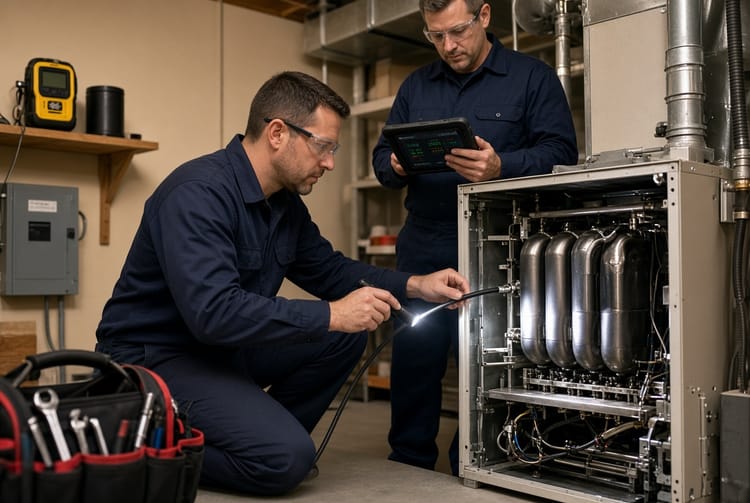
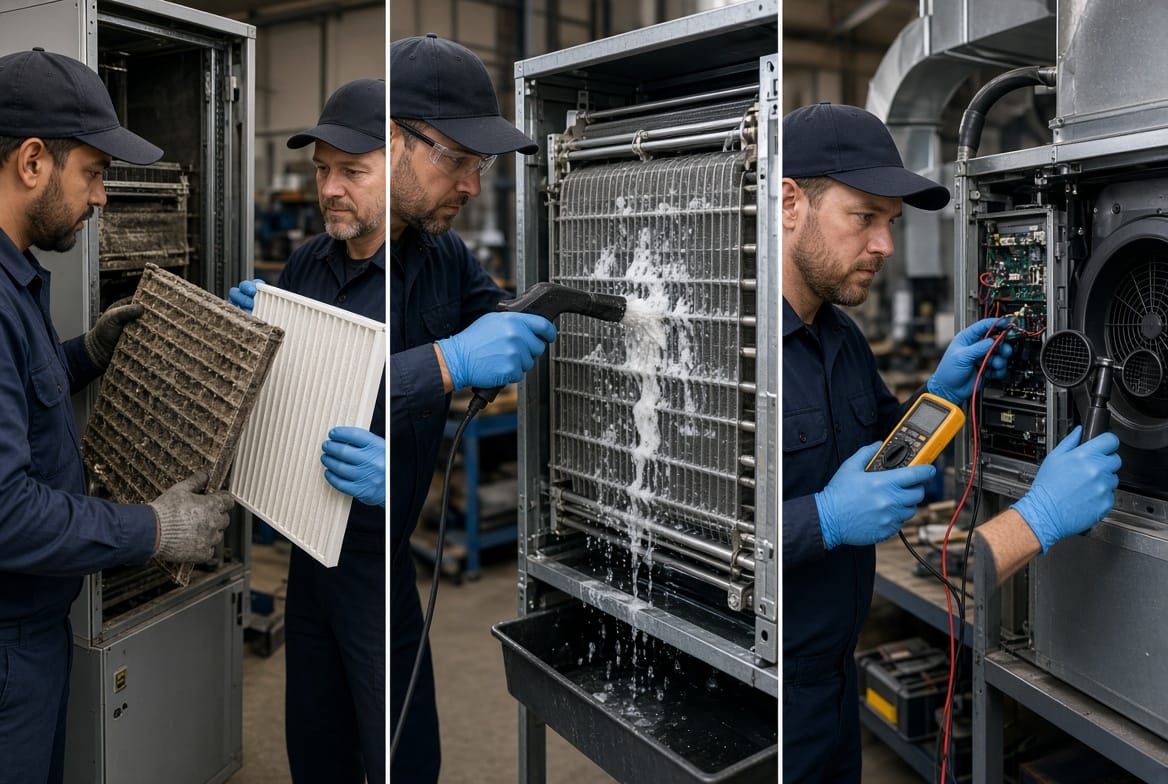
A quality plan is more than a quick visual glance. It follows a repeatable process that covers the components most likely to fail or lose efficiency. Typical elements include bi-annual inspections, filter changes, coil cleaning, and thorough system checks.
Bi-Annual Inspections
Most reputable providers schedule two visits each year—one before the cooling season and one before heating season. During these bi-annual inspections, a technician evaluates the entire system from thermostat to outdoor unit. They look for refrigerant leaks, electrical connections that have loosened from vibration, signs of corrosion, and unusual wear on belts or bearings. Early detection of these issues prevents mid-season shutdowns.
Filter Changes
Air filters are the first line of defense against dust and allergens. A clogged filter restricts airflow, forcing the blower to work harder and allowing debris to reach the evaporator coil. Regular filter changes—often performed or verified during each visit—restore proper airflow and protect indoor air quality. Many plans include a supply of the correct filter size so the homeowner never has to guess.
Coil Cleaning
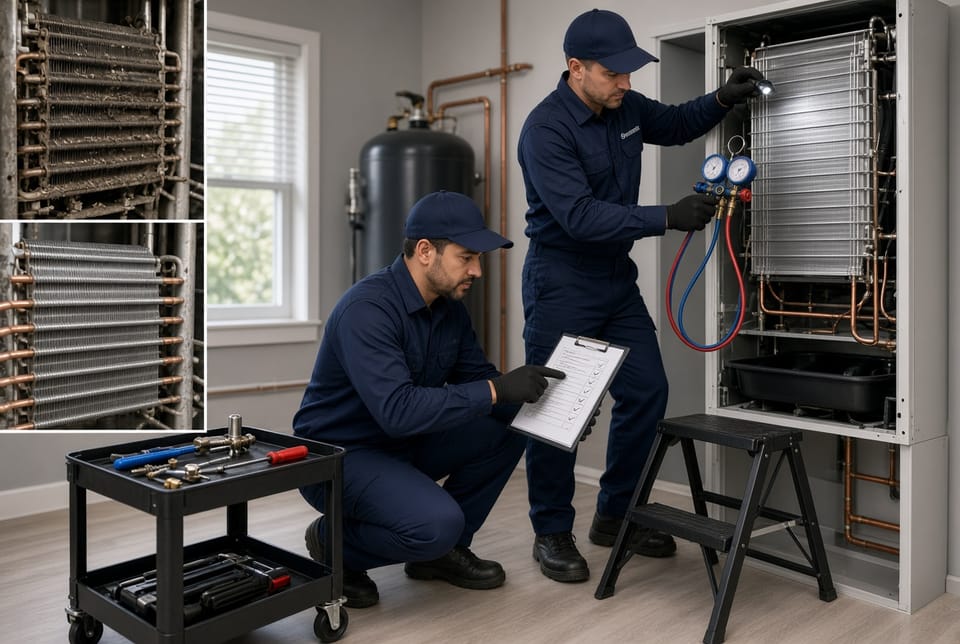
Both indoor evaporator coils and outdoor condenser coils accumulate dirt, pollen, and mineral deposits. Dirty coils transfer heat poorly, which means the system runs longer to reach the set temperature. Professional coil cleaning uses the right chemicals and techniques to restore heat-transfer efficiency without damaging the delicate fins. Clean coils also reduce the risk of frozen evaporator coils in summer and overheating in winter.
System Checks
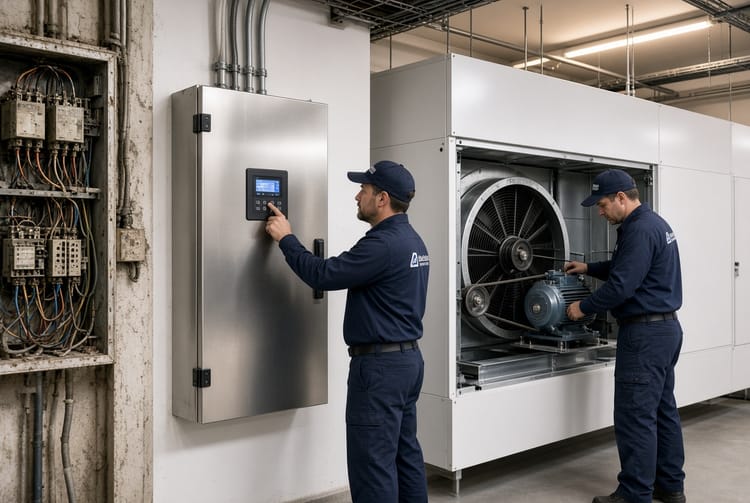
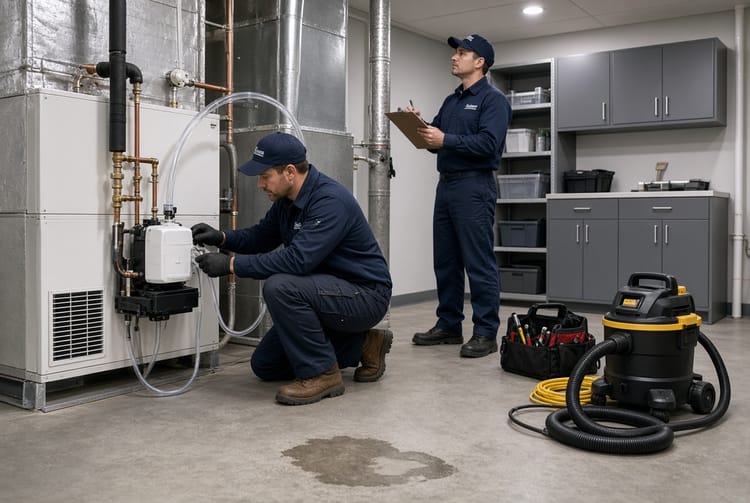
A complete system check goes beyond the obvious. Technicians measure refrigerant charge, test safety controls, inspect condensate drains to prevent water damage, verify thermostat calibration, and listen for unusual sounds that signal bearing or motor problems. Electrical components receive special attention because loose connections generate heat and can lead to component failure.
Together these services form the backbone of a reliable HVAC maintenance plan.
Key Benefits of Staying on a Maintenance Plan
The advantages of consistent care compound over time. Homeowners who enroll in a structured program typically notice three major improvements.
- Fewer breakdowns. Routine inspection and cleaning catch worn parts and restricted airflow before they cause a complete shutdown. Emergency service calls become rare rather than routine.
- Longer system lifespan. Heat and friction are the enemies of compressors, motors, and heat exchangers. When those components operate under proper conditions, they last years longer than neglected equipment.
- Energy savings. A clean, properly charged, and well-adjusted system uses less electricity or gas to deliver the same comfort. Many households see a noticeable drop in monthly utility bills after the first full year on a plan.
Additional benefits include more consistent indoor humidity, quieter operation, and documentation that can support manufacturer warranty claims. Some insurance carriers even view documented maintenance favorably.
How to Choose the Right HVAC Maintenance Plan
Not every plan is created equal. Selecting the best option requires attention to several practical details.
First, confirm the frequency and depth of service. A plan that only offers one visit per year may leave the system vulnerable during the opposite season. Look for programs that explicitly include bi-annual inspections plus the core tasks of filter changes, coil cleaning, and system checks.
Second, ask what is covered versus what is extra. Some plans include standard filters and basic cleaning; others charge separately for refrigerant top-offs or major part replacement. Transparency here prevents surprise invoices.
Third, evaluate technician qualifications and response time. The best plans assign experienced, licensed professionals who arrive with the proper tools and parts. Priority scheduling for plan members is another valuable feature—when a problem does arise, members often receive faster service.
Fourth, review cancellation and transfer policies. A good plan should be easy to pause if you sell the home and should transfer to a new owner without penalty.
Finally, compare the annual cost against the likely expense of even one emergency repair plus higher energy bills. In most cases the plan pays for itself within the first year or two.
Seasonal Considerations for Year-Round Protection
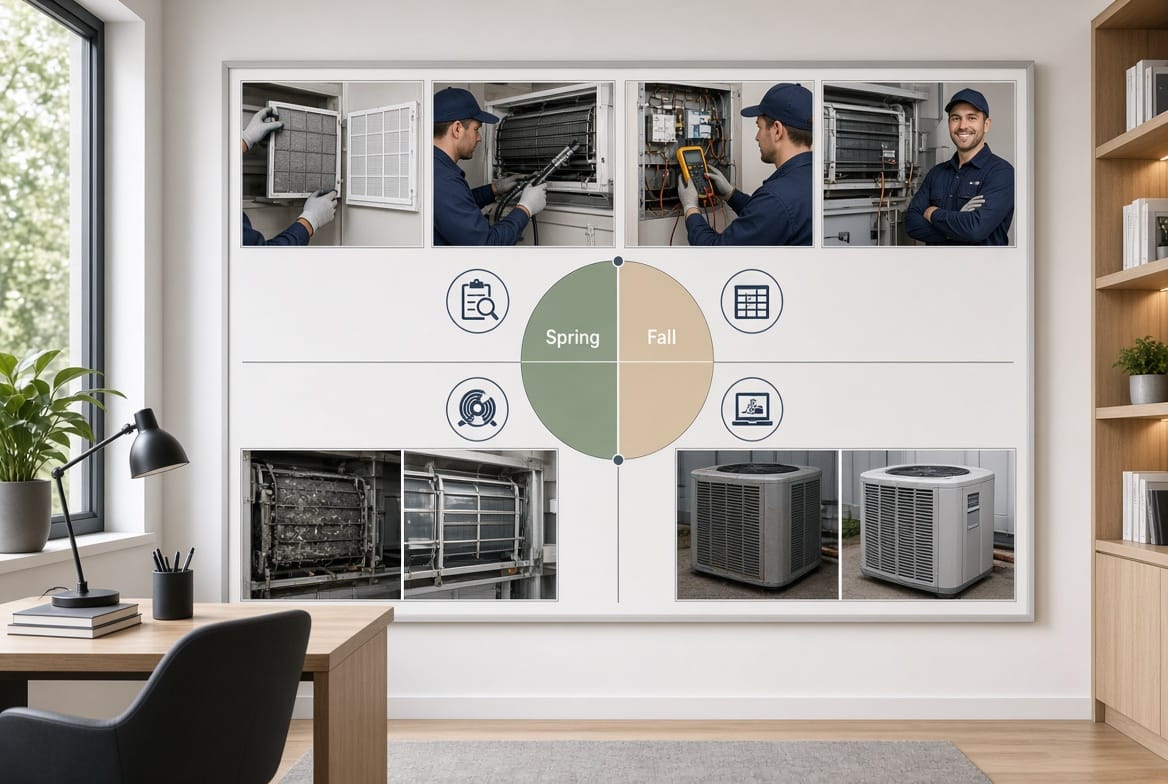
Spring and fall visits are timed for good reason. In spring the technician prepares the air conditioner for high demand: cleaning outdoor coils, checking refrigerant, and testing condensate drainage. In fall the focus shifts to the furnace or heat pump: inspecting heat exchangers, testing ignition systems, and verifying safe combustion or efficient heat transfer.
Between official visits, simple homeowner habits support the plan. Changing filters on the recommended schedule, keeping outdoor units free of leaves and debris, and noting any unusual noises or odors help the technician work more efficiently during the next appointment.
Common Problems Prevented by Regular Maintenance
Many of the most expensive HVAC failures begin as small, preventable issues:
- Restricted airflow from dirty filters leading to frozen coils or overheated motors
- Corroded electrical connections causing intermittent operation or complete failure
- Clogged condensate drains producing water damage and mold growth
- Low refrigerant charge forcing the compressor to run continuously
- Misaligned belts or failing capacitors that strain other components
A structured HVAC maintenance plan systematically addresses each of these risks.
Professional Service Versus Occasional DIY Efforts
Homeowners can and should change filters and keep outdoor units clear. Those tasks matter. However, coil cleaning, refrigerant handling, electrical testing, and combustion analysis require specialized tools, training, and safety knowledge. Attempting these jobs without proper equipment can void warranties or create new hazards. The most effective strategy combines simple homeowner habits with professional bi-annual inspections and system checks.
Making the Plan Work for Your Specific System
Whether you have a conventional split system, a heat pump, a packaged unit, or a dual-fuel setup, the core principles remain the same. The technician simply adapts the checklist to the equipment type. High-efficiency systems with variable-speed motors and communicating thermostats benefit even more from precise adjustments that only a trained professional can perform.
Older systems approaching the end of their expected life still gain from maintenance. Clean, well-tuned equipment often delivers several extra years of reliable service, giving the owner time to plan a future replacement rather than facing an emergency decision.
Documentation and Peace of Mind
A professional plan typically includes a written service record after each visit. That documentation becomes valuable if a warranty claim arises or if you decide to sell the property. Buyers and inspectors view a well-maintained HVAC system as a positive feature.
More importantly, knowing that qualified technicians have examined the equipment twice a year reduces anxiety when extreme weather arrives. Comfort becomes predictable rather than a source of worry.
Taking the Next Step
Protecting an HVAC system does not require complicated decisions. It requires consistency. A well-structured HVAC maintenance plan built around bi-annual inspections, timely filter changes, professional coil cleaning, and thorough system checks delivers fewer breakdowns, longer equipment life, and meaningful energy savings.