The HVAC Duct Sealing: Stopping Leaks That Waste Energy

Hidden within the walls, floors, and ceilings of nearly every home and commercial building lies a critical yet often overlooked component of the heating and cooling system: the ductwork. When these pathways develop leaks, they quietly undermine comfort, inflate utility costs, and force equipment to work harder than necessary. Duct sealing stands as one of the most effective, long-lasting solutions for reclaiming lost energy and restoring peak performance. This comprehensive guide explores why duct leaks matter, how to recognize them, and the proven professional methods that deliver lasting results.
Seal Your Ducts & Stop Energy Waste – Call Now!
Understanding the Hidden Cost of Duct Leaks
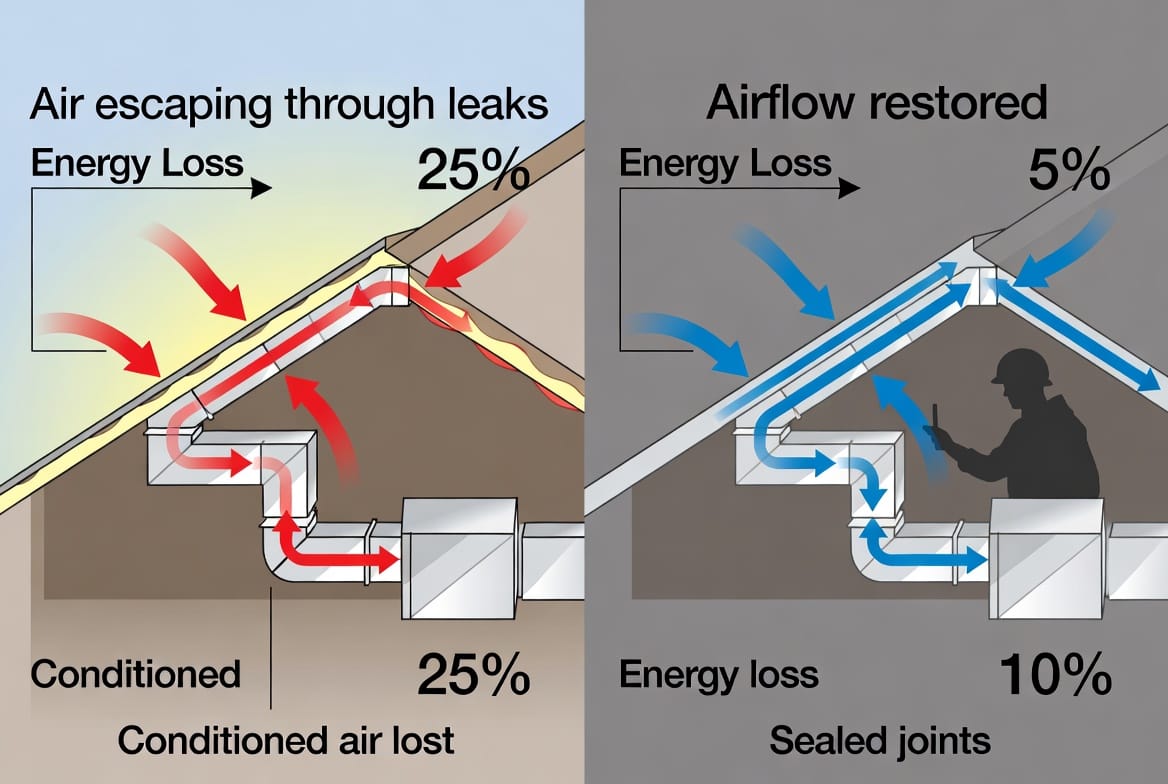
Air distribution systems are designed to deliver conditioned air precisely where it is needed. When gaps, cracks, or disconnected sections appear, a significant portion of that carefully heated or cooled air escapes into attics, crawl spaces, wall cavities, or other unconditioned areas. Industry research consistently shows that typical duct systems can lose up to 30 percent of conditioned air through leakage before it ever reaches living spaces. In older homes or systems that have never been properly sealed, losses can climb even higher.
This wasted energy translates directly into higher monthly bills. The furnace or air conditioner must run longer cycles to compensate for the lost air, consuming extra electricity or fuel while struggling to maintain set temperatures. Over a single heating or cooling season, the financial impact can reach hundreds of dollars for an average household. Beyond cost, the extra runtime accelerates wear on motors, compressors, and heat exchangers, shortening equipment lifespan and increasing the likelihood of costly repairs.
Leaks also affect indoor air quality and comfort. Dust, insulation particles, and outdoor contaminants can be drawn into the system through return-side openings, then distributed throughout the building. Supply-side leaks, meanwhile, create pressure imbalances that pull unfiltered air from unwanted areas. The result is uneven temperatures, dusty surfaces, and a system that never quite feels efficient.
Recognizing the Warning Signs of Duct Leaks
Homeowners and facility managers often notice symptoms long before they identify the root cause. Paying attention to these indicators can prompt timely inspection and sealing:
- Dust accumulation around registers and vents. Excess dust settling near supply outlets frequently signals that the system is pulling in particles from unconditioned spaces through leaky returns or supply gaps.
- Uneven temperatures from room to room. One area remains consistently too warm or too cool despite thermostat adjustments, pointing to restricted or lost airflow caused by leaks or disconnected sections.
- Unexpectedly high energy bills. When utility costs rise without corresponding changes in weather, occupancy, or thermostat settings, duct leakage is a common culprit.
- Visible gaps or disconnected duct sections. In accessible areas such as attics, basements, or utility rooms, flexible ducting may have slipped free of collars, or metal joints may show daylight.
- Whistling or rushing air sounds. Audible air movement near ducts or registers when the system operates can indicate pressurized leaks.
- Excessive system runtime. Equipment that cycles frequently or runs for extended periods without reaching the desired temperature often compensates for lost capacity.
These signs rarely appear in isolation. A combination of dusty registers, uneven rooms, and rising bills provides strong evidence that professional evaluation is warranted. Early detection prevents further energy waste and protects indoor comfort.
Why Professional Duct Sealing Delivers Superior Results
While temporary fixes such as duct tape may seem convenient, they fail under the temperature extremes, pressure changes, and vibration present in HVAC systems. Professional sealing employs materials and techniques engineered for permanence and performance.
Mastic sealant remains the industry gold standard for accessible joints. This thick, water-based compound is applied with a brush or trowel to create a flexible, airtight barrier that adheres permanently to metal, flex duct, and other surfaces. Unlike tape, mastic does not dry out, crack, or peel over time. Technicians carefully clean joint surfaces, apply the sealant generously, and often reinforce larger gaps with fiberglass mesh tape embedded in the mastic for added strength.
Aerosol sealant technology offers an advanced solution for systems with extensive or hard-to-reach leakage. In this process, the duct system is pressurized and a specialized aerosolized sealant is introduced. The particles travel through the airstream and deposit precisely at leak sites, building up until openings are closed. This method reaches joints buried inside walls or above ceilings without requiring major demolition. Results are measurable: technicians typically perform before-and-after leakage tests using calibrated equipment to document reduction percentages, often achieving 80–90 percent or greater improvement.
Additional professional steps enhance long-term success. Technicians inspect the entire distribution network, repair or replace damaged sections, properly support flexible ducting to prevent sagging, and ensure connections at the air handler, registers, and returns are secure. Insulation is frequently added or restored over sealed ducts in unconditioned spaces to further reduce conductive losses.
These methods are not guesswork. Certified technicians follow established protocols, use diagnostic tools such as duct blasters or pressure gauges, and provide documented results. The investment typically pays for itself through energy savings within a few seasons while delivering immediate gains in comfort and air quality.
The Broader Benefits of Sealed Ductwork
Beyond the primary goal of energy efficiency, properly sealed ducts deliver multiple advantages that improve daily living and protect property value:
- Consistent comfort throughout the building. Balanced airflow eliminates hot and cold spots, allowing thermostats to maintain setpoints with greater accuracy and fewer cycles.
- Improved indoor air quality. By preventing the infiltration of dust, allergens, and outdoor pollutants, sealed systems support healthier breathing environments—especially valuable for households with allergy or respiratory concerns.
- Reduced strain on HVAC equipment. Shorter runtimes and proper static pressure extend the service life of furnaces, air conditioners, and heat pumps while lowering the frequency of breakdowns.
- Lower carbon footprint. Conserving energy decreases overall energy consumption and associated emissions, aligning with broader sustainability goals.
- Enhanced system capacity. Recovering previously lost airflow can sometimes allow existing equipment to meet cooling or heating loads that previously seemed inadequate, potentially delaying the need for larger or additional units.
- Quieter operation. Eliminating high-velocity leaks and pressure imbalances often reduces operational noise transmitted through the duct network.
These benefits compound over time. A sealed system maintains its efficiency year after year with minimal additional maintenance, providing reliable performance through seasonal extremes.
The Professional Inspection and Sealing Process
A thorough duct sealing project follows a structured sequence designed for accuracy and lasting results. It begins with a comprehensive visual and diagnostic assessment. Technicians examine accessible ductwork, measure system static pressure, and often perform a leakage test to quantify the current loss rate. This baseline data guides the scope of work and later verifies improvement.
Access planning follows. In some cases, limited openings in ceilings or walls may be required to reach critical joints; these are carefully restored afterward. Cleaning of joint surfaces removes dust and debris so sealants adhere properly. Application of mastic or aerosol sealant proceeds systematically, with special attention to high-leakage zones such as connections at the air handler, branch takeoffs, and register boots.
After sealing, technicians retest the system to confirm leakage reduction. Final steps include reinstalling or upgrading insulation, securing supports, and providing the homeowner or building manager with documentation of the work performed and measured results. Many professionals also offer recommendations for complementary improvements such as filter upgrades, thermostat optimization, or minor equipment adjustments that further maximize efficiency.
The entire process is designed to minimize disruption. Most residential projects can be completed in a single day, with occupants able to remain in the home. Commercial projects are scheduled to accommodate operational needs.

Long-Term Maintenance and Prevention
Once ducts are properly sealed, simple habits help preserve the investment. Regular filter changes maintain clean airflow and reduce stress on the system. Annual professional HVAC tune-ups include visual checks of accessible duct connections. Avoiding excessive negative pressure by ensuring return pathways remain unobstructed prevents new stress on joints. In attics or crawl spaces, periodic visual inspections can catch any settling or damage early.
For properties undergoing renovations, coordinating duct sealing with other mechanical work ensures the system remains intact. New construction offers the ideal opportunity to seal ducts before walls and ceilings are closed, locking in efficiency from day one.
Making the Decision to Seal
Homeowners and facility managers sometimes delay duct sealing because the problem remains out of sight. Yet the cumulative cost of wasted energy, compromised comfort, and accelerated equipment wear quickly exceeds the investment in professional service. Modern sealing techniques deliver measurable, documented results with minimal disruption and rapid payback through lower utility bills.
Energy efficiency is no longer optional in an era of rising utility rates and growing environmental awareness. Sealing duct leaks recovers capacity that already exists within the system, avoiding the need for oversized equipment or constant thermostat adjustments. The outcome is a quieter, cleaner, more reliable HVAC system that performs as originally designed.
Get Professional Duct Sealing & Lower Bills – Call Now