The HVAC Duct Insulation: Preventing Condensation and Energy Loss
Proper HVAC duct insulation stands as one of the most critical yet frequently overlooked components in any modern heating and cooling system. When ducts move conditioned air throughout a home or commercial space, they travel through unconditioned areas such as attics, crawl spaces, basements, and wall cavities. Without adequate insulation, those ducts become vulnerable to two major problems: condensation that invites moisture damage and energy loss that drives up utility bills. Understanding why duct insulation matters, recognizing the early signs of failure, and knowing the best replacement or upgrade options empowers homeowners and facility managers to protect both indoor comfort and long-term system performance.
Stop Condensation & Energy Loss – Call for Duct Insulation Today!
Why HVAC Duct Insulation Matters
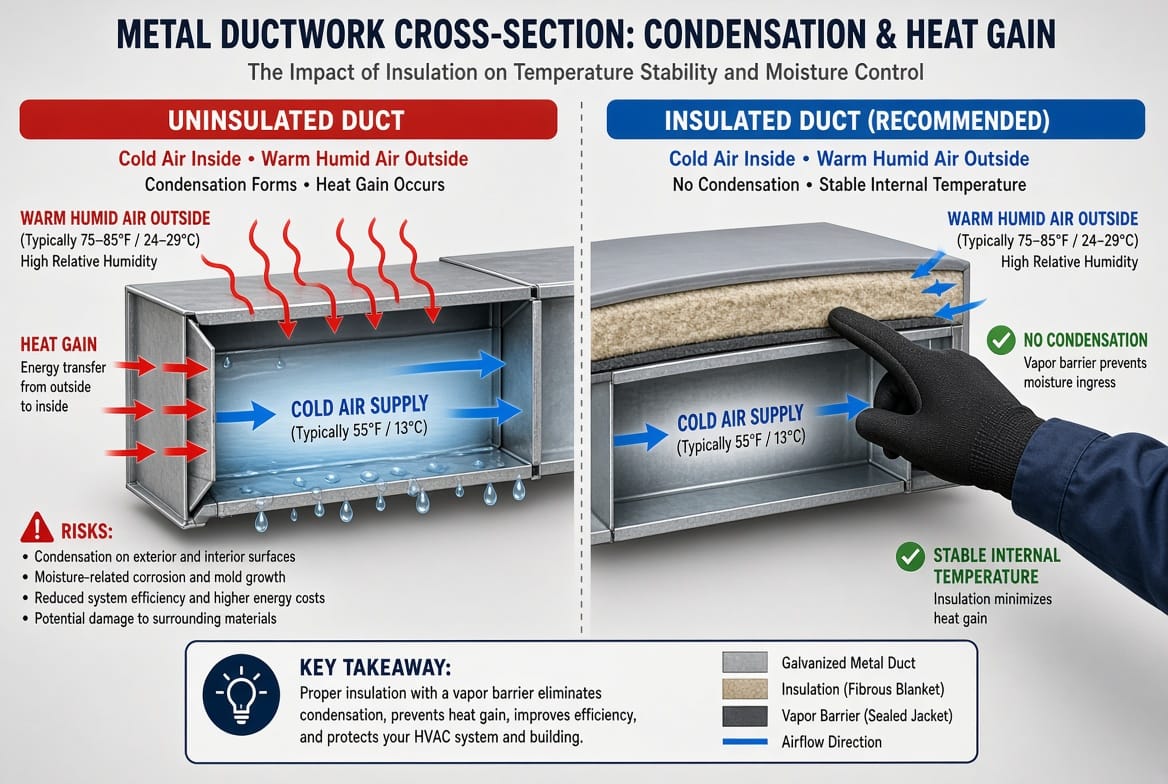
Ducts carry air that is either significantly cooler or warmer than the surrounding environment. In cooling mode, cold air travels through warm, humid spaces. In heating mode, hot air moves through colder zones. The temperature difference creates ideal conditions for moisture to form on the exterior of uninsulated or poorly insulated metal ducts. This process, known as condensation, occurs when warm moist air contacts a cold surface and reaches its dew point.
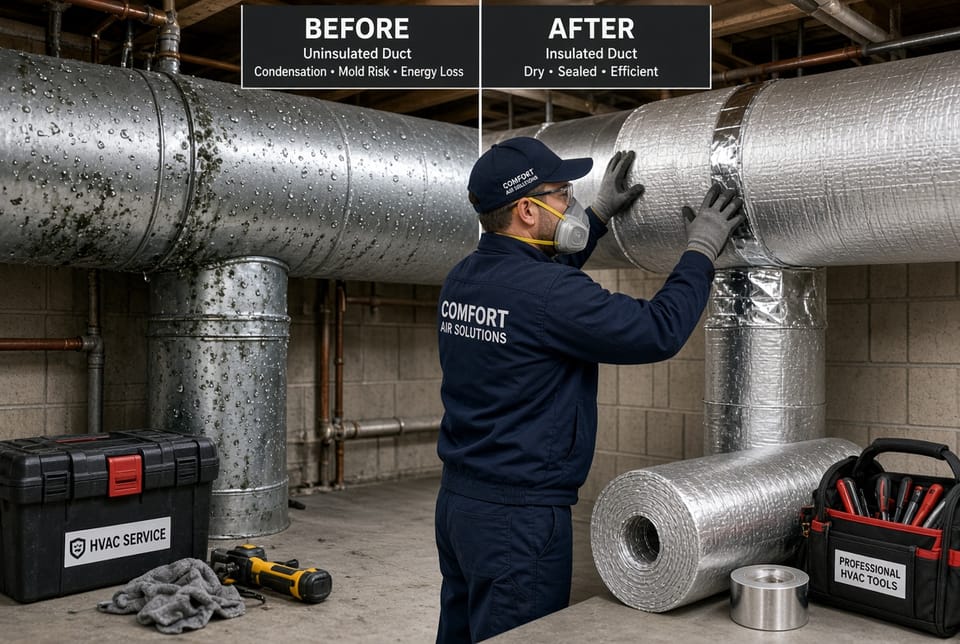
Condensation does far more than leave water droplets. Persistent moisture promotes mold growth, weakens duct joints, and can drip onto ceilings, insulation, or flooring below. At the same time, uninsulated ducts allow heat transfer. Cool air gains heat before it reaches living spaces in summer, while heated air loses temperature in winter. The result is a system that works harder, runs longer, and consumes more energy to achieve the same comfort level.
Quality duct insulation creates a thermal barrier. It keeps the outer surface of the duct closer to the temperature of the surrounding air, dramatically reducing the chance of condensation. It also minimizes conductive heat transfer, so conditioned air arrives at registers closer to the temperature set on the thermostat. The combined effect delivers measurable benefits: lower energy consumption, reduced risk of moisture-related damage, quieter operation, and more consistent room-to-room temperatures.
In regions with high humidity or extreme seasonal temperature swings, the importance of proper insulation multiplies. Even modest improvements in insulation thickness or material quality can produce noticeable drops in monthly energy costs while protecting structural components from long-term water damage.
How Condensation Forms and Spreads
When cold air flows through an uninsulated duct on a hot, humid day, the metal surface temperature can drop well below the dew point of the surrounding air. Water vapor condenses into liquid, first as fine beads, then as larger droplets that run along the duct surface. Over time these droplets collect at low points, seep through joints, or saturate nearby building materials.
Mold thrives in the damp environment created by chronic condensation. Once established on the exterior of ducts or on surrounding insulation and wood framing, mold spores can become airborne and enter the living space through small leaks. Occupants may notice musty odors, increased allergy symptoms, or visible discoloration on ceilings and walls near duct runs.
Energy loss compounds the problem. Every degree of temperature change that occurs inside the duct forces the air handler or furnace to compensate. In cooling season this means longer compressor run times. In heating season it means higher fuel or electricity use. Studies of residential systems consistently show that poorly insulated ducts can account for 20 to 30 percent of total HVAC energy waste in extreme cases, although actual figures vary by climate, duct length, and insulation condition.
Common Signs of Insulation Failure
Homeowners and maintenance staff should watch for clear indicators that duct insulation is no longer performing its job. Early detection allows corrective action before secondary damage becomes expensive.
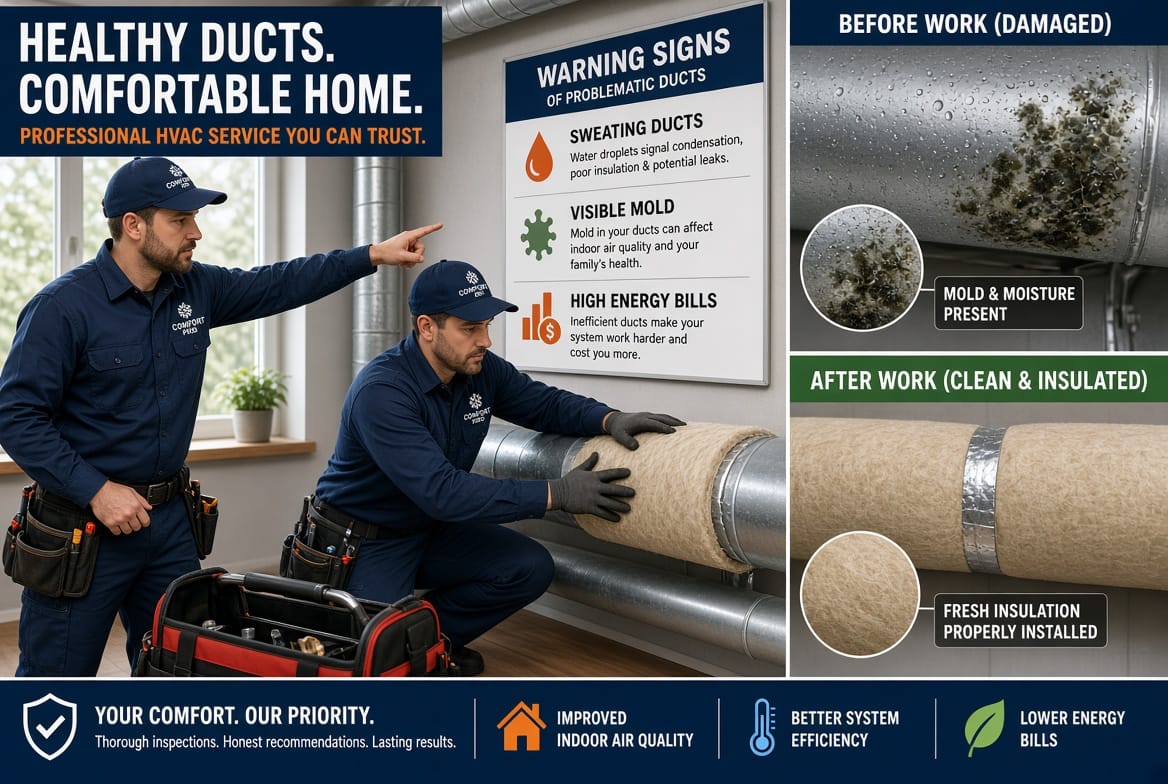
- Sweating ducts: Visible water droplets or dampness on the exterior of supply or return ducts, especially during peak cooling periods.
- Mold growth: Dark spots, fuzzy patches, or musty smells near ductwork in attics, basements, or utility rooms.
- Elevated energy bills: Sudden or gradual increases in heating and cooling costs without corresponding changes in usage patterns or outdoor temperatures.
- Uneven room temperatures: Some rooms remain too warm or too cool even when the thermostat is set correctly, often because air loses or gains heat while traveling through compromised ducts.
- Water stains or damaged ceilings: Brown rings or soft spots on drywall or plaster located directly beneath duct runs.
- Excessive system runtime: The HVAC unit cycles more frequently or runs longer to reach setpoints.
Any one of these signs warrants a professional inspection. Multiple signs appearing together usually indicate that insulation has degraded, become compressed, or was never installed to modern standards.
Materials and Performance Standards
Modern duct insulation comes in several proven forms. Fiberglass duct wrap with a foil or kraft facing remains widely used because it offers good thermal resistance at a reasonable cost. The facing acts as a vapor barrier that further limits moisture migration. Closed-cell elastomeric foam provides excellent resistance to moisture absorption and is especially useful in high-humidity environments. Rigid foam board insulation can be applied to larger commercial ducts or rectangular plenums where wrap materials are less practical.
R-value is the standard measure of thermal resistance. Residential codes in many areas now require a minimum R-6 or R-8 for ducts in unconditioned spaces, with higher values recommended in extreme climates. Thickness, density, and installation quality all influence actual performance. Gaps, compressions, or missing vapor barriers can reduce effective R-value dramatically even when the material itself meets specifications.
Professional installation ensures continuous coverage, tightly sealed seams, and proper support so that insulation does not sag or pull away over time. Mechanical fasteners, adhesive, and specialized tapes designed for HVAC use create a durable, airtight assembly.
Replacement and Upgrade Options
When existing insulation shows signs of failure, several practical paths exist. In some cases localized repair is sufficient: removing damaged sections, cleaning the duct surface, and applying new wrap with sealed joints. More extensive degradation usually calls for complete removal and replacement. During a full upgrade, technicians can also seal duct joints with mastic or approved tape, improving overall system airtightness and further reducing energy loss.
Upgrading to higher R-value materials or switching to closed-cell foam can deliver superior long-term performance, especially in humid climates. Some homeowners choose to combine insulation upgrades with duct cleaning or minor layout improvements that shorten runs or eliminate unnecessary bends. The goal is always the same: deliver conditioned air efficiently while keeping exterior duct surfaces dry.
Cost considerations include material quality, accessibility of the duct runs, and labor. Although premium insulation carries a higher upfront price, the reduction in energy consumption and avoidance of moisture-related repairs typically produce a favorable return within a few seasons. Many utility programs offer rebates for verified duct insulation improvements, further improving the economics.
Best Practices for Long-Term Protection
Once new insulation is in place, a few simple habits help maintain its effectiveness. Keep attic and crawl-space ventilation balanced so humidity does not become excessive. Address any roof or plumbing leaks promptly so moisture does not reach ductwork from external sources. Schedule periodic visual inspections, especially after extreme weather seasons, to confirm that insulation remains intact and dry.
Professional HVAC technicians can perform infrared scans or simple surface-temperature checks that quickly reveal areas where insulation may have slipped or degraded. Early intervention keeps small issues from becoming large ones.
The Broader Impact on Indoor Air Quality and Comfort
Beyond energy savings, properly insulated ducts contribute directly to healthier indoor environments. By eliminating condensation, they remove a primary food source for mold. Reduced system runtime also means less dust circulation and quieter operation. Consistent delivery temperatures improve comfort in every room, reducing the temptation to adjust the thermostat aggressively and further waste energy.
In commercial settings the benefits scale quickly. Large duct networks serving multiple zones can lose substantial energy when insulation is inadequate. Employee comfort, equipment longevity, and operating budgets all improve when ducts are correctly protected.
Taking Action with Confidence
Recognizing the importance of HVAC duct insulation is the first step. Acting on that knowledge protects the investment already made in heating and cooling equipment while delivering daily returns in lower bills and greater peace of mind. Whether the current system shows early warning signs or simply has never been upgraded to modern standards, professional assessment provides a clear path forward.
Technicians trained in ductwork evaluation can measure surface temperatures, inspect for moisture, and recommend the most cost-effective combination of sealing and insulation. Materials selected for the specific climate and building type ensure lasting performance. Once installed, the insulation works silently and continuously, preventing condensation and energy loss year after year.
Homeowners who prioritize this critical component often report noticeable improvements within the first cooling or heating season. Rooms that once felt stuffy or uneven become comfortable. Energy statements reflect the reduced workload on the equipment. Most importantly, the risk of hidden moisture damage diminishes substantially.
Insulate your ducts for efficiency.
Protect Your Home from Sweating Ducts – Call for Professional Service!