The HVAC Condenser Fan Blade: Balancing for Quiet Operation
In every well-functioning air conditioning system, the condenser fan blade plays a critical mechanical role that often goes unnoticed until something goes wrong. This rotating component draws outdoor air across the condenser coils, releasing heat and allowing the refrigerant to cool efficiently. When the blade spins true and balanced, the system operates with remarkable quiet efficiency. When it does not, the entire outdoor unit can become a source of disruptive noise, excess vibration, and rising energy costs.
Get Balanced Condenser Fan Blades – Call for Expert Service
Understanding how a condenser fan blade becomes unbalanced, recognizing the early warning signs, and knowing how professional balancing restores smooth performance empowers homeowners to protect both comfort and equipment longevity. This guide explores the mechanical realities of fan blade balance, the risks of neglect, and the reliable solutions that return an HVAC system to near-silent operation.
Why Condenser Fan Blade Balance Matters
The condenser fan blade is engineered to rotate at high speeds—often between 800 and 1,200 revolutions per minute—while moving large volumes of air. Even a slight imbalance creates centrifugal forces that the motor and mounting hardware must constantly fight. Over time, these forces stress bearings, loosen fasteners, and transmit vibration through the entire outdoor cabinet.
A properly balanced blade delivers three essential benefits:
- Quiet operation that keeps outdoor noise levels low enough for peaceful patios and open windows
- Efficient airflow that maintains designed heat-rejection rates and protects compressor life
- Reduced mechanical wear that extends the service life of the fan motor and related components
When balance is lost, these advantages disappear. The system works harder, consumes more electricity, and risks premature failure. Restoring balance is not cosmetic; it is a core mechanical service that safeguards performance and comfort.
How Condenser Fan Blades Become Unbalanced
Several everyday conditions gradually throw a fan blade out of balance. Recognizing these causes helps homeowners appreciate why routine professional attention is valuable.
Dirt and Debris Buildup
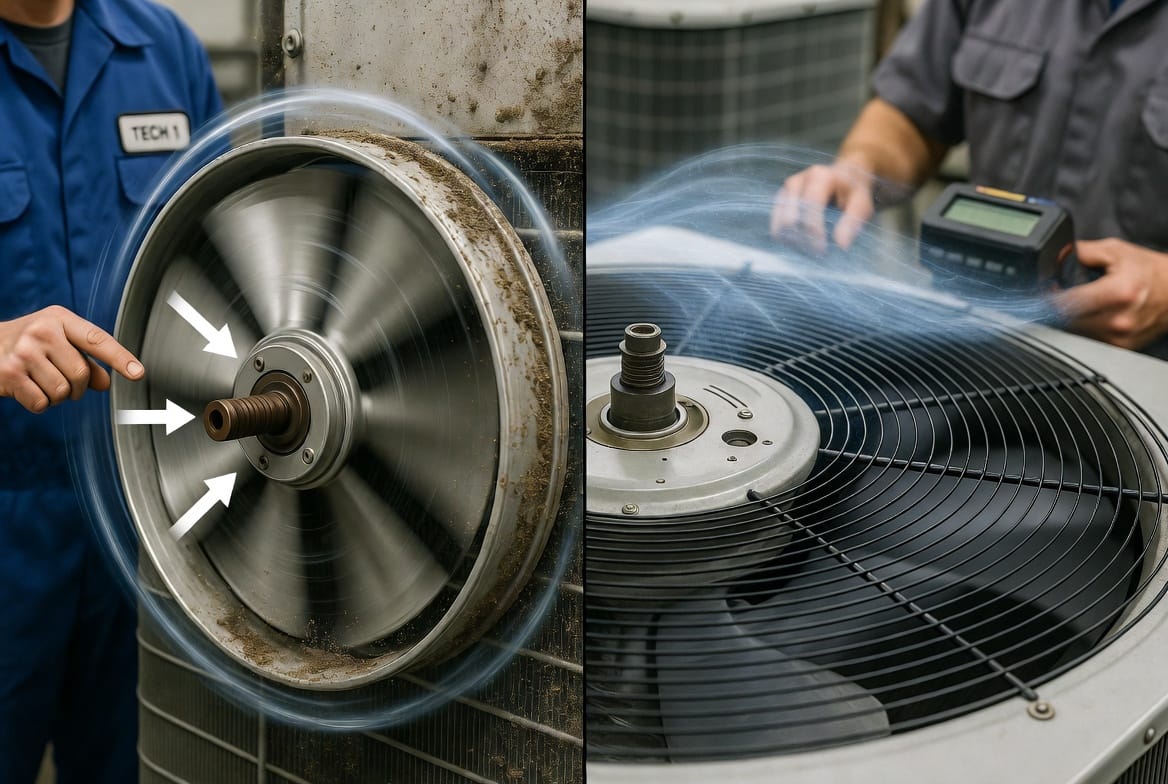
Outdoor condenser units sit exposed to pollen, dust, leaves, grass clippings, and airborne contaminants. Over months and seasons, these materials accumulate unevenly on the blade surfaces. One side of a blade may collect a thicker layer of grime than another, shifting the center of mass. Even a few grams of uneven dirt can generate noticeable vibration at operating speed. In coastal or industrial areas, salt or fine particulates accelerate the problem.
Bent or Damaged Blades
Physical impacts are another common culprit. A falling branch, a child’s ball, or careless handling during other maintenance can bend a blade tip or warp a section of the metal. Once the aerodynamic profile is altered, the blade no longer moves through the air symmetrically. The resulting imbalance grows more pronounced as rotational speed increases.
Natural Wear and Material Fatigue
Metal fatigue, corrosion at the hub, or gradual erosion of the blade edges can also create imbalance. Over thousands of operating hours, microscopic changes accumulate. In older systems, the blade material itself may thin unevenly, especially if the unit has endured years of high humidity or temperature cycling. Factory balance weights can loosen or shift, compounding the issue.
These factors rarely appear overnight. They develop slowly, which is why many homeowners first notice symptoms only after the imbalance has already begun stressing other components.
Clear Signs That a Fan Blade Needs Balancing
An unbalanced condenser fan blade announces itself through several detectable symptoms. Homeowners who learn to recognize them can schedule service before minor vibration becomes major damage.
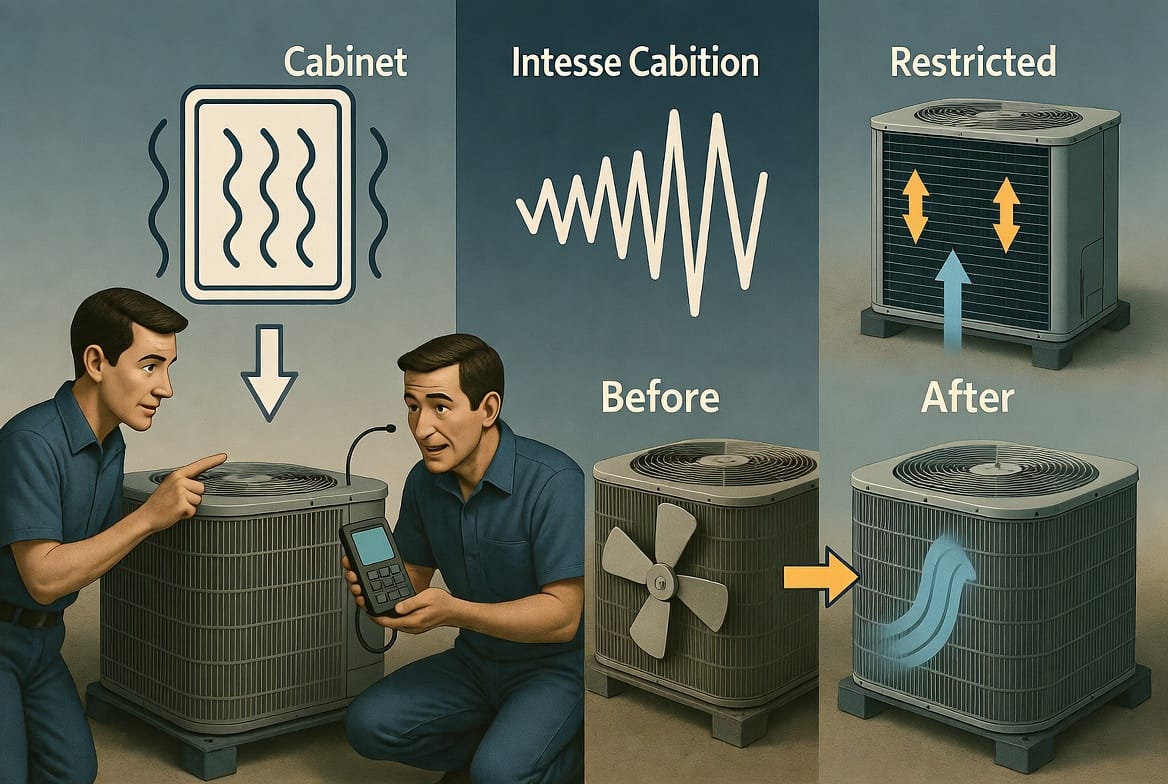
- Excessive vibration: The outdoor cabinet may visibly shake or produce a rhythmic thumping sensation when the hand is placed on the top grille.
- Unusual noise: A once-quiet unit begins to emit a low humming, rattling, or whooshing sound that intensifies as the fan reaches full speed.
- Reduced airflow: Heat rejection suffers, causing the system to run longer cycles and struggle to maintain indoor temperatures on hot days.
- Higher energy bills: The compressor and fan motor draw extra power to overcome the mechanical inefficiency created by imbalance.
- Premature component wear: Fan motor bearings may fail earlier than expected, or mounting bolts may loosen and require repeated tightening.
Any combination of these signs warrants prompt professional evaluation. Ignoring them allows vibration to travel into the compressor and refrigerant lines, raising the risk of more expensive repairs.
The Professional Balancing Process
Restoring quiet operation requires more than a simple visual inspection. Trained technicians follow a systematic mechanical procedure that returns the blade to factory-level balance or better.
Step 1: Thorough Cleaning
The process begins with complete removal of the fan blade assembly when necessary. Technicians carefully clean every surface, eliminating dirt, grease, and biological growth that contribute to imbalance. Specialized non-abrasive cleaners protect the blade finish while ensuring every gram of debris is gone.
Step 2: Inspection and Straightening
Each blade is examined for bends, cracks, or corrosion. Minor warping can often be corrected with precision tools. Severely damaged blades are replaced with exact OEM or high-quality aftermarket equivalents to maintain original design integrity.
Step 3: Dynamic Balancing
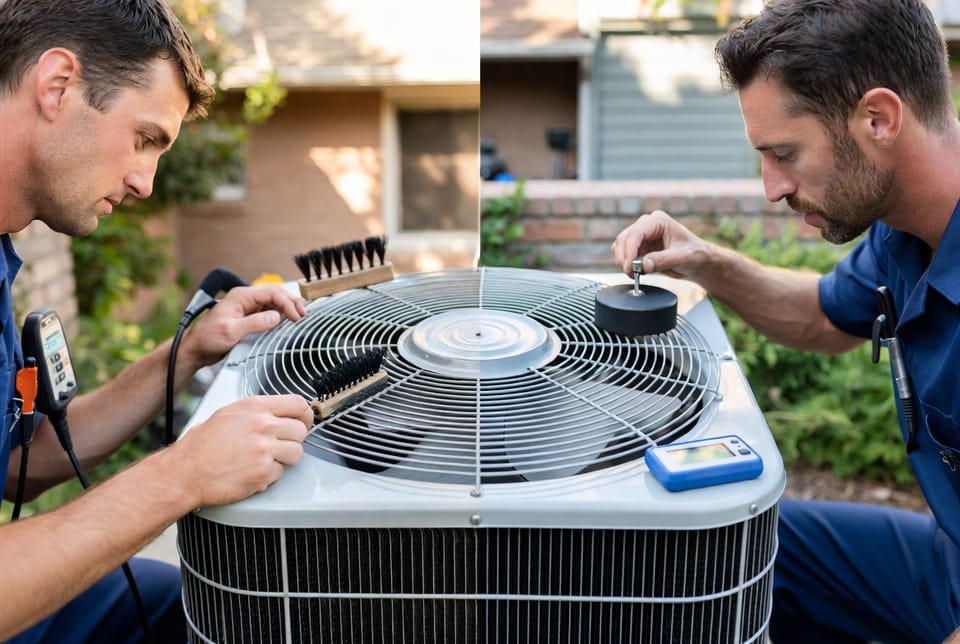
Using calibrated electronic balancing equipment, technicians spin the blade at operating speed and measure residual vibration. Small, precisely calculated weights are then attached at exact locations along the blade or hub until vibration readings fall within acceptable tolerances—typically well below the levels that produce audible noise or measurable stress.
Step 4: Reassembly and Verification
The balanced assembly is reinstalled with proper torque on all fasteners. Technicians then run the system through multiple cycles, confirming that vibration has been eliminated, airflow has returned to design specifications, and noise levels have dropped dramatically.
This multi-step approach addresses both the symptom and the underlying causes. The result is a condenser fan that spins true, moves air efficiently, and operates with the quiet confidence homeowners expect.
Benefits of Professional Fan Blade Balancing
Choosing expert service delivers measurable advantages that extend far beyond reduced noise.
Immediate quiet comfort returns to outdoor living spaces. Conversations on the patio, open bedroom windows at night, and peaceful backyard gatherings become possible again without the constant background drone of an unbalanced unit.
Energy efficiency improves. A balanced blade reduces the load on the fan motor and allows the condenser coils to reject heat as designed. Systems often regain several percentage points of efficiency, translating into lower monthly utility costs.
Equipment longevity increases. By eliminating chronic vibration, balancing protects bearings, shafts, and the compressor itself. Many homeowners discover that a single balancing service prevents cascading failures that would otherwise appear within one or two seasons.
Indoor comfort stabilizes. Consistent airflow across the condenser supports stable refrigerant pressures, shorter run times, and more even temperature control throughout the home.
These outcomes are not theoretical. They are the direct mechanical consequences of restoring a critical rotating component to proper balance.
When to Schedule Condenser Fan Service
Most manufacturers recommend annual professional maintenance for outdoor units. During these visits, technicians routinely check fan blade condition and balance. Homeowners should also request service at the first sign of vibration or unusual noise, after any physical impact to the unit, or following periods of heavy pollen or construction activity nearby.
Waiting until the middle of a heat wave is never ideal. Scheduling service during milder weather allows thorough work without the pressure of immediate cooling demand and often results in faster appointment availability.
Maintaining Balance Between Professional Visits
While true dynamic balancing requires specialized tools, homeowners can support long-term performance with simple habits:
- Keep the area around the outdoor unit clear of leaves, grass, and debris
- Gently rinse the exterior of the cabinet and top grille with a garden hose several times each season (never spray water directly into the electrical components)
- Avoid leaning objects against the unit or allowing children to climb on it
- Note any change in sound or vibration and contact a professional promptly
These steps reduce the rate at which imbalance develops and help the system stay closer to optimal condition between formal service visits.
The True Cost of Neglect Versus Timely Care
An unbalanced condenser fan blade rarely fails catastrophically on its own. Instead, it steadily increases wear on surrounding parts. Fan motors that should last 10–15 years may fail in half that time. Compressor stress can lead to expensive refrigerant circuit repairs. In extreme cases, prolonged vibration loosens electrical connections or damages coil fins, compounding repair costs.
Professional balancing, by contrast, is a focused mechanical service that restores quiet, efficient operation at a fraction of the expense of major component replacement. It is one of the highest-value interventions available for outdoor HVAC equipment.
Quiet Operation Starts with Balanced Blades
The condenser fan blade is a deceptively simple mechanical component whose balance determines much of the outdoor unit’s character. Dirt buildup, bent blades, and gradual wear can quietly rob a system of its designed silence and efficiency. The resulting vibration, noise, and reduced airflow are not merely annoyances; they are early warnings that mechanical stress is accumulating.
Professional cleaning, inspection, and dynamic balancing reverse these effects. The process returns the blade to true rotation, restores proper airflow, lowers energy consumption, and protects the rest of the system from unnecessary wear. Homeowners who invest in this service regain the quiet outdoor environment and reliable cooling performance they expect from a quality HVAC system.
Eliminate Noise & Vibration – Call for Condenser Fan Service