The HVAC Air Handler Cabinet: Insulation and Sealing for Efficiency
The indoor air handler is the quiet workhorse of any modern HVAC system. While outdoor condensers and rooftop units often receive the spotlight, the air handler cabinet indoors determines how efficiently conditioned air reaches every room. Proper insulation and sealing of this cabinet directly influence energy use, indoor comfort, humidity control, and long-term equipment health. When these elements are neglected, homeowners face higher utility bills, uneven temperatures, and potential moisture damage. This comprehensive guide explains why cabinet insulation matters, how to recognize failure, and why professional sealing delivers measurable efficiency gains.
Call Now for Expert Insulation & Sealing Service
Understanding the Air Handler Cabinet’s Critical Role
An air handler contains the blower, evaporator coil, and often heating elements or a heat-pump indoor coil. The metal cabinet that houses these components must maintain a consistent internal environment. Conditioned air travels through the cabinet at temperatures far different from the surrounding mechanical room or closet air. Without adequate thermal insulation, heat transfers rapidly through the metal walls. In cooling mode this causes the exterior surfaces to drop below the dew point, producing condensation. In heating mode the same heat loss wastes energy and reduces the temperature of supply air.
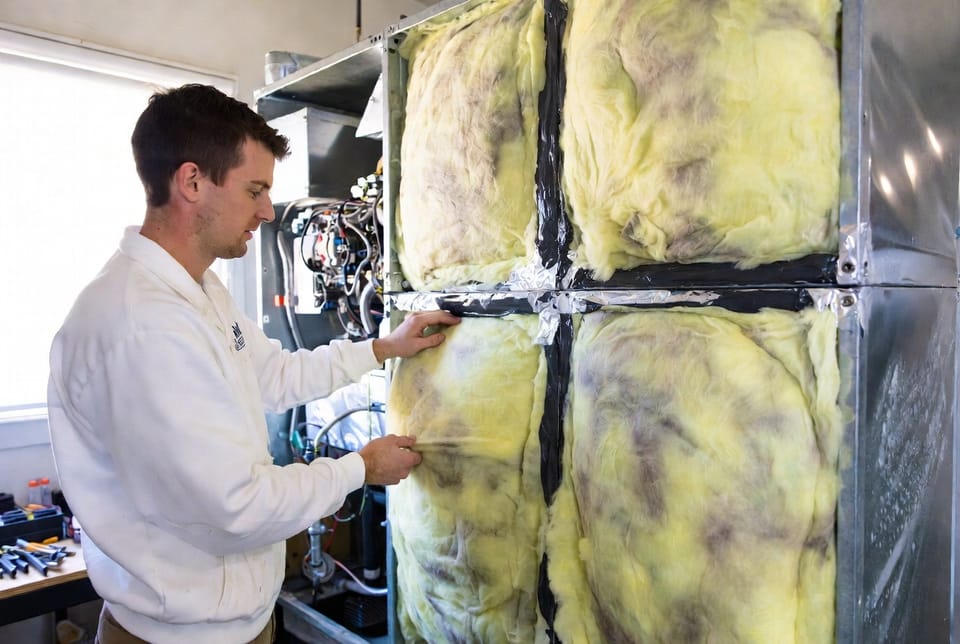
Insulation acts as a thermal barrier. High-quality cabinet insulation—typically closed-cell foam, fiberglass boards with vapor retarders, or multi-layer foil-faced materials—slows conductive heat transfer. At the same time, airtight sealing prevents unconditioned air from infiltrating the cabinet or conditioned air from escaping into the mechanical space. Together these measures keep the system operating at its designed efficiency rating.
Why Insulation Prevents Condensation and Protects Components
Condensation is one of the most common and costly problems associated with poorly insulated air handlers. When warm, humid air contacts a cold metal surface, moisture forms. Over time this moisture can:
- Drip onto floors or ceilings, creating water damage
- Promote mold growth inside and around the cabinet
- Corrode metal components and electrical connections
- Increase the load on the condensate drain system
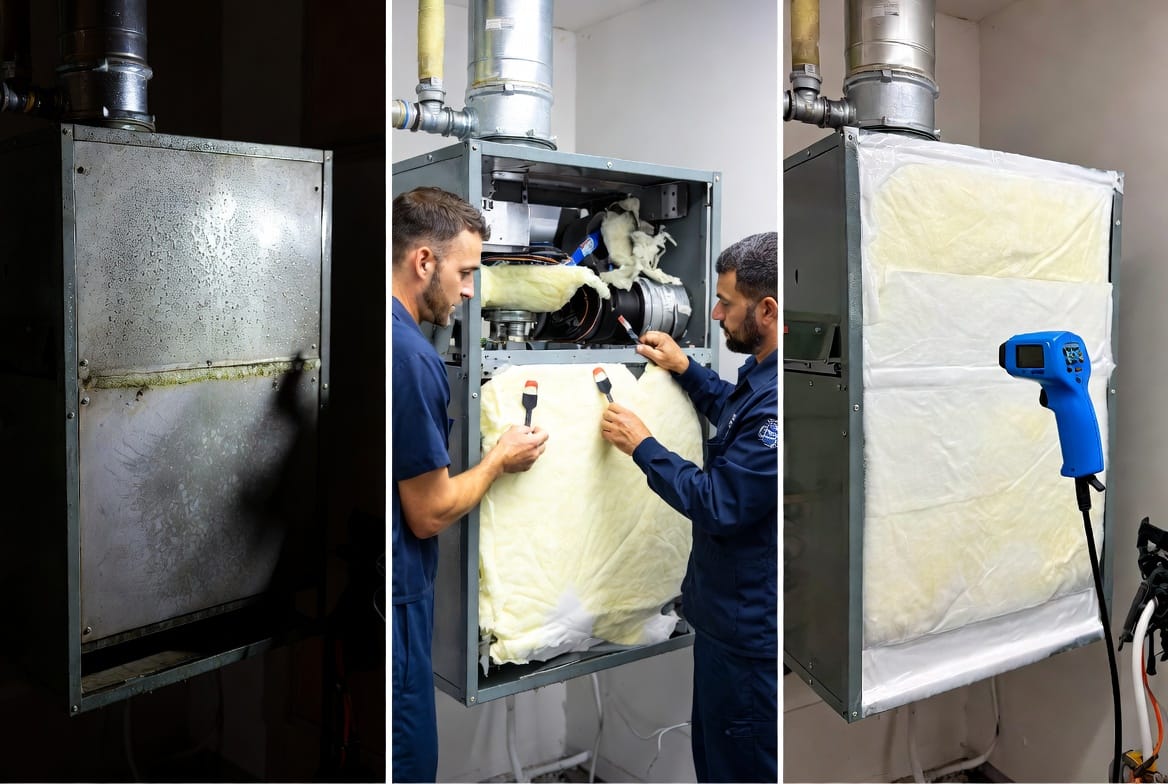
Proper insulation keeps the exterior surface temperature above the dew point of the surrounding air. This simple physical principle eliminates the conditions required for condensation. In addition, dense insulation materials absorb vibration from the blower motor and reduce airborne noise transmitted into living spaces. Homeowners frequently notice a quieter home after cabinet insulation is upgraded or restored.
Modern air handlers leave the factory with some level of insulation, yet installation practices, age, and mechanical stress can compromise performance. Panels may shift, fasteners can loosen, and older materials may settle or absorb moisture themselves. Periodic professional inspection ensures the insulation remains continuous and effective.
Recognizing the Signs of Insulation Failure
Early detection of insulation problems prevents larger repairs. Homeowners and property managers should watch for these clear indicators:
- Sweating cabinet surfaces, especially during humid weather or peak cooling periods
- Visible water stains on the floor beneath or around the unit
- Musty odors near the mechanical closet
- Visible mold growth on cabinet exterior, nearby drywall, or insulation edges
- Unexpectedly high indoor humidity levels despite the system running
- Increased energy bills without corresponding changes in usage patterns
- Unusual noise or vibration transmitted through walls or floors
When any of these symptoms appear, the cabinet should be evaluated promptly. Ignoring moisture issues allows mold colonies to expand and can lead to secondary damage to ductwork, flooring, and structural materials.
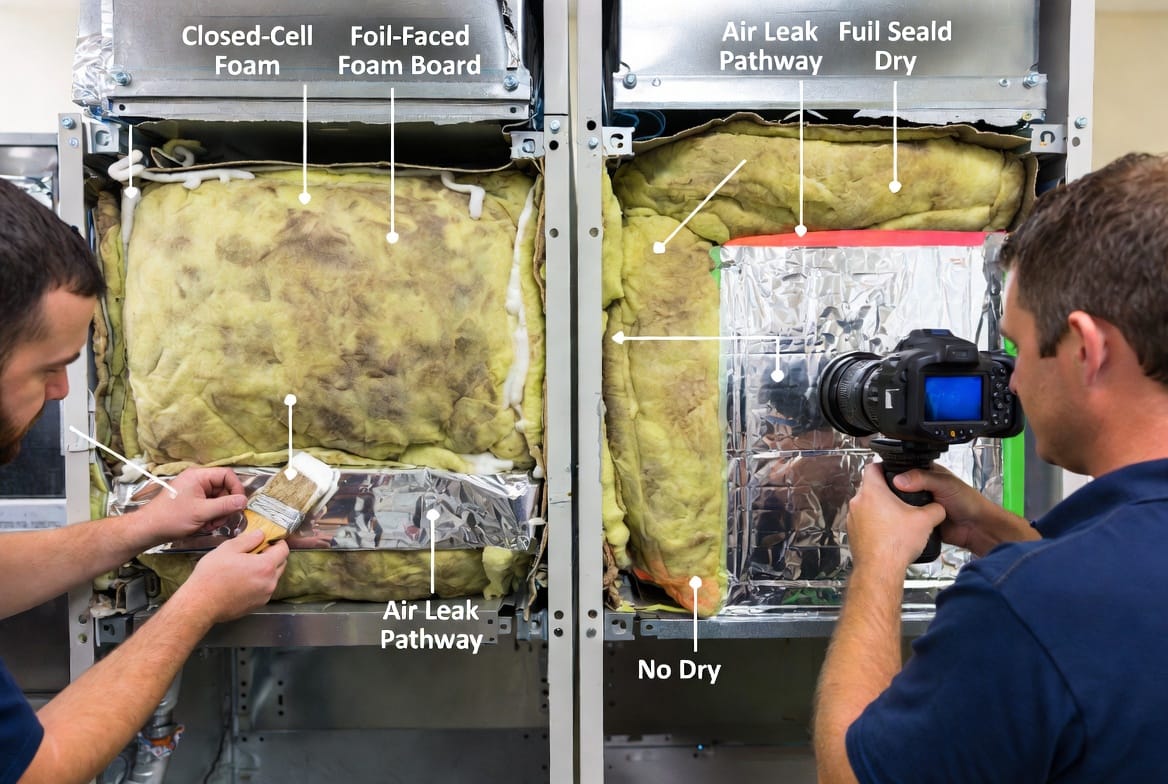
How Proper Sealing Eliminates Air Leaks and Boosts Efficiency
Air leaks around the air handler cabinet waste energy in two directions. In cooling mode, warm attic or closet air can be drawn into the return side of the cabinet, forcing the evaporator coil to remove extra heat and moisture. On the supply side, cooled air escaping into the mechanical space never reaches the living areas. Both scenarios increase runtime and energy consumption.
Professional sealing addresses every potential pathway:
- Cabinet panel joints and access doors
- Electrical conduit and control-wire penetrations
- Refrigerant line and condensate drain exits
- Blower housing and filter-rack interfaces
- Transitions between the cabinet and connecting ductwork
Technicians use a combination of methods tailored to each location. High-quality mastic sealant provides a durable, flexible bond on metal surfaces. Foil-faced tape rated for HVAC use seals larger gaps. In some cases, closed-cell spray foam or gasket materials create permanent barriers around irregular penetrations. The goal is a continuous air barrier that keeps conditioned air inside the system and unconditioned air outside.
Sealing also improves indoor air quality. When the cabinet is airtight, the system draws return air only from the designed return pathways rather than pulling dusty or humid air from the mechanical room. This reduces the burden on filters and helps maintain consistent humidity levels throughout the home.
The Efficiency Connection: Measurable Savings and Comfort Gains
A well-insulated and sealed air handler cabinet contributes directly to system Seasonal Energy Efficiency Ratio (SEER) and Heating Seasonal Performance Factor (HSPF) performance. Manufacturers rate equipment under controlled laboratory conditions that assume minimal cabinet losses. Real-world installation variables often reduce those ratings. Restoring proper insulation and sealing closes that gap.
Homeowners typically experience:
- Lower monthly energy consumption
- More consistent room-to-room temperatures
- Reduced humidity fluctuations
- Quieter operation
- Extended equipment life because the system cycles less frequently
In humid climates the benefits are especially pronounced. Preventing cabinet sweating eliminates a major source of indoor moisture that would otherwise require additional dehumidification energy. In colder climates, reduced heat loss through the cabinet means supply air arrives at design temperature with less reheating demand.
Professional Inspection and Restoration Process
Restoring cabinet performance begins with a thorough inspection. A qualified technician examines the entire exterior and interior of the cabinet, checks surface temperatures with infrared tools, and may perform a simple pressure or smoke test to locate hidden leaks. Any existing moisture or mold is carefully cleaned and treated according to industry standards before new materials are applied.
Insulation upgrades often involve removing degraded material and installing higher-performance boards or foam with continuous vapor barriers. Sealing follows a systematic sequence so that every joint and penetration receives attention. After work is complete, the technician verifies that exterior surfaces remain dry under operating conditions and that airflow and static pressure remain within manufacturer specifications.
This process is best performed by trained HVAC professionals who understand both the mechanical and building-science aspects of air-handler performance. Attempting DIY sealing without proper materials or knowledge can create new restrictions or leave critical pathways unaddressed.
Long-Term Maintenance Practices That Protect Your Investment
Once the cabinet is properly insulated and sealed, simple ongoing habits preserve the results. Keep the mechanical room clean and free of stored items that could restrict airflow or trap humidity. Replace filters on schedule so the blower does not work against excessive resistance. Schedule annual professional maintenance that includes a visual check of cabinet condition and a quick surface-temperature scan during cooling operation.
If renovations or duct modifications occur near the air handler, ensure any new penetrations are sealed immediately. Moisture alarms or simple humidity monitors placed near the unit can provide early warning of developing issues.
Conclusion: Efficiency Starts Inside the Cabinet
The air handler cabinet may be out of sight, but its condition is never out of mind for system efficiency and home comfort. Continuous insulation prevents condensation and noise while robust sealing stops energy-wasting air leaks. Recognizing early signs such as a sweating cabinet or mold growth allows timely intervention before damage spreads. Professional restoration returns the indoor unit to peak performance, lowers operating costs, and protects indoor air quality.
Protect Your System – Request Professional Sealing