The Home Renovation Dumpster: Sizing for Your Project

A home renovation generates more debris than most people expect. Cabinets, tile, drywall, flooring, fixtures, and packaging add up fast. The dumpster you place in the driveway is not an afterthought. It is the container that keeps the job moving, protects your property, and prevents extra hauls that inflate cost and delay.
Call Now for Kitchen-to-Whole-House Dumpster Sizing
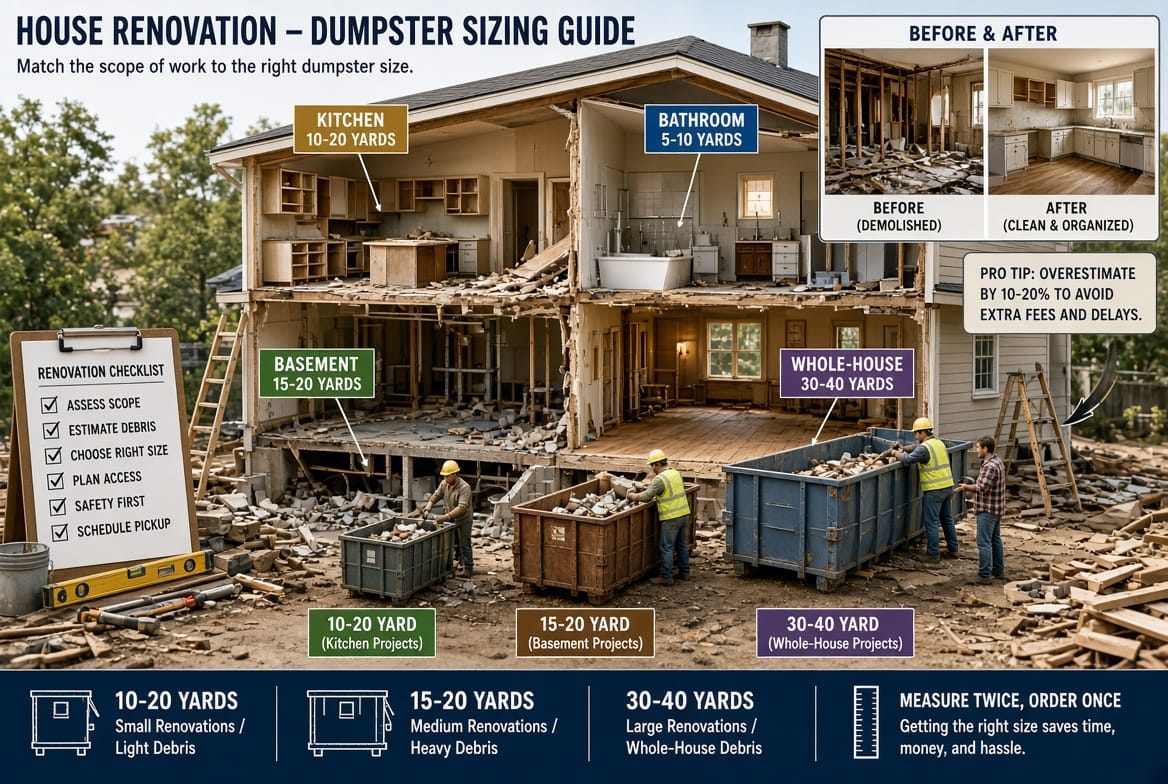
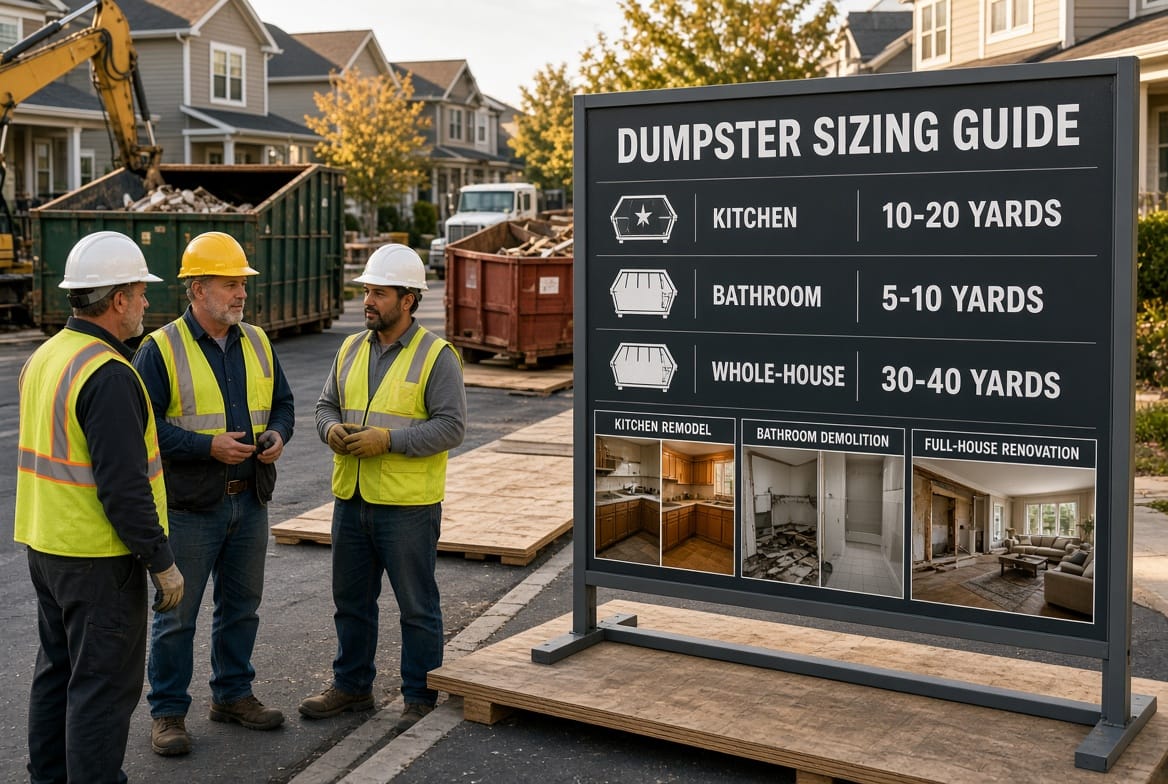
Choosing the correct dumpster size is one of the most practical decisions you will make before demolition starts. Too small, and you pay for extra trips or pile debris unsafely. Too large, and you may pay for unused capacity and struggle with placement. This guide explains how to size a home renovation dumpster for the projects homeowners request most often: kitchen (10–20 yards), bathroom (5–10 yards), basement (15–20 yards), and whole-house (30–40 yards).
The goal is simple. Match volume to the work, stay within weight limits, and keep the site safe and compliant.
Why Dumpster Sizing Matters on a Renovation
Renovation debris is bulky and heavy. A single kitchen can produce old cabinets, countertops, appliances, backsplash, flooring, and framing scraps. A bathroom adds tile, tub or shower surround, vanity, and wet materials that weigh more than they look. A basement or whole-house project multiplies that volume.
Correct sizing does four things at once:
- Prevents overfilling, which is a safety and hauling risk.
- Reduces the chance of a second rental or mid-project swap.
- Helps you stay inside the dumpster’s weight allowance.
- Keeps walkways, driveways, and neighboring property clear.
An undersized container looks cheaper on paper. In practice it often costs more because the hauler cannot legally or safely transport a load that exceeds height or weight rules. An oversized container can block access, require a larger drop zone, and still leave you paying for space you never used.
Sizing is not guesswork. It is a planning step that belongs on the same list as permits, material orders, and contractor scheduling.
How Dumpster “Yards” Actually Work
Dumpster size is measured in cubic yards. One cubic yard is a cube measuring 3 feet on each side—about the volume of a full dishwasher or a tightly packed stack of debris roughly the size of a washing machine.
Residential roll-off dumpsters commonly come in 10-yard, 15-yard, 20-yard, 30-yard, and 40-yard sizes. Some markets also offer compact 5-yard or mini containers for tight lots and small baths. The number refers to volume capacity, not weight. Weight depends on what you throw in.
Light materials such as wood, cabinets, and cardboard fill space quickly. Dense materials such as tile, concrete, dirt, plaster, and roofing shingles hit weight limits long before the dumpster looks full. That distinction matters. A bathroom full of ceramic tile can weigh more than a kitchen full of hollow cabinets.
When you estimate, think in both directions:
- Volume: How much space will the debris occupy?
- Density: How heavy is that debris per yard?
If your project includes masonry, plaster, or roofing, tell the rental company. They can recommend a size and a material mix that stays legal to haul.
Kitchen Remodels: Plan for a 10–20 Yard Dumpster
A kitchen remodel is one of the most common reasons homeowners rent a dumpster. It is also one of the easiest projects to underestimate.
Typical kitchen debris includes:
- Base and wall cabinets
- Countertops (laminate, butcher block, stone remnants)
- Appliances that will not be reused or donated
- Backsplash tile and thinset
- Flooring and underlayment
- Drywall and framing scraps
- Boxes, packaging, and old plumbing pieces
A 10-yard dumpster often works for a partial kitchen: cabinet swap only, limited flooring, or a galley kitchen with few structural changes. If you are gutting a standard 10-by-12 or 12-by-14 kitchen—including cabinets, counters, and flooring—a 15- or 20-yard dumpster is usually the safer choice.
Stone counters, thick tile floors, and plaster walls push the job toward the 20-yard end of the range. Lightweight cabinet boxes and plywood fill the container visually but may leave weight capacity unused. Mixed debris is the rule, not the exception.
Practical kitchen-sizing notes:
- Remove doors and hardware if you want to pack cabinets tighter.
- Do not bury heavy tile under a mountain of empty boxes; load dense material first and distribute it.
- Save donation-worthy appliances and intact cabinets when possible. Less in the dumpster means a smaller size can work.
- If you are also opening a wall into a dining room, add volume. That “small extra” often turns a 10-yard plan into a 20-yard need.
For most full kitchen gut jobs, start the conversation at 15–20 yards. It is easier to leave a little unused space than to stop work because the container is full on day three.
Bathroom Projects: 5–10 Yard Dumpsters Usually Suffice
Bathrooms are smaller rooms, but they are dense. Tile, mortar, cast-iron tubs, vanities, toilets, and cement board pack a lot of weight into a compact footprint.
A 5-yard dumpster can be enough for a powder room or a light refresh: vanity, toilet, and a small amount of flooring. Many rental fleets start at 10 yards for driveway roll-offs, so confirm availability. If a true 5-yard unit is not offered in your area, a 10-yard dumpster is the standard small-job solution.
A 10-yard dumpster is the better default for a full primary bathroom remodel. That usually includes:
- Tub or shower demolition
- Wall and floor tile
- Vanity and countertop
- Drywall or cement board
- Possibly a toilet and some plumbing rough-in scraps
Cast-iron tubs and multi-layer tile are the hidden weight problem. One old tub can consume a surprising share of the weight limit. If the bath is part of a larger hall or closet expansion, treat it more like a small kitchen and consider stepping up.
Bathroom-specific cautions:
- Wet debris is heavier. Let materials dry when you can.
- Do not mix large amounts of unused thinset or bagged mortar with household trash if the hauler restricts certain materials.
- Keep the load below the top rail. Tile shards that sit above the fill line are a road hazard.
For a single standard bathroom, 5–10 yards is the planning range. For two bathrooms gutted at the same time, do not automatically double the size without checking weight. Two tiled baths can exceed a small container’s allowed tons even if the pile still looks manageable.
Basement Renovations: 15–20 Yards Is the Working Range
Basements surprise people. The room looks empty until demolition starts. Then old paneling, drop-ceiling tiles, carpet and pad, partition walls, and leftover storage all appear at once.
A 15-yard dumpster fits many finished-basement refreshes: carpet pull, ceiling grid, a few walls, and built-in removal. A 20-yard dumpster is the smarter choice when you are:
- Removing wood paneling and drywall
- Demolishing a basement bath or wet bar
- Pulling carpet plus pad across a large footprint
- Clearing years of stored contents along with construction debris
- Cutting out damaged framing after a moisture problem
Basements also collect dense leftovers: old concrete pieces, leftover brick, and damp materials. Moisture increases weight. If the basement had a leak or a finished ceiling that hid plaster, budget toward 20 yards.
Access matters as much as volume. A basement project often means carrying debris up stairs. A correctly sized dumpster placed close to the exit reduces trips and injury risk. If the only drop location is far from the walk-out, a slightly larger container can still be worthwhile because it cuts the number of times the crew must stop and restack.
Do not use a basement dumpster as a catch-all for hazardous or restricted items. Paint, solvents, and certain treated materials may be prohibited. Ask before you load.
Whole-House Renovations: 30–40 Yard Dumpsters
A whole-house renovation is a different category. You are not emptying one room. You are emptying a building system: kitchens, baths, flooring throughout, possibly roofing, windows, siding, and interior partitions.
A 30-yard dumpster can serve a targeted whole-house interior remodel—new flooring on one level, kitchen and two baths, and limited wall changes—especially if you stage the work and empty the container between phases.
A 40-yard dumpster is the common choice for a true gut renovation or a project that includes exterior work plus interior demolition. These containers hold a large volume of mixed construction and demolition debris. They also require more driveway length, a firmer drop surface, and careful attention to weight limits.
Whole-house sizing principles:
- Phase the demolition if possible. One 30- or 40-yard container emptied and returned can be cleaner than two containers competing for space.
- Separate salvage. Doors, lumber, and fixtures that can be reused or donated shrink the load.
- Watch roofing and masonry. Those materials can max out weight while the dumpster still looks half empty.
- Confirm overhead clearance for delivery trucks and trees.
- Ask about driveway protection. Larger dumpsters are heavier on the boards or plywood you should place underneath.
A whole-house job is where professional guidance pays for itself. The difference between 30 and 40 yards is not only price. It is site logistics, truck access, and whether the crew can keep working without a mid-week overflow.
Other Factors That Change the “Right” Size
Room type is the starting point, not the entire decision. Several project details can move you up or down a size.
Weight limits. Every dumpster has a included-tonnage allowance. Exceed it and overage fees apply. Tile, dirt, concrete, plaster, and shingles are the usual culprits.
Prohibited items. Appliances with refrigerant, paints, oils, batteries, and some electronics often cannot go in a standard construction dumpster. Removing them from the estimate can change volume.
Lot and driveway constraints. A 40-yard container needs space to drop, swing, and pick up. Tight urban driveways may force a 20-yard plan even when the debris theoretically wants 30.
Permits and HOA rules. Some streets require a permit if the dumpster sits on the roadway. Placement rules can limit which size you can accept.
Project schedule. A two-week kitchen and a two-month whole-house renovation do not use a container the same way. Longer jobs may need a swap or an extension.
Mixed loads versus clean loads. Some haulers price clean concrete or clean wood differently. Mixing everything into one container is convenient; it is not always cheapest or lightest.
Tell the rental company the room count, the materials, and whether you are doing a cosmetic update or a structural gut. That conversation is more useful than an online size chart used in isolation.
Common Sizing Mistakes
Homeowners repeat the same errors:
- Choosing by room name instead of debris type. A “small bathroom” full of tile is not small by weight.
- Forgetting packaging from the new materials. The outgoing kitchen is only half the story.
- Loading above the fill line because “it will settle.” It may not settle enough, and the driver can refuse the pickup.
- Ignoring the drop zone. A perfect 20-yard plan fails if the truck cannot place the box.
- Treating the dumpster as a garage-cleanout plus renovation bin without checking restricted items.
Avoiding those mistakes is straightforward. Walk the house before you order. Open cabinets, look under vanities, check attic or basement storage that will be emptied during the work, and list the heavy materials out loud.
Practical Tips for a Cleaner, Safer Rental
- Place plywood under the dumpster to protect concrete and asphalt.
- Load heavy items on the bottom and distribute them.
- Break down cabinets and boxes to reclaim cubic yards.
- Keep a clear path from the work area to the container.
- Do not climb inside the dumpster in an unsafe way; use proper footing and help.
- Photograph the empty and full container if you need a record for the contractor or hauler.
- Schedule delivery for the day demolition actually starts, not a week early, unless you need the box as a staging tool.
A well-run dumpster rental feels invisible. Debris leaves the house, the driveway stays usable, and the hauler can pick up on the first attempt.
Size the Container to the Work—Then Get Help Placing It
Kitchen remodels most often need 10–20 yards. Bathrooms usually fit 5–10 yards. Basement projects commonly land at 15–20 yards. Whole-house renovations typically require 30–40 yards. Those ranges are reliable starting points. Your materials, weight, access, and schedule make the final call.
Measure the job before you order. Describe the debris honestly. Leave a margin for the unexpected wall, the extra layer of flooring, or the storage you forgot was in the basement. The right dumpster keeps the renovation professional from the first swing of the hammer to the last pickup.
Call Now for Fast Dumpster Delivery & Expert Sizing