The Home Inventory for Renters: Protecting Your Belongings
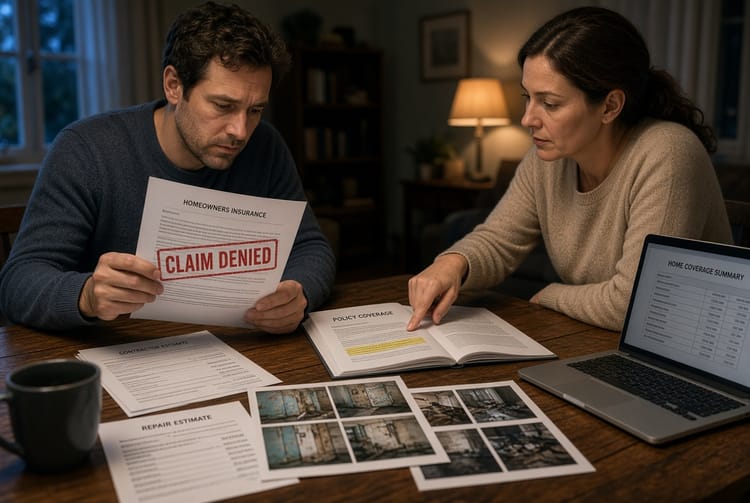
Renting a home or apartment offers flexibility and freedom, yet it also places the responsibility for protecting personal possessions squarely on your shoulders. Landlords typically cover the structure itself, but your belongings—the items that make a rental feel like home—remain vulnerable without proper preparation. A home inventory is the single most effective tool renters can create to safeguard those possessions. This detailed record becomes essential when filing claims after theft, fire, or water damage. It transforms an overwhelming situation into a clear, evidence-based process that insurance companies respect and respond to quickly.
Safeguard Against Theft, Fire & Water Damage – Call Now!
Creating a thorough inventory is not complicated, yet it delivers lasting confidence. In the sections that follow, you will discover exactly why renters need this document, which categories of items deserve careful attention, and the most efficient methods for documenting everything without turning the project into a weekend-long ordeal. By the end, you will possess a practical roadmap that turns potential loss into manageable recovery.
Why Renters Need a Home Inventory
Many renters assume their landlord’s policy somehow extends to personal property. That assumption is incorrect and potentially costly. Standard rental agreements and landlord policies protect the building, not the contents inside your unit. When disaster strikes, only a current, well-organized home inventory provides the proof required to recover the full value of what you own.
Protection After Theft
Burglary remains an unfortunate reality in both urban and suburban rental communities. Without an inventory, recalling every stolen item under stress becomes nearly impossible. Serial numbers vanish from memory, purchase dates blur, and approximate values invite disputes. A documented list allows you to present precise details—model numbers, approximate ages, and original costs—so adjusters can process the claim efficiently. The inventory also helps law enforcement by supplying accurate descriptions that increase the chance of recovery.
Preparation for Fire Damage
Fire can destroy belongings in minutes. Smoke and water used to extinguish flames often ruin items that flames never touched. In the chaotic aftermath, survivors struggle to list what was lost. An existing inventory removes that burden. It supplies an independent record created under calm conditions, making it far more credible than a reconstruction attempted after trauma. Insurance carriers rely on such contemporaneous documentation to authorize replacement or cash settlements without prolonged investigation.
Response to Water Damage
Leaking pipes, overflowing appliances, or storm-related flooding can soak furniture, electronics, clothing, and irreplaceable keepsakes. Water damage claims frequently involve disputes over pre-existing conditions versus sudden events. Photographs and written descriptions that capture the condition of items before the incident eliminate ambiguity. Your inventory becomes the baseline that proves the extent of loss and supports a fair settlement.
Beyond these three primary risks, an inventory offers quieter benefits. It encourages you to notice what you actually own, which often leads to better organization and reduced clutter. It also simplifies conversations with agents when you review coverage limits. Most importantly, it replaces uncertainty with authority: you know exactly what you possess and can prove it.
What to Include in Your Renter’s Home Inventory
A useful inventory is comprehensive yet practical. Focus on items that carry significant financial or emotional value while remaining realistic about time. The goal is completeness without perfectionism.
Begin with the high-value categories that insurers examine most closely:
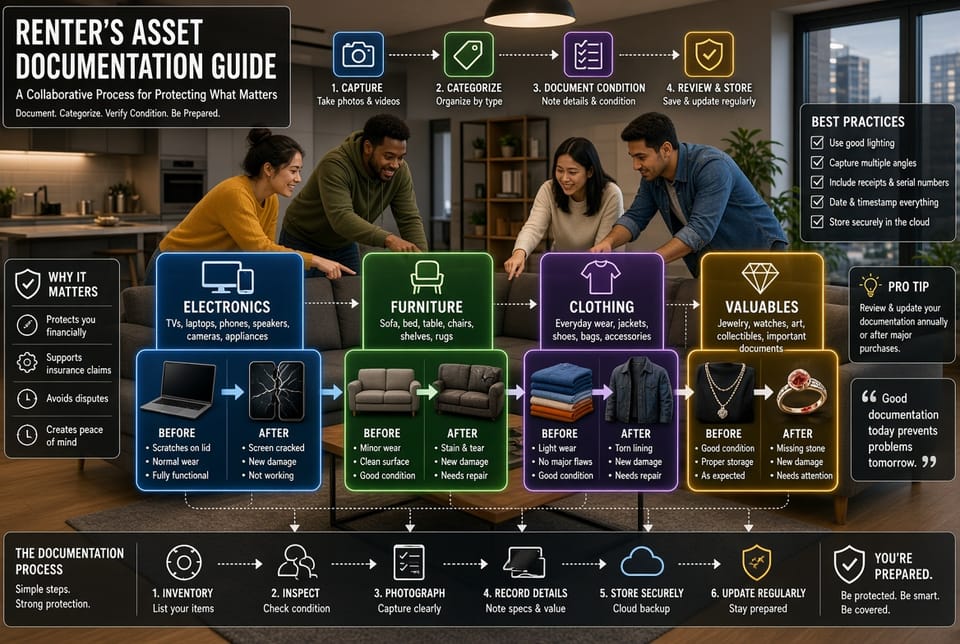
- Electronics: Televisions, computers, laptops, tablets, smartphones, gaming consoles, cameras, audio systems, and smart-home devices. Record brand, model, serial number, purchase date, and approximate current value.
- Furniture: Sofas, beds, mattresses, dining sets, desks, chairs, bookshelves, and storage units. Note materials, dimensions, condition, and any unique features.
- Clothing and Accessories: Formal wear, seasonal outerwear, designer pieces, shoes, handbags, and jewelry. Group everyday items by category and estimate quantities and average costs; itemize expensive pieces individually.
- Valuables and Collectibles: Watches, fine jewelry, art, antiques, musical instruments, sports equipment, and hobby collections. These often require separate scheduled coverage, so detailed documentation is especially critical.
- Kitchen and Household Goods: Major appliances you own (not the landlord’s), cookware sets, small appliances, linens, and décor. Capture sets rather than every spoon.
- Personal Documents and Digital Assets: While physical papers may be limited, list important external hard drives, specialized software licenses, and any irreplaceable photographs or heirlooms.
Include purchase receipts or credit-card statements whenever available. If an item was a gift, note the approximate date and value at the time it was received. For older possessions, research current replacement costs rather than original prices so the inventory reflects realistic recovery amounts.

How to Document Your Belongings Efficiently
Efficiency keeps the project manageable and ensures you actually finish it. Treat the inventory as a living document rather than a one-time marathon.
Start with a room-by-room walkthrough. Choose one space—perhaps the living room—and work systematically from left to right, top to bottom. Use your smartphone to take clear, well-lit photographs of each item or group of items. Capture multiple angles for furniture and close-ups of serial numbers or unique markings. Speak a short voice memo describing the item while photographing if that feels faster than typing.
Transfer the information into a simple digital spreadsheet or secure notes application. Columns might include: Item description, Brand/Model, Serial number, Purchase date or approximate age, Estimated replacement value, Location in the home, and Photo filename or link. Cloud storage with automatic backup protects the file itself from the same disasters that threaten your belongings.
For large collections such as clothing or books, photograph the entire closet or shelf, then note quantities and average values rather than listing every shirt. Reserve detailed entries for pieces worth more than a few hundred dollars. This balanced approach keeps the inventory useful without becoming endless.
Once the initial record is complete, schedule a brief annual review—perhaps at lease renewal or tax time. Add new purchases, remove discarded items, and update values for anything that has appreciated or depreciated significantly. Many renters find that spending thirty focused minutes each year maintains an accurate file with almost no ongoing effort.
Store copies in at least two separate locations: one in secure cloud storage and another on an external drive kept with a trusted relative or in a safe-deposit box. Physical printouts can serve as a final backup, though digital versions remain easier to update and share with an insurance adjuster.
Practical Tips That Strengthen Your Inventory
Several small habits dramatically improve the quality and usability of your record. Photograph items in their normal setting rather than isolating them against a blank wall; context helps establish ownership and condition. When possible, include a dated newspaper or calendar in one wide shot of each room to prove the inventory’s timeline.
Keep receipts in a dedicated digital folder linked to the corresponding inventory entries. Even a quick photo of a receipt attached to the item description saves time later. For jewelry or small valuables, consider professional appraisals every few years; the written appraisal becomes a powerful addition to your file.
Discuss the completed inventory with your insurance representative. Agents can confirm whether your current renters insurance limits adequately cover the total value you have documented. If gaps appear—especially for high-value electronics or jewelry—you can adjust coverage before a loss occurs rather than discovering shortfalls afterward.
Avoid common pitfalls. Do not rely solely on memory or vague descriptions such as “assorted electronics.” Specificity wins claims. Do not store the only copy of the inventory inside the rental unit itself. And do not wait until after a loss to begin the process; the strongest inventories are created in ordinary, calm circumstances.
The Long-Term Value of Preparedness
A completed home inventory does more than support insurance claims. It fosters a deeper awareness of what you own and what truly matters. Many renters discover duplicate items they no longer need or realize certain possessions deserve better protection. The document also eases transitions: when moving to a new rental, the inventory travels with you and updates easily for the next address.
In the event of a claim, the difference between having an inventory and lacking one is often measured in thousands of dollars and weeks of delay. Adjusters move faster when evidence is organized. Settlements arrive sooner. Emotional recovery begins earlier because the administrative burden is lighter.
Renters who maintain current inventories report a quiet but powerful sense of control. Life’s uncertainties remain, yet one major source of post-disaster stress has been removed. That reassurance alone justifies the modest time investment.
Updating and Maintaining Your Record Over Time
Life changes, and so should your inventory. New roommates, inherited items, major purchases, or even simple redecorating can alter the contents of your rental. Establish a lightweight maintenance routine. After any significant acquisition, spend five minutes adding the item and its photo. At the start of each lease year, conduct a quick visual sweep of every room and note discrepancies.
Digital tools make this nearly effortless. Spreadsheet applications allow sorting by room or value. Secure note apps support embedded photos and voice notes. Whatever format you choose, consistency matters more than sophistication. A simple, regularly updated list outperforms an elaborate system that is abandoned after the first month.
When you eventually leave the rental, the inventory continues to serve. It becomes the foundation for the next home’s record and provides a clear list of items to insure under a new policy.
Taking the Next Step Toward Security
You now understand the critical role a home inventory plays for renters, the specific categories that deserve attention, and the efficient methods for creating and maintaining the record. The remaining action is straightforward: begin documenting. Set aside a single afternoon, gather your smartphone and a simple digital file, and walk through your space room by room. Progress compounds quickly; most renters complete a solid first draft in a few focused hours.
Once the inventory exists, pair it with appropriate coverage. Renters insurance is designed precisely for the belongings you have just catalogued. A brief conversation with a knowledgeable agent confirms that your policy limits match the values you have recorded and that any high-value items receive the extra attention they need.
Document your rental belongings. The time you invest today becomes the foundation of financial recovery tomorrow. For personalized guidance on how a strong inventory works together with the right policy. A short call can close the gap between vulnerability and lasting protection, giving you the confidence that your possessions—and your peace of mind—are truly secured.
Secure Your Belongings with Expert Renters Coverage – Call Now!