The Home Inventory Checklist: What to Include for Every Room

Creating a thorough home inventory checklist is one of the most practical steps any homeowner can take to safeguard their property and simplify the claims process. When the unexpected happens—whether fire, theft, or severe weather—an accurate record of your belongings provides clear evidence of ownership and value. This guide walks you through exactly what to document in every major room, giving you a reliable, room-by-room system that insurance professionals recommend.
Free Home Inventory Checklist Support – Call Now!
A complete home inventory does more than list items. It captures descriptions, approximate values, purchase dates, and supporting photos or serial numbers. The result is peace of mind and faster resolution if you ever need to file a claim. Follow this practical structure and you will cover the areas that matter most.
Why a Room-by-Room Approach Works Best
Organizing by room prevents oversights and keeps the process manageable. Most people find it easier to move systematically through the house rather than trying to recall everything at once. Start with high-value areas and work outward. Photograph each item in its normal location, note any unique features, and store digital copies in a secure cloud folder or external drive kept off-site.
Key benefits of this method include:
- Clearer organization for both you and your insurance carrier
- Faster identification of missing or damaged items
- Stronger documentation that supports accurate replacement costs
- Reduced stress during an already difficult time
Living Room: Electronics, Furniture, and Art
Begin in the living room, the space that often holds a concentration of valuable and frequently used items.
Electronics form a major category here. List every television, sound system, streaming device, gaming console, and remote. Include brand names, model numbers, screen sizes, and approximate purchase prices. Note any extended warranties still in effect. Capture clear photos of serial numbers when possible.
Furniture requires careful attention. Document sofas, armchairs, coffee tables, entertainment centers, and side tables. Record materials (leather, wood, fabric), dimensions, and condition. If pieces are custom or antique, add any appraisals or receipts you still have.
Art and decorative objects deserve special focus. Paintings, sculptures, framed prints, mirrors, and collectible décor should be photographed from multiple angles. Write brief descriptions that include artist names if known, medium, size, and estimated value. Even smaller items such as lamps, rugs, and throw pillows can add up quickly when replaced.
Additional living-room details to capture:
- Window treatments and hardware
- Built-in shelving contents
- Any smart-home devices or security cameras
Take wide shots of the entire room as well as close-ups of individual pieces. This combination creates a complete visual record.
Kitchen: Appliances and Cookware
The kitchen contains both high-cost appliances and numerous smaller items that are easy to overlook.
Major appliances should be listed first. Refrigerators, ranges, dishwashers, microwaves, and range hoods need brand, model, serial number, and age. Note energy-efficient features or special functions that affect replacement value.
Small appliances include blenders, toasters, coffee makers, food processors, and stand mixers. Group similar items and record quantities when you own multiples.
Cookware and utensils form another substantial category. Document pots, pans, knife sets, bakeware, and specialty tools. High-quality brands or complete matching sets often carry higher replacement costs. China, crystal, and everyday dishware should also be inventoried by set or piece count.
Don’t forget:
- Pantry contents of significant value (specialty oils, spices in bulk)
- Kitchen electronics such as tablets used for recipes
- Built-in features like under-cabinet lighting or custom cabinetry hardware
Photograph open cabinets and drawers so the full volume of items is visible. This visual evidence proves the extent of your kitchen inventory far better than a simple list.
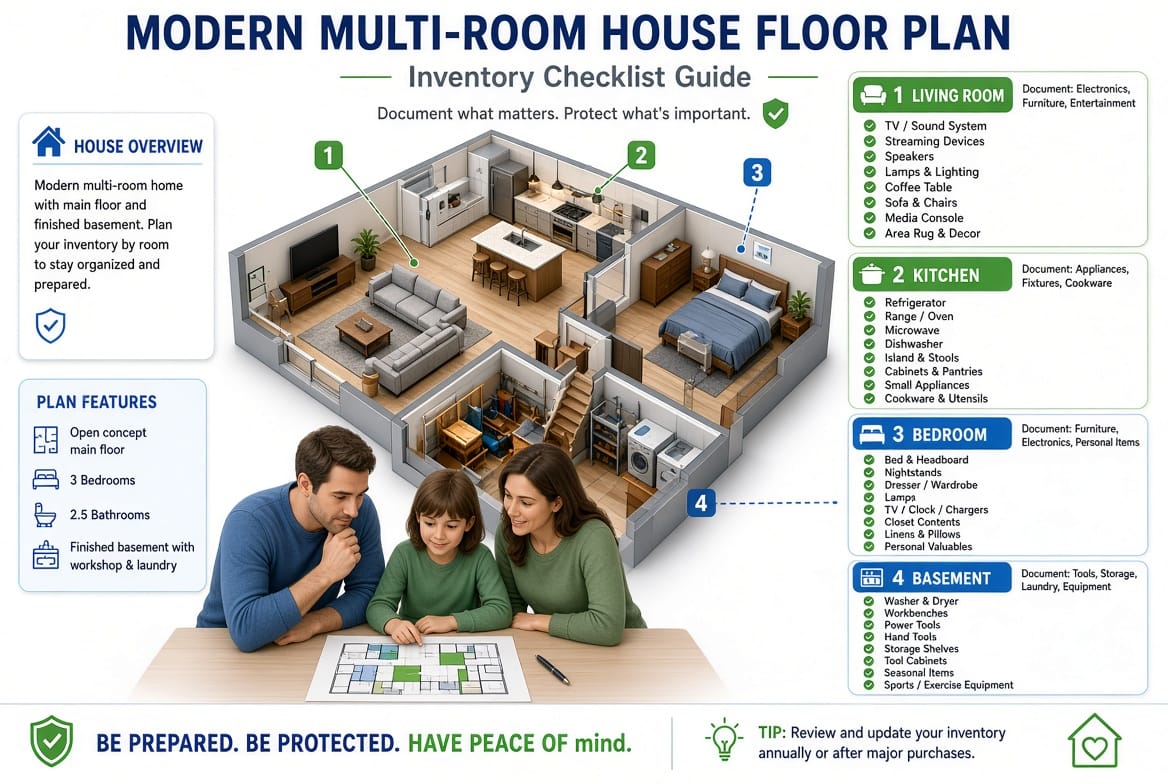
Bedroom: Clothing, Jewelry, and Electronics
Bedrooms often hold personal items of both sentimental and monetary value.
Clothing and accessories should be inventoried by category rather than every single garment. Note quantity of formal wear, seasonal outerwear, designer pieces, and footwear. High-value items such as coats, suits, or handbags warrant individual entries with brand and approximate cost.
Jewelry requires extra care. List rings, necklaces, watches, earrings, and bracelets. Include metal type, gemstones, appraisals, and purchase receipts if available. Photograph each piece against a plain background and, when possible, include a ruler or coin for scale. Store a separate secure copy of jewelry records.
Electronics in the bedroom typically include televisions, laptops, tablets, phones, and charging stations. Record serial numbers and any protective cases or accessories of value.
Additional bedroom items:
- Mattresses, bed frames, and quality bedding sets
- Dressers, nightstands, and mirrors
- Artwork or family photographs with frames of value
- Exercise equipment if stored in the room
A thorough bedroom inventory protects both everyday necessities and irreplaceable personal treasures.
Basement: Tools and Stored Items
Basements frequently become long-term storage zones and therefore contain a surprising amount of value.
Tools and equipment form the core of many basement inventories. Hand tools, power tools, workbenches, ladders, and lawn equipment should be listed with brand and condition notes. Specialty tools or complete sets often represent significant replacement costs.
Stored items include seasonal decorations, sporting goods, luggage, archived documents, and household overflow. Box contents should be summarized—holiday décor collections, camping gear, or bulk paper goods—rather than itemized down to the last piece.
Other basement categories:
- Water heaters, furnaces, and mechanical systems (note age and model)
- Freezers or secondary refrigerators and their contents of value
- Furniture in storage or unfinished pieces
- Wine collections or other climate-sensitive goods if present
Photograph storage shelves both closed and open. Label boxes clearly in your records so you can identify contents quickly if needed.
Expanding the Checklist to Remaining Areas
While the four primary rooms cover the majority of household value, a complete inventory also touches bathrooms, dining rooms, home offices, garages, and outdoor spaces. Apply the same principles: list high-value items first, photograph thoroughly, and note serial numbers or unique features.
Bathrooms typically include fixtures, mirrors, medicine cabinets, and any specialized equipment.
Dining rooms focus on tables, chairs, china cabinets, and formal tableware.
Home offices require detailed records of computers, monitors, printers, and professional equipment.
Garages and outdoor areas cover vehicles (separate from home policy in most cases), lawn tools, patio furniture, and outdoor kitchens.
Consistency across every space strengthens the overall document.
Practical Tips for Building and Maintaining Your Inventory
Use a simple spreadsheet or dedicated home-inventory app. Columns might include room, item description, brand/model, serial number, purchase date, approximate value, and photo file name. Update the list whenever you acquire significant new items or dispose of old ones.
Photograph items in good lighting from multiple angles. Include close-ups of labels and serial numbers. Back up digital files in at least two secure locations.
Keep paper copies of appraisals, receipts, and the inventory itself in a fire-resistant location or off-site. Review the entire checklist annually or after major life changes such as renovations or large purchases.
Risks of incomplete documentation include delayed claims, underpayment, and difficulty proving ownership of high-value pieces. A current, detailed inventory dramatically reduces those risks.
How an Accurate Inventory Supports Your Insurance Protection
Insurance policies cover personal property within defined limits and conditions. A well-prepared home inventory checklist helps you understand whether your current coverage matches the actual value of your belongings. It also speeds the claims process by giving adjusters clear, organized information.
Many homeowners discover through the inventory process that they need higher personal-property limits or scheduled coverage for jewelry, art, or collectibles. Addressing those gaps before a loss occurs provides stronger protection.
Final Steps to Complete Your Checklist
Walk through each room with your list in hand. Check off items as you document them. Once finished, store the completed inventory securely and share a copy with your insurance representative if desired. Revisit the list after holidays, birthdays, or any period of significant purchasing.
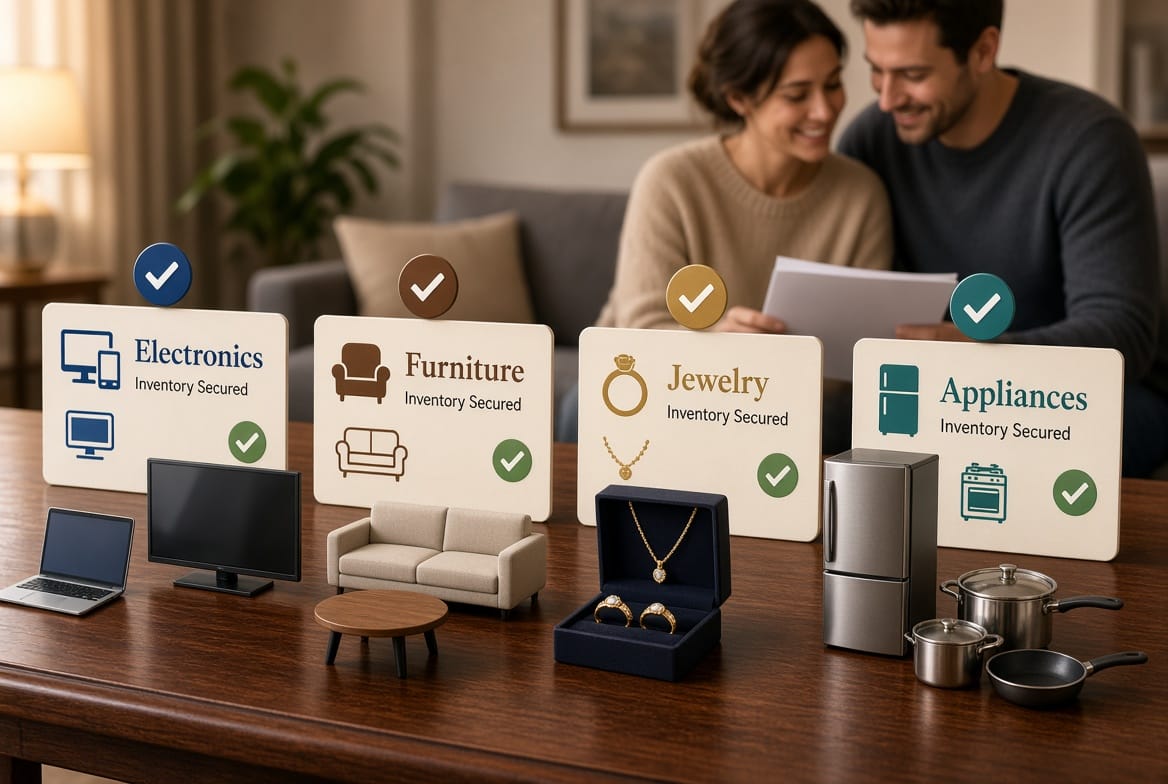
Document your home room by room. A complete inventory is one of the simplest yet most effective ways to protect what matters most. For personalized inventory guidance tailored to your policy and property. The right preparation today creates lasting confidence for tomorrow.
Call Now for Free Room-by-Room Inventory Guidance!