The High-Value Home Insurance: Coverage for Luxury Properties
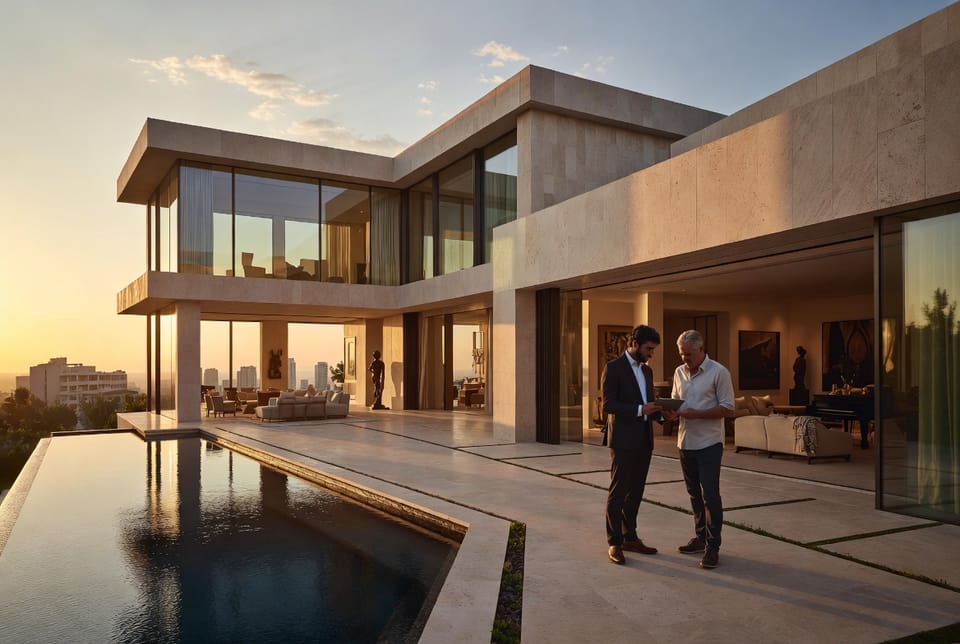
Owning a luxury property represents far more than square footage and curb appeal. It reflects years of careful investment, architectural vision, and the accumulation of fine art, custom finishes, and personal collections that cannot be easily replaced. Standard homeowners policies, while adequate for conventional residences, frequently fall short when applied to high-value homes. High-value home insurance exists precisely to close that gap. This specialized form of coverage is engineered for properties whose reconstruction costs, liability exposures, and contents exceed the limits and valuation methods of ordinary policies.
Protect Your Luxury Investment – Call Now
In the following sections we examine what high-value home insurance actually covers, why conventional coverage often proves insufficient, and how a properly structured policy delivers both financial security and genuine peace of mind.
Understanding Specialized High-Value Home Insurance
High-value home insurance is not simply a larger version of a standard policy. It is a distinct product line underwritten by carriers experienced in the unique risks of luxury real estate. These policies typically begin at reconstruction values of one million dollars or more and extend well into the multi-million-dollar range. Underwriters evaluate not only the dwelling itself but also the quality of materials, the presence of custom millwork, advanced systems, and the nature of personal property housed within the home.
The result is a contract built around agreed-value or extended-replacement-cost provisions, elevated liability limits, and scheduled coverage for collectibles. Policyholders receive broader terms, fewer exclusions, and claims service tailored to complex losses. This approach protects the full investment rather than leaving owners exposed to partial recoveries or uncovered exposures.
Why Standard Policies Fall Short for Luxury Homes
Conventional homeowners insurance relies on simplified valuation formulas and standardized coverage forms. Those tools work reasonably well for production homes with predictable construction costs. Luxury properties, however, present several challenges that render standard policies inadequate.
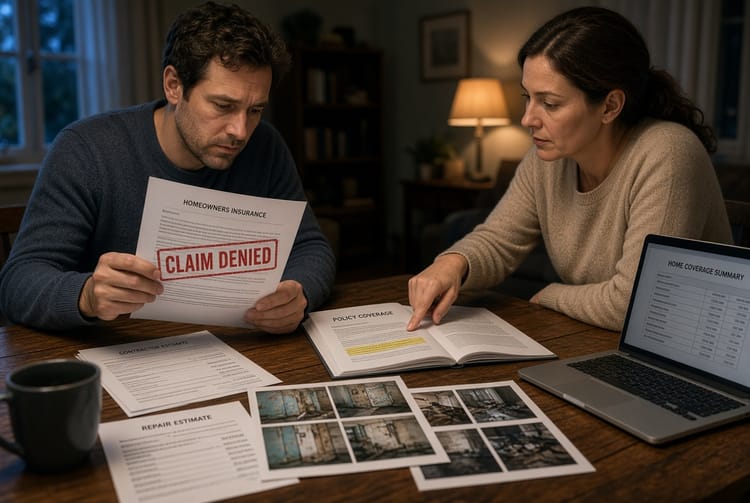
First, replacement cost calculations under ordinary policies often underestimate the true expense of reconstructing a custom residence. Specialty materials, imported stone, hand-finished cabinetry, and integrated smart-home systems can drive rebuilding costs far beyond the policy limit. When a total loss occurs, the homeowner may face a substantial shortfall.
Second, liability limits on standard policies are frequently capped at levels that no longer match the asset profile or lifestyle of high-net-worth individuals. A single serious incident—whether on the property or involving the homeowner elsewhere—can generate claims that exceed ordinary limits by a wide margin.
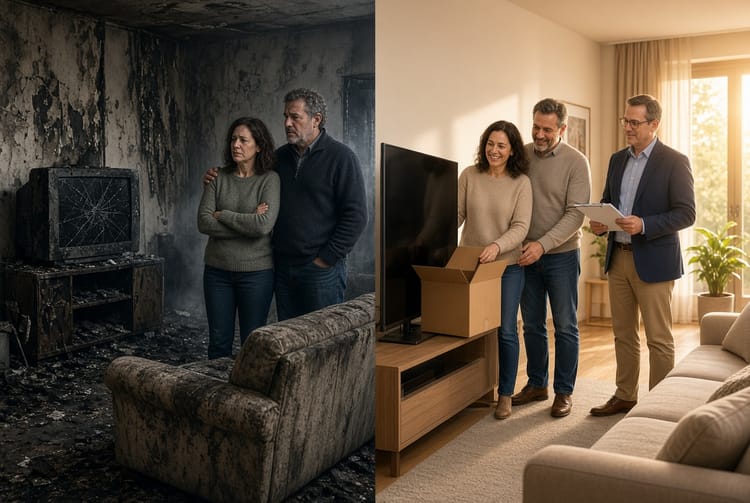
Third, valuable personal property such as fine art, antique furnishings, rare wine collections, jewelry, and designer clothing is subject to restrictive sub-limits under typical policies. A single painting or collection can exceed those sub-limits many times over, leaving significant portions of the loss unreimbursed.
Fourth, the construction quality of luxury homes introduces specialized risks. Unique architectural features, historic elements, or environmentally sensitive building systems may require specialized contractors and materials that ordinary insurers do not fully account for in their claims processes.
These gaps create genuine financial vulnerability. High-value home insurance addresses each of them systematically.
Core Coverages That Define High-Value Protection
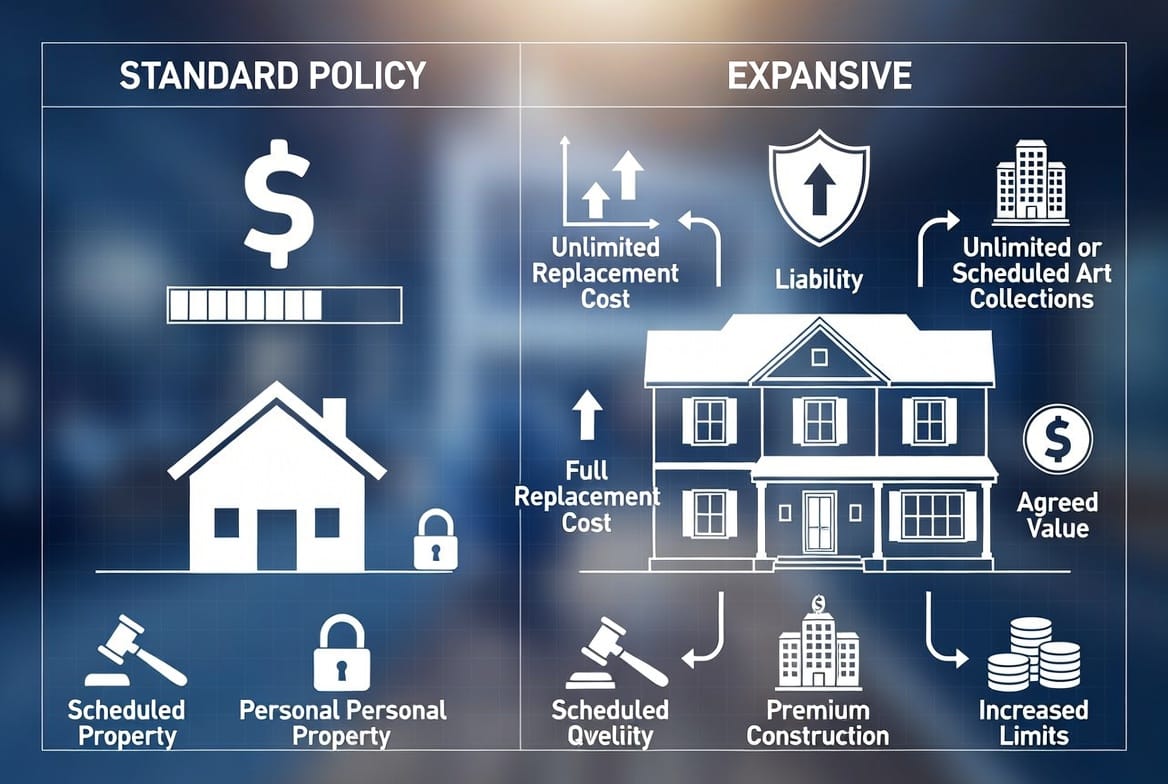
A well-designed high-value policy delivers four foundational advantages that distinguish it from ordinary coverage.
Full Replacement Cost Without Artificial Caps
Rather than relying on depreciated actual-cash-value settlements or fixed percentage extensions, high-value policies typically guarantee replacement cost based on current market conditions for materials and labor of comparable quality. Many carriers offer extended or guaranteed replacement-cost endorsements that pay the full amount necessary to rebuild the residence as it existed, even if costs exceed the stated dwelling limit by a meaningful percentage. This provision is essential when custom features or supply-chain pressures inflate reconstruction expenses.
Significantly Higher Liability Limits
Luxury properties and the lifestyles associated with them generate elevated liability exposures. High-value policies routinely provide liability limits of five million, ten million, or more, often through a combination of primary coverage and personal excess liability (umbrella) layers. These limits protect personal assets against catastrophic claims arising from injuries on the property, incidents involving household staff, or lawsuits connected to the homeowner’s broader activities. Elevated liability protection is one of the most critical risk-management tools available to high-net-worth families.
Dedicated Coverage for Collectibles and High-Value Contents
Fine art, antiques, jewelry, wine cellars, musical instruments, and other collections receive specialized treatment. Policies allow individual items or entire collections to be scheduled with agreed values, eliminating the sub-limit constraints of standard forms. Coverage frequently extends to breakage, mysterious disappearance, and transit risks. Professional appraisals and updated valuations ensure that settlements reflect true market worth rather than arbitrary formulaic amounts. This structured approach removes uncertainty when a loss involves irreplaceable objects.
Recognition of Superior Construction Quality
Underwriters and claims professionals who specialize in high-value homes understand that reconstruction must match the original quality of craftsmanship. Policy language and claims protocols support the engagement of appropriate architects, specialty contractors, and material suppliers. Coverage often includes additional living expenses sufficient for the temporary housing of a family accustomed to a particular standard of living, as well as the cost of temporary storage and climate control for sensitive contents during reconstruction.
Together these elements create a coherent safety net that mirrors the complexity and value of the insured property.
Additional Protections Commonly Included
Beyond the core four areas, high-value policies frequently incorporate further enhancements that address the realities of luxury ownership:
- Coverage for outdoor structures, landscaping, and hardscape features that contribute significantly to overall property value
- Protection for home systems such as elevators, advanced HVAC, security, and automation technology
- Extended coverage for water damage, including certain backup and seepage scenarios that standard policies may exclude or limit
- Worldwide coverage for personal property while traveling or temporarily stored
- Identity-theft and cyber-related expense reimbursements tailored to high-profile individuals
- Claims advocacy services that coordinate directly with preferred contractors and restoration specialists
These features reduce friction at the moment of loss and accelerate recovery.
The Claims Experience Difference
When a significant loss occurs, the quality of claims handling becomes as important as the policy wording itself. Carriers specializing in high-value homes typically assign experienced adjusters familiar with luxury construction and high-end contents. Many provide dedicated claims advocates who manage the process from first notice through final settlement. Access to preferred restoration networks, art conservators, and specialty fabricators helps ensure that repairs and replacements meet the original standard. This level of service transforms a potentially overwhelming event into a managed recovery process.
Determining the Right Level of Coverage
Selecting appropriate high-value protection begins with accurate valuation. A professional appraisal of the dwelling’s reconstruction cost—factoring in current labor rates, specialty materials, and architectural complexity—establishes the foundation. Personal property inventories, supported by photographs, appraisals, and receipts, identify items that require scheduling. Liability needs should reflect both the property’s exposure and the broader asset profile of the household.
An independent insurance advisor experienced in high-value risks can review existing coverage, identify gaps, and structure a policy that balances comprehensive protection with efficient premium allocation. Periodic reviews remain essential as property values, collections, and personal circumstances evolve.
Common Misconceptions About High-Value Coverage
Some owners assume that simply increasing the dwelling limit on a standard policy is sufficient. In reality, higher limits alone do not automatically expand personal-property sub-limits, improve liability protection, or alter valuation methods. Others believe that high-value policies are only for ultra-high-net-worth estates. In practice, any home whose reconstruction cost or contents value exceeds ordinary policy parameters can benefit from specialized terms.
Another misconception is that these policies are prohibitively expensive relative to the protection they deliver. When measured against the potential financial shortfall of an under-insured loss, the premium differential often represents a modest and rational investment in risk transfer.
Long-Term Value of Specialized Protection
Beyond immediate claims response, high-value home insurance contributes to long-term financial planning. Accurate coverage supports estate planning, lending relationships, and the preservation of family assets across generations. Knowing that a catastrophic event will not force the liquidation of other holdings or the compromise of lifestyle provides a form of security that standard policies cannot match.
Owners who maintain proper documentation, updated valuations, and ongoing dialogue with their advisors further strengthen that security. The combination of robust policy language and disciplined risk management creates durable protection for one of life’s most significant investments.
Practical Steps to Secure Appropriate Coverage
Begin by assembling current reconstruction-cost estimates and detailed inventories of high-value contents. Engage a knowledgeable advisor who works regularly with carriers that underwrite luxury risks. Review policy forms carefully, paying particular attention to valuation clauses, liability limits, and scheduled-item provisions. Confirm that additional living expense limits are realistic for the family’s needs. Finally, establish a schedule for periodic reviews so that coverage remains aligned with changing property values and personal circumstances.
These steps transform abstract policy language into concrete, reliable protection.

Protecting What Matters Most
Luxury properties embody more than market value; they represent personal history, aesthetic achievement, and financial legacy. Leaving such assets protected only by conventional insurance creates unnecessary exposure. High-value home insurance closes the gaps in replacement cost, liability, collectibles, and construction-quality recognition that standard policies leave open. The result is comprehensive coverage designed for the realities of sophisticated real estate ownership.
When a loss occurs, the difference between adequate and inadequate protection becomes immediately apparent. Specialized policies deliver the financial resources, professional claims support, and contractual certainty required to restore both the property and the owner’s peace of mind.
Protect your luxury investment. A brief conversation with an experienced advisor can clarify current gaps and outline a policy structure matched to the true value of your home and its contents. Taking that step today ensures that the protection surrounding your most significant asset remains as carefully considered as the property itself.
Call for Specialized Luxury Property Insurance