The Gutter Sealant Types: Silicone vs. Acrylic vs. Butyl
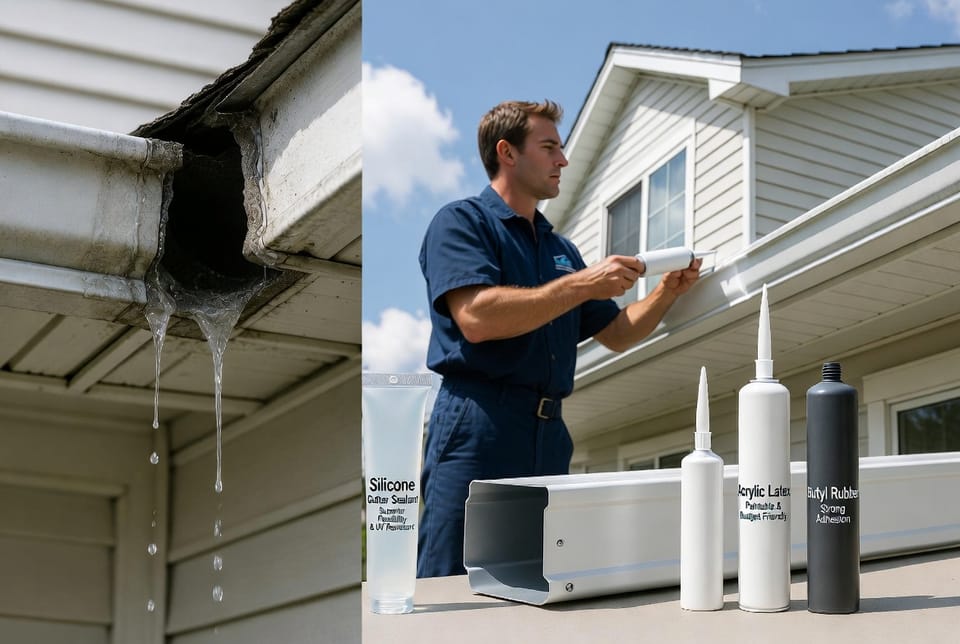
Properly functioning gutters protect your home’s foundation, siding, and landscaping by channeling water safely away from the structure. Yet even high-quality gutter systems eventually develop leaks at seams, end caps, and downspout connections. Temperature fluctuations cause metal and vinyl gutters to expand and contract, while relentless UV exposure, wind-driven rain, and debris impact degrade older seals. Choosing the right gutter sealant prevents these small failures from escalating into foundation erosion, basement flooding, wood rot, and costly structural repairs.
rotect Your Foundation – Professional Gutter Sealing Starts Here
Homeowners today can select from three primary sealant chemistries: silicone, acrylic/latex, and butyl. Each offers distinct performance characteristics suited to specific conditions and locations on the gutter system. Understanding these differences allows you to match the product to the job, maximizing longevity and minimizing future maintenance. This guide provides a clear, practical comparison so you can make confident decisions—whether tackling a weekend project or engaging professionals for comprehensive service.
Understanding Key Properties Required for Effective Gutter Sealing
Successful gutter sealants must balance several demanding requirements. They need strong adhesion to aluminum, vinyl, copper, and painted surfaces without primers in most cases. They must remain flexible to accommodate thermal movement—gutters can shift noticeably between summer heat and winter cold. Superior UV resistance prevents premature hardening, cracking, or chalking on exposed rooflines. The sealant should cure to a waterproof barrier quickly yet allow enough working time for proper tooling. Additional considerations include paintability for aesthetic integration, ease of cleanup, temperature application range, and expected service life measured in years rather than months.
When these properties align with the specific stresses at each gutter location, the result is a reliable, low-maintenance system. Mismatched products often fail within one or two seasons, leading to recurring leaks and frustration. The following sections examine each chemistry in depth so you can identify the best fit for your property.
Silicone Gutter Sealants: The Premium Choice for Flexibility and UV Protection
Silicone sealants stand out for their remarkable elasticity and resistance to ultraviolet degradation. Formulated from silicone polymers, these products maintain flexibility across extreme temperature ranges—typically performing from well below freezing to over 300°F. This elasticity proves invaluable at gutter seams and end caps, where daily expansion and contraction would quickly fatigue less forgiving materials.
Advantages of Silicone Sealants
- Exceptional UV resistance maintains integrity and appearance even on sun-drenched rooflines.
- High elongation capacity accommodates movement without cracking or losing adhesion.
- Rapid skinning and curing in most weather conditions, with excellent long-term waterproofing.
- Service life often exceeds 10–15 years when properly applied, reducing repeat maintenance.
- Low shrinkage during cure preserves the integrity of the seal.
Limitations to Consider
- Premium pricing reflects advanced performance.
- Most standard formulations are not paintable; the cured surface resists topcoats.
- Some surfaces benefit from a compatible primer for maximum bond strength.
- Initial odor during application dissipates quickly with quality low-VOC products.
Ideal Applications for Silicone
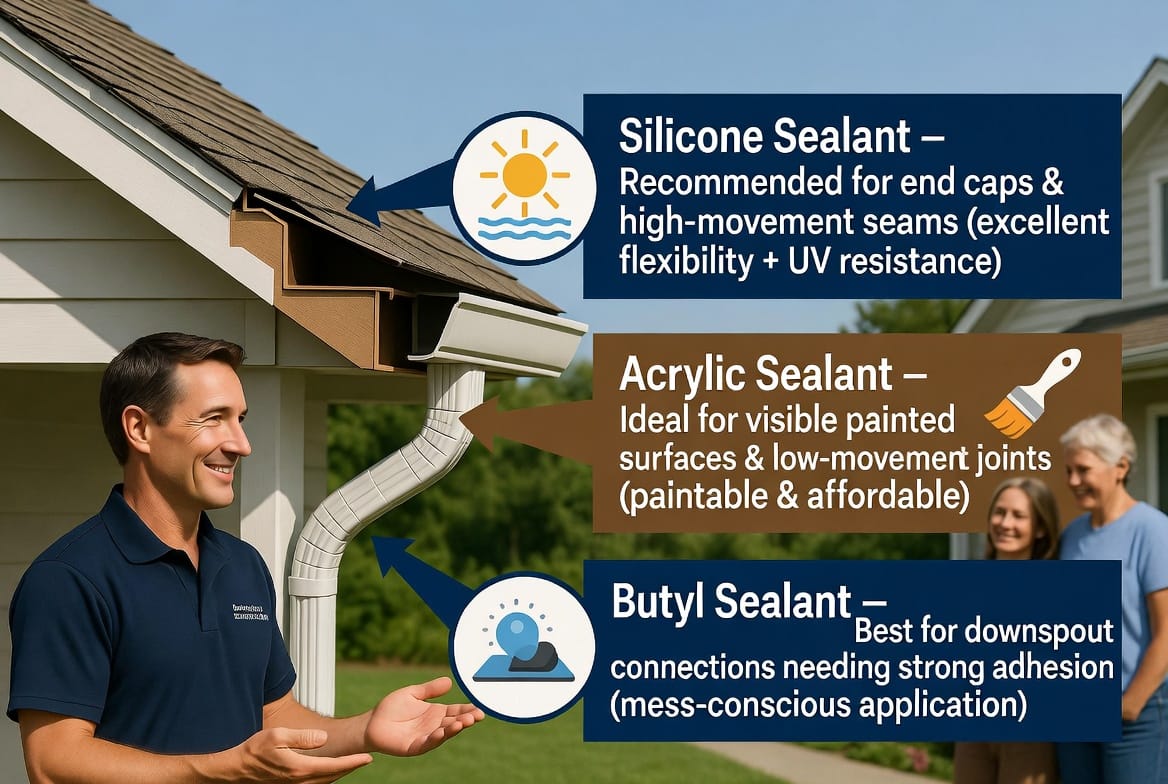
Use silicone gutter sealant at end caps, miter joints, and long-running seams where movement is greatest. It excels on south- and west-facing exposures receiving intense sunlight. Silicone also performs well at the junction where gutters meet fascia boards, provided the surface is clean and dry. Technicians often prefer silicone for high-profile or hard-to-access areas because the durability justifies the investment.
Application success depends on thorough surface preparation. Remove old sealant, dirt, and oxidation with a stiff brush and isopropyl alcohol. Apply a continuous, concave bead and tool it firmly into the joint. Allow full cure before exposing the system to heavy water flow.
Acrylic and Latex Gutter Sealants: Affordable and Paintable Solutions
Acrylic and latex-based sealants provide a cost-effective alternative when budget constraints or aesthetic requirements take priority. These water-based or hybrid formulations offer good initial adhesion and the significant advantage of being fully paintable once cured. Homeowners who have painted their gutters to match trim or siding appreciate the seamless appearance acrylic allows.
Strengths of Acrylic Sealants
- Excellent paintability lets you match sealant color to the gutter or surrounding trim.
- Lower material cost makes it attractive for large projects or rental properties.
- Easy water cleanup before cure reduces mess and tool maintenance.
- Decent flexibility for moderate-movement areas when high-quality formulas are selected.
- Low odor and user-friendly application characteristics.
Drawbacks and Performance Trade-offs
- Moderate UV resistance means faster degradation in intense sunlight compared with silicone.
- Lower long-term elasticity can lead to cracking at high-movement joints within a few seasons.
- Generally shorter service life (3–7 years typical) in exposed exterior conditions.
- May shrink slightly during cure, requiring a second application in some cases.
Best Uses for Acrylic Sealants
Choose acrylic where the gutter will be painted or where UV exposure is limited—such as north-facing elevations or partially shaded sections. It works well for small cosmetic repairs and low-stress seams. Acrylic is also suitable for interior gutter applications or covered porches where paint matching is essential and weather exposure is reduced.
Proper technique remains critical. Apply to clean, dry surfaces and tool the bead smoothly. Allow adequate curing time (often 24–48 hours) before painting. In high-UV or high-movement zones, acrylic may require more frequent inspection and touch-up.
Butyl Rubber Gutter Sealants: Powerful Adhesion with Application Challenges
Butyl rubber sealants deliver outstanding tack and adhesive strength, making them valuable in specific gutter applications. These synthetic rubber-based products remain flexible after curing and create a strong bond even on slightly irregular or contaminated surfaces—provided proper preparation occurs.
Key Benefits of Butyl Sealants
- Superior adhesion to metal, vinyl, and many other building materials.
- Remains pliable over time, resisting cracking from thermal movement.
- Good performance in a range of temperatures during and after application.
- Often available in convenient tube, tape, or rope forms for different needs.
Important Limitations
- Messy application—butyl is extremely sticky and can adhere to tools, hands, clothing, and surrounding surfaces.
- Difficult to tool smoothly; excess material tends to string and smear.
- Moderate UV resistance; prolonged direct sunlight can eventually harden the surface.
- Higher material cost than acrylic but usually less than premium silicone.
- Cleanup requires mineral spirits or specialized solvents.
Recommended Applications for Butyl
Butyl excels at downspout connections, where strong, immediate grab is needed and movement is moderate. It also performs well in areas requiring a thick, gap-filling seal or where surface preparation is challenging. Some professionals use butyl tape or rope for flashing integration at gutter ends. Because of the application difficulty, butyl is often reserved for targeted repairs rather than entire gutter runs.
Technicians mitigate mess by wearing gloves, using dedicated tools, and working methodically. Excess can be trimmed after partial cure, but prevention through careful application yields the cleanest results.
Comprehensive Comparison: Silicone vs. Acrylic vs. Butyl for Gutter Applications
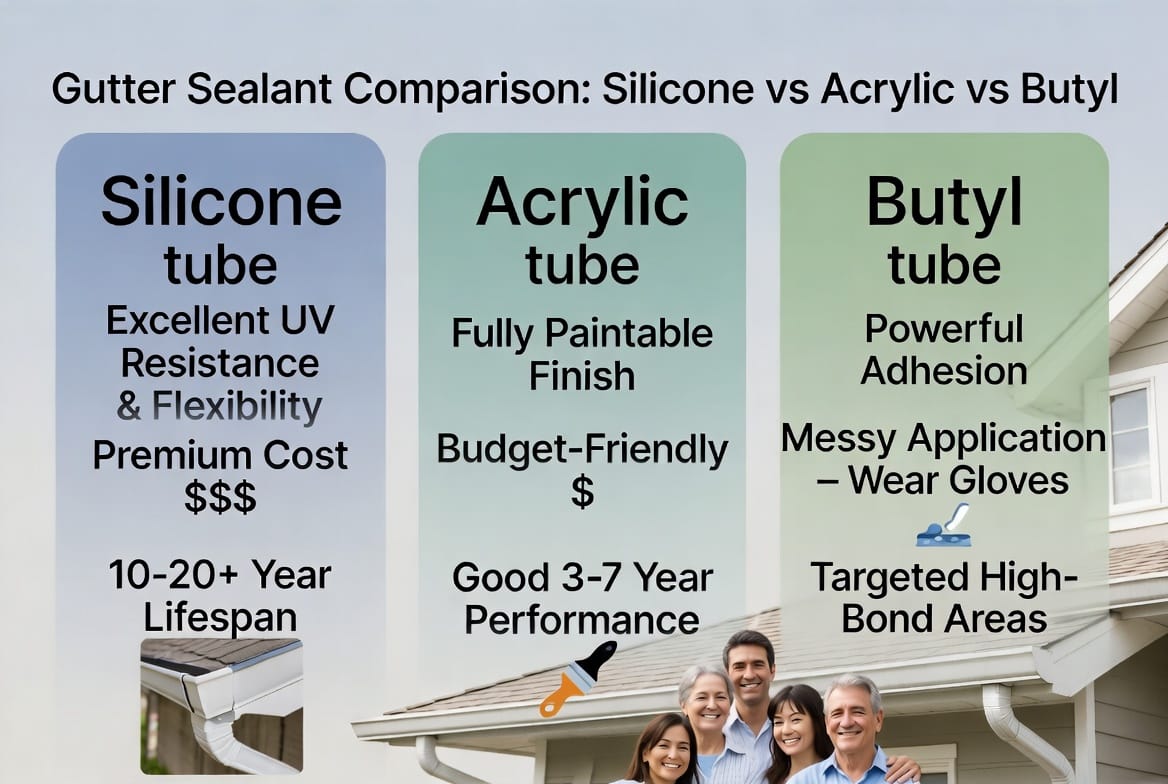
Selecting the optimal gutter sealant requires weighing performance priorities against project constraints. The table below summarizes the core trade-offs.
| Sealant Type | Flexibility & Movement Accommodation | UV Resistance & Longevity | Paintability | Relative Cost | Application Mess | Best Suited Locations |
|---|---|---|---|---|---|---|
| Silicone | Excellent – handles significant thermal expansion | Excellent – 10–20+ years typical | Poor | High | Low | End caps, long seams, high-sun exposures |
| Acrylic/Latex | Good for moderate movement | Moderate – 3–7 years typical | Excellent | Low | Low | Painted gutters, low-stress areas, budget projects |
| Butyl | Good – remains pliable | Moderate – varies with exposure | Poor | Medium | High | Downspout joints, high-adhesion needs, gap filling |
Silicone represents the best long-term value for most homeowners despite higher initial cost, especially in sunny or variable climates. Acrylic suits situations where paint matching or upfront savings matter most and exposure is moderate. Butyl serves targeted, high-adhesion roles but demands careful handling to avoid frustration.
Best Practices for Application and Long-Term Performance
Surface preparation determines success more than product choice. Always remove old, cracked sealant completely, wire-brush away oxidation, and clean with isopropyl alcohol or a manufacturer-recommended solvent. Work on dry days with moderate temperatures—most sealants perform best between 40°F and 90°F. Apply a consistent bead, tool it concave for water shedding, and protect the area from rain during initial cure.
Inspect sealed gutters seasonally. Look for cracks, gaps, or separation, especially after extreme weather. Prompt touch-up prevents minor issues from becoming major water intrusion events. Keep gutters clean of debris to reduce standing water stress on seals.
When Professional Gutter Sealant Service Makes Sense
While many homeowners successfully apply sealant themselves, professional service offers distinct advantages. Trained technicians diagnose the full condition of the gutter system, identify hidden problems at fascia boards or hidden seams, and use commercial-grade products applied under optimal conditions. They work efficiently with proper safety equipment and often provide workmanship warranties that DIY efforts cannot match.
Signs that professional intervention is warranted include widespread sealant failure, recurring leaks after DIY attempts, sagging gutters, or visible foundation moisture. A thorough professional evaluation can prevent small issues from escalating into expensive repairs involving siding, landscaping, or structural elements.
Protecting Your Home Starts with the Right Sealant Decision
The difference between a gutter system that lasts decades and one requiring frequent repairs often comes down to selecting and correctly applying the appropriate gutter sealant. Silicone provides unmatched durability in demanding conditions. Acrylic delivers value and aesthetics where paintability matters. Butyl solves specific adhesion challenges when applied with care.
By understanding these options and matching them to your gutter’s unique stresses, you safeguard your home against water damage, preserve property value, and enjoy greater peace of mind during every storm. For expert diagnosis, premium product application, and reliable results tailored to your home, trust the specialists who handle these systems every day.
Seal your gutters with confidence using the right product for lasting protection. Our team is ready to help you choose and apply the optimal solution for your property.
Stop Leaks Before They Start – Call Our Gutter Experts Today