The Gutter Screen Mesh Size: Matching Hole Size to Debris Type
Selecting the right gutter screen mesh size is one of the smartest decisions you can make when protecting your home’s drainage system. Too often, homeowners install a generic screen only to face repeated clogs, water backups, and costly repairs. The secret lies in matching hole size to debris type — a key factor in product selection that ensures your gutters perform reliably season after season.
Choose the Right Mesh Size – Call Now!
When you understand how mesh size directly affects performance, you gain confidence in choosing a solution tailored to your property. Smaller holes deliver superior debris filtration, blocking even tiny particles before they enter the gutter. Yet they can clog faster in areas with heavy organic buildup. Larger holes, by contrast, promote excellent water flow while still capturing bigger debris — though they may allow finer material to slip through. The right balance keeps your system efficient without constant maintenance.
In this comprehensive guide, we explore every aspect of product selection so you can make an informed choice. You’ll learn how different mesh sizes interact with common debris, why local tree types matter, and which options deliver the best long-term results. With the proper screen in place, you can enjoy peace of mind knowing your gutters are working exactly as designed — protecting your foundation, siding, and landscaping from water damage.
The Basics of Gutter Screen Mesh Size
Gutter screen mesh size refers to the diameter of the openings in the protective material installed over your gutters. Measured in inches or microns, this specification determines what stays out and what flows through. Choosing correctly prevents the most common gutter failures: overflow, ice dams in winter, and premature wear on fascia boards.
Performance boils down to a simple trade-off. Smaller holes block more debris but require more frequent inspection in leafy seasons. Larger holes pass more water and resist clogging longer, yet they allow smaller particles to enter. Neither extreme is inherently better — success comes from alignment with your specific environment.
Key performance factors include:
- Debris filtration efficiency — how effectively the screen stops leaves, needles, seeds, pollen, and twigs.
- Water flow capacity — ensuring rain and melting snow drain freely without pooling.
- Clog resistance — the screen’s ability to shed organic material rather than trap it.
- Durability under load — resistance to UV exposure, wind, and seasonal weight.
By focusing on these elements during product selection, you avoid the frustration of mismatched systems that underperform from day one.
How Mesh Size Affects Real-World Performance
Consider a heavy rainstorm. A micro-mesh screen with tiny openings captures nearly everything, keeping gutters pristine. However, in regions with dense foliage, those same fine holes can become saturated quickly, reducing water flow and causing overflow.
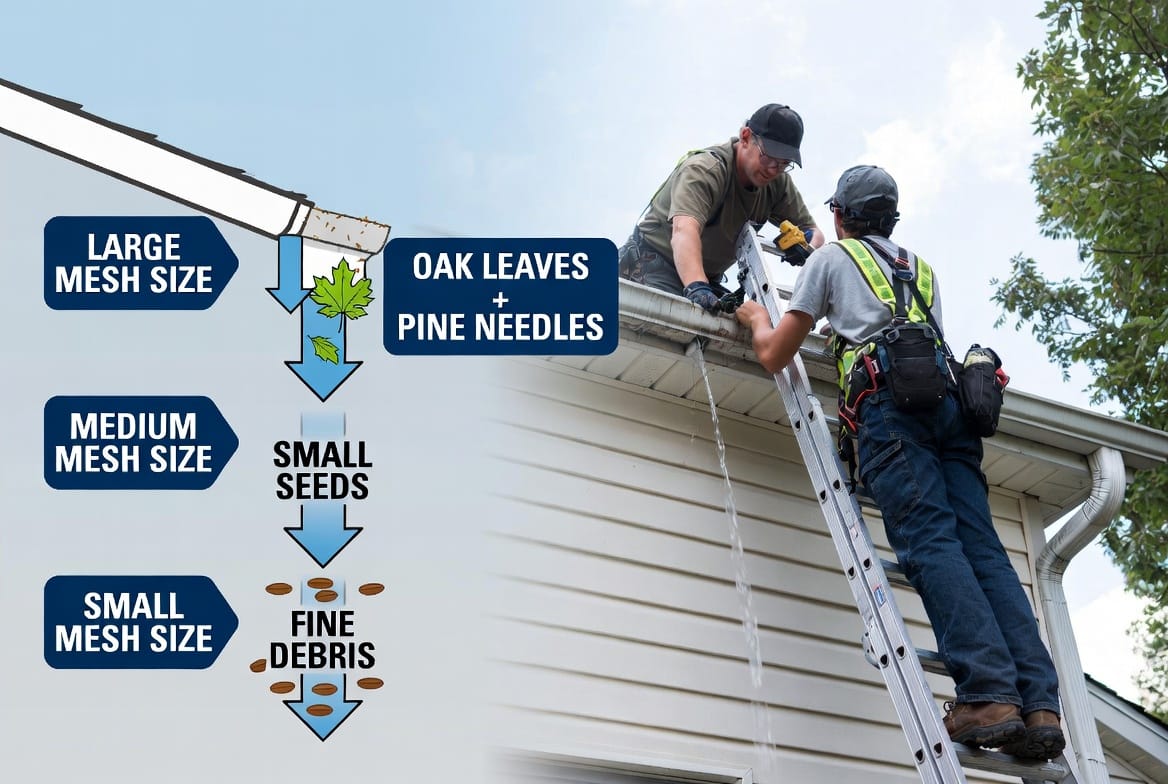
A 1/4-inch mesh, on the other hand, lets smaller seeds and pine needles pass while stopping larger leaves. Water moves freely, but you may notice minor debris buildup over time. The ideal choice strikes a balance that matches your local conditions without sacrificing protection.
Smaller mesh sizes excel at comprehensive debris blocking but demand strategic placement and occasional rinsing. Larger mesh sizes prioritize unrestricted drainage and lower maintenance, making them reassuring options for homeowners who prefer set-it-and-forget-it solutions.
Understanding this relationship empowers you to select a product that works with nature rather than against it. The result? Fewer emergency calls, lower repair bills, and gutters that continue performing year after year.
Identifying Common Debris Types Around Your Home
Your local landscape dictates the debris your gutters must handle. Oak leaves are broad, flat, and tend to mat together when wet, creating heavy blockages. Pine needles are slender, pointed, and can weave through larger openings like thread through a needle. Tree seeds, acorns, and pollen add fine, lightweight material that accumulates in corners and downspouts.
Other contributors include:
- Twigs and small branches from storms
- Blossoms and seed pods in spring
- Roof granules and shingle dust
- Insect remains and bird debris
Each type interacts differently with gutter screen mesh size. Recognizing your dominant debris profile is the first step toward effective product selection and long-term performance.
Matching Mesh Size to Local Tree Types
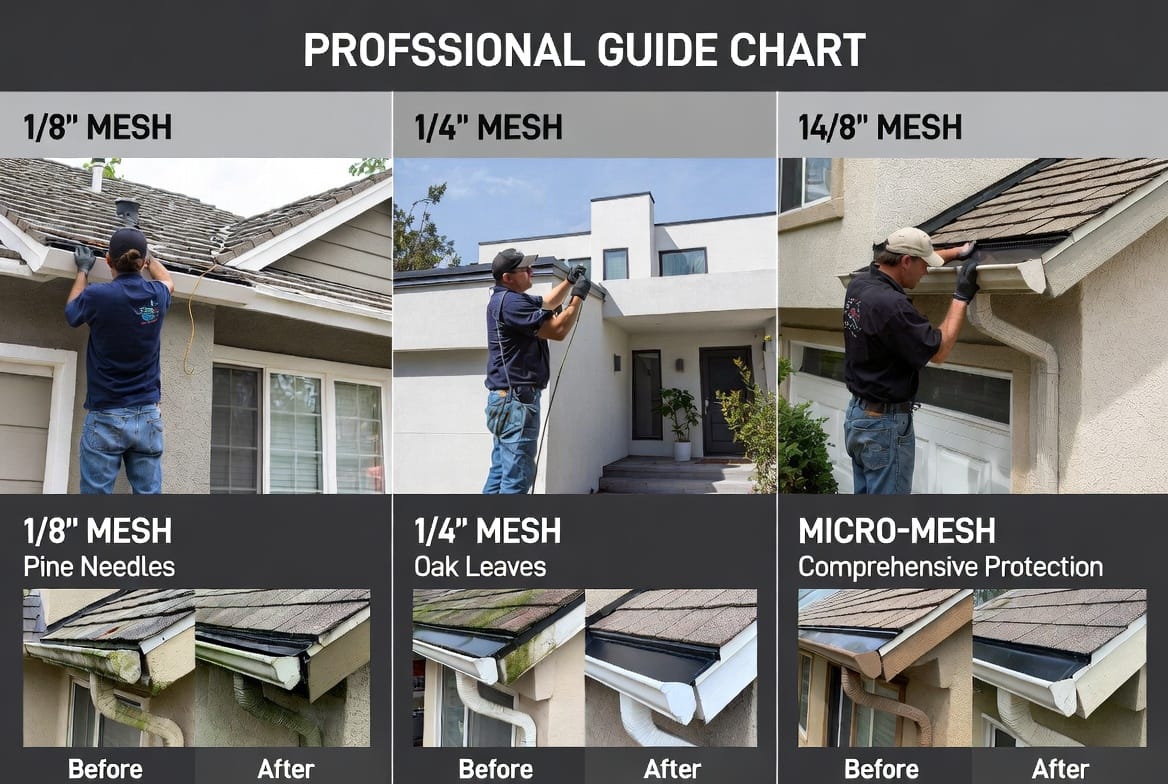
Oak-dominated landscapes benefit from 1/4-inch mesh screens. These openings capture the broad leaves that would otherwise clog downspouts while still allowing sufficient water passage. Homeowners report dramatically reduced overflow and easier seasonal cleaning.
Pine-heavy areas call for 1/8-inch mesh. The smaller holes effectively trap needles before they form dense mats inside the gutter. Although slightly more prone to surface buildup, proper design ensures needles slide off during rain, maintaining excellent flow.
Mixed or seed-rich environments often require micro-mesh technology. These ultra-fine screens block virtually all debris types — leaves, needles, seeds, and pollen — delivering the highest level of protection. While they may need occasional attention in peak seasons, the prevention of internal clogs makes them a wise investment for comprehensive defense.
When selecting, consider not only tree types but also proximity, prevailing winds, and seasonal weather patterns. A property surrounded by mature oaks twenty feet away faces different challenges than one with scattered pines. Professional assessment ensures your gutter screen mesh size perfectly matches these variables.
Popular Mesh Sizes and Their Best Applications
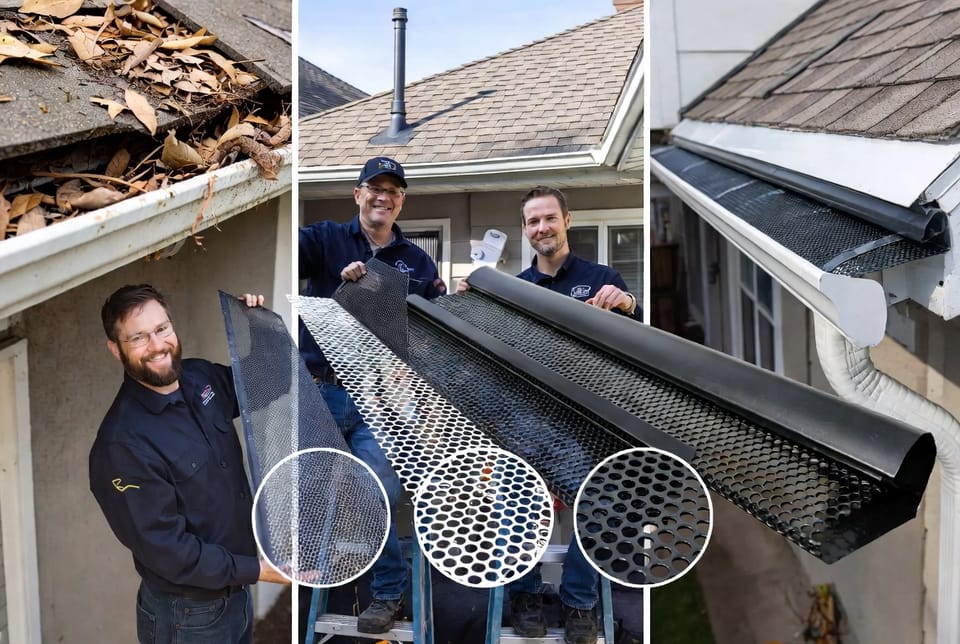
- 1/8-inch mesh: Ideal for pine needles and fine debris. Offers strong filtration with good water flow when installed at the correct angle.
- 1/4-inch mesh: Excellent for oak leaves and larger organic material. Balances protection and drainage for most suburban homes.
- Micro-mesh: Provides near-total debris blocking for properties with diverse tree cover. Best paired with built-in self-cleaning features to manage potential surface loading.
Each option serves specific needs. Product selection should factor in your home’s architecture, roof pitch, and local climate for optimal results.
Key Factors in Smart Product Selection
Beyond hole size, evaluate material quality, frame strength, and installation method. Aluminum, stainless steel, and copper screens each offer unique benefits in durability and appearance. Look for screens engineered with reinforced edges and proper slope to encourage natural debris shedding.
Bold risks to avoid include choosing purely on price or aesthetics without considering performance data. A mismatched gutter screen mesh size can lead to hidden water damage, foundation erosion, and even interior leaks — issues far costlier than investing in the right product upfront.
Professional Installation: Ensuring Lasting Success
Even the best mesh performs poorly if installed incorrectly. Professional technicians understand precise pitch requirements, seamless connections, and integration with existing gutter systems. Their expertise eliminates guesswork and delivers results that last.
With expert installation, your chosen mesh size operates at peak efficiency. You gain the reassurance of a system designed specifically for your trees and climate — one that requires minimal intervention while providing maximum protection.
Why the Right Choice Delivers Peace of Mind
When hole size matches debris type, your gutters become a reliable, low-maintenance asset rather than a recurring problem. You protect your home’s structural integrity, preserve landscaping investments, and avoid emergency service calls during storms.
Homeowners who invest time in proper product selection consistently report drier basements, cleaner exteriors, and greater overall satisfaction with their gutter systems. The upfront attention to gutter screen mesh size pays dividends for decades.
Choose the right screen for your trees. We’re ready to help you select and install the perfect solution — so your gutters work flawlessly, season after season.
Match Your Mesh to Your Trees – Free Advice, Call Now