The Gutter Leaf Guard Comparison: Mesh vs. Solid vs. Brush
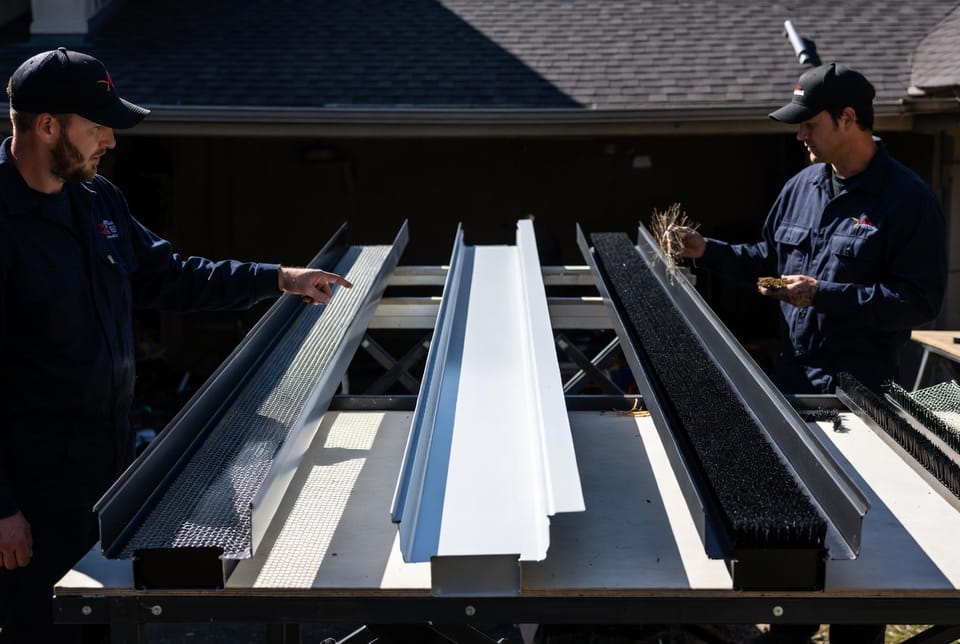
Protecting your home’s drainage system begins with selecting the right gutter leaf guard. Without effective protection, leaves, twigs, shingle grit, and organic debris quickly accumulate inside gutters, leading to clogged gutters, overflowing water, foundation damage, and costly repairs. Homeowners face a critical decision when choosing among the three most common styles available today: mesh gutter guards, solid cover gutter guards, and brush gutter guards.
Get the Right Gutter Guard Today – Call Now!
Each design approaches the same problem—keeping debris out while allowing water to flow freely—through a distinctly different mechanism. Understanding these differences empowers you to match the solution to your roof type, climate, tree coverage, and maintenance preferences. This comprehensive comparison examines how mesh, solid, and brush systems perform, their individual strengths and limitations, and the practical factors that determine which option delivers the most reliable long-term results.
By the end of this guide you will possess clear, actionable knowledge to choose the right gutter guard for your property and move forward with confidence.
Understanding the Core Challenge of Gutter Protection
Gutters serve a vital role by channeling rainwater away from the foundation, siding, and landscaping. When debris blocks the flow, water backs up, seeps under shingles, stains exterior walls, and saturates soil near the house. Seasonal leaf drop, pine needles, and even small branches intensify the risk in heavily wooded areas.
A quality gutter leaf guard acts as the first line of defense. It must accomplish two simultaneous goals: exclude unwanted material and maintain unrestricted water passage during heavy storms. The three primary categories—mesh, solid cover, and brush—achieve these goals through fundamentally different engineering principles. Evaluating each principle reveals why performance varies dramatically from one style to another.
Mesh Gutter Guards: Fine Screening That Blocks Debris
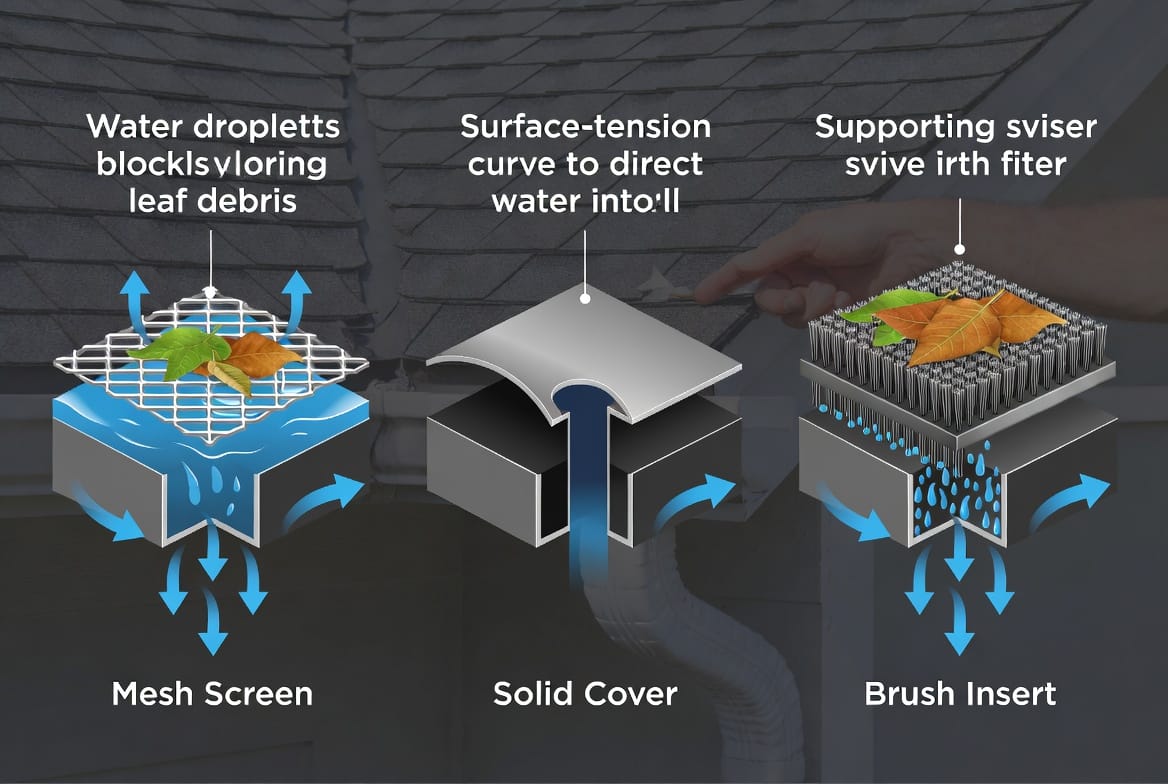
Mesh gutter guards consist of a fine screen, typically fabricated from stainless steel, aluminum, or heavy-duty vinyl, stretched across the open top of the gutter. The mesh openings are sized small enough to prevent leaves, twigs, and larger particles from entering while still permitting water to pass through the screen and into the gutter channel below.
Installation usually involves securing the mesh under the first row of shingles or clipping it directly to the gutter lip, creating a continuous barrier along the entire run. Because the screen sits above the gutter, most debris remains on the surface where wind or rain can eventually wash it off—or where a homeowner can remove it with a simple brush or leaf blower.
Advantages of Mesh Systems
- Excellent debris exclusion for leaves and larger organic matter
- High water-flow capacity during moderate rainfall
- Relatively straightforward installation on most existing gutter profiles
- Durable metal versions resist UV degradation and physical impact
- Allows visual inspection of the gutter interior without full removal
Limitations of Mesh Systems
- Fine mesh can trap shingle grit, pollen, and pine needles over time, requiring periodic surface cleaning
- Some designs allow small debris to accumulate on top, reducing effective water intake if neglected
- In regions with heavy ice or snow, mesh may hold residual moisture that contributes to ice dam formation
- Lower-quality vinyl mesh can sag or tear under prolonged sun exposure
Mesh gutter guards excel in environments where moderate leaf fall is the primary concern and where the homeowner is willing to perform light seasonal maintenance. They strike a practical balance between protection and accessibility, yet they still demand occasional attention to remain fully effective.
Solid Cover Gutter Guards: Surface Tension Technology That Keeps Debris Out
Solid cover gutter guards, sometimes called surface-tension or reverse-curve systems, feature a continuous solid panel that covers the entire gutter opening. A precisely engineered lip or curve at the outer edge allows water to cling to the surface and flow into a narrow intake slot while leaves and debris simply slide off the smooth face onto the ground below.
No openings exist large enough for debris to enter the gutter channel. Water follows the physical principle of adhesion and surface tension, traveling around the curved edge and dropping safely into the gutter. The result is a virtually debris-free interior that rarely requires cleaning.
Advantages of Solid Cover Systems
- Nearly complete exclusion of leaves, needles, twigs, and even small animals
- Minimal maintenance—most debris never reaches the gutter at all
- Smooth exterior surface sheds material naturally with wind and rain
- High resistance to clogging even under dense tree canopy
- Long service life when constructed from heavy-gauge aluminum or steel
Limitations of Solid Cover Systems
- Extremely heavy rainfall can occasionally overwhelm the surface-tension effect, causing temporary overflow
- Proper pitch and installation alignment are critical for consistent performance
- Higher initial material and labor cost compared with simpler designs
- Some models may require professional fitting to match specific gutter sizes
Because solid cover gutter guards keep the gutter channel clean by design, they represent the highest level of protection available for most residential applications. Homeowners who value “set-it-and-forget-it” performance frequently select this style for its long-term reliability and reduced upkeep.
Brush Gutter Guards: Inserted Filaments That Support Debris on Top
Brush gutter guards take an entirely different approach. A cylindrical or rectangular brush made of dense polypropylene or nylon bristles is inserted directly into the open gutter channel. The bristles stand upright, filling the gutter from bottom to top so that leaves and larger debris rest on the upper surface of the brush rather than falling into the water pathway.
Water filters downward through the flexible bristles and continues along the gutter floor toward the downspouts. The design is simple, inexpensive, and can be installed by many homeowners without specialized tools.
Advantages of Brush Systems
- Low material cost and easy DIY installation
- Flexible bristles conform to irregular gutter shapes
- Leaves remain elevated and can be removed by hand or blower
- Suitable for temporary or budget-conscious solutions
Limitations of Brush Systems
- Debris accumulates on top of the brush and must be cleared regularly
- Fine particles and sludge can still settle among the bristles over time
- Reduced water-flow capacity once the brush becomes partially packed
- Bristles may degrade under prolonged UV exposure or freeze-thaw cycles
- Least effective overall at preventing long-term buildup inside the gutter
While brush gutter guards offer an accessible entry point for basic protection, their performance declines faster than either mesh or solid systems when exposed to heavy debris loads. They function best as a short-term measure rather than a permanent solution.
Direct Performance Comparison Across Key Criteria
When evaluated side by side, clear performance rankings emerge. Solid cover gutter guards consistently deliver the highest level of debris exclusion and the lowest maintenance demand. Mesh gutter guards provide strong protection with moderate upkeep requirements. Brush gutter guards rank lowest in long-term effectiveness because they allow progressive accumulation both on and within the bristle mass.
Water-handling capacity under normal rainfall favors mesh and solid systems equally; extreme cloudbursts occasionally challenge surface-tension designs, yet properly installed solid covers still outperform brushes. Durability rankings place metal mesh and aluminum solid covers at the top, while plastic brushes show faster material fatigue.
Cost considerations reverse the performance order: brushes are least expensive upfront, mesh occupies the middle range, and solid covers require the largest initial investment. Over a ten-year horizon, however, the reduced cleaning and repair expenses associated with solid systems often produce the lowest total cost of ownership.
Climate, Roof Design, and Tree Density Considerations
Local conditions heavily influence which gutter leaf guard performs best. In regions dominated by deciduous trees that drop large volumes of leaves each autumn, solid covers prevent the majority of material from ever contacting the gutter. Pine-needle climates benefit similarly from solid systems because needles easily lodge in mesh openings and brush bristles.
Steep roof pitches accelerate water velocity, making surface-tension solid covers especially efficient. Low-slope or complex multi-level roofs may favor mesh designs that tolerate slight installation variations. Coastal or high-wind areas require robust metal construction to resist uplift and corrosion—again favoring quality mesh or solid options over lightweight brushes.
Ice and snow loads introduce additional variables. Solid covers with adequate intake slots continue to function beneath moderate ice, while mesh can trap moisture and brushes may compress under weight. Homeowners in freeze-prone zones should prioritize systems engineered with thermal expansion tolerance and clear drainage paths.
Installation Best Practices and Long-Term Maintenance
Regardless of the chosen style, professional installation ensures correct alignment, secure fastening, and compatibility with existing gutter hangers and downspouts. Mesh systems must maintain consistent tension to avoid sagging. Solid covers require precise lip geometry and continuous support. Brush inserts need full-length coverage without gaps at seams or corners.
Maintenance schedules differ markedly. Solid covers typically need only an annual visual check and occasional surface rinse. Mesh systems benefit from seasonal removal of surface debris using a soft brush or low-pressure blower. Brush systems demand more frequent clearing—often after every major leaf-fall event—to restore water capacity.
Neglecting any system eventually leads to the very problems the guards were meant to prevent: clogged gutters, overflows, and water intrusion. Selecting a low-maintenance design from the outset dramatically reduces the risk of these outcomes.
Evaluating Total Value Beyond Initial Price
The true measure of a gutter leaf guard lies in the combination of protection, longevity, and ownership cost. A low-priced brush may appear attractive at purchase, yet repeated cleaning labor and earlier replacement erase the savings. Mesh offers a middle path that satisfies many average properties. Solid covers, while more expensive initially, deliver the greatest peace of mind and the fewest future interventions.
Homeowners who factor in the value of their time, the cost of potential water damage, and the desire for a clean, functional drainage system consistently find solid covers to be the superior long-term investment. Mesh remains an excellent alternative when budget or specific roof constraints limit options. Brush systems serve best as interim solutions or for properties with minimal debris exposure.

Making the Informed Final Choice
Selecting among mesh, solid, and brush gutter guards ultimately depends on balancing protection needs against practical constraints. For the majority of homeowners seeking maximum debris exclusion and minimal ongoing effort, solid cover gutter guards stand out as the clear preference. Mesh gutter guards provide reliable intermediate performance with manageable upkeep. Brush gutter guards, while accessible, rank as the least effective for sustained protection.
A properly chosen system transforms gutters from a recurring seasonal chore into a dependable, low-attention component of the home’s exterior. The investment pays dividends through preserved foundation integrity, cleaner landscaping, and freedom from emergency clean-outs after every storm.
Choose the right gutter guard for your home by matching the technology to your specific environment and priorities. When expert guidance is needed to evaluate roof configuration, existing gutter condition, or optimal product selection, professional consultation ensures the decision rests on accurate assessment rather than guesswork.
Experienced specialists can review your situation, explain installation details, and help you secure a solution engineered for lasting performance. Protecting your home begins with informed action—take that step today and enjoy the confidence of a gutter system that works reliably season after season.
Protect Your Home from Debris – Call Today