The Gutter Hanger Types: Hidden vs. Standard Hangers
Choosing the right gutter hanger is one of the most important decisions a homeowner can make when protecting a property from water damage. Gutters do far more than simply channel rainwater away from the foundation. Their ability to stay firmly attached, maintain proper pitch, and resist the weight of water, ice, and debris depends almost entirely on the hanger system that supports them. Two primary methods dominate the market today: the traditional standard hanger and the newer, more advanced hidden hanger. Understanding the differences between these systems—how they are installed, how they perform over time, and which one offers greater security—helps homeowners make confident, informed upgrades that protect their investment for decades.
Get Stronger Gutter Support – Call for Install!
This guide examines both standard hangers and hidden hangers in detail. You will discover why one method remains visible and older while the other sits inside the gutter for superior strength and a cleaner look. You will also learn the practical installation steps, durability factors, and long-term benefits that separate the two approaches. By the end, you will see clearly why upgrading to hidden hangers provides better gutter support and lasting peace of mind.
Understanding Standard Hangers: The Visible Traditional Method
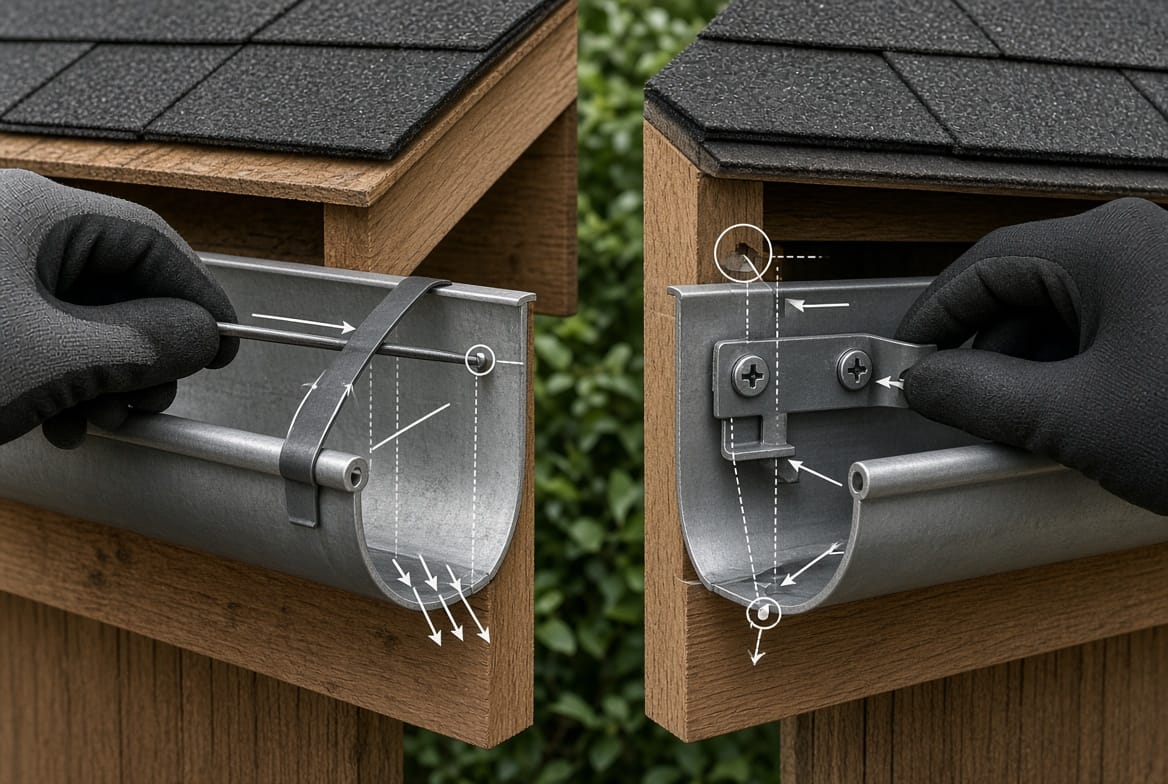
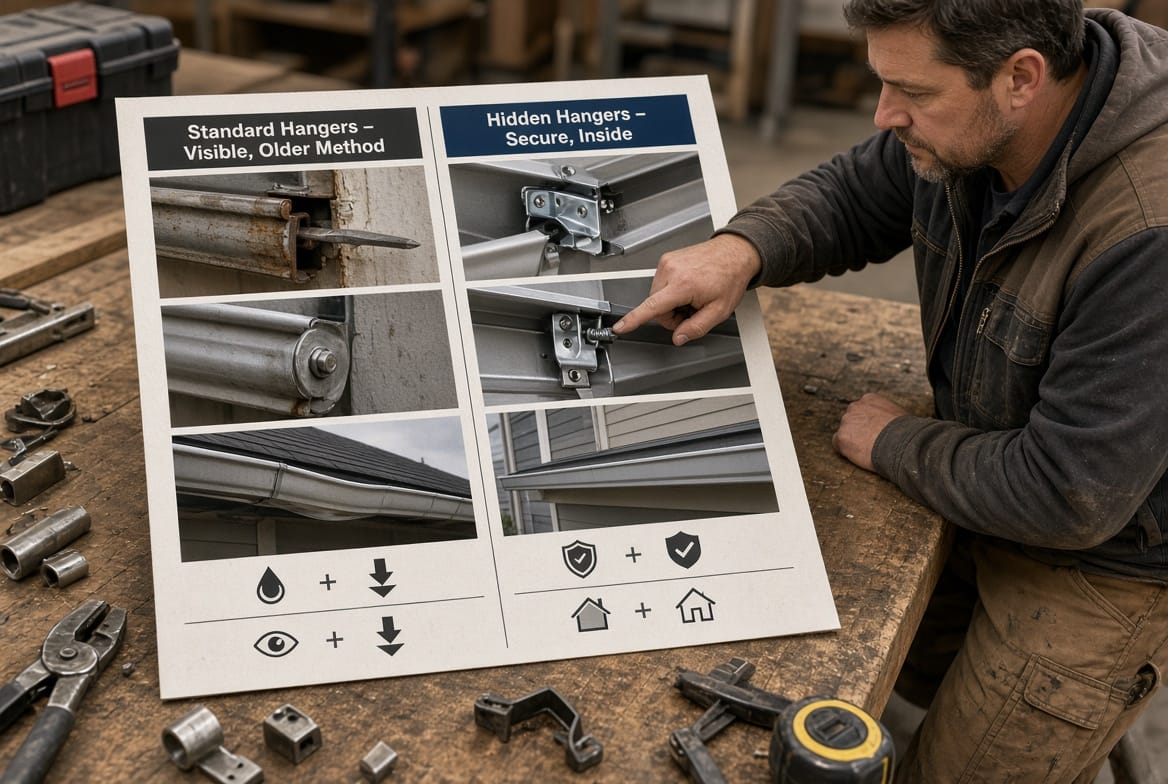
Standard hangers, sometimes called spike-and-ferrule hangers or external brackets, have been the conventional choice for many years. These hangers feature a long spike or screw that passes through a metal ferrule or bracket, goes over the front lip of the gutter, and then drives into the fascia board or rafter tail behind the gutter. Because the hanger sits on top of the gutter edge and remains fully visible from the ground, many people immediately recognize the classic “look” of older gutter systems.
The design is straightforward. A standard hanger essentially clamps the gutter against the fascia by applying pressure from the outside. When installed correctly, the hanger keeps the gutter in place and helps maintain the slight downward slope needed for water to flow toward the downspouts. Homeowners and contractors have relied on this method for generations because materials were readily available and the process felt familiar.
However, the very features that made standard hangers popular also create limitations. Because the hanger rests on the front edge, it can create small interruptions in the smooth water path. Over time, the constant expansion and contraction of metal, combined with the weight of standing water or ice, can loosen the spike. Once a spike begins to pull free, the gutter may sag, pull away from the house, or develop low spots that collect debris. Visible hangers also collect leaves and twigs more easily, accelerating clogs.
Despite these drawbacks, standard hangers still serve many properties adequately when the system is new and properly maintained. They remain a lower-cost option for basic installations and can be adequate in mild climates with light rainfall. Yet for homeowners seeking maximum security and a refined appearance, the older method often falls short of modern expectations.
Exploring Hidden Hangers: The Secure Internal Solution
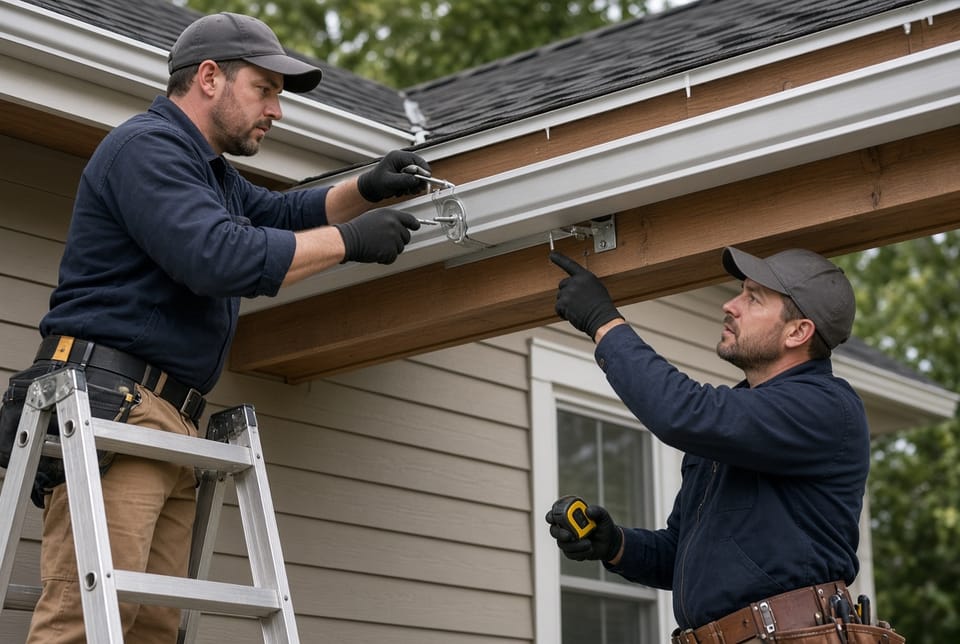
Hidden hangers represent a significant advancement in gutter support technology. Instead of resting on the front edge, these hangers are positioned inside the gutter itself. A sturdy bracket or clip attaches to the back of the gutter and is then fastened directly into the fascia board with heavy-duty screws. The hanger remains completely out of sight once the gutter is in place, giving the entire system a seamless, continuous appearance.
Because the hidden hanger sits inside the channel, it supports the gutter from within and distributes weight more evenly. This internal placement allows the front lip of the gutter to stay free of any hardware, improving both water flow and visual appeal. Modern hidden hangers are typically made from thicker gauge aluminum or steel and often include built-in features such as adjustable height settings or reinforced tabs that lock onto the gutter’s hemmed edge.
Homeowners appreciate the cleaner look immediately. From the street or the yard, the gutter appears as one continuous line with no visible spikes or brackets interrupting the surface. More importantly, the internal design resists the forces that cause traditional systems to fail. Wind uplift, ice dams, and heavy rain loads are better managed because the hanger grips the gutter more securely and transfers stress directly into the structural fascia.
Installation Differences Between the Two Hanger Types
Installation methods highlight one of the clearest distinctions between standard hangers and hidden hangers.
For standard hangers, the process generally follows these steps:
- Position the gutter against the fascia at the correct pitch.
- Place the ferrule or bracket over the front lip.
- Drive a long spike or screw through the bracket, through the back of the gutter, and into the wood behind.
- Space hangers approximately every 24 to 36 inches along the run.
- Check alignment and adjust as needed.
This method is relatively quick for experienced installers, yet it requires careful attention to avoid splitting the fascia or driving the spike at an incorrect angle. Over-tightening can deform the gutter, while under-tightening leaves the system vulnerable to movement.
Hidden hanger installation follows a different sequence that prioritizes internal strength:
- Secure the hidden bracket to the back of the gutter using the manufacturer’s locking tabs or screws.
- Lift the entire assembly into position against the fascia.
- Drive heavy-duty screws through the hanger’s mounting holes directly into the fascia or rafter tails.
- Space the hangers more closely—often every 16 to 24 inches—for maximum support.
- Confirm that the front edge remains free and that the pitch remains consistent.
Although the initial setup can take slightly longer, the result is a far more rigid connection. Professional installers often note that hidden hangers reduce the chance of future adjustments because the system holds its position more reliably from day one.
Durability and Performance: Why Hidden Hangers Excel
Durability separates the two systems most dramatically. Standard hangers depend on the integrity of a single long spike or screw that must resist both downward weight and outward pull. Seasonal temperature swings cause metal to expand and contract, gradually working the spike loose. In regions with heavy snow or ice, the added load can bend the front lip or pull the entire gutter away from the house. Once a few hangers fail, the remaining ones carry extra stress, accelerating overall deterioration.
Hidden hangers address these weaknesses directly. By fastening inside the gutter and using multiple strong screws, they create a broader load path. The internal position keeps the hanger protected from direct weather exposure and reduces the leverage that wind or ice can apply. Many modern hidden hangers also incorporate thicker metal and corrosion-resistant coatings, further extending service life. Independent testing and field experience consistently show that systems using hidden hangers maintain proper alignment longer and require fewer repairs over a 20- to 30-year span.
Additional performance advantages include:
- Improved resistance to wind uplift during storms.
- Better ability to handle the weight of ice dams without deformation.
- Reduced risk of sagging between hangers.
- Cleaner water flow because nothing interrupts the front edge.
- Easier future maintenance since debris does not catch on external hardware.
These factors combine to give hidden hangers a clear edge in both security and longevity.
Visual and Aesthetic Considerations
Beyond structural performance, appearance matters to many homeowners. Standard hangers remain visible along the entire length of the gutter, creating a dotted or interrupted line that some find dated. In contrast, hidden hangers disappear completely once installed, allowing the gutter to present a smooth, continuous profile that complements modern and traditional architecture alike. Color-matched systems look especially refined because no contrasting metal spikes break the visual flow.
For properties where curb appeal is a priority—whether preparing a home for sale or simply taking pride in exterior presentation—the seamless look of hidden hangers provides a noticeable upgrade without requiring a complete redesign of the roofline.
Common Problems Solved by Upgrading
Many homeowners first notice gutter issues when they see water overflowing, staining on siding, or sections pulling away from the house. These problems frequently trace back to failing standard hangers. Upgrading to hidden hangers often resolves the root causes:
- Sagging sections regain proper pitch and stay level.
- Loose connections are replaced with rigid internal support.
- Visible hardware that collects debris is eliminated.
- Future ice and wind loads are managed more effectively.
The transformation can feel dramatic. A previously problematic gutter system begins performing as a reliable water-management tool rather than a constant source of concern.
Making the Decision: When to Choose Hidden Hangers
For new construction or full gutter replacement, hidden hangers are almost always the preferred recommendation. They deliver superior strength, cleaner aesthetics, and lower long-term maintenance. Even on existing systems that still use standard hangers, a professional upgrade is often practical. Technicians can remove the old external hardware, install new hidden hangers at proper spacing, and re-secure the gutters without replacing the entire run in many cases.
Climate, roof design, and local weather patterns also influence the choice. Homes in areas with frequent heavy rain, snow, or high winds benefit most from the added security of internal hangers. Properties with longer gutter runs or complex architectural lines likewise gain from the consistent support that hidden hangers provide.
Professional Installation Ensures Optimal Results
While some experienced do-it-yourself homeowners attempt hanger upgrades, the safest and most reliable outcome comes from trained professionals. Proper spacing, correct fastener selection, precise pitch adjustment, and secure attachment into solid wood rather than weakened fascia all require skill and the right tools. A qualified crew inspects the entire system, identifies any underlying issues such as rotting wood or improper slope, and completes the installation so the gutters perform at their best from the first rainfall.
Final Recommendation and Next Steps
The evidence is clear. Standard hangers served a valuable role for many years, yet their visible design and reliance on external spikes leave them vulnerable to loosening, sagging, and reduced durability. Hidden hangers, by contrast, sit securely inside the gutter, deliver stronger attachment, maintain a seamless appearance, and resist the forces that cause older systems to fail. The installation differences favor long-term performance, and the durability advantages translate into fewer repairs and greater protection for the home.
Upgrading to hidden hangers is one of the most effective ways to improve gutter support and safeguard your property against water-related damage. When you are ready to enjoy the security, cleanliness, and lasting strength of a modern hanger system, professional installation makes the process straightforward and reliable.
Experienced technicians will evaluate your current gutters, recommend the ideal hidden hanger configuration, and complete the work with precision so your home benefits from superior support for years to come. Protect your investment with the hanger system designed for strength and peace of mind.
Get Reliable Hidden Hanger Installation – Call Today!