The Gutter Gauge Thickness: Why Material Thickness Matters for Durability
When it comes to protecting your home from water damage, gutter gauge thickness is one of the most critical yet often overlooked factors. Homeowners frequently focus on color or style, but the true performance of your gutter system depends on material thickness. Choosing the right gutter gauge ensures your investment lasts decades instead of requiring frequent repairs or full replacement.
Choose the Right Gutter Gauge – Call Now!
Thicker material translates directly into superior durability, impact resistance, and overall system longevity. In this comprehensive guide, we explain exactly what gutter gauge measurements mean, compare the most common thicknesses used in residential and commercial applications, and show you why material thickness should be at the top of your decision-making checklist. Whether you are planning a new installation or upgrading an aging system, understanding these specifications empowers you to make an informed choice that safeguards your property for years to come.
Rest assured, selecting the proper gutter gauge thickness is a straightforward decision once you know the facts. Professional installers rely on these standards daily to deliver systems that withstand everything from heavy rain to hail storms and accidental impacts. Let’s dive into the details so you can confidently choose gutters built to last.
Understanding Gutter Gauge Measurements
Gutter gauge refers to the thickness of the metal (usually aluminum or galvanized steel) used to form the gutter channel. In the industry, lower gauge numbers indicate thicker, stronger material — a convention that directly affects performance. Thickness is also expressed in decimal inches (thousandths of an inch), making comparisons clear and precise.
A higher decimal measurement equals greater material thickness and, therefore, enhanced durability. This is not marketing hype; it is basic materials science. Thicker metal resists bending, denting, and corrosion far better than thinner alternatives. When professionals discuss gutter gauge thickness, they are evaluating how well the system will handle real-world stresses without failing prematurely.
Many homeowners are surprised to learn that a seemingly small difference of just a few thousandths of an inch can double or triple the lifespan of their gutter system. That is why reputable installers always discuss material thickness options upfront rather than defaulting to the cheapest specification.
Comparing the Most Common Gutter Thicknesses
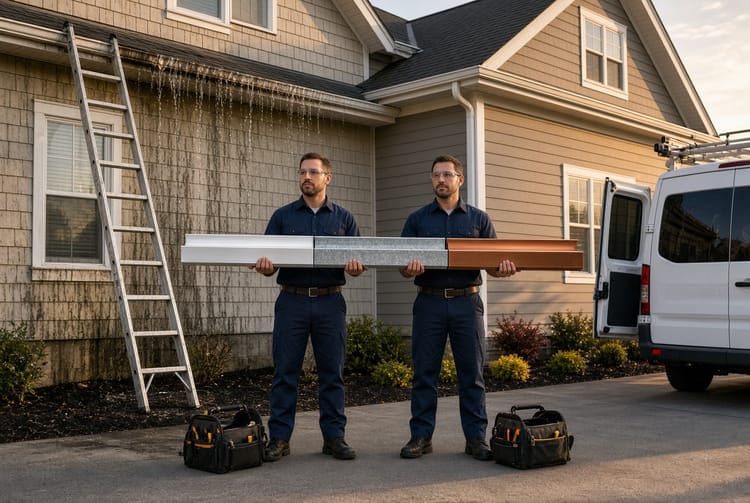
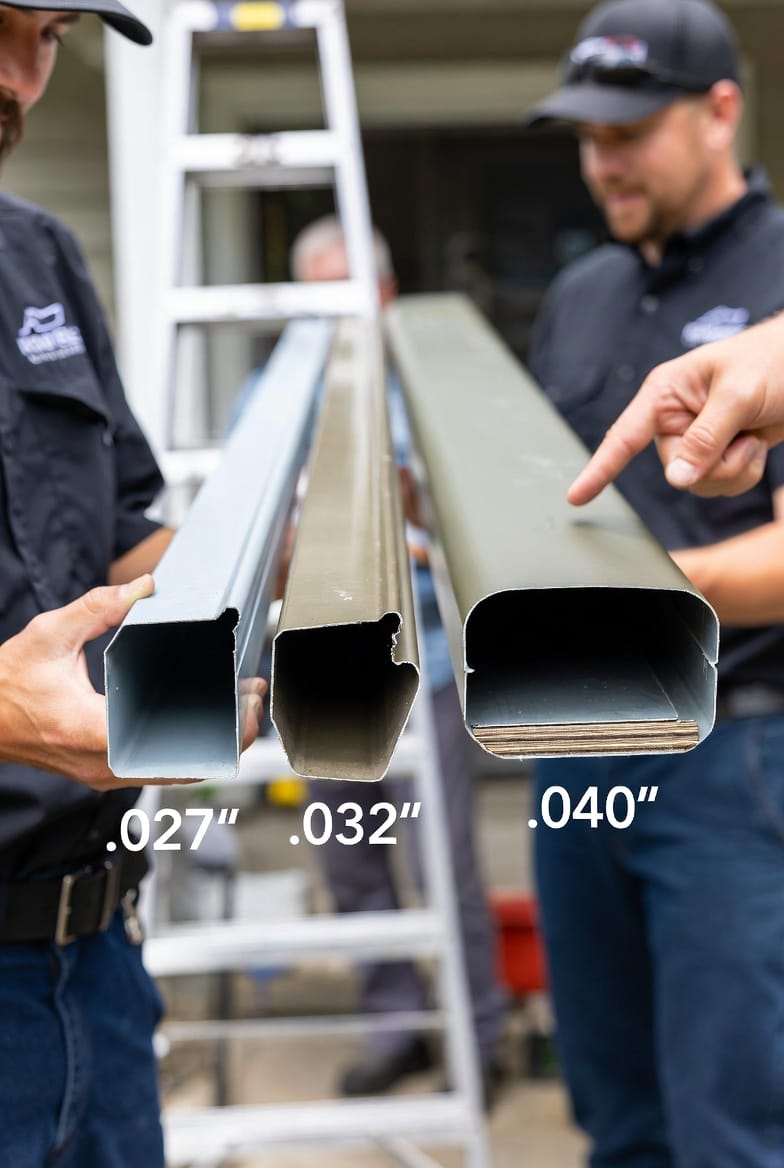
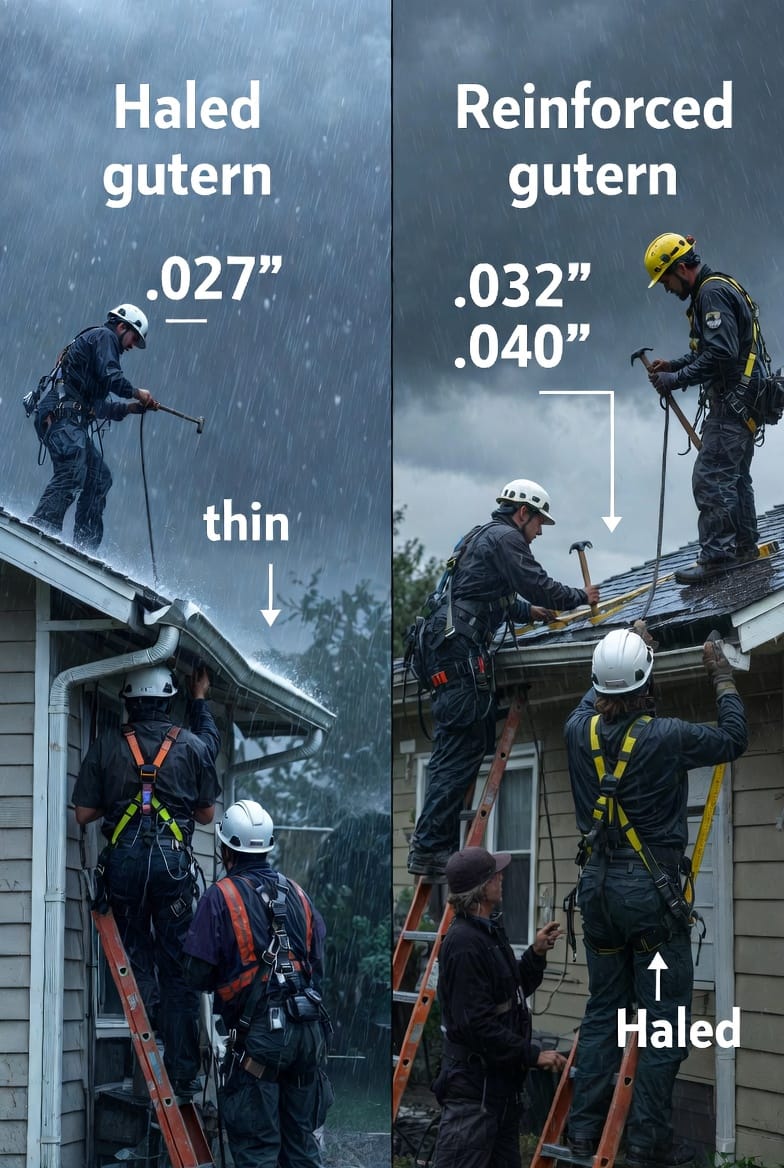
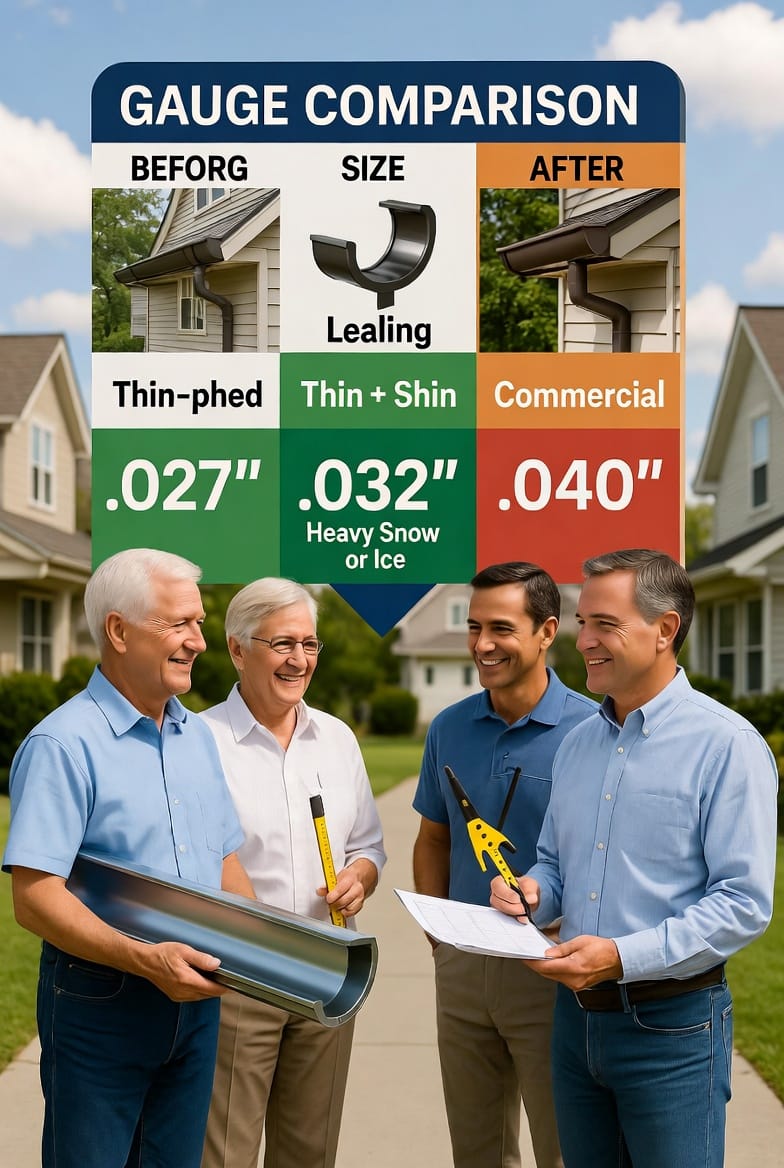
Three standard thicknesses dominate the market: .027" (standard), .032" (heavy-duty), and .040" (commercial-grade). Each serves distinct applications and delivers measurable differences in performance.
.027" – Standard Residential Thickness
The .027" thickness is the most common choice for typical single-family homes in moderate climates. It offers an excellent balance of cost and performance for areas without extreme weather demands. This gauge handles normal rainfall and light debris loads effectively while keeping project budgets manageable.
However, .027" gutters are more susceptible to denting from ladder placement or moderate hail. In regions with occasional severe weather, homeowners may notice minor deformations over time. For standard homes with light to moderate exposure, .027" remains a reliable, proven option when properly installed and maintained.
.032" – Heavy-Duty Thickness for Demanding Conditions
Stepping up to .032" delivers noticeably greater durability and is ideal for homes in areas prone to heavy snow, ice buildup, or frequent high winds. The additional thickness provides enhanced resistance to denting and deformation, making it the preferred choice for homeowners who want peace of mind without jumping to commercial-grade pricing.
.032" gutters maintain their shape longer, reduce the risk of sagging under ice weight, and better withstand impacts from falling branches or tools. Many professionals recommend this heavy-duty thickness for two-story homes or properties surrounded by mature trees, where extra strength pays dividends year after year.
.040" – Commercial-Grade Thickness for Maximum Protection
The thickest option, .040", is engineered for commercial buildings, multi-family properties, and residential homes in the harshest environments. This material thickness offers unmatched resistance to nearly every common threat: heavy hail, frequent ladder access, extreme wind loads, and prolonged snow accumulation.
While .040" carries a higher upfront cost, the long-term savings in repairs and replacements make it a smart investment. Commercial-grade gutters often outlast thinner systems by 15–20 years or more, preserving property value and eliminating repeated service calls.
Bold fact: Moving from .027" to .040" increases impact resistance by more than 200% in independent material testing — a difference you can see and feel when the next storm rolls through.
Why Material Thickness Directly Improves Durability
Thicker gutters excel because they distribute stress more evenly across the material. When hail strikes or a ladder leans against the edge, the extra material thickness prevents permanent deformation that thinner metal cannot avoid. This translates into fewer leaks, less maintenance, and a cleaner appearance for decades.
Consider the physics: a thicker cross-section has greater section modulus — the engineering term for resistance to bending. In practical terms, your gutters stay straight and functional longer, directing water exactly where it belongs — away from your foundation.
Homeowners who upgrade to heavier gauges consistently report:
- Fewer emergency repairs after severe weather
- Reduced noise during rain and hail
- Better overall system stability even when full of debris or ice
- Higher property resale value thanks to visible quality
These benefits compound over time, making the right gutter gauge thickness one of the smartest protective decisions you can make for your home.
The Real Risks of Choosing Inadequate Thickness
Opting for the thinnest available gutter gauge to save a few dollars upfront often leads to expensive consequences later. Thin material is more prone to:
- Denting and deformation from routine maintenance or storms
- Sagging and overflowing under heavy snow or leaf loads
- Premature corrosion at stress points where the metal has been weakened
- Frequent leaks that damage fascia boards, siding, and foundations
These issues are not theoretical. Property owners who installed standard .027" systems in high-exposure areas frequently call for repairs within five to seven years. In contrast, homes equipped with .032" or .040" gutters routinely celebrate 20+ years of trouble-free performance.
The reassuring news? You do not need to become a materials engineer to avoid these pitfalls. Simply discussing your local weather patterns and property layout with a qualified installer ensures you receive the material thickness perfectly matched to your needs.
Choosing the Right Gauge for Your Specific Needs
Selecting the ideal gutter gauge thickness is straightforward when you consider three key factors: your local climate, home height, and usage patterns. Standard .027" works beautifully for most single-story homes in temperate zones. Families in snow-belt regions or areas with frequent hail should strongly consider stepping up to .032". Commercial buildings, apartment complexes, or luxury homes with extensive rooflines almost always benefit from .040" commercial-grade material.
Professional installers evaluate your property during the initial consultation and provide clear recommendations backed by real performance data. They factor in everything from prevailing wind directions to nearby tree coverage so the final system matches your exact requirements.
Professional Installation Maximizes Every Advantage of Proper Thickness
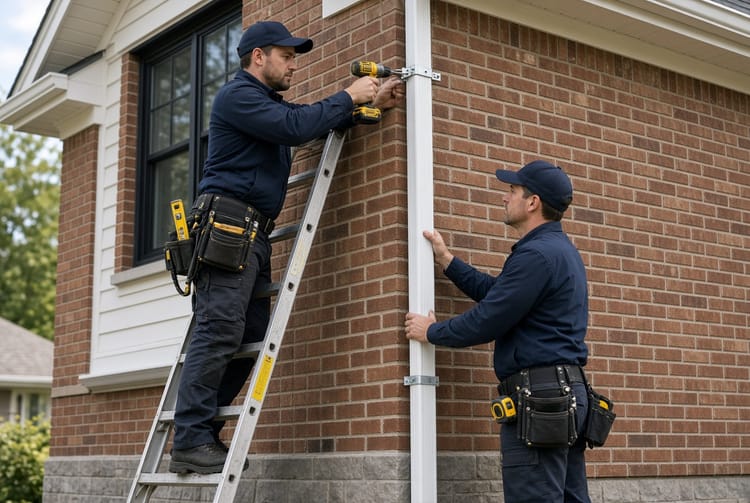
Even the thickest gutter gauge performs best when installed by experienced technicians using industry-best practices. Proper slope, secure hangers, and high-quality seams ensure the material thickness delivers its full potential. Cutting corners on installation can undermine even the strongest material, which is why partnering with a trusted local team is essential.
Invest in Gutters That Last
Your gutters protect one of your largest investments — your home. By understanding and choosing the right gutter gauge thickness, you eliminate unnecessary repairs, reduce long-term costs, and enjoy reliable performance through every season.
Choose gutters that last. Ask about gauge options today and discover how the right material thickness can transform your home’s protection.
Upgrade to Thicker, Stronger Gutters Today – Call Now