The Gutter Freeze-Thaw Damage: Why Ice Expands and Breaks Gutters
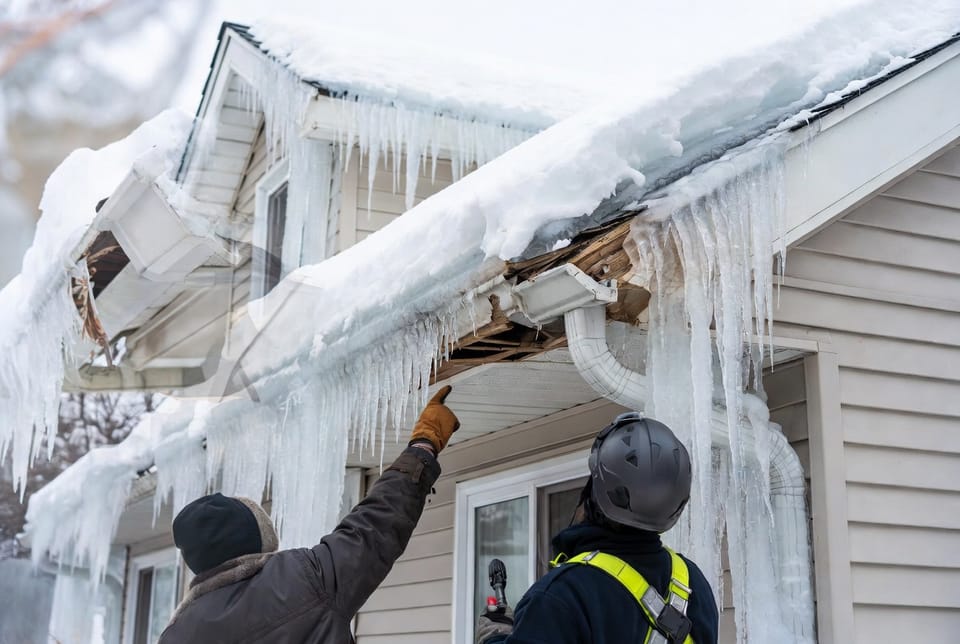
Winter brings more than just cold temperatures and beautiful snowfalls. For many homeowners, it also brings the silent, destructive force of gutter freeze-thaw damage. Understanding how this process works is essential for protecting your home’s foundation, siding, and structural integrity.
Protect Your Gutters from Ice Damage – Call Now!
At its core, gutter freeze-thaw damage occurs when water collects in your gutters, freezes during cold nights, and expands with tremendous force. This cycle repeats throughout winter, gradually weakening your gutter system until costly repairs or full replacements become necessary.
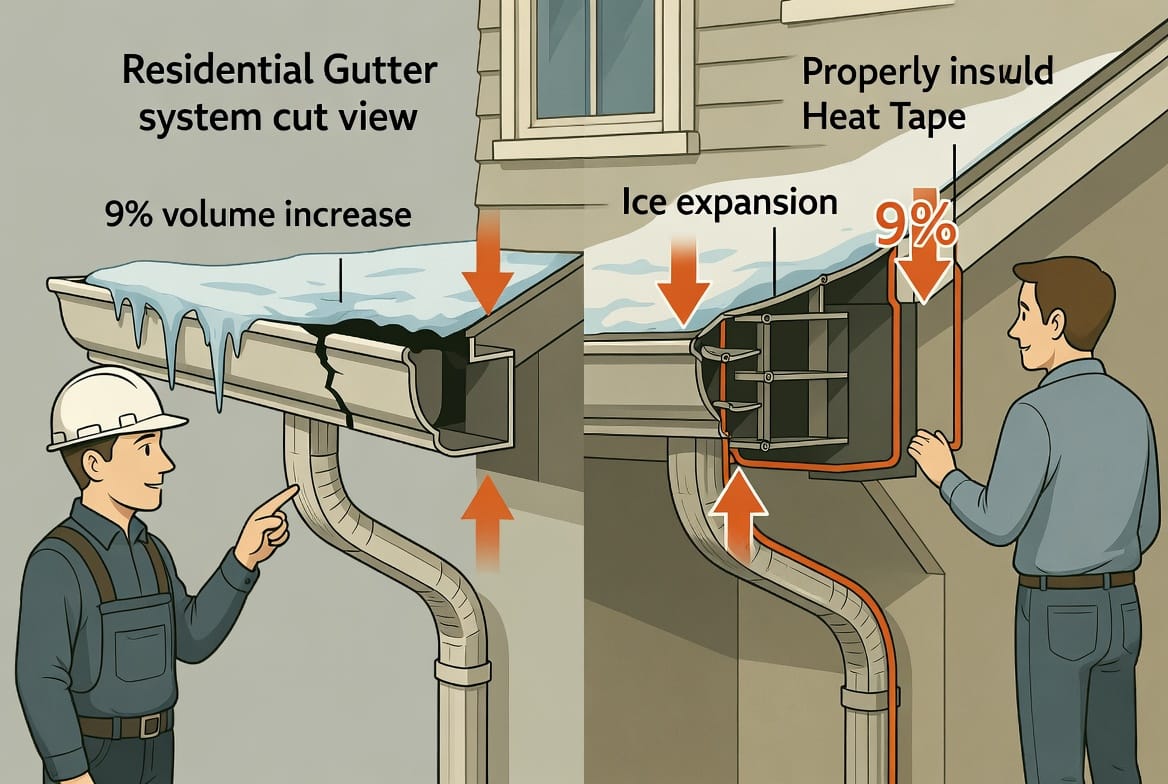
Ice expansion is one of the most powerful natural forces affecting home exteriors. When water freezes, it increases in volume by approximately 9%. That seemingly small percentage creates enough pressure to crack concrete, burst pipes, and — most relevant here — destroy well-installed gutters.
How Water Trapped in Gutters Leads to Freeze-Thaw Damage
Gutters are designed to channel rainwater and melting snow away from your roof and foundation. However, when debris, improper slope, or design flaws cause water to pool instead of drain, trouble begins.
During the day, snow on your roof melts and flows into the gutters. At night, temperatures drop below freezing. The standing water turns to ice. As it freezes, the 9% volume expansion exerts massive outward pressure on the gutter walls, seams, and hangers.
This pressure doesn’t always cause immediate failure. Instead, it builds gradually:
- Seam separation occurs as expanding ice forces joints apart
- Bulging and warping appear along the gutter length
- Pulling away from fascia happens as ice lifts the entire system
- Downspout blockages and cracks develop from repeated freezing
This internal pressure is invisible until significant damage has already occurred.
The Science Behind Ice Expansion in Gutters
Water molecules behave uniquely when they freeze. In liquid form, they move freely. When temperatures drop to 32°F (0°C) or below, they form a crystalline structure that takes up more space.
This expansion generates pressure estimated at up to 30,000 pounds per square inch in confined spaces — more than enough to deform aluminum or steel gutters, crack seals, and stress fascia boards.
Repeated freeze-thaw cycles compound the damage. Each cycle widens tiny cracks, loosens fasteners, and creates new vulnerabilities. Over one harsh winter, a gutter system that was previously in good condition can sustain irreversible harm.
Many homeowners first notice the problem in early spring when they see:
- Gutter sections hanging at odd angles
- Visible gaps between gutter and fascia
- Ice dams forming along roof edges
- Water staining on exterior walls
These are all classic signs of advanced gutter freeze-thaw damage.
Long-Term Consequences of Ignoring Winter Gutter Damage
Left unaddressed, freeze-thaw damage creates a cascade of expensive problems:
- Foundation erosion from uncontrolled water overflow
- Siding and trim rot due to constant moisture exposure
- Basement leaks from poor water management
- Structural weakening of fascia and soffit boards
- Complete gutter system failure requiring full replacement
The financial impact can be significant. What begins as minor seam repairs can quickly escalate to thousands of dollars in water damage restoration if water penetrates your home’s envelope.
Protecting your investment starts with understanding these risks.
Effective Prevention Strategies for Gutter Freeze-Thaw Damage
The good news is that gutter freeze-thaw damage is highly preventable with proactive maintenance and proper installation techniques.
Here are the most effective prevention methods:
- Ensure proper slope and drainage: Gutters should slope ¼ inch per 10 feet toward downspouts to promote complete water evacuation
- Keep gutters clean: Regular removal of leaves, twigs, and debris prevents water pooling
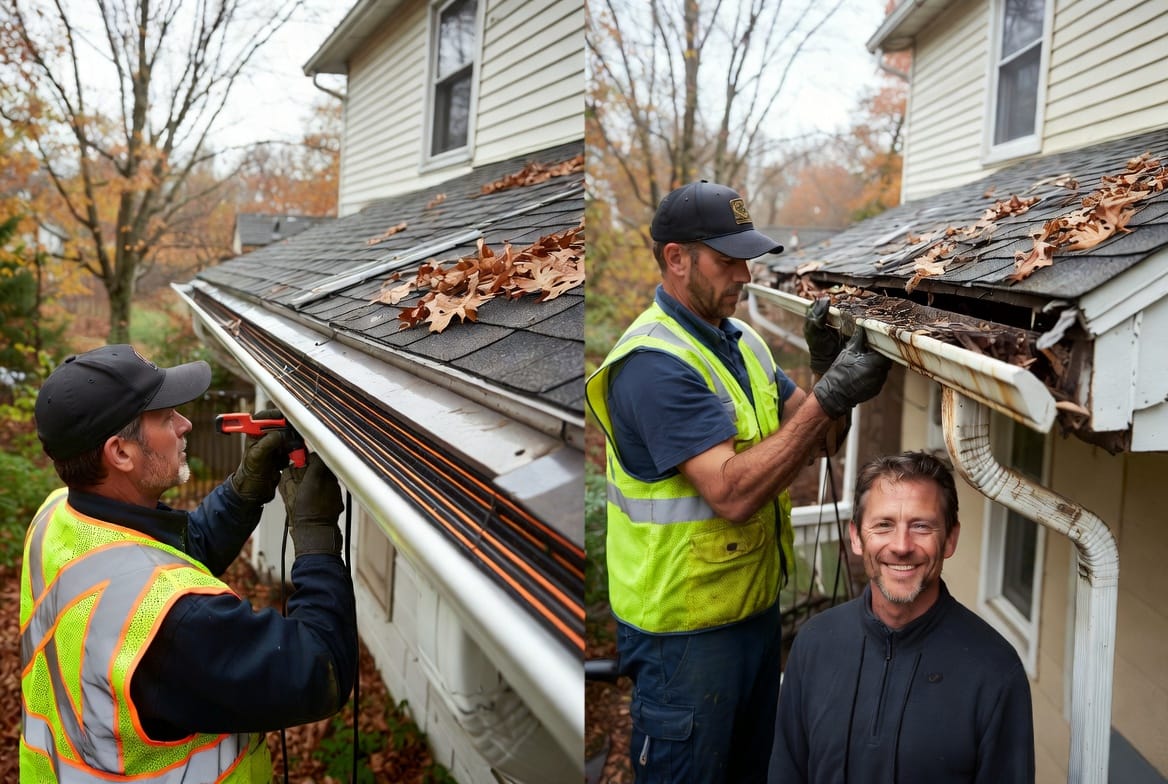
- Install heat cables (gutter de-icing systems): These provide consistent warmth to prevent ice formation in vulnerable areas
- Inspect and repair before winter: Address loose hangers, separated seams, and minor damage in autumn
- Consider gutter guards: Quality systems reduce debris buildup while allowing proper water flow
- Improve roof ventilation: Proper attic airflow reduces ice dam formation
Professional assessment is often the most reliable way to identify hidden vulnerabilities before winter arrives.
When to Call Professionals for Gutter Winterization
While basic maintenance can be done by homeowners, complex issues involving ice expansion damage require professional expertise. Trained technicians can:
- Assess the full extent of existing damage
- Perform precision repairs that restore structural integrity
- Install advanced de-icing systems tailored to your roof design
- Recommend long-term solutions based on your local climate
- Provide warranties on both parts and labor
Don’t wait until you see ice pushing your gutters apart. Early intervention saves money and prevents secondary damage to your home.
Protecting Your Home This Winter and Beyond
Gutter freeze-thaw damage is a predictable seasonal challenge, not an inevitable disaster. With the right knowledge, preparation, and professional support, you can safeguard your home’s exterior drainage system against winter’s harshest effects.
Understanding the science behind ice expansion empowers you to take action before problems escalate. Proper slope, regular cleaning, timely repairs, and strategic use of heat cables form a comprehensive defense against the destructive 9% volume increase that occurs when water freezes.
Your home deserves reliable protection from foundation to rooftop. Don’t let hidden ice damage compromise years of investment.
Ice destroys gutters from inside. Take control today by scheduling professional winterization services.
Get Professional Gutter Protection This Winter – Call Today