The Gutter End Cap: Preventing Leaks at the Most Common Failure Point
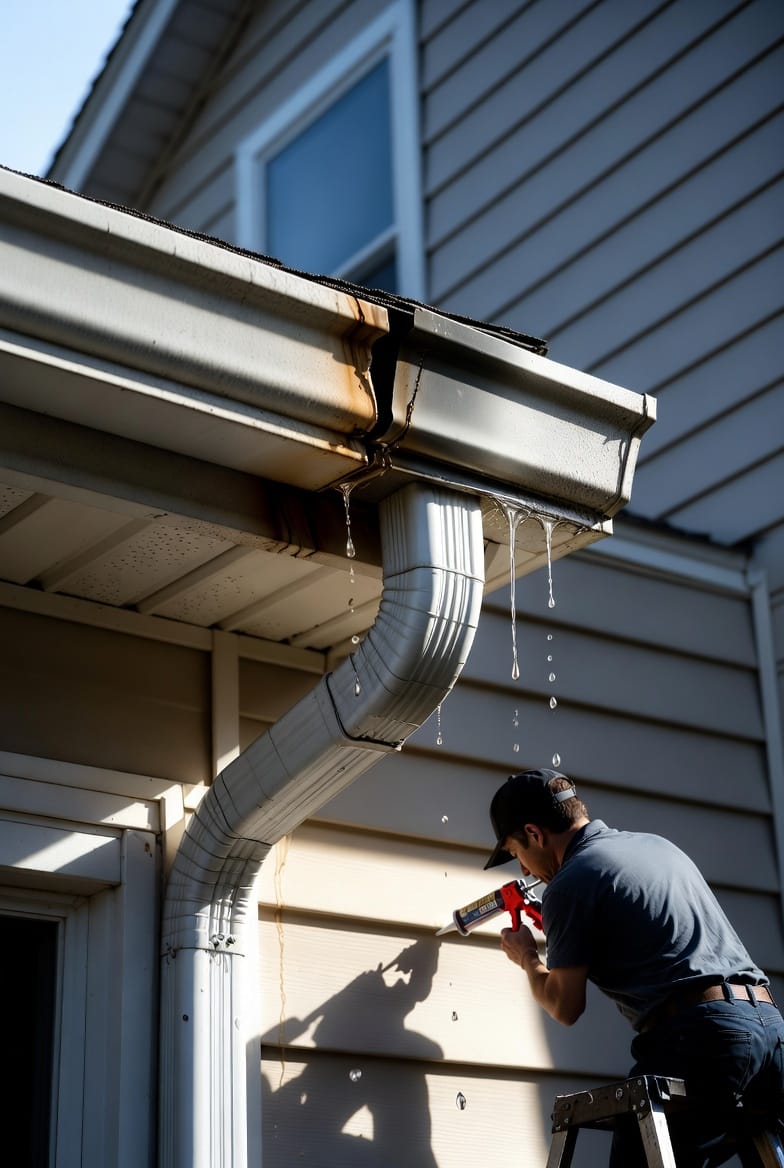
In residential gutter systems, gutter end caps serve as the silent guardians at the very ends of every run. These small components play an outsized role in keeping water flowing exactly where it belongs—away from your foundation, siding, and landscaping. Yet they represent the single most frequent point of failure in otherwise reliable gutter setups.
Fix Failing Gutter End Caps Before They Damage Your Home – Call Now
When a gutter end cap loses its seal, water escapes precisely where it should be contained, leading to cascading problems that can affect your entire home. Understanding how these caps work, why they fail, and the most effective repair and replacement strategies empowers homeowners to act decisively.
This comprehensive guide walks you through every essential detail with clear, practical advice designed to restore confidence in your gutter system. Whether you’re noticing early signs of trouble or planning proactive maintenance, the right knowledge ensures long-term protection without unnecessary worry.
Understanding the Role of Gutter End Caps in Your Drainage System
Gutter end caps are precisely engineered closures that seal the open ends of gutter channels. Installed at the termination of each gutter run, they prevent water from spilling out sideways and instead direct every drop toward the downspouts.
Without a properly functioning end cap, rainfall that collects along the roofline would simply pour off the ends, undermining the entire purpose of the gutter system. These caps must withstand constant exposure to rain, wind, temperature swings, and debris while maintaining a watertight bond with the gutter material—typically aluminum, steel, or vinyl.
Their importance extends far beyond basic water management. A secure gutter end cap protects against hidden water intrusion that can rot fascia boards, damage soffits, erode soil around the foundation, and even invite mold growth inside wall cavities.
Homeowners often overlook them because they sit at the outer edges, yet professionals recognize them as critical control points. When maintained correctly, a quality end cap contributes to a seamless drainage system that operates reliably season after season.
How Gutter End Caps Seal the Ends of Your Gutter Runs
The sealing mechanism relies on a combination of mechanical fit and high-performance sealant. The cap slides or snaps over the open end of the gutter trough, creating an overlapping lip that matches the gutter’s profile.
Factory-applied or field-applied sealant—usually a flexible, UV-resistant compound—fills any microscopic gaps and bonds the cap permanently to the gutter body. This dual approach (mechanical + chemical) ensures the joint remains flexible enough to handle thermal expansion yet rigid enough to resist wind-driven rain.
During installation, technicians clean the gutter end thoroughly, apply a generous bead of sealant along the interior seam, press the cap firmly into place, and sometimes add mechanical fasteners for extra security. The result is a continuous barrier that channels water without interruption.
Properly sealed gutter end caps create an invisible but essential line of defense. They eliminate turbulence at the terminus, maintain consistent water flow, and prevent back-splash that could otherwise reach vulnerable areas of the home exterior.
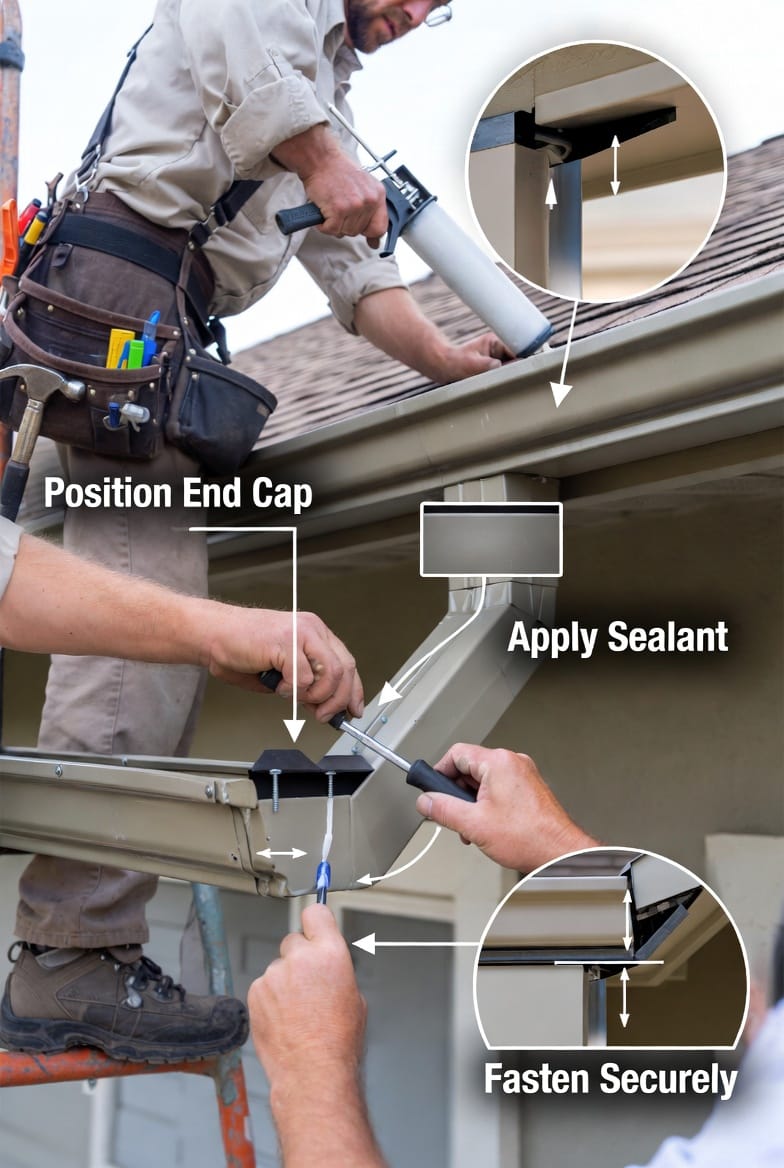
Identifying the Most Common Failure Point in Gutter Systems
Industry experience consistently shows that gutter end caps fail more often than any other component in a standard gutter assembly. Their location at the extreme ends exposes them to maximum stress from wind, falling debris, and repeated thermal cycling.
Unlike mid-run sections that benefit from continuous support, end caps bear the full force of water momentum as it reaches the termination point. Over time, this constant pressure tests every inch of the seal.
Homeowners frequently discover problems only after water has already caused visible staining or pooling below the gutter line. Because the failure occurs at the outermost edge, it can go unnoticed until significant damage accumulates. Recognizing this vulnerability early allows for swift, cost-effective intervention.
The Primary Causes of Gutter End Cap Failures
Two dominant factors drive nearly all gutter end cap failures: sealant breakdown and thermal expansion and contraction.
Over years of sun exposure, the flexible sealant that bonds the cap to the gutter begins to harden, crack, and lose adhesion. Ultraviolet rays break down the chemical structure, while repeated freezing and thawing cycles in colder climates accelerate the process. Once the seal weakens, even moderate rainfall can force water past the joint.
Thermal movement compounds the issue. Metal gutters expand and contract with daily temperature swings—sometimes by as much as a quarter-inch over a 10-foot run. The end cap, fixed at the terminus, absorbs this movement directly. If the sealant cannot flex with the material, gaps form and leaks follow.
Additional contributors include poor initial installation, debris accumulation that exerts outward pressure, and impacts from tree limbs or hail. Each factor erodes the integrity of the seal until water finds its way through.
Recognizing the Signs of a Failing Gutter End Cap
Early detection prevents escalation. Look for these clear indicators during routine inspections:
- Water dripping or streaming directly from the end of the gutter even when the rest of the system flows normally
- Staining or discoloration on fascia boards or siding immediately below the gutter end
- Moss or algae growth concentrated at the termination point
- Visible cracks or gaps in the sealant around the cap edges
- Rust or corrosion appearing where water has been escaping
If you notice any of these signs, prompt action restores protection before minor seepage becomes major structural concern.
The Risks of Ignoring Leaks at the End Cap
Unchecked gutter end cap leaks introduce water exactly where your home is most vulnerable. Persistent moisture can rot wooden fascia and soffit materials, compromise structural connections, and create pathways for insects and pests.
Foundation erosion often follows as water saturates soil directly beneath the leak. In severe cases, this leads to shifting, cracking, or costly waterproofing repairs. Interior water damage—ceiling stains, wall discoloration, or basement seepage—frequently traces back to overlooked end-cap failures.
The financial impact grows quickly. What begins as a simple sealant refresh can evolve into extensive siding replacement, fascia repair, or even interior remediation if left unaddressed. Acting early protects both your property value and your peace of mind.
Step-by-Step Guide to Inspecting Your Gutter End Caps
Safe inspection requires only basic tools and careful observation. Start from the ground using binoculars to scan each end cap for visible gaps or discoloration.
For closer examination, use a sturdy ladder positioned on level ground and always maintain three points of contact. Gently probe the sealant with a gloved finger to check for softness or brittleness. Look inside the gutter for pooled water or debris pressing against the cap.
Document findings with photos for future reference. Perform inspections at least twice yearly—once in spring after winter storms and again in fall before leaf drop. This simple habit catches issues while they remain inexpensive to resolve.
Repair Options: From Temporary Fixes to Permanent Solutions
When addressing a compromised gutter end cap, homeowners have three progressive options, each with distinct advantages:
- Re-caulking offers a quick, low-cost temporary solution. Fresh exterior-grade sealant fills existing gaps and can stop minor leaks for 1–2 seasons. It requires thorough cleaning and proper application but serves best as a stopgap measure.
- Rivet and seal provides significantly better durability. Technicians drill and install corrosion-resistant rivets to secure the cap mechanically, then apply high-performance sealant over the entire joint. This method withstands thermal movement far longer than caulking alone.
- New end cap replacement delivers the most reliable, long-term fix. Professionals remove the failed component entirely, clean the gutter end, and install a precisely matched new cap using both mechanical fasteners and industrial-grade sealant. This restores the system to original or better performance.
Choosing the appropriate method depends on the extent of damage and your long-term goals.
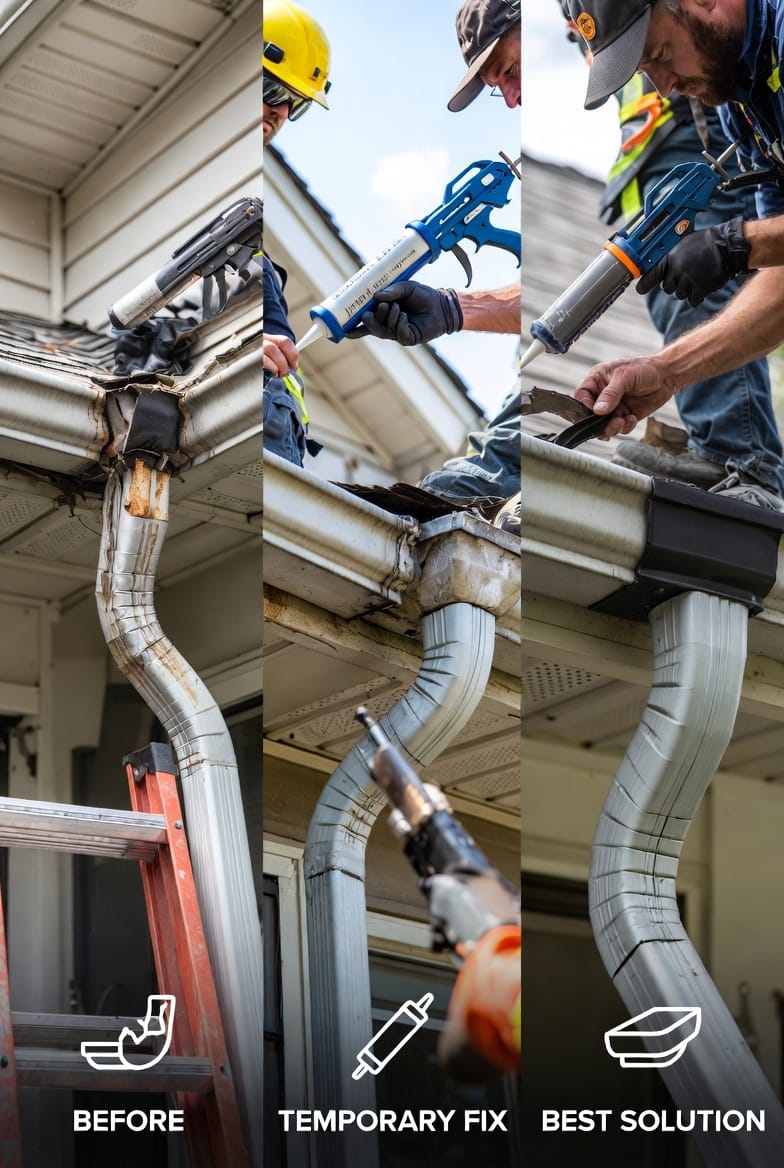
Why Professional Replacement is Often the Best Choice
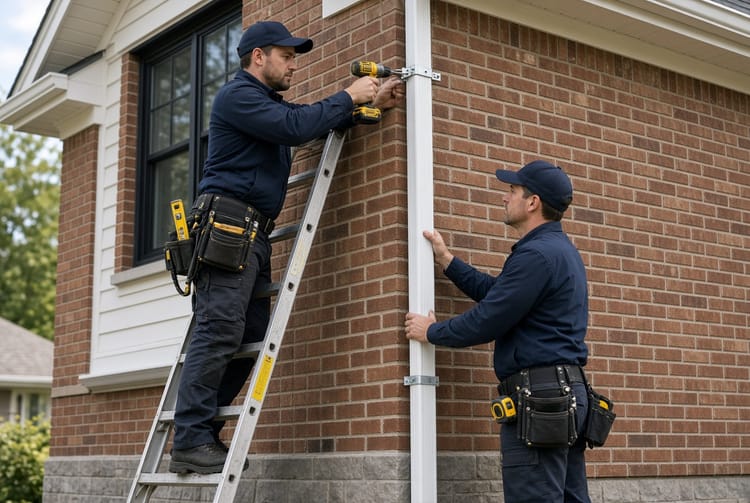
While DIY attempts may seem economical, professional gutter end cap replacement ensures proper alignment, material compatibility, and warranty-backed workmanship. Certified technicians use commercial-grade sealants and tools that outperform consumer products, delivering results that last decades rather than seasons.
They also inspect the entire gutter run during the visit, identifying related issues before they become costly surprises. The investment in expert service typically pays for itself many times over through avoided water damage and extended system life.
Preventive Maintenance to Extend the Life of Your Gutter End Caps
Consistent care dramatically reduces failure rates. Schedule professional cleanings twice annually to remove debris that stresses end caps. Apply UV-protectant treatments to exposed sealant during maintenance visits.
Consider upgrading to heavier-gauge materials or reinforced end caps in high-wind or extreme-climate regions. Installing leaf guards can further minimize debris-related pressure on the seals.
These proactive steps transform gutter end caps from frequent failure points into reliable performers.
Choosing the Right Materials for Durable Gutter End Caps
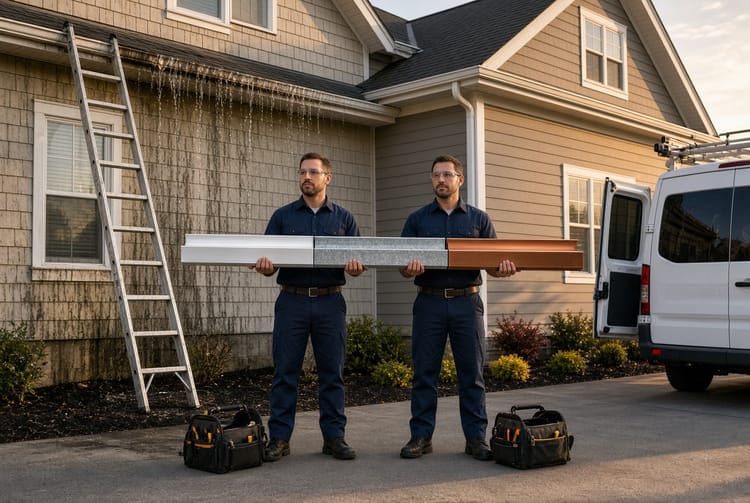
Material selection influences longevity. Aluminum offers excellent corrosion resistance and lightweight strength. Galvanized steel provides superior rigidity in heavy-rain areas. Vinyl suits budget-conscious installations but may require more frequent sealant attention.
Pair the cap material with compatible, high-quality sealants formulated for outdoor exposure. Professional installers match components precisely, ensuring thermal compatibility and maximum service life.
How Expert Gutter Repair Services Can Help
Trained gutter specialists bring experience, proper equipment, and proven techniques to every job. They diagnose root causes accurately, execute repairs efficiently, and leave the system performing at peak efficiency.
Homeowners gain peace of mind knowing the work is guaranteed and completed safely. Expert service transforms potential headaches into straightforward, lasting solutions.
Stop leaks at the ends. Let experienced technicians restore complete confidence in your home’s drainage system.
Professional Gutter End Cap Repair & Replacement – Call Today!