The Gutter Downspout Strap: Securing Downspouts to Prevent Damage
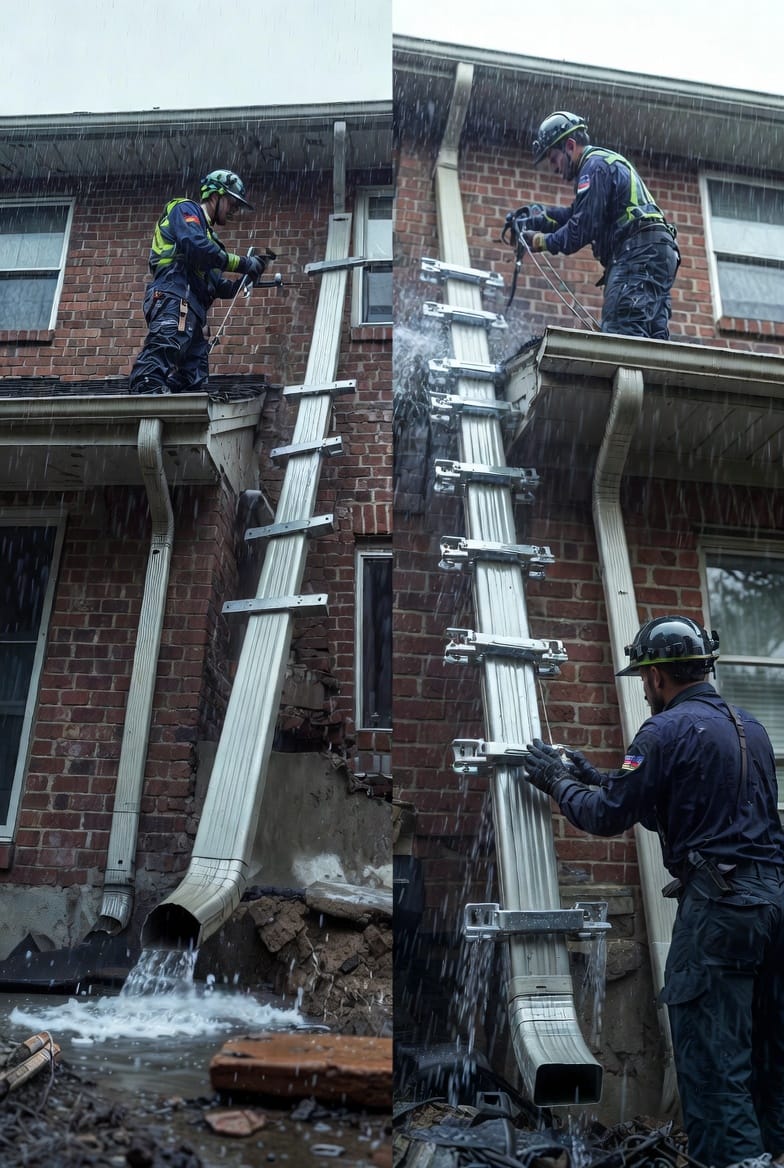
In every well-functioning gutter system, the gutter downspout strap plays a quiet yet critical role. While homeowners often focus on the larger gutters and downspouts themselves, these small metal or plastic bands are the unsung heroes that keep everything aligned and working properly. Without secure downspout straps, even the best-installed system can fail under the pressure of wind, heavy rain, or simple gravity over time.
Fix Loose Downspouts Today – Call for Expert Repair
At first glance, a gutter downspout strap may seem like a minor component. Yet it is precisely this small but important piece that prevents costly separation between the downspout and the wall of your home. When properly installed and maintained, downspout straps deliver long-term protection against water intrusion, foundation erosion, and structural damage. This comprehensive guide explores everything you need to know about these essential fasteners — from their function and ideal placement to signs of wear and the benefits of timely replacement.
Rest assured: when downspout straps are correctly positioned and in good condition, your entire drainage system performs reliably for years. Professional gutter services emphasize their importance because they understand that neglecting this detail can lead to expensive repairs later.
Understanding the Critical Role of the Gutter Downspout Strap
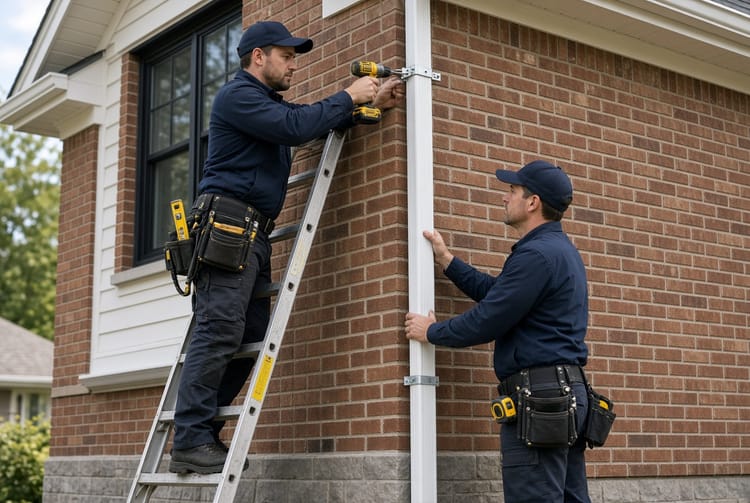
The gutter downspout strap is a specialized bracket or band designed specifically to anchor the downspout securely to the exterior wall of your home. Manufactured from rust-resistant materials such as galvanized steel, aluminum, or heavy-duty plastic, these straps wrap around the downspout and fasten directly into the siding or masonry with corrosion-resistant screws.
What makes the gutter downspout strap indispensable is its ability to counteract the natural forces that pull downspouts away from the wall. Heavy water flow during storms adds significant weight inside the downspout. Wind gusts create lateral pressure. Over seasons of freeze-thaw cycles, materials expand and contract. Without adequate downspout straps, these forces cause the downspout to separate, bend, or even detach completely.
Preventing separation is the primary job of every gutter downspout strap. When the downspout remains firmly attached, water flows smoothly from the gutters all the way to the ground or a designated drainage area. This controlled flow protects your foundation, landscaping, and basement from unwanted moisture. Homeowners who invest in quality downspout straps often report fewer issues with water pooling near the house and reduced risk of mold or mildew inside walls.
Beyond basic security, modern downspout straps also contribute to the overall aesthetic of your home. Sleek, painted straps blend seamlessly with the downspout color, maintaining a clean, professional appearance while delivering superior strength.
How Downspout Straps Prevent Costly Damage
The physics behind downspout strap effectiveness is straightforward yet powerful. Each strap distributes the weight and pressure of the downspout across multiple attachment points. This even distribution stops the pipe from pulling away under load.
Consider a typical rainstorm. Water rushes through the gutter and into the downspout at high volume. Without downspout straps placed at regular intervals, the pipe can bow outward, creating gaps that allow water to splash against the siding. Over time, these gaps lead to water damage, paint peeling, wood rot, and even foundation cracks.
Bold risks of failing downspout straps include:
- Foundation erosion from redirected water
- Siding and trim damage caused by constant moisture
- Basement flooding when water seeps underground
- Structural weakening of the entire gutter system
- Increased repair costs that could have been avoided
By contrast, properly installed gutter downspout straps eliminate these threats. They keep the downspout aligned, ensure consistent water flow, and maintain the integrity of your home’s exterior. Professional technicians often describe downspout straps as the “silent guardians” of the gutter system — small investments that deliver outsized protection.
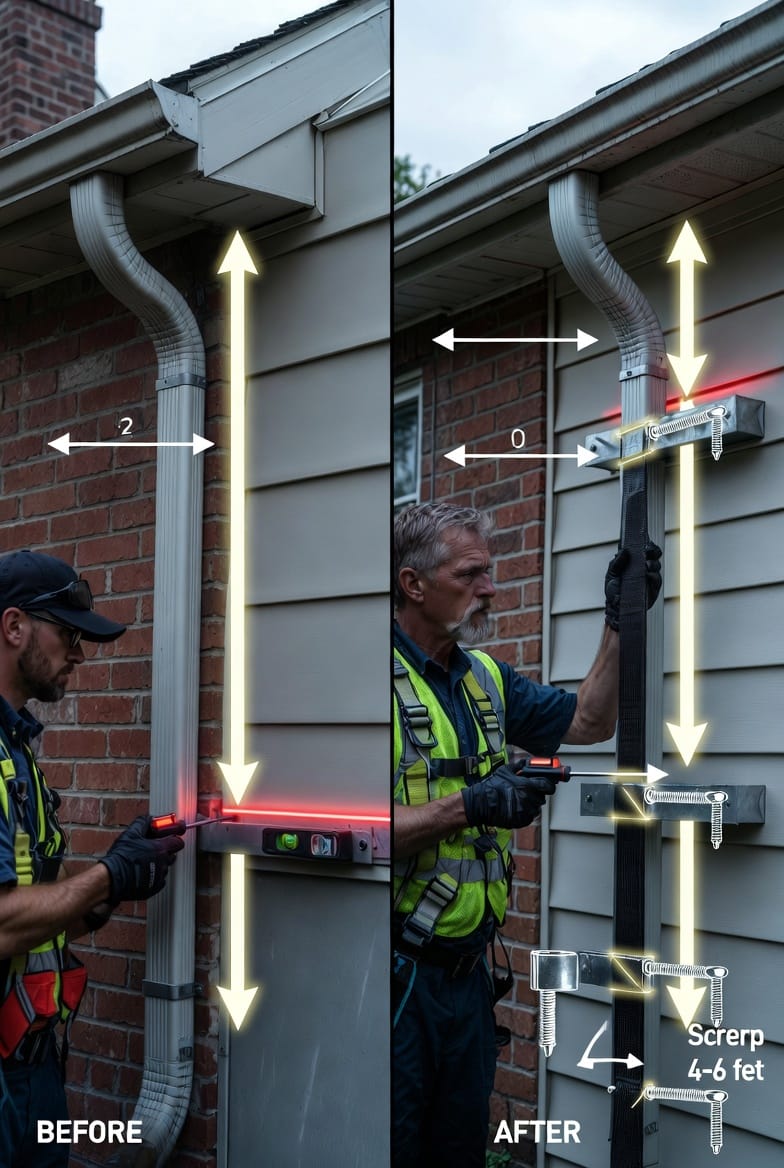
Optimal Placement: Why Every 4-6 Feet Matters
Industry standards recommend installing gutter downspout straps every 4 to 6 feet along the length of the downspout. This spacing is not arbitrary. It provides the perfect balance between support and flexibility while preventing stress points that could lead to bending or cracking.
Placing straps too far apart allows excessive movement. Placing them too close can create unnecessary holes in the siding and increase installation time without added benefit. The 4-to-6-foot rule has been proven effective across thousands of homes in varying climates.
Best practices for downspout strap placement include:
- Starting the first strap within 12 inches of the gutter outlet connection
- Adding a strap at every joint or elbow for extra reinforcement
- Ensuring the final strap sits just above the ground or splash block
- Using a level during installation to maintain perfect vertical alignment
- Choosing straps that match the downspout diameter exactly
When downspout straps follow this proven spacing, the entire system resists wind uplift and water weight far more effectively. Homeowners in high-wind or heavy-rain regions particularly benefit from this strategic placement.
Recognizing the Warning Signs of Worn or Loose Straps
Over time, even the strongest gutter downspout straps can show signs of wear. Corrosion from moisture and salt air, loose screws from repeated expansion and contraction, or simple material fatigue can compromise their hold.
Key warning signs that it is time to replace your downspout straps include:
- Visible gaps between the downspout and the wall
- Downspout pulling away noticeably at any point along its length
- Rusty or corroded straps that appear weakened
- Loose or missing screws allowing movement
- Audible rattling during wind or rain
- Water splashing against the house instead of flowing cleanly down the pipe
Catching these issues early prevents escalation. A single loose gutter downspout strap can quickly lead to multiple straps failing as pressure shifts to the remaining fasteners.
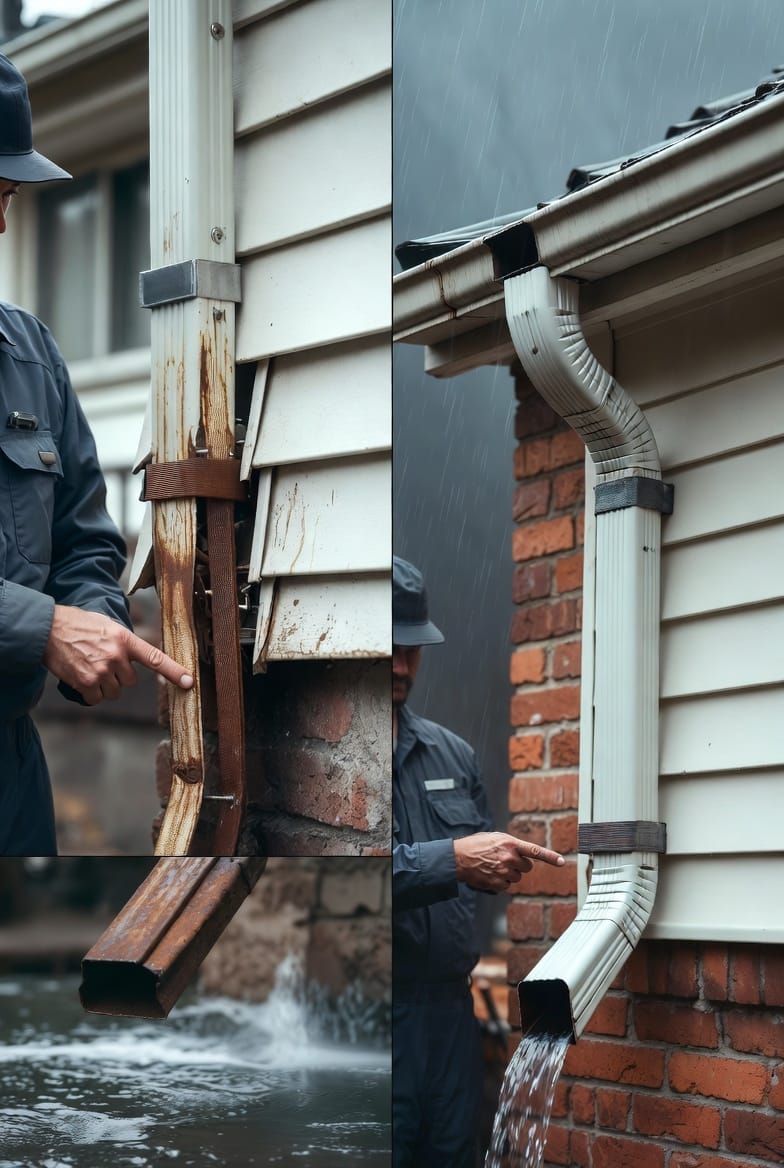
Step-by-Step Professional Replacement Process
Replacing gutter downspout straps is a precise task best handled by experienced technicians. The process begins with a thorough inspection to identify all loose or corroded fasteners.
Technicians then:
- Carefully remove the old, damaged downspout straps without bending the downspout
- Clean the wall surface and downspout exterior
- Measure and mark exact 4-to-6-foot intervals
- Install new heavy-duty gutter downspout straps using corrosion-resistant screws
- Test the entire downspout for stability and proper alignment
- Verify smooth water flow during a simulated rain test
This methodical approach ensures every downspout strap contributes maximum holding power. Professional replacement also includes checking connected gutters and elbows, providing a complete system health assessment at the same time.
While some homeowners attempt DIY repairs, professional service guarantees the correct materials, proper torque on screws, and long-term reliability that DIY methods often cannot match.
Long-Term Benefits of Maintaining Secure Downspouts
Investing in quality gutter downspout straps and timely replacements delivers benefits that extend far beyond the downspout itself. Homes with properly secured systems experience:
- Reduced risk of foundation and basement water issues
- Longer lifespan for the entire gutter and downspout assembly
- Enhanced curb appeal with straight, professional-looking drainage
- Lower overall maintenance costs over time
- Peace of mind during severe weather events
Authoritative recommendation: schedule a professional gutter inspection every 12 to 18 months. During these visits, technicians can quickly assess and reinforce downspout straps before small problems become major repairs.
Simple Maintenance Tips to Extend Strap Life
Keeping gutter downspout straps in excellent condition requires minimal effort. Regular visual checks after storms, clearing debris from the downspout opening, and addressing any loose straps immediately will dramatically extend their service life.
Apply a fresh coat of rust-inhibiting paint to metal straps during annual gutter cleaning. In coastal or high-humidity areas, consider upgrading to stainless steel or aluminum downspout straps for superior corrosion resistance.
These small maintenance habits, combined with professional service when needed, keep your gutter system performing at its peak.
Secure Your Downspouts Properly Today
The gutter downspout strap may be small, but its impact on your home’s protection is enormous. By understanding its function, ensuring correct placement every 4 to 6 feet, and replacing any corroded or loose straps promptly, you safeguard your property against preventable water damage.
Secure your downspouts properly. Don’t wait for visible gaps or rattling pipes to remind you of this important maintenance item.
Our experienced technicians will inspect, replace, and reinforce every gutter downspout strap to keep your system strong, aligned, and fully functional for years to come.
Protect Your Home from Water Damage – Call Now