The Gutter Downspout Strainer: Catching Debris Before It Clogs
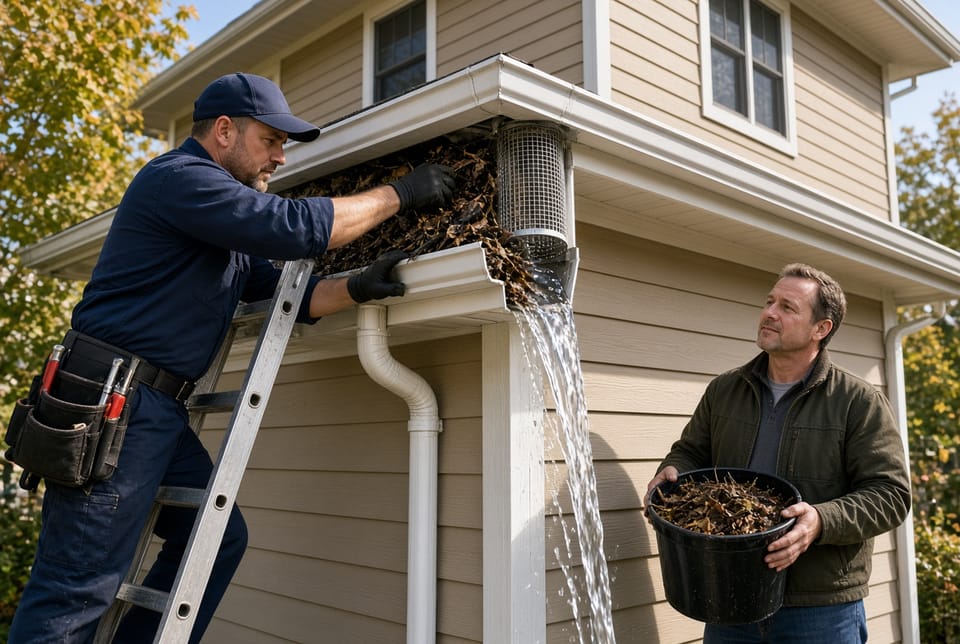
A well-maintained gutter system protects your roof, fascia, siding, and foundation. Yet one of the most common points of failure is not the gutter trough itself—it is the narrow downspout. Leaves, shingle grit, pine needles, and twigs travel with rainwater until they reach the outlet. Once inside the vertical pipe, they compact, restrict flow, and create clogs that force water to overflow.
Get Strainers Installed – Prevent Debris Buildup
A downspout strainer is the simplest, most affordable device designed to stop that sequence. Inserted directly at the gutter outlet, it intercepts debris while allowing water to pass. The result is fewer overflows, less ladder work, and a gutter system that performs as intended season after season.
What Exactly Is a Downspout Strainer?
A downspout strainer (sometimes called a gutter strainer, leaf strainer, or outlet screen) is a small, open-top basket or mesh insert sized to drop into the circular or rectangular opening where the gutter meets the downspout. Most models are made of stainless steel, galvanized steel, or heavy-duty plastic. The sides and bottom contain perforations or a fine mesh large enough for water yet small enough to trap ordinary yard debris.
Unlike full-length gutter guards that cover the entire trough, the strainer occupies only the critical transition point. It does not alter the gutter’s water-carrying capacity; it simply filters what enters the downspout. Because it sits inside the existing outlet, no cutting, drilling, or permanent modification is required on most homes.
How the Strainer Catches Leaves and Debris
Rainwater flows along the gutter toward the nearest outlet. As it reaches the strainer:
- Water passes through the mesh or perforations and continues down the pipe.
- Larger particles—leaves, seed pods, twigs, and shingle granules—are held on the surface or inside the basket.
- Smaller grit that does slip through is far less likely to accumulate into a solid blockage.
The captured material remains visible and accessible from the gutter itself. A homeowner or technician can lift the strainer, empty it into a bucket, rinse it, and replace it in seconds. This “catch-and-remove” action is the core reason the device works.
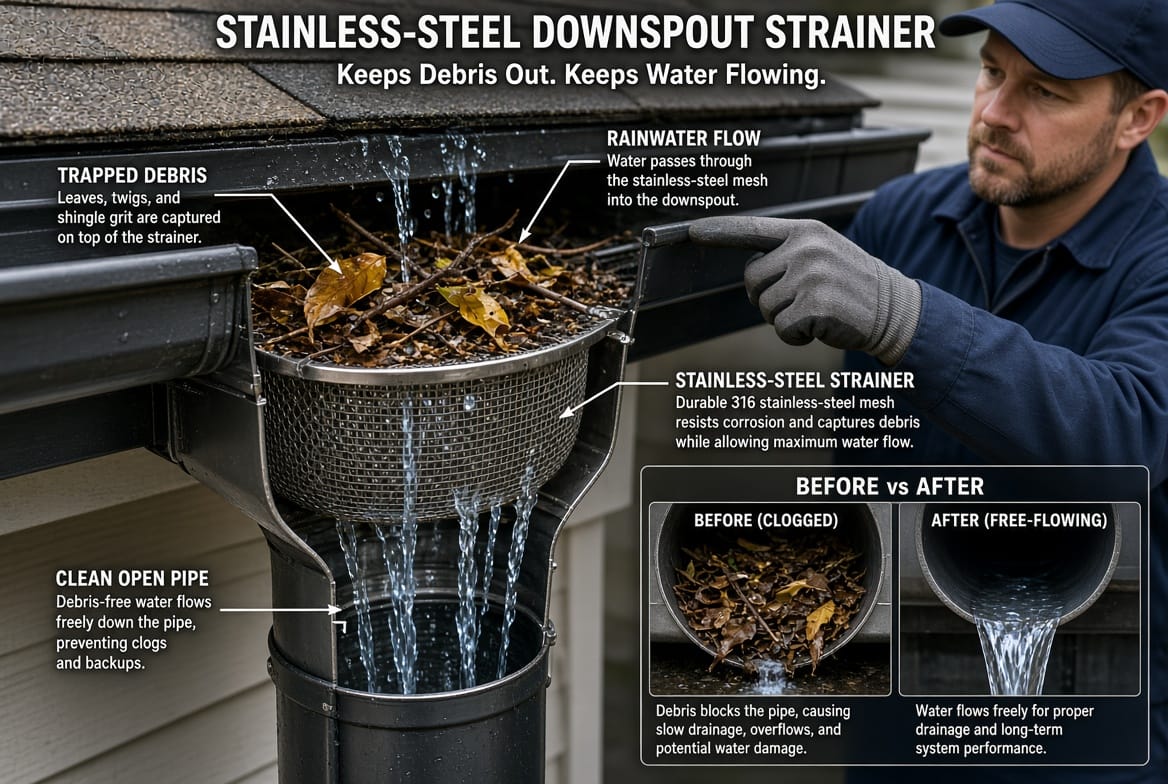
Why a Strainer Dramatically Reduces Clogs
Downspouts are typically two-by-three or three-by-four inches in diameter. Once debris enters that confined space it has nowhere to go except to pack tighter with each rainfall. A single handful of wet leaves can reduce flow by more than half. Subsequent storms add more material until water backs up into the gutter, overflows the fascia, and saturates the soil beside the foundation.
By stopping debris at the gutter outlet, the strainer keeps the vertical pipe essentially empty. Water velocity inside a clear downspout is high enough to flush any fine particles that do pass the mesh. The combination of physical interception plus maintained flow velocity is what prevents the progressive compaction that produces a full clog.
Homes in heavily wooded lots or regions with pine trees see the greatest benefit, but even modest landscaping produces enough seasonal litter to justify the device.
Key Benefits of Installing Downspout Strainers
- Prevents clogs before they form inside the pipe.
- Easy installation—most units drop in by hand with no tools.
- Affordable—typically a few dollars per outlet.
- Visible debris collection makes inspection and cleaning obvious.
- Compatible with existing gutters and most gutter-guard systems.
- Reduces the frequency of professional cleanings.
- Helps protect against ice dams in freeze-thaw climates by keeping water moving.
- Lowers the risk of foundation seepage and basement moisture.

Installation: A Five-Minute Job
Most strainers require no special skills.
- Climb safely to the gutter using a stable ladder and helper if possible.
- Remove any existing debris from the outlet.
- Select a strainer whose diameter matches the outlet (common sizes are clearly marked).
- Drop the unit into the opening until the rim seats flush with the gutter floor.
- Confirm that water can still flow around and through the mesh.
Some models include a small handle or tab for easy lifting. Others feature a slight taper that creates a snug friction fit. In either case the entire process is reversible; the strainer can be lifted out for cleaning or replacement at any time.
Maintenance Routine That Keeps Performance High
A strainer is not “install and forget.” After major storms or during peak leaf-drop season, a quick visual check from the ground or a short ladder trip is enough. Lift the unit, dump the contents into a compost bin or trash bag, rinse if needed, and reseat it. This two-minute habit prevents the very accumulation the device was designed to stop.
In regions with heavy pollen or fine seed, a soft brush can clear the mesh without removing the strainer. Stainless-steel models resist rust and last for many years; plastic versions are inexpensive enough to replace if they become brittle.
Choosing the Right Strainer for Your Home
Consider three factors:
- Material – Stainless steel offers the longest life and finest mesh. Galvanized steel is a mid-range option. Heavy plastic works well in mild climates and costs the least.
- Mesh size – Finer mesh catches more debris but may require slightly more frequent emptying. A ¼-inch opening balances flow and filtration for most properties.
- Outlet shape – Round, square, and rectangular outlets each have matching strainers. Measure before purchasing.
Homes with six-inch commercial-style gutters may need larger-capacity baskets. Properties with existing gutter guards still benefit; the strainer adds a second layer of protection at the most vulnerable point.
Common Mistakes to Avoid
- Installing a strainer that sits too high and allows water to overflow the rim.
- Choosing a mesh so fine that it itself becomes a restriction during torrential rain.
- Forgetting to empty the basket after autumn leaf drop.
- Using a flimsy unit that collapses under the weight of wet debris.
Each of these errors is easily corrected once recognized. The device itself remains one of the most forgiving upgrades a homeowner can make.
Cost Versus Value
A quality strainer typically costs less than a single professional service call. When multiplied across a two-story home with four or six downspouts, the total investment remains modest. The return appears in avoided water damage, reduced cleaning frequency, and peace of mind during heavy rain.
Seasonal Considerations
Spring pollen and seed drop, summer thunderstorms, autumn leaf fall, and winter freeze-thaw cycles each place different demands on the system. A strainer that is emptied after each major event stays effective year-round. In snow country the open mesh also reduces the chance that ice will form a complete seal inside the downspout.
Integrating Strainers with Other Gutter Accessories
Strainers complement rather than replace gutter guards, splash blocks, extensions, and underground drain lines. Used together they create a layered defense: guards keep most debris out of the trough, the strainer catches what remains at the outlet, and extensions carry water away from the foundation. The combination is greater than any single product.
Final Thoughts and Next Step
A downspout strainer is a small, inexpensive component that solves a large, expensive problem. By catching debris at the gutter outlet it keeps the downspout clear, water flowing, and your home protected. Installation takes minutes; the protection lasts for years.
Reduce downspout clogs with strainers. Ask about the right strainer for every outlet on your home. A few well-placed devices today prevent the overflow, staining, and foundation risk that appear after the next storm.
Protect Your Home from Clogs – Call Today