The Gutter Downspout Redirect: Moving Water Away from Foundation
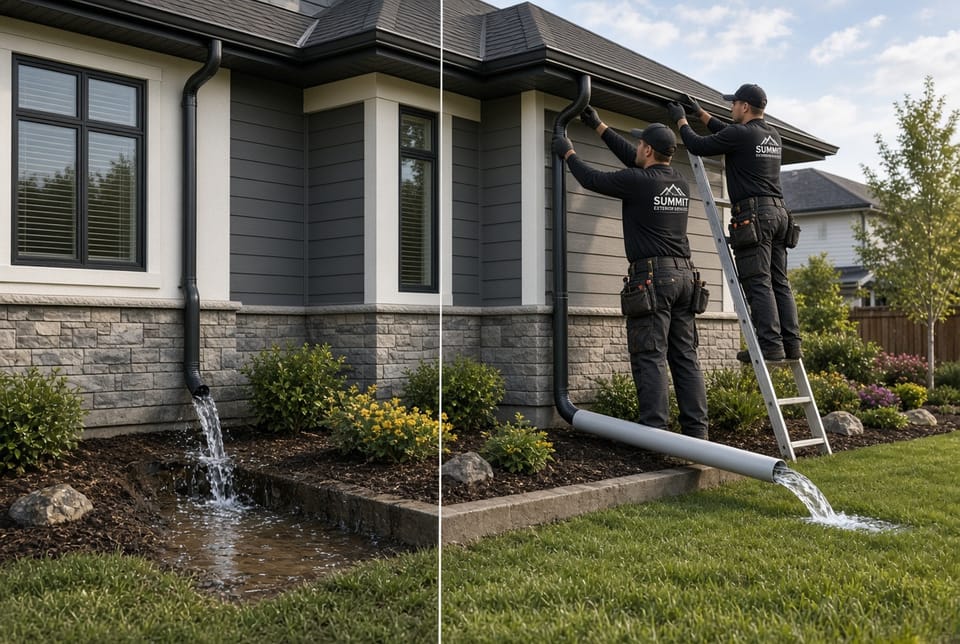
Proper water management around your home begins at the gutters and ends far from the foundation. Every rainfall sends hundreds of gallons of water cascading through your downspouts. When that water remains too close to the house, it creates a silent but relentless threat to the structural integrity of the building. Redirecting downspout water is one of the most effective, straightforward, and cost-efficient ways to protect your investment. This comprehensive guide explores why redirection matters, how to recognize the warning signs of inadequate drainage, the most reliable methods for moving water away, and practical solutions that deliver lasting results.
Redirect Downspout Water Today – Call Now!
Water that collects near the foundation saturates the soil, increases hydrostatic pressure, and can lead to cracks, settling, and interior moisture problems. By implementing a thoughtful downspout redirect strategy, homeowners gain peace of mind knowing that rainwater is guided to a safe distance where it can absorb naturally into the ground or flow into appropriate drainage systems. The process is not complicated, yet the benefits are profound and long-lasting.
Why Downspout Redirection Matters for Foundation Health
Your foundation is designed to support the entire weight of the home, but it is vulnerable to excess moisture. When downspouts discharge water within a few feet of the walls, the surrounding soil expands and contracts with each wet and dry cycle. Over time this movement stresses concrete, masonry, or block foundations. In colder climates the freeze-thaw cycle amplifies the damage as water trapped in the soil freezes and expands.
Effective water management keeps the soil moisture levels consistent and reduces the risk of foundation movement. Redirecting downspout water also helps preserve landscaping, prevents erosion of mulch beds, and minimizes the chance of water entering basements or crawl spaces. Homeowners who prioritize this simple step often avoid expensive repairs that can run into the thousands of dollars. Authoritative sources in the building industry consistently rank proper drainage among the highest-impact maintenance practices for long-term home durability.
A well-executed redirect does more than solve an immediate problem. It contributes to overall property value, improves curb appeal by eliminating muddy patches near the house, and supports healthier plant growth farther from the structure. When water is moved away correctly, the entire perimeter of the home remains drier and more stable.
Recognizing the Signs of Poor Drainage
Identifying drainage issues early allows for timely intervention before minor problems escalate. Several clear indicators signal that downspout water is not being managed effectively.
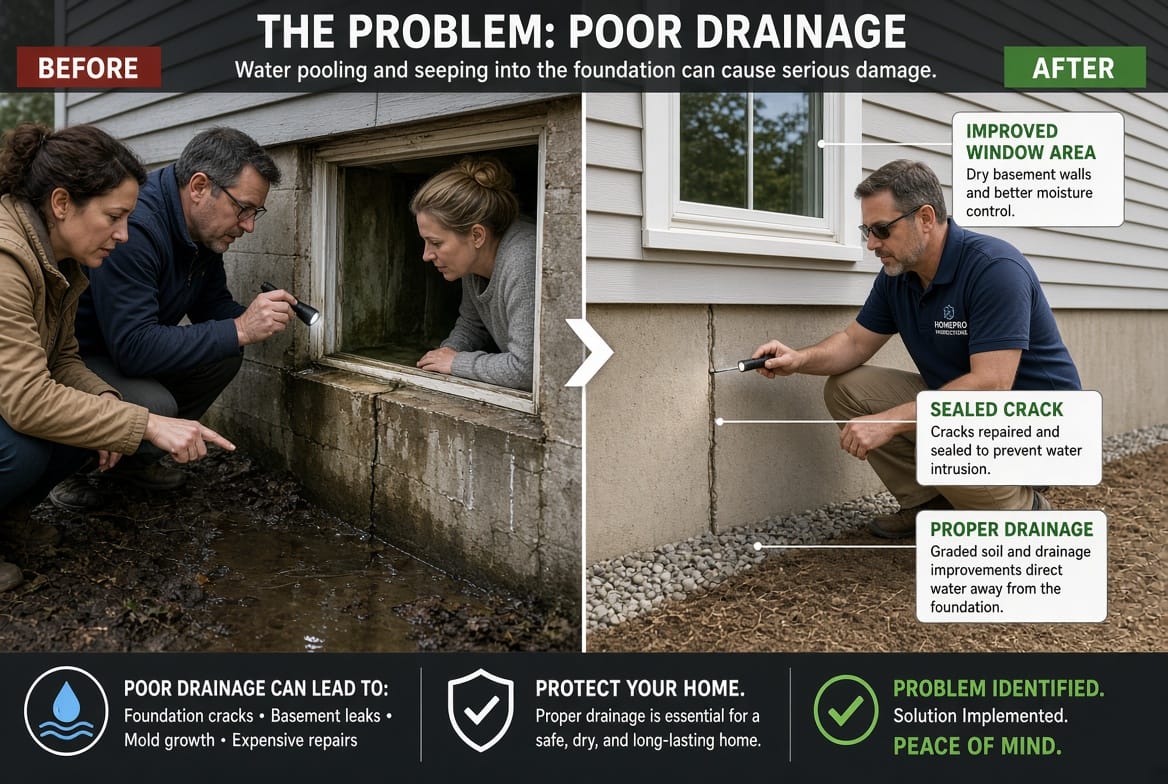
- Water pooling near the foundation after rain is the most obvious warning. Persistent puddles that remain for hours or days indicate that the soil cannot absorb the volume quickly enough or that the grade slopes toward the house.
- Foundation cracks appearing on exterior walls or basement floors often result from repeated soil expansion. Horizontal cracks or stair-step patterns in brick or block walls are particularly concerning.
- Damp or musty odors in the basement or crawl space suggest moisture is migrating inward through the foundation.
- Efflorescence—a white, powdery residue on interior foundation walls—reveals that water is carrying minerals through the concrete.
- Warped or swollen baseboards, peeling paint near floor level, and visible mold growth further confirm chronic moisture exposure.
- Erosion channels or washed-out mulch beds along the foundation line show the force of concentrated water flow.
- Doors and windows that suddenly stick or become difficult to open can result from foundation shifting caused by uneven soil moisture.
These signs rarely appear in isolation. When several occur together, the need for improved downspout redirection becomes urgent. Addressing them promptly restores confidence that the home remains protected against progressive water damage.
Proven Methods for Redirecting Downspout Water
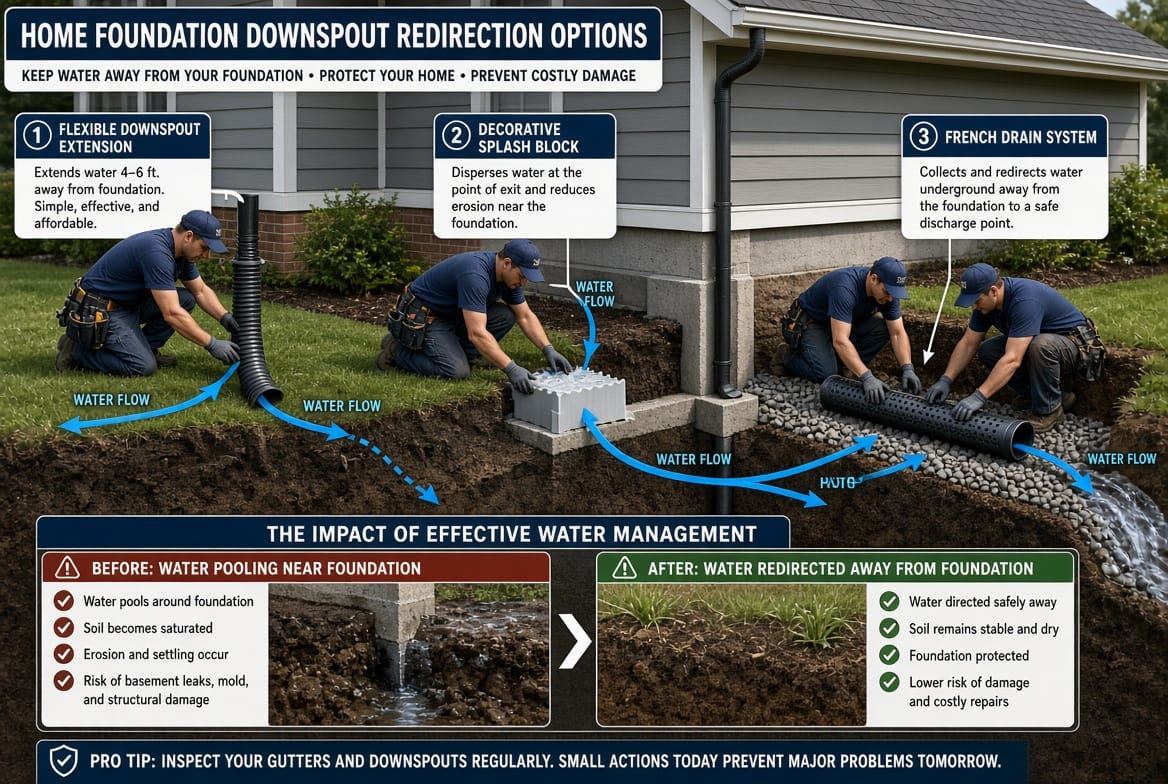
Several reliable techniques exist for guiding water away from the foundation. The best choice depends on the volume of water, the slope of the yard, soil type, and aesthetic preferences. Each method can be implemented independently or combined for maximum effectiveness.
Downspout Extensions
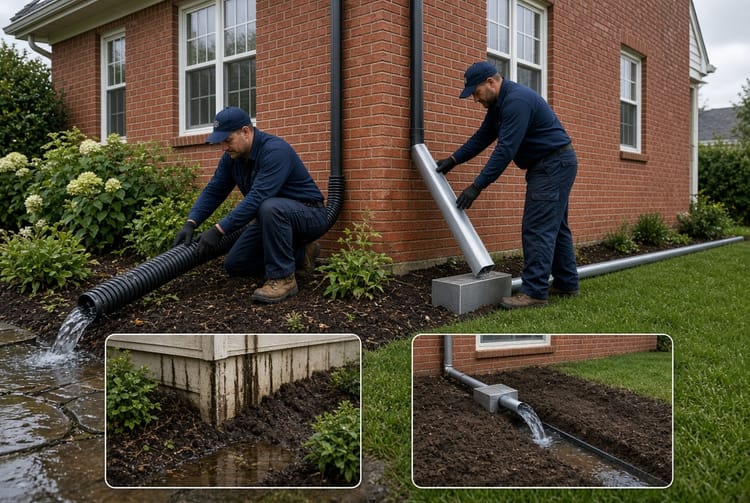
Downspout extensions are among the simplest and most popular solutions. These rigid or flexible pipes attach directly to the existing downspout outlet and carry water ten to twenty feet or more from the foundation. Rigid aluminum or vinyl extensions offer durability and a clean appearance, while flexible corrugated versions adapt easily to uneven terrain.
Installation is straightforward. Measure the required length, secure the extension with screws or clamps, and ensure a gentle downward slope so water flows freely without pooling inside the pipe. At the discharge end, a splash block or buried outlet prevents erosion. For homes with limited yard space, extensions can be routed underground and connected to a larger drainage system.
Regular inspection keeps extensions free of leaves and debris. Seasonal checks before heavy rain periods guarantee uninterrupted performance. When properly maintained, extensions provide reliable water management for years and dramatically reduce the volume of water reaching the foundation.
Splash Blocks
Splash blocks serve as an immediate, low-cost solution for short-distance redirection. These concrete, plastic, or composite pads sit beneath the downspout outlet and direct water outward in a controlled sheet. Their angled design spreads the flow and prevents it from digging into the soil directly against the foundation.
Splash blocks work best when the ground already slopes away from the house. They are ideal for moderate rainfall amounts and can be enhanced by pairing them with short extensions. Decorative versions blend with landscaping, maintaining curb appeal while performing an essential protective function.
Although simple, splash blocks require correct placement. The high end must sit firmly under the downspout, and the low end should point away from the structure. Periodic cleaning removes sediment that can alter the water path. When used thoughtfully, splash blocks form an effective first line of defense in a comprehensive drainage plan.
French Drains
For properties with heavy water volume, poor soil absorption, or persistent pooling, a French drain offers a more permanent underground solution. This system consists of a perforated pipe surrounded by gravel and wrapped in filter fabric. Water from the downspout enters the pipe and travels horizontally to a suitable discharge point farther from the house—often a dry well, storm drain, or lower area of the yard.
Installation involves digging a trench with a consistent slope, laying the fabric and gravel bed, placing the pipe, and covering everything with additional gravel and soil or turf. The result is an invisible yet highly efficient drainage channel that handles large volumes without surface disruption.
French drains excel in clay soils that drain slowly and in areas where surface extensions would interfere with walkways or landscaping. Professional installation ensures proper depth, slope, and connection to the downspout. Once complete, the system requires minimal maintenance beyond occasional outlet clearing. Homeowners gain a robust, long-term water management solution that protects the foundation quietly and effectively.
Combining methods often yields the best results. An extension can feed into a French drain, or a splash block can serve as a temporary measure while a more permanent system is planned. The key principle remains consistent: move water at least six to ten feet from the foundation and preferably farther on larger properties.
Comprehensive Solutions and Best Practices
Beyond individual redirection techniques, a complete approach considers the entire water pathway. Start by ensuring gutters remain clean and free-flowing so downspouts receive the full volume without overflow. Confirm that the ground around the foundation slopes away at a minimum grade of six inches over the first ten feet. This positive grading works in partnership with redirected downspouts to keep water moving outward.
Soil type influences absorption rates. Sandy soils drain quickly, while clay holds moisture longer and benefits most from extended redirection. In regions with intense rainfall, larger-capacity extensions or dual downspout systems may be warranted. Underground drainage connected to municipal systems, where permitted, provides an additional outlet.
Seasonal maintenance forms a critical part of any solution. Inspect all components after major storms and before winter. Clear debris, check for cracks or separations, and verify that discharge points remain unobstructed. Addressing small issues promptly prevents larger failures.
Professional assessment adds value when the property presents unique challenges such as limited space, complex landscaping, or existing foundation concerns. Experienced technicians evaluate water volume, soil conditions, and structural factors to recommend the most suitable combination of extensions, splash blocks, or French drains. Their expertise ensures the system performs reliably under real-world conditions.
Homeowners who implement these solutions report noticeable improvements: basements stay drier, exterior walls remain free of moisture stains, and landscaping thrives without constant waterlogging near the house. The investment in proper redirection pays dividends through avoided repair costs and enhanced comfort.
Long-Term Benefits and Peace of Mind
Redirecting downspout water delivers benefits that extend far beyond immediate moisture control. Foundations remain stable, reducing the likelihood of costly structural repairs. Interior spaces stay healthier as humidity levels drop and mold risks diminish. Landscaping flourishes because water is distributed more evenly across the property rather than concentrated in damaging amounts near the walls.
Energy efficiency can improve as well. Dry basements and crawl spaces require less dehumidification, lowering utility costs. The overall resilience of the home increases, providing greater confidence during severe weather events. Property value benefits from documented drainage improvements, an attractive feature for future buyers who recognize the importance of solid water management.
These advantages accumulate over years of consistent performance. A system installed today continues protecting the foundation through countless rain cycles, freeze events, and seasonal changes. The reassurance that comes from knowing water is actively directed away from critical structural elements is invaluable.
Taking Action to Protect Your Foundation
Every home benefits from intentional downspout redirection. Whether the solution involves simple extensions, strategically placed splash blocks, a carefully engineered French drain, or a combination of approaches, the goal remains the same: move water away from the foundation before it can cause harm. Recognizing the signs of poor drainage and responding with proven methods safeguards the structural integrity of the house and preserves the comfort of the living spaces within.
The process does not require dramatic renovation. Thoughtful planning, quality materials, and correct installation produce reliable results. Regular attention keeps the system functioning at peak efficiency. Homeowners who take these steps join countless others who have successfully eliminated water-related foundation concerns through disciplined water management.
Redirect water away from your foundation. Professional assistance ensures the job is completed correctly the first time, delivering lasting protection tailored to the specific needs of the property.
Get Expert Gutter Downspout Solutions – Call Today