The Gutter Downspout Extension Types: Rigid vs. Flexible
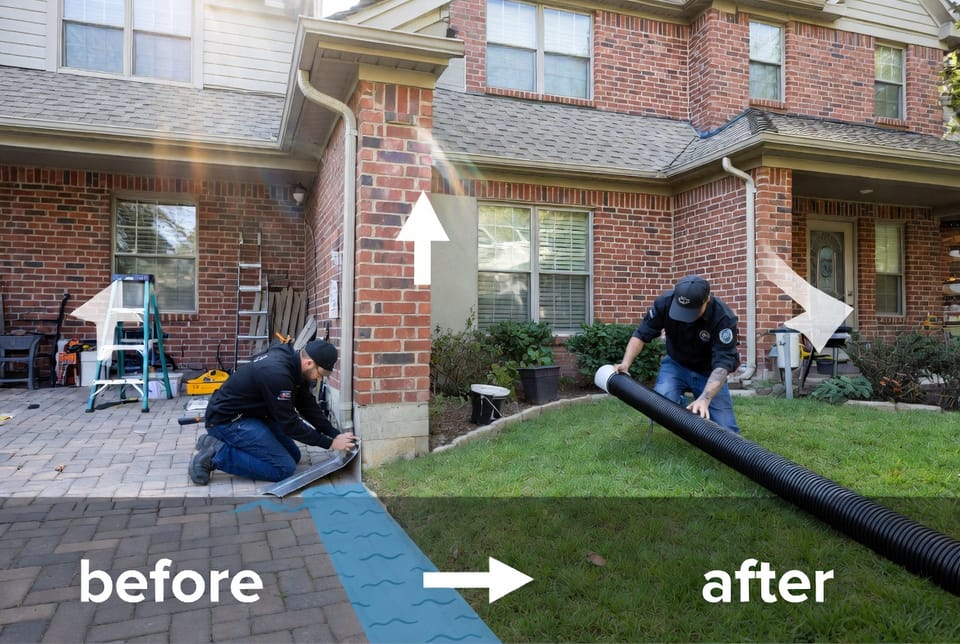
Proper water management around your home starts at the gutters and ends with the right downspout extension. When rainwater exits your downspouts uncontrolled, it can pool near the foundation, erode soil, or create soggy lawns. Selecting between rigid extensions and flexible roll-out extensions is one of the most effective ways to direct that water safely away. This guide compares both options in detail so you can make a confident, informed decision that protects your property for years to come.
Protect Your Foundation – Call for Expert Gutter Extensions
Understanding Downspout Extensions and Why They Matter
A downspout extension is a simple yet critical component that continues the path of water beyond the base of your downspout. Without one, water dumps directly beside the foundation—raising the risk of basement seepage, foundation cracks, and landscape washouts.
Both rigid and flexible styles solve this problem, yet they differ in construction, installation, longevity, and ideal use. Choosing correctly means matching the extension to your property’s surface, climate, and long-term needs. Rest assured that either type, when installed properly, dramatically reduces water-related risks and keeps your home’s exterior looking well-maintained.
Rigid Downspout Extensions: Built for Permanence and Strength
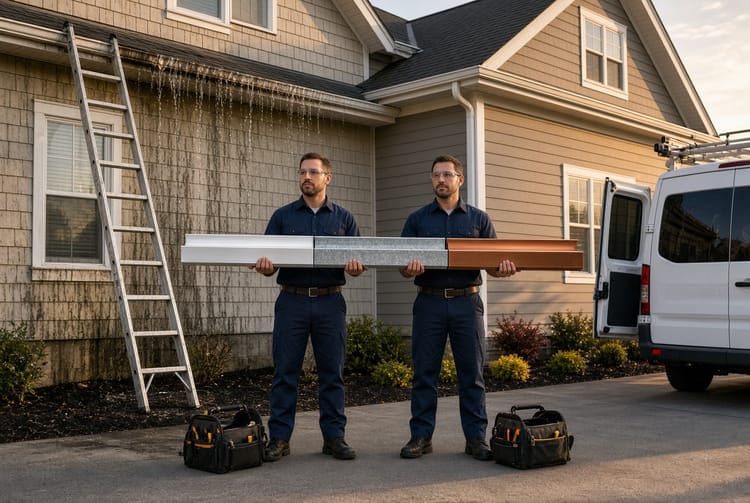
Rigid extensions are the traditional, heavy-duty choice. They are manufactured from either aluminum, galvanized steel, or PVC and come in fixed lengths that can be joined together or cut to exact measurements.
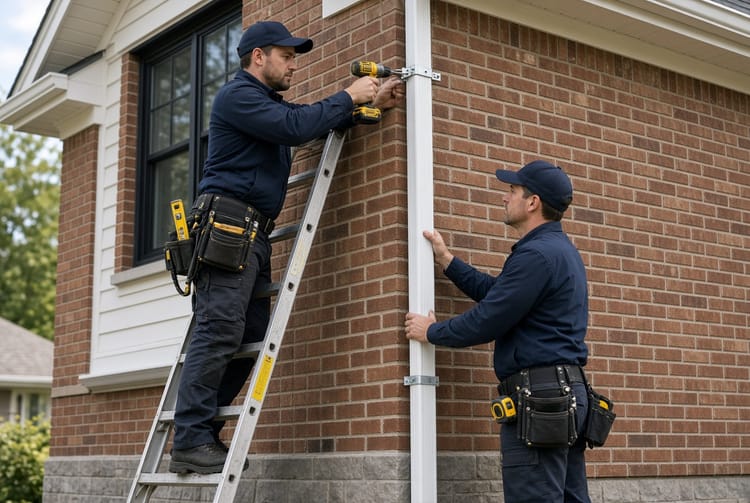
Once secured with screws, brackets, or adhesive, a rigid extension becomes a permanent fixture of the drainage system. Its solid walls resist crushing from foot traffic, lawn equipment, or heavy snow. Because the material does not flex, water flows in a straight, predictable line with minimal resistance.
Key advantages of rigid extensions include:
- Exceptional durability against weather extremes
- Clean, professional appearance that blends with existing gutter systems
- Ability to handle high water volumes without kinking or collapsing
- Resistance to UV degradation and impact damage
Homeowners who value a “set-it-and-forget-it” solution often prefer rigid styles. They are especially effective on hardscapes—driveways, walkways, patios, and concrete slabs—where the extension can be anchored firmly and left in place year-round.
Installation typically involves measuring the required distance from the foundation (usually six to ten feet), cutting the pipe if needed, and fastening it securely. Metal versions can be painted to match the house, while white or gray PVC offers a low-maintenance finish. Although the initial labor is greater than simply unrolling a flexible piece, the long-term reliability more than compensates.
Flexible Roll-Out Extensions: Convenience and Adaptability
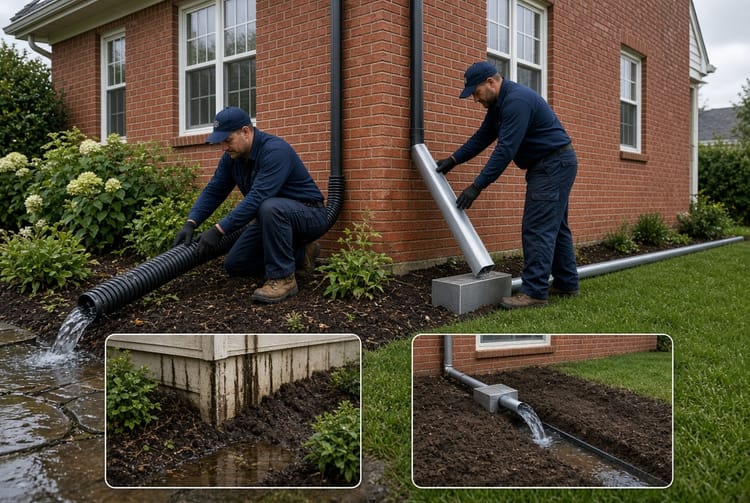
Flexible roll-out extensions, sometimes called corrugated or accordion-style extensions, are designed for ease. Made from lightweight plastic, they collapse into a compact coil for storage and expand to the desired length when needed.
Their greatest strength is mobility. You can roll them out during a storm and retract them afterward so they do not interfere with mowing or outdoor activities. This makes them popular for properties with large lawns or seasonal landscaping changes.
However, flexibility comes with trade-offs. The thinner plastic walls are more susceptible to cracking in freezing temperatures, crushing under vehicle tires, or becoming brittle after prolonged sun exposure. Water flow can also be slightly restricted by the corrugated ridges, and the extension may shift out of position if not weighted or staked down.
Ideal applications for flexible extensions include:
- Temporary seasonal use
- Soft soil or grass areas where a permanent pipe would be unsightly
- Rental properties or homes where future landscaping changes are planned
Despite lower durability, a quality flexible extension still effectively moves water away from the foundation when monitored and maintained. Many homeowners keep both types on hand—rigid for permanent hardscape runs and flexible for occasional lawn coverage.
Applications: Matching Extension Type to Your Landscape
The surface surrounding your home largely dictates which extension performs best.
On hardscapes such as concrete driveways, brick patios, or stone walkways, rigid extensions excel. They can be fastened flush to the surface, creating a seamless drainage path that withstands daily foot and vehicle traffic. The permanent installation also prevents tripping hazards and maintains curb appeal.
On lawns and garden beds, flexible roll-out extensions often prove more practical. Their ability to be moved or stored means you can protect the foundation during wet seasons without leaving a fixed pipe that interferes with grass growth or lawn care. When the ground is soft after heavy rain, a flexible tube can be repositioned easily to avoid creating ruts.
Mixed properties benefit from a hybrid approach: rigid sections near the house transitioning to flexible lengths farther out, or separate extensions dedicated to different zones. Evaluating slope, soil type, and daily use of the area ensures the chosen extension works with—not against—your landscape.
Cost Differences and Long-Term Value
Price is frequently a deciding factor, yet true cost must include lifespan and maintenance.
Rigid extensions generally carry a higher upfront price because of the material quality and installation labor. Aluminum or steel units cost more than basic PVC, and professional fastening adds to the total. Once installed, however, they require almost no ongoing expense. A well-mounted rigid system can last fifteen to twenty-five years with only occasional inspection.
Flexible roll-out extensions are inexpensive to purchase and can be installed in minutes by almost anyone. The lower initial outlay appeals to budget-conscious homeowners. Over time, though, replacements become necessary as the plastic degrades, cracks, or loses shape. Frequent handling also increases the chance of damage, so the cumulative cost can approach or exceed that of a single rigid installation.
When calculating value, consider climate. In regions with freeze-thaw cycles, rigid metal or heavy-duty PVC resists damage better than thin flexible plastic. In milder areas with extensive lawns, the convenience of flexible units may justify periodic replacement. Factoring in potential repair bills from water damage further tilts the scale toward the more durable option for many properties.
Installation Best Practices for Maximum Performance
Regardless of type, correct installation determines effectiveness.
Begin by confirming that gutters and downspouts are clean and free of debris. Measure the distance needed to carry water at least six feet—preferably farther—from the foundation. For rigid extensions, ensure joints are sealed and the pipe slopes gently away from the house. Secure every section so wind or accidental contact cannot dislodge it.
Flexible extensions should be fully extended and staked or weighted at the discharge end to prevent shifting. Avoid sharp bends that restrict flow. In both cases, direct the outlet toward a natural drainage area, dry well, or rain garden rather than a neighboring property.
Professional installation guarantees proper slope, secure fastening, and code-compliant materials. Technicians also inspect the entire gutter system for leaks or misalignment that could undermine the new extension. This comprehensive approach eliminates guesswork and delivers immediate peace of mind.
Maintenance Tips to Extend Service Life
Routine care keeps either style performing at its best.
Inspect rigid extensions twice a year for loose fasteners, dents, or joint separation. Clear any leaves or sediment that may accumulate at the open end. Paint metal surfaces as needed to prevent corrosion.
For flexible extensions, roll them up during prolonged dry periods to shield them from UV exposure. Check for cracks or flattened sections after winter and replace damaged units promptly. Keep the corrugated channels free of debris so water moves freely.
In both cases, monitor the ground near the discharge point. If erosion appears, lengthen the extension or add a splash block or rock bed to dissipate energy. Simple seasonal checks prevent small issues from becoming costly foundation repairs.
Common Risks of Choosing the Wrong Extension
Selecting an unsuitable extension introduces avoidable problems. A flexible unit left permanently on a high-traffic hardscape can be crushed, creating ponding that defeats its purpose. A rigid pipe installed across a frequently mowed lawn may become an obstacle or require repeated disconnection. Insufficient length allows water to return toward the foundation, while poor slope causes standing water inside the extension itself.
Recognizing these risks early and matching the product to the site eliminates them. Authoritative guidance and careful measurement turn potential liabilities into reliable protection.
Environmental and Aesthetic Considerations
Beyond function, extensions influence the look and ecological footprint of your property. Rigid metal can be powder-coated or painted to disappear against siding or trim. PVC offers a clean, modern profile. Flexible plastic, while less elegant when extended, vanishes when stored.
Both types support responsible water management by preventing runoff that carries fertilizers or sediments into storm drains. Directing roof water to planted areas can even reduce irrigation needs. Choosing durable materials further minimizes waste from frequent replacements.
Making the Final Decision: Rigid or Flexible?
Ask yourself three practical questions:
- Is the primary discharge area a hard surface or soft lawn?
- Do I prefer a permanent installation or seasonal flexibility?
- Am I prepared for higher initial cost in exchange for decades of low maintenance?
If the answers favor permanence, strength, and hardscape compatibility, rigid extensions are the superior choice. If convenience, temporary use, and soft-ground placement matter most, flexible roll-out extensions deliver excellent short-term results. Many homeowners ultimately install rigid units at key downspouts and keep flexible ones as backups for extreme weather.
Whichever path you select, the goal remains identical: move rainwater safely away from your foundation so your home stays dry, stable, and valuable.
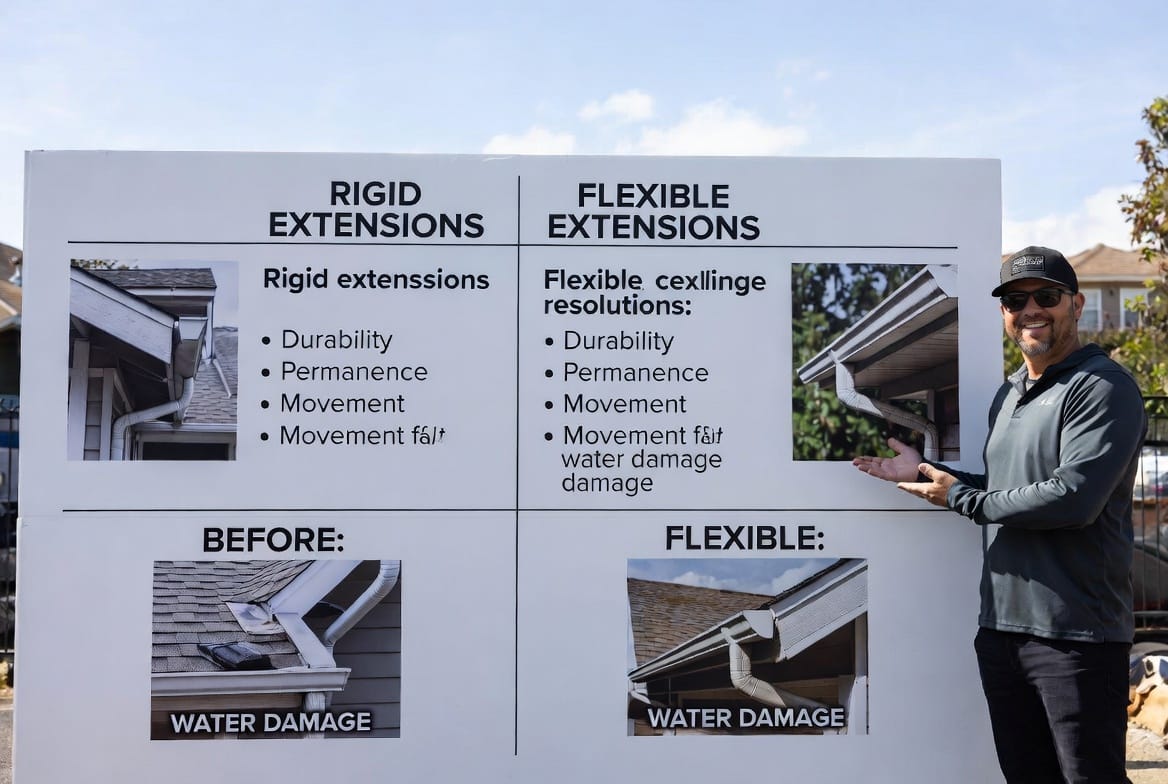
Choose the Right Downspout Extension Today
Protecting your home from water damage does not require complicated solutions—only the correct downspout extension matched to your property. Whether you need the lasting strength of a rigid metal or PVC system or the adaptable convenience of a flexible roll-out design, the right choice delivers reliable drainage, peace of mind, and long-term savings.
For professional assessment, precise installation, and expert recommendations tailored to your home. Our experienced team is ready to help you select and install the ideal extension so every rainfall works in your favor rather than against your foundation.
Secure Your Gutters with the Perfect Extension – Call Today