The Gutter Downspout Clog: Causes and Prevention

A properly functioning gutter system is one of the most important yet overlooked defenses of any home. While gutters collect rainwater from the roof, downspouts are responsible for carrying that water safely away from the foundation. When a downspout clogs, the entire system fails. Water that should be directed away instead overflows, pools, and seeps into places it was never meant to go.
Stop Gutter Overflow Before It Spreads – Call Today
Downspout clogs are among the most common gutter problems homeowners face. They develop gradually and often go unnoticed until a heavy rainstorm reveals the damage. Understanding why they happen, how to recognize the early signs, and what prevention methods actually work can save thousands of dollars in repairs and protect the structural integrity of your home.
This guide explains the leading causes of gutter downspout clogs, the clear warning signs you should never ignore, and the most effective prevention strategies available today.
Why Downspouts Clog: The Most Common Causes
Downspouts are narrow vertical pipes. Anything that enters the gutter has the potential to travel downward and become trapped. Over time, even small amounts of material can compact into a solid blockage.
Leaves and Organic Debris
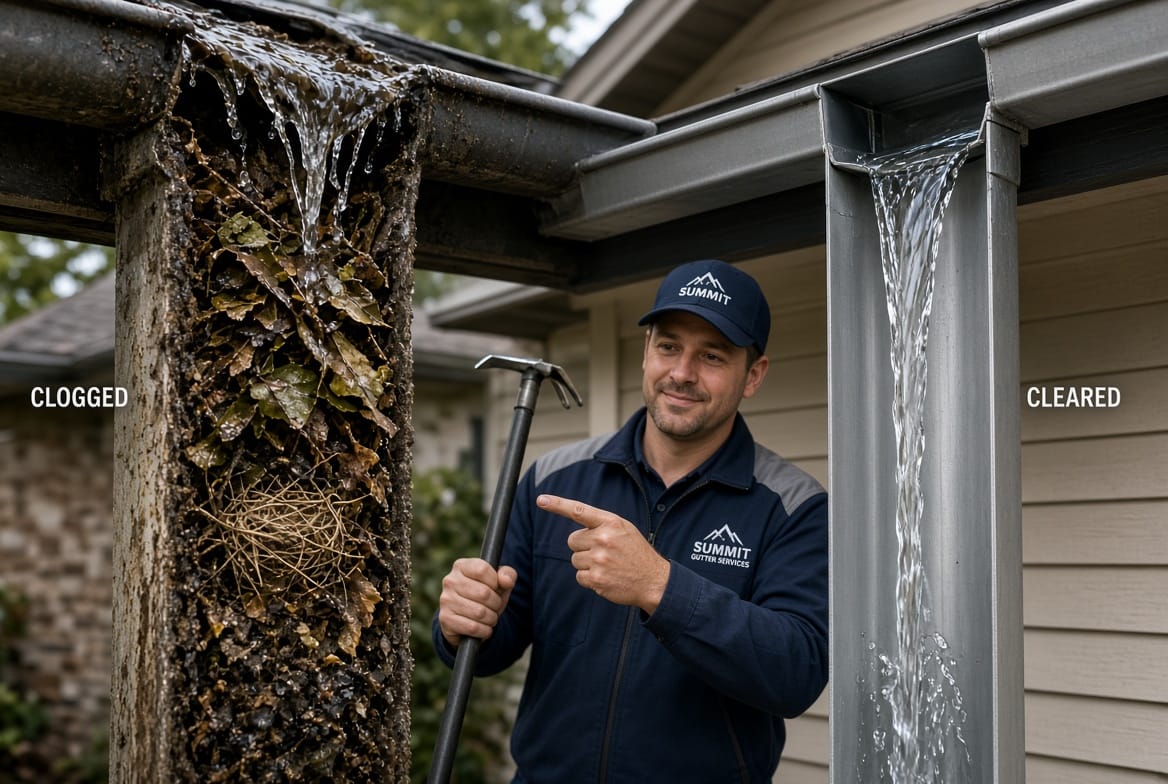
The number-one cause of downspout clogs is leaves. In autumn, trees shed thousands of leaves that land directly in gutters. Rainwater then washes those leaves toward the downspout openings. Once inside the pipe, wet leaves mat together and form a dense plug.
Needles from pine and spruce trees are especially problematic. They are thin enough to slip past many screens yet fibrous enough to tangle and hold other debris in place. Over months, this organic material decomposes into a sludge that further restricts water flow.
Dirt, Shingle Granules, and Sediment
Roof shingles slowly lose their protective granules. These tiny particles wash into the gutters along with dust, pollen, and soil blown by wind. When mixed with moisture, they create a heavy, cement-like buildup at the bottom of the downspout or at the elbow joints where the pipe turns.
This type of clog is particularly dangerous because it is not always visible from the top of the gutter. Homeowners may clean the horizontal troughs and still leave a hidden blockage inside the vertical pipe.
Birds, Nests, and Animal Activity
Birds frequently view downspout openings as convenient nesting sites. Twigs, grass, feathers, and even small amounts of mud can be packed tightly into the top of the pipe. Squirrels and other small animals sometimes drop acorns or nesting material into gutters as well.
Once a nest is established, it acts like a dam. Water cannot pass, and the blockage grows as more debris accumulates behind it.
Ice Dams and Frozen Debris
In colder climates, melting snow refreezes inside downspouts. Ice expands and locks existing leaves or dirt in place. When temperatures rise, the ice melts but the compacted debris remains, creating a year-round obstruction.
Poor Installation or Inadequate Slope
Even a well-maintained system can clog if the downspout was installed incorrectly. Gutters that lack proper pitch allow water to sit instead of flowing toward the outlets. Undersized downspouts cannot handle the volume of water from large roof sections, leading to overflow even without a complete blockage.
Recognizing the Signs of a Clogged Downspout
Early detection is the difference between a simple cleaning and expensive structural repairs. Watch for these unmistakable indicators.
Overflow During Rain
The most obvious sign is water spilling over the sides of the gutters instead of traveling down the downspout. You may see streams running off the roof edge or cascading down siding. This overflow means the downspout cannot accept the volume of water entering the system.
Water Backup in the Gutters
Look inside the gutters after a storm. Standing water that remains hours later is a classic symptom of a clogged downspout. The water has nowhere to go, so it sits and slowly seeps through seams or overflows at the lowest points.
Stains and Streaks on Siding
Repeated overflow leaves dirty water marks on exterior walls. These streaks often appear directly below gutter joints or at the corners of the house. Over time the stains become permanent and may indicate that moisture is already penetrating the wall assembly.
Foundation and Landscape Damage
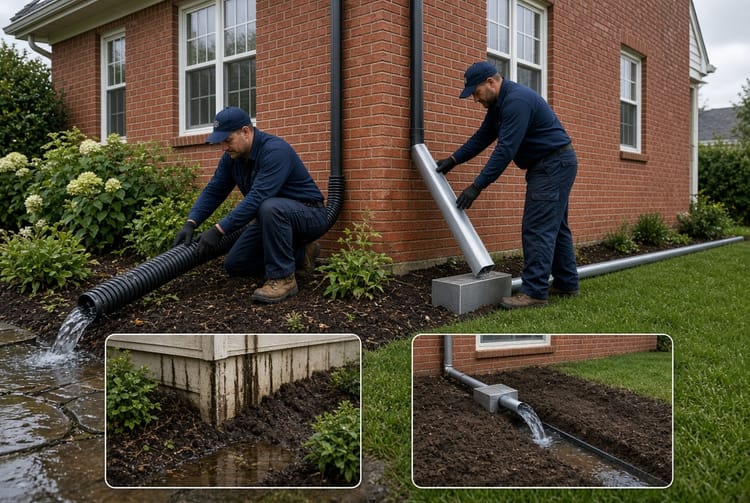
Water that cannot exit through the downspout pools against the foundation. You may notice soggy soil, eroded mulch beds, or small trenches forming near the house. In severe cases, this constant saturation leads to cracks in the foundation or water intrusion into the basement.
Pest Activity and Plant Growth
A clogged downspout creates a damp, sheltered environment. Mosquitoes breed in standing water. Weeds and even small trees can take root in the accumulated debris. Seeing vegetation growing from a gutter or downspout opening is a clear signal that cleaning is long overdue.
The Real Risks of Ignoring a Downspout Clog
A clogged downspout is never just an inconvenience. Left unaddressed, it creates a cascade of problems that grow more expensive with every rainfall.
Water that overflows onto the roof can work its way under shingles and into the attic. Prolonged moisture leads to wood rot, mold growth, and compromised roof decking. At ground level, constant saturation weakens the soil supporting the foundation. Over years this can cause settling, cracks, and costly structural repairs.
Basement flooding is another common result. Water that should have been carried 4–6 feet away from the house instead soaks into the ground next to the foundation wall. Hydrostatic pressure then forces moisture through cracks or porous concrete.
Landscaping suffers as well. Mulch washes away, plants drown, and walkways become slippery or undermined. The aesthetic damage is immediate; the structural damage is often hidden until it becomes severe.
The financial impact compounds. A professional gutter cleaning costs far less than foundation waterproofing, roof replacement, or mold remediation. Prevention is always the more economical choice.
Proven Prevention Strategies That Work
The good news is that downspout clogs are highly preventable. A combination of physical barriers and consistent maintenance keeps the system functioning as designed.
Leaf Guards and Gutter Covers
Leaf guards are one of the most effective first-line defenses. These covers sit on top of the gutters and allow water to pass while blocking larger debris. Modern designs include micro-mesh screens, reverse-curve covers, and foam inserts.
Micro-mesh systems are particularly effective against pine needles and small seeds. They still require occasional inspection, but they dramatically reduce the volume of material that reaches the downspout.
Downspout Filters and Strainers
Even with gutter covers, some fine debris will enter the system. Downspout filters or strainers installed at the top of the pipe catch this material before it travels downward. Many models are removable so they can be cleaned without climbing a ladder.
Some homeowners also add clean-out fittings at the base of the downspout. These allow a technician to access the pipe from ground level if a clog does form.
Regular Professional Cleaning
No guard or filter is 100 percent maintenance-free. Regular cleaning remains essential. Most homes benefit from a thorough gutter and downspout service twice a year — once in late spring after pollen season and once in late fall after the majority of leaves have dropped.
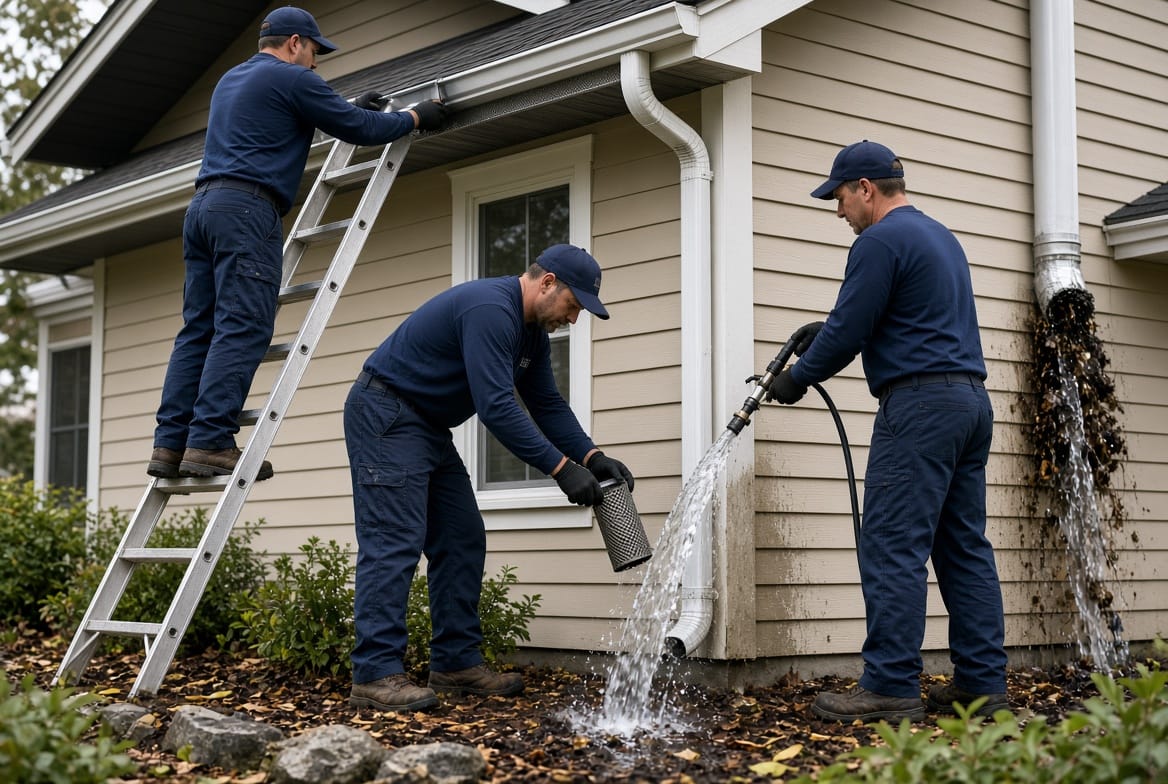
Professional technicians use specialized tools to flush the entire length of the downspout, including the underground drain lines if present. They also check for proper slope, secure hangers, and hidden damage that a homeowner might miss.
Additional Best Practices
- Keep trees trimmed so branches do not hang directly over the roof.
- Ensure downspouts discharge at least four to six feet away from the foundation.
- Consider extending downspouts or adding splash blocks if water currently pools near the house.
- Inspect the system after every major storm, especially in the first year after installation of new guards.
Why Professional Service Makes the Difference
Many homeowners attempt to clean gutters themselves. While occasional surface cleaning is possible, reaching the full length of a downspout safely and completely is difficult without the right equipment. Ladders on wet ground, hidden electrical lines, and unstable roof edges create real safety risks.
Professional gutter technicians arrive with extension tools, high-powered flushers, and the experience to identify problems that are not yet visible. They can also recommend the specific combination of leaf guards, downspout filters, and maintenance schedule that matches your roof type, tree coverage, and local climate.
A well-maintained system lasts longer, performs better, and protects the larger investment of your home.
Protect Your Home Starting Today
Downspout clogs do not resolve themselves. Every rainfall that occurs while the pipe is blocked adds another layer of risk. The combination of physical barriers and scheduled professional care is the most reliable way to keep water moving where it belongs.
Prevent downspout clogs before the next storm. A clean, properly functioning gutter system is one of the simplest and most effective ways to safeguard your foundation, roof, and landscape.
Experienced technicians can inspect your current system, remove existing blockages, and install the prevention measures that will keep your downspouts clear for years to come.
Keep Rainwater Flowing Safely Away – Call Now