The Gutter Cleaning Frequency: How Often You Really Need It
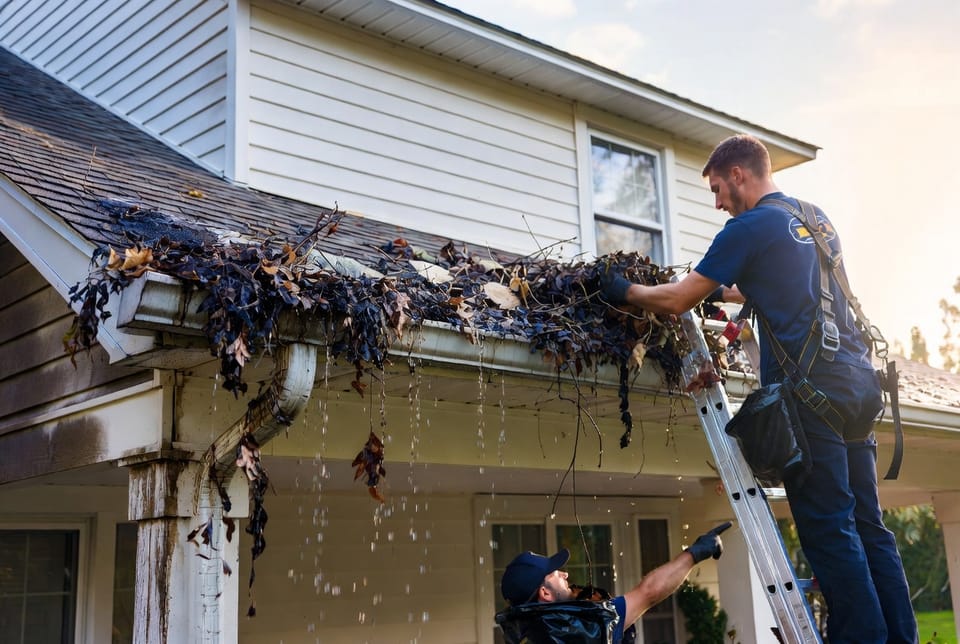
Maintaining a clean, free-flowing gutter system is one of the simplest yet most overlooked ways to protect your home’s structure, foundation, and curb appeal. Many homeowners wait until water is pouring over the sides or plants are sprouting from the troughs before taking action. By then, the damage is already underway. Understanding the correct gutter cleaning frequency removes the guesswork and turns a reactive chore into a reliable maintenance habit.
Protect Your Home – Call for Expert Gutter Service
This guide lays out a clear, practical schedule based on real-world conditions, explains the warning signs that demand immediate attention, and shows why spring and fall remain the two most important windows for service. Follow these recommendations and you will keep water moving where it belongs—away from your house.
Why Gutter Cleaning Frequency Matters More Than You Think
Gutters are designed to collect rainwater from the roof and channel it safely to downspouts and away from the foundation. When leaves, shingle grit, pine needles, and dirt accumulate, that pathway becomes blocked. Water then backs up, overflows, or freezes in place. The consequences range from stained siding and rotting fascia to basement seepage and foundation cracks.
A consistent maintenance schedule is far less expensive than repairing the damage caused by neglect. Most residential properties thrive on a twice-yearly cleaning rhythm. Properties surrounded by mature trees or located in regions with heavy pollen and seed drop often need additional mid-season checks. Homes fitted with quality gutter guards can stretch the interval longer, yet even guarded systems benefit from periodic inspection.
The goal is not perfection; it is prevention. Clean gutters perform their job silently and effectively. Clogged gutters announce themselves only after the problem has grown costly.
Standard Gutter Cleaning Frequency for Most Homes
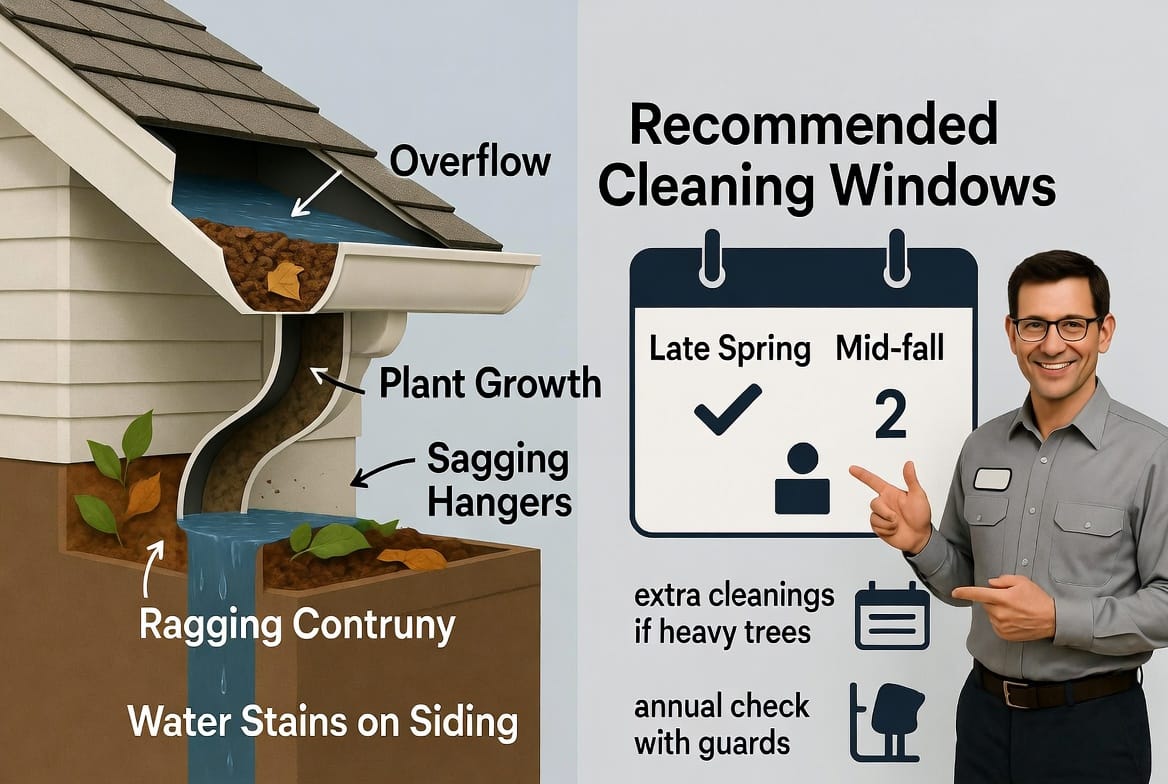
For the average single-family house in a temperate climate with moderate tree cover, cleaning gutters twice a year is the industry-backed baseline. One thorough cleaning in late spring and another in mid-to-late fall keeps the system ready for the heaviest rainfall periods.
Spring cleaning removes the pollen, seed pods, and residual winter debris that collected over the colder months. Fall cleaning clears the heavy leaf drop before winter freezes arrive. This two-season approach prevents the majority of overflow events and ice-dam formation.
Homes with significant tree canopy—especially deciduous trees that drop large volumes of leaves—should increase frequency to three or even four times annually. Early summer and late summer check-ups catch the continuous drip of organic material before it forms dense mats. Properties near pine or fir trees face a different challenge: needles that filter through screens and form a dense, water-resistant layer. These homes almost always need more frequent attention.
Conversely, houses equipped with well-maintained gutter guards or micro-mesh covers can often reduce frequency to once a year, provided the covers themselves are inspected and the downspouts remain clear. Guards slow debris entry but do not eliminate it. Fine particles and organic dust still accumulate over time.
Climate also influences the schedule. Regions with prolonged rainy seasons or frequent severe storms may require an extra cleaning after major weather events. Dry, arid climates with sparse vegetation can sometimes stretch intervals, yet dust and wind-blown grit still build up.
The safest approach is to start with the twice-yearly standard and adjust according to what you observe after each cleaning. Keep a simple log of the volume and type of debris removed. Patterns quickly reveal whether your property needs more or less frequent service.
Key Factors That Change How Often You Need Gutter Cleaning
Several variables determine the ideal interval for your specific property:
- Tree density and species – Deciduous trees demand more frequent cleaning than evergreens in most cases, though pine needles create their own persistent problems.
- Roof pitch and complexity – Steeper roofs shed debris faster into the gutters; complex valleys and multiple roof planes concentrate material in certain sections.
- Gutter design and size – Standard 5-inch gutters fill faster than larger 6-inch systems. Seamless gutters with proper slope perform better than older sectional styles.
- Presence of gutter guards – Quality covers reduce frequency but never eliminate the need for inspection.
- Local weather patterns – Heavy pollen seasons, frequent storms, or long winters with freeze-thaw cycles all accelerate clogging.
- Nearby construction or landscaping – New plantings, mulching, or nearby tree trimming can dump unexpected debris into the system.
Evaluating these factors once a year allows you to fine-tune the gutter cleaning frequency rather than following a rigid calendar. The result is both cost efficiency and better protection.
Clear Signs Your Gutters Are Already Clogged
Waiting for a complete blockage is never wise. Several visible and audible indicators signal that cleaning is overdue:
- Overflow during light or moderate rain – Water cascading over the front edge instead of flowing to the downspouts is the most obvious red flag.
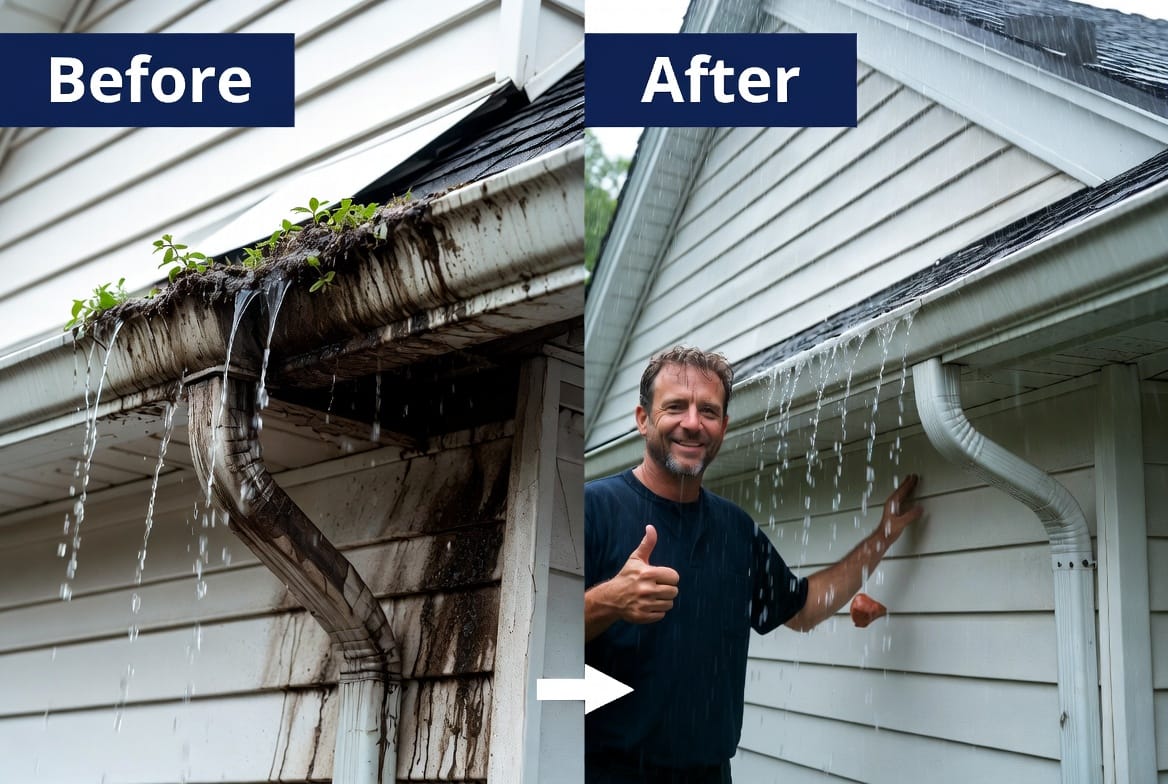
- Plants or weeds growing inside the gutter – Any vegetation indicates standing water and accumulated organic matter that has been present long enough to support life.
- Sagging or pulling away from the fascia – The weight of wet debris can bend hangers and separate the gutter from the house.
- Water stains on siding or foundation – Dark streaks below the gutter line or damp spots near the base of the wall show repeated overflow.
- Downspouts that remain dry while gutters fill – This points to a clog at the outlet or within the downspout itself.
- Visible debris mounds – Leaves, twigs, or shingle granules piled above the gutter rim mean capacity has already been exceeded.
- Insects or rodents – Standing water and organic material attract mosquitoes, wasps, and small animals looking for nesting sites.
Any one of these signs warrants prompt attention. Multiple signs appearing together indicate a system that has been neglected for too long and may already be causing secondary damage.
Seasonal Timing: Why Spring and Fall Are Non-Negotiable
Timing the cleanings correctly multiplies their effectiveness. Spring and fall align with the natural debris cycles of most temperate regions.
Spring cleaning should occur after the last major pollen drop and before the heavy summer thunderstorm season begins. Removing winter residue and spring seed material ensures the system can handle sudden downpours without overflow. It also gives you an opportunity to inspect for freeze damage—cracked seams, loosened hangers, or ice-related separation—before warm weather hides the evidence.
Fall cleaning is even more critical in many areas. Once the majority of leaves have dropped, a thorough cleaning prevents the dense, wet mats that form when autumn rains arrive. Completing the work before the first hard freeze is essential. Water trapped in debris expands when it freezes, forcing gutters away from the house and creating ice dams that drive moisture under shingles.
In regions with extended leaf seasons or multiple tree species that drop at different times, a late-summer touch-up between the two primary cleanings can be valuable. The same principle applies after major storms or high-wind events that strip branches and deposit unusual amounts of material.
Homes with gutter guards still benefit from these seasonal inspections. Guards reduce volume but can become partially blocked by seed casings or pine needles that lodge in the mesh. A quick professional check confirms the covers remain functional and the underlying trough is clear.
Building a Practical Maintenance Schedule You Can Stick To
A written schedule removes decision fatigue. Consider the following framework and adapt it to your property:
- Late March to mid-April: Spring cleaning and full system inspection.
- Late May to early June (tree-heavy properties only): Mid-season debris check.
- Late September to mid-October: Primary fall cleaning after peak leaf drop.
- Early November (optional): Final pre-winter verification in colder climates.
- After any major storm: Spot inspection of high-risk sections.
Mark the dates on a calendar or set recurring digital reminders. Pair the work with other seasonal tasks—such as HVAC filter changes or exterior window washing—to create a natural habit loop.
If you prefer not to climb ladders or handle the physical work, schedule professional service for the same windows. Experienced crews complete the job faster, carry proper safety equipment, and can spot developing issues that untrained eyes miss.
The Hidden Costs of Waiting Too Long
Delaying cleaning beyond the recommended frequency does more than create messy overflows. Prolonged standing water accelerates corrosion of metal gutters and softens wooden fascia boards. Saturated debris becomes heavy enough to pull fasteners loose, requiring costly re-hanging or full replacement. Water that repeatedly spills onto the foundation can erode soil, create voids, and eventually crack concrete or block walls.
Interior damage is equally possible. Moisture forced under roofing materials leads to attic mold, stained ceilings, and compromised insulation. These repairs routinely cost many times more than routine professional cleanings.
A consistent schedule is therefore both a protective measure and a financial safeguard. The modest investment of time or service fees each spring and fall preserves the far larger investment represented by the home itself.
When Professional Cleaning Becomes the Smarter Choice
While motivated homeowners can clean single-story gutters with proper equipment, multi-story homes, steep pitches, and complex rooflines raise safety and thoroughness concerns. Professionals bring extension ladders, harnesses, specialized tools, and the experience to clear downspouts completely rather than simply removing surface debris.
They also perform a visual inspection of hangers, seams, and slope during every visit. Early detection of a loose section or improper pitch prevents larger failures later. Many service providers offer seasonal packages that lock in the twice-yearly rhythm and include priority scheduling after storms.
The phone number for reliable professional service is (866) 332-0659. Calling ahead of the busy spring and fall windows secures preferred dates and avoids the scramble that occurs once leaves begin falling in earnest.
Long-Term Benefits of Staying on Schedule
Homes that maintain the recommended gutter cleaning frequency enjoy quieter performance during storms, cleaner exterior surfaces, and fewer unexpected repair bills. Roof edges stay dry, landscaping near the foundation remains healthy, and the overall appearance of the property stays sharp. In colder climates the reduction in ice-dam risk alone justifies the effort.
Beyond the tangible protections, there is peace of mind. Knowing the system is ready for whatever weather arrives removes one more source of homeowner stress. That reassurance compounds year after year.
Final Recommendation and Next Step
Twice a year remains the reliable standard for most properties. Increase the frequency when trees are dense or debris volume is high; decrease it only when quality guards and low vegetation allow. Watch for the classic signs—overflow, plant growth, sagging, and water stains—and act promptly when they appear. Align cleanings with spring and fall for maximum effectiveness.
Clean gutters regularly. When the schedule calls for professional help or the job exceeds your comfort level. A short conversation and a timely appointment keep your home protected season after season.
Clear Clogs Fast – Call for Professional Cleaning