The Ground Squirrel Colony: Managing Large Populations on Rural Properties
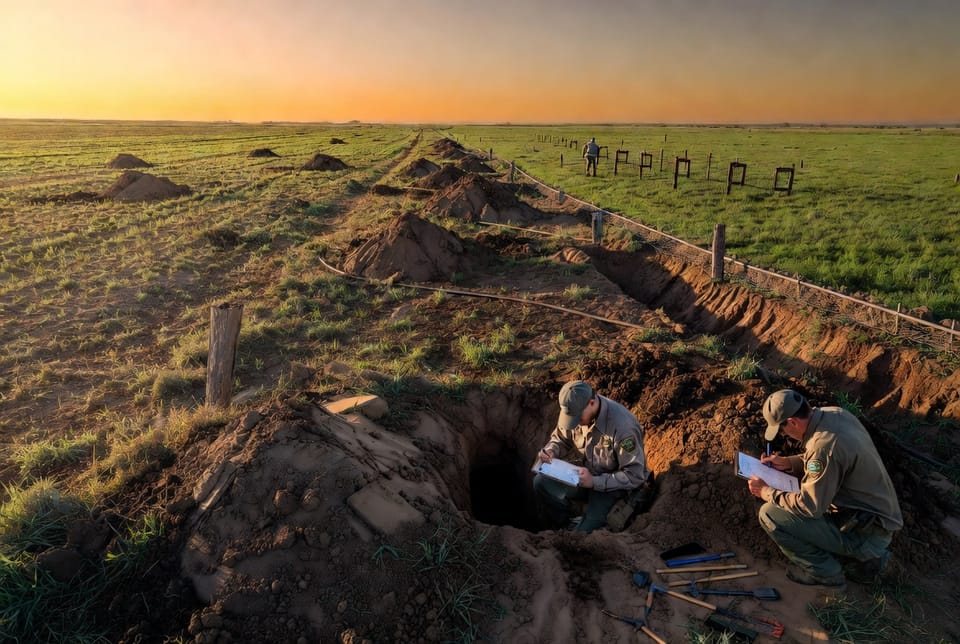
Ground squirrels may appear small and unassuming, but when they form large colonies, they become a formidable threat to rural properties. These burrowing rodents can quickly undermine the stability of your land, damage valuable crops, and compromise essential infrastructure. If you're noticing unexplained holes, crop losses, or structural concerns on your acreage, it's time to take decisive action.
Protect Your Rural Property from Burrowing Damage – Call Now!
Professional wildlife removal offers reliable, effective solutions tailored to the unique challenges of rural environments. In this comprehensive guide, we'll explore ground squirrel behavior, identify key signs of infestation, detail the risks involved, and outline proven management strategies that restore peace and protect your investment.
Understanding Ground Squirrel Behavior
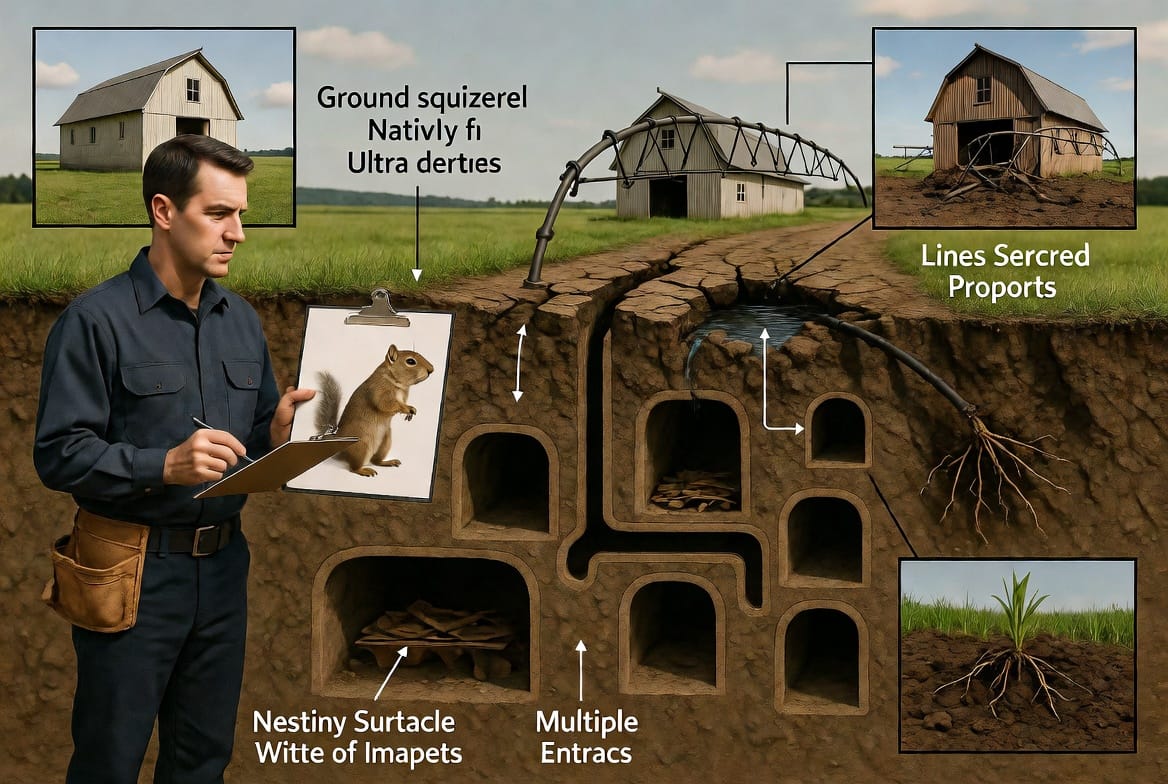
Ground squirrels are highly social animals that thrive in colonies, often numbering dozens or even hundreds on expansive rural properties. They excavate complex burrow systems that serve as homes, nurseries, and escape routes. These networks can extend many feet underground, with multiple entrances and chambers reaching depths of several feet.
Unlike tree squirrels, ground squirrels are active during the day and retreat to burrows when threatened. They hibernate or aestivate during extreme weather, emerging in spring to forage and reproduce rapidly. Females can produce litters of 5-11 young, allowing populations to explode under favorable conditions.
Key behaviors that lead to problems include:
- Intensive burrowing: Creating extensive tunnel networks for protection and nesting.
- Foraging habits: Consuming seeds, grains, fruits, vegetables, and grasses, which directly impacts agricultural yields.
- Gnawing instincts: Chewing on various materials to wear down continuously growing teeth.
This colonial lifestyle makes them particularly difficult for homeowners to manage alone, as individual efforts often fail to address the entire population.
Recognizing the Signs of Infestation
Early detection is crucial for effective control. Large colonies leave unmistakable evidence across your property.
Common signs include:
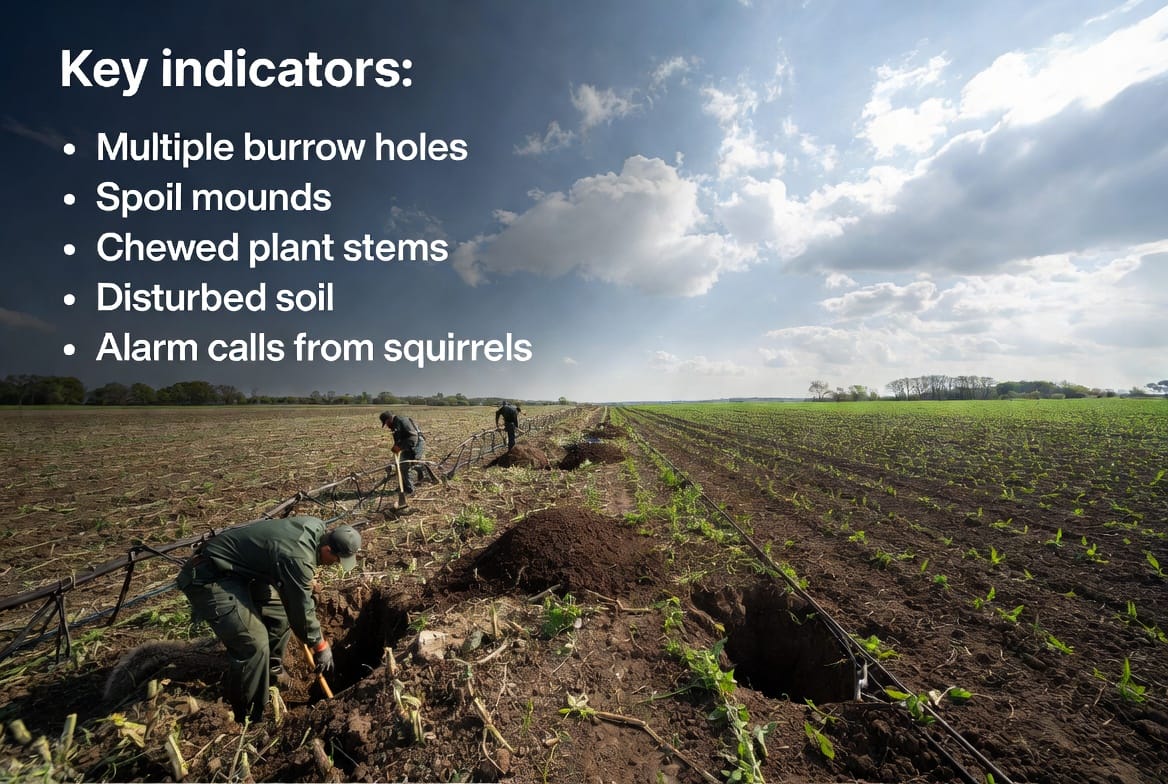
- Multiple burrow entrances: Round holes, typically 2-5 inches wide, often surrounded by fan-shaped mounds of loose soil (spoil piles) with no plug at the entrance.
- Crop and vegetation damage: Chewed plants, stripped bark on young trees (girdling), and patches of wilted or missing forage.
- Irrigation and infrastructure issues: Gnawed plastic pipes, sprinkler heads, or lines leading to leaks and inefficient water distribution.
- Audible clues: High-pitched barking or chirping alarm calls when squirrels are disturbed.
- Structural concerns: Sunken areas in lawns, cracked walkways, or shifting soil near foundations and outbuildings.
On rural properties, these signs can spread rapidly from field edges or adjacent uncultivated land. Regular inspections, especially in spring and summer, help catch colonies before they become entrenched.
The Risks and Damages of Ground Squirrel Colonies
Unchecked ground squirrel populations pose significant financial and safety risks. Burrowing activity weakens soil structure, leading to erosion, trip hazards, and potential collapse of levees, ditches, or building foundations. In agricultural settings, they consume substantial crops and contaminate areas with droppings.
Major risks include:
- Foundation and structural damage: Tunnels under buildings can cause settling, cracks, and costly repairs.
- Irrigation system failures: Chewed lines result in water waste, dry patches, and expensive replacements.
- Crop losses: Direct feeding and soil mounds damage machinery and reduce yields significantly.
- Safety hazards: Burrows create uneven ground that endangers livestock, equipment, and people.
- Disease transmission: While not primary vectors like some rodents, they can carry fleas or other parasites.
For rural property owners, these issues compound quickly, affecting productivity, property values, and long-term land usability. Prompt professional intervention prevents escalation and provides lasting relief.
Professional Management Strategies for Ground Squirrel Removal
DIY methods rarely suffice for large colonies due to their numbers and adaptability. Licensed wildlife removal experts employ integrated approaches combining inspection, exclusion, trapping, and baiting while adhering to local regulations.
Effective professional techniques include:
- Thorough inspection and monitoring: Identifying active burrows and population size to customize the plan.
- Trapping programs: Using strategically placed cage or body-grip traps near burrow entrances for humane and targeted removal, ideal for smaller or sensitive areas.
- Baiting with approved rodenticides: Placed in secure stations or burrows using anticoagulants or zinc phosphide for efficient population reduction in larger infestations.
- Burrow fumigation: Gas cartridges or other approved methods that target underground networks safely.
- Exclusion and habitat modification: Installing barriers, removing debris piles, and modifying landscapes to make the area less attractive for re-infestation.
Professionals prioritize safety for non-target wildlife, pets, and the environment. They also provide follow-up monitoring to ensure complete eradication.
Prevention: Long-Term Protection for Your Rural Property
Effective management doesn't end with removal. Implementing prevention strategies helps safeguard against future colonies.
- Maintain short vegetation and remove brush piles or rock heaps that provide cover.
- Repair and protect irrigation systems with durable materials.
- Monitor perimeter areas regularly, especially borders with wild land.
- Consider physical barriers like buried hardware cloth around gardens or vulnerable structures.
- Promote natural predators through habitat enhancements where appropriate.
Combining these with periodic professional inspections creates a robust defense.
Case Studies: Real-World Success in Ground Squirrel Control
Many rural Texas property owners have faced similar challenges. One large ranch reported extensive crop damage and foundation shifts from a thriving colony. After professional assessment, a combination of targeted trapping and baiting reduced the population by over 80% within weeks, followed by exclusion work that prevented re-entry. Irrigation efficiency improved dramatically, and yields rebounded the next season.
Another homeowner near Dallas dealt with burrowing under outbuildings. Experts used fumigation and habitat modification, eliminating the issue while ensuring compliance with wildlife regulations. These examples highlight how expert intervention delivers efficient, responsible results.
Why Choose Professional Wildlife Removal Services
Attempting to handle large ground squirrel colonies alone can be time-consuming, ineffective, and potentially hazardous. Professionals bring expertise, proper equipment, and knowledge of local laws to the task. They minimize risks to beneficial wildlife and ensure humane, environmentally sound practices.
With rapid reproduction rates, delay can lead to exponential growth. Early, expert action protects your property's value and functionality.
Restoring Peace and Productivity to Your Land
Ground squirrel colonies represent a serious but manageable challenge for rural property owners. By understanding their behavior, recognizing signs early, and enlisting professional support for trapping, baiting, exclusion, and prevention, you can reclaim your land effectively.
Don't let these burrowing pests undermine your hard work and investment. Ground squirrel colonies can undermine structures and reduce productivity. For safe, reliable eradication and long-term protection. We're here to help restore your rural property to its full potential with compassionate, effective wildlife removal solutions.
Professional Ground Squirrel Removal Experts – Call Today