The Ground Fault Circuit Interrupter (GFCI): How It Works and Where Required

Ground Fault Circuit Interrupters, commonly known as GFCIs, stand as one of the most critical safety devices in modern electrical systems. These specialized outlets and breakers have prevented countless injuries and fatalities by rapidly cutting power the moment a dangerous ground fault occurs. In homes across the country, GFCI protection is not merely a convenience—it is a life-preserving requirement under current electrical codes. This comprehensive guide explains precisely how a GFCI detects current imbalance, details every location where installation is mandated, and outlines the simple monthly testing routine that keeps the device reliable. By the end, you will understand why GFCI protection saves lives and how professional installation ensures your family remains secure.
Protect Your Family from Ground Faults – Call Today!
Electrical safety begins with awareness. Water, moisture, and damaged insulation create pathways for electricity to leave its intended circuit and travel through a person or conductive surface to ground. When that happens, the results can be severe shock, burns, or electrocution. Traditional circuit breakers respond only to overloads or short circuits; they cannot detect the small current leakage that characterizes a ground fault. That is exactly where the Ground Fault Circuit Interrupter excels. Designed to sense even minute differences in current flow, a GFCI interrupts power in as little as 1/40 of a second—fast enough to prevent serious harm.
Understanding Ground Faults and Why They Matter
A ground fault occurs whenever electricity escapes the normal hot-to-neutral path and finds an unintended route to the earth or grounded metal. Common triggers include frayed appliance cords, water contacting live terminals, or deteriorated insulation inside walls. In kitchens, bathrooms, outdoor spaces, and unfinished basements, these conditions appear frequently. Without rapid interruption, the human body can become part of the circuit, allowing dangerous current to pass through vital organs.
Key risks associated with unprotected circuits include:
- Electric shock severe enough to cause muscle paralysis
- Cardiac arrhythmia or respiratory failure
- Thermal burns at the point of contact
- Secondary injuries from falls after a sudden jolt
GFCI technology was developed specifically to neutralize these threats. By continuously monitoring the balance between outgoing and returning current, the device acts as an instantaneous guardian. When the difference exceeds a safe threshold—typically five milliamperes—the GFCI trips, de-energizing the circuit before injury can occur. This response speed and sensitivity make GFCIs indispensable in any area where moisture or grounded surfaces increase the likelihood of a fault.
How a GFCI Detects Current Imbalance
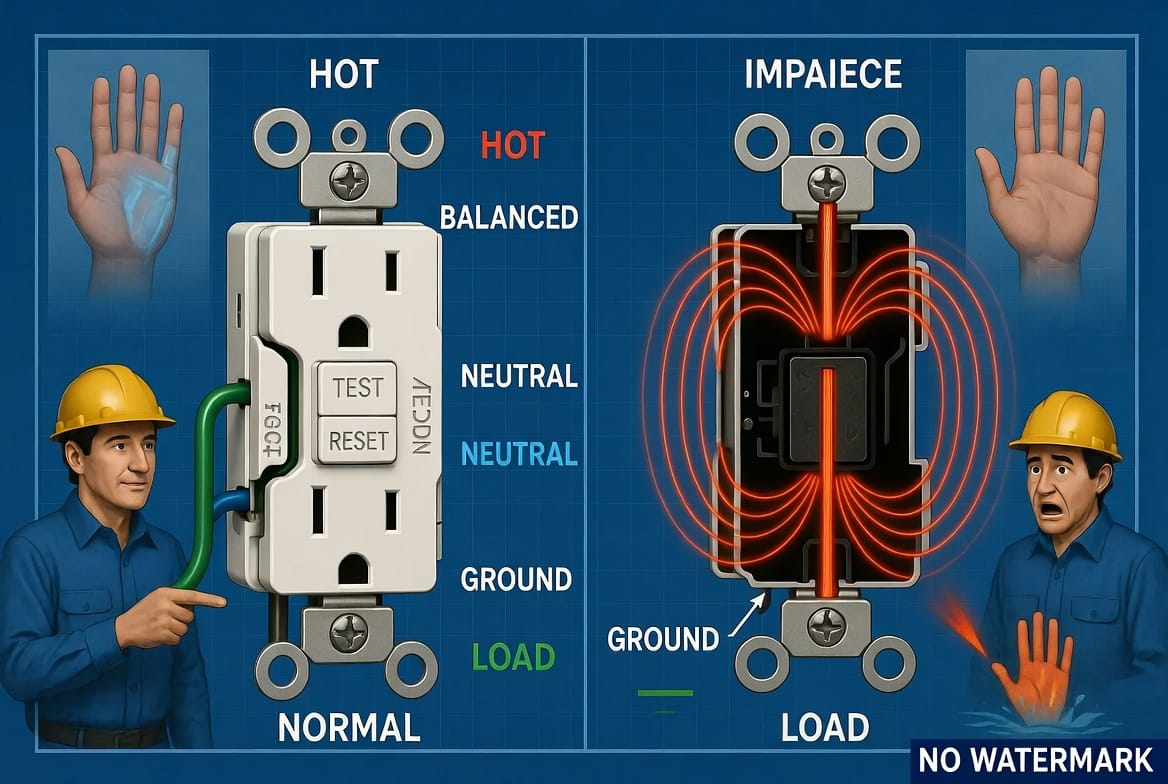
At the heart of every Ground Fault Circuit Interrupter lies a precision current transformer, often called a differential transformer or sensing coil. The hot (live) conductor and the neutral conductor both pass through this coil. Under normal operating conditions, the current flowing out on the hot wire equals the current returning on the neutral wire. Because the magnetic fields generated by these equal and opposite currents cancel each other, the sensing coil produces no output voltage.
The moment a ground fault develops, a portion of the current leaves the intended path and travels through an alternate route—possibly a person standing on a wet floor or touching a grounded appliance. This creates an imbalance: the current on the hot conductor no longer matches the current on the neutral. The residual magnetic field induces a small voltage in the sensing coil. An electronic circuit amplifies that signal and, once the imbalance reaches approximately five milliamperes, triggers a solenoid that opens the contacts, cutting power instantly.
This process is entirely automatic and requires no human intervention. Modern GFCI outlets also incorporate test and reset buttons so users can verify functionality. The internal electronics continuously supervise the sensing circuit itself, ensuring the device remains ready to protect. Because the trip threshold is set far below the level that causes ventricular fibrillation in adults, GFCI protection provides a critical margin of safety for both adults and children.
Additional design features enhance reliability. Many units include indicator lights that confirm power is present and that the device has not tripped. Some advanced models offer self-testing functions that automatically check the sensing and trip mechanisms every few minutes. Whether installed as a receptacle, a circuit breaker, or a portable unit, the fundamental principle remains identical: detect imbalance, interrupt current, prevent harm.
Where GFCI Protection Is Required by Code
Electrical codes, including the widely adopted National Electrical Code, mandate GFCI protection in specific locations because those areas present elevated ground-fault risk. Compliance is not optional; it is a fundamental safety standard enforced during new construction, renovations, and many service upgrades. The primary required locations include kitchens, bathrooms, outdoor areas, garages, and unfinished basements. Understanding each requirement helps homeowners and property managers maintain full protection.
Kitchens
In kitchens, GFCI protection is required for all 125-volt, single-phase, 15- and 20-ampere receptacles that serve countertop surfaces. This includes outlets above the counter, those inside islands or peninsulas, and receptacles serving dishwashers or other wet-area appliances. Water from sinks, spills, and cleaning create constant moisture exposure. A GFCI outlet or upstream GFCI breaker ensures that any leakage current immediately de-energizes the circuit, protecting anyone preparing food or cleaning surfaces.
Bathrooms
Every bathroom receptacle must be GFCI-protected. Whether the outlet is beside the sink, near the bathtub, or serving a vanity, the combination of water, grounded plumbing, and bare skin creates a high-risk environment. Codes require protection at the receptacle itself or via a GFCI circuit breaker feeding the entire bathroom circuit. This rule applies to both new installations and replacements of existing outlets.
Outdoor Locations
All outdoor receptacles require GFCI protection. Weather exposure, wet soil, and the possibility of using power tools or holiday lighting in damp conditions make outdoors especially hazardous. Even receptacles under covered porches or in weatherproof enclosures must incorporate GFCI technology. Portable GFCI devices can supplement fixed installations when temporary power is needed.
Garages
In attached and detached garages, GFCI protection is mandatory for all 125-volt receptacles. Concrete floors, water from vehicles, and the frequent use of power tools increase fault potential. Many codes also extend the requirement to unfinished storage areas and workbenches located within the garage structure.
Unfinished Basements
Unfinished basements present unique challenges: bare concrete, potential water intrusion, and temporary wiring for workshops or laundry. Codes require GFCI protection for all 125-volt receptacles in these spaces. Finished basements may have different rules for certain circuits, but any receptacle in an unfinished area must be protected.
Additional locations frequently covered by local amendments or expanded code cycles include laundry areas, crawl spaces, boathouses, and receptacles near swimming pools or hot tubs. Whenever doubt exists, professional evaluation ensures full compliance and optimal safety.

Monthly Testing: Keeping GFCI Protection Reliable
Even the most advanced GFCI can fail over time due to age, lightning surges, or internal component wear. That is why manufacturers and safety organizations recommend testing every GFCI device at least once a month. The procedure is simple and takes less than thirty seconds.
Locate the test and reset buttons on the face of the outlet or on the GFCI breaker. Press the test button. The device should trip immediately, cutting power to the receptacle and any downstream outlets. Confirm that connected devices lose power. Then press the reset button to restore service. If the GFCI fails to trip when tested, or if it will not reset, the unit has failed and must be replaced promptly by a qualified electrician.
Regular testing verifies both the sensing circuit and the mechanical trip mechanism. In high-use areas such as kitchens and bathrooms, more frequent checks provide extra assurance. Keeping a simple log of test dates helps track performance and demonstrates due diligence for insurance or rental-property requirements.
Additional Safety Considerations and Best Practices
Beyond code-mandated locations, many homeowners choose to expand GFCI coverage to laundry rooms, workshops, and outdoor lighting circuits. Using GFCI circuit breakers at the panel protects an entire run of outlets with a single device, simplifying maintenance. When replacing older two-prong receptacles, upgrading to GFCI outlets simultaneously improves both grounding and fault protection.
Professional installation remains the safest approach. Licensed electricians understand load calculations, proper wiring methods, and local inspection requirements. They also ensure that GFCI devices are correctly oriented, that downstream receptacles are properly protected, and that the overall system meets current standards. Attempting complex upgrades without adequate knowledge can create new hazards or leave existing risks unaddressed.
GFCI protection works hand-in-hand with other safety measures such as proper grounding, arc-fault circuit interrupters where required, and regular visual inspection of cords and appliances. Together these layers form a robust defense against electrical injury.
Conclusion: Protect What Matters Most
The Ground Fault Circuit Interrupter represents a quiet yet powerful advancement in residential and commercial electrical safety. By continuously monitoring for current imbalance and interrupting power within milliseconds, GFCIs have dramatically reduced electrocution incidents in the very locations where water and electricity most often meet. Understanding how the device works, recognizing every code-required location, and performing simple monthly tests empower homeowners to maintain that protection year after year.
GFCI protection saves lives. Do not wait for a close call or a failed inspection to act. Whether you need new GFCI outlets in the kitchen, a full circuit upgrade in the garage, or verification that existing devices still function correctly, professional service delivers peace of mind.
Ensure Code-Compliant GFCI Protection – Call Now!