The Gratitude Practice in Recovery: Shifting Focus for Emotional Healing

In the challenging journey of recovery, shifting your mindset can be the key that unlocks true freedom. When facing the weight of past choices and the daily battle to maintain sobriety, it is easy to dwell on deficits – the cravings, the regrets, the moments lost. Yet, there exists a simple, powerful therapeutic habit that gently redirects your attention toward what is working, what is growing, and what is possible. This is the gratitude practice in recovery.
Transform Your Recovery with Gratitude – Call Now
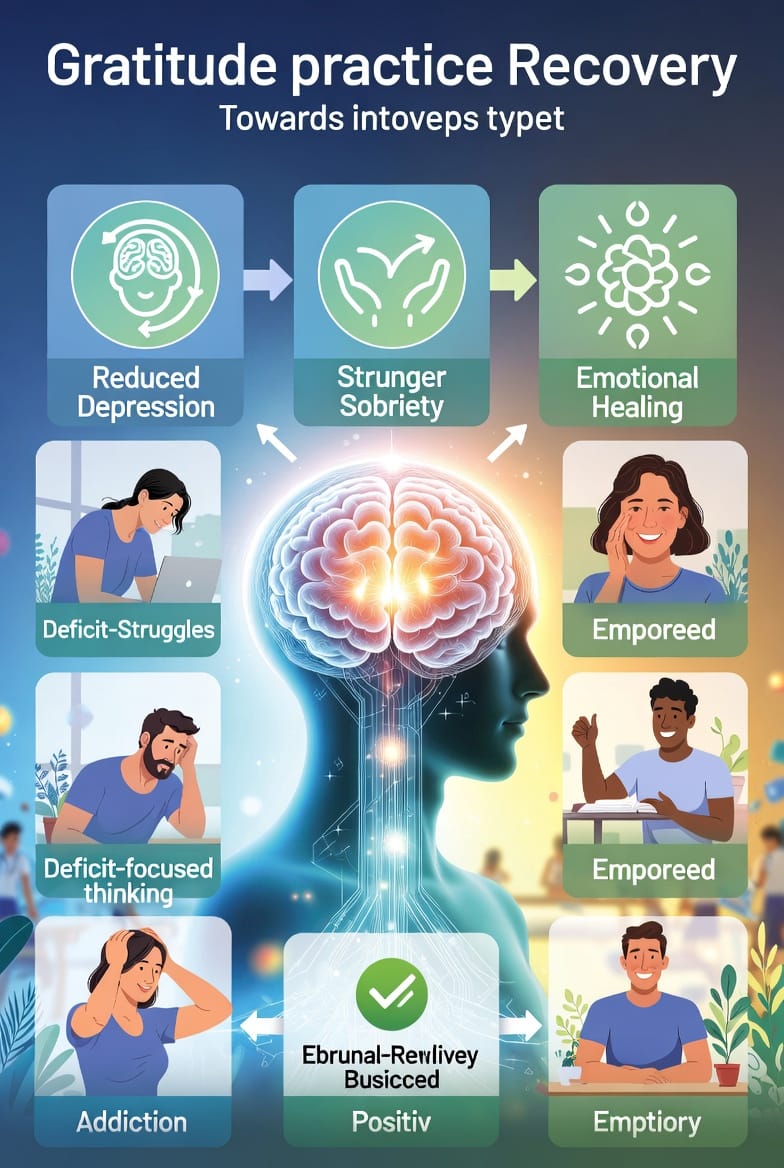
Far more than positive thinking, the gratitude practice is a deliberate daily exercise that rewires how the brain processes emotions. It builds emotional resilience, reduces the grip of depression, and strengthens the foundation of long-term sobriety. At its core, gratitude teaches the mind to focus on positives rather than deficits, creating space for healing where pain once dominated.
This article explores how daily gratitude exercises – from private journaling to sharing in supportive circles – become a cornerstone of emotional healing. You will discover the science-backed mechanisms at work, practical ways to begin, and the reassuring truth that this habit is accessible to everyone in recovery. With consistent effort, gratitude becomes not just a tool, but a new way of living.
Understanding Gratitude as a Therapeutic Habit in Recovery
Gratitude practice in recovery is not about ignoring difficulties. It is about acknowledging them while intentionally highlighting the good that exists alongside them. In rehab settings, this habit is woven into wellness programs because it addresses the emotional voids that often fuel relapse.
When you practice gratitude, you train your attention away from scarcity – the “not enough” mindset that amplifies anxiety and depression. Instead, you cultivate an awareness of abundance: the support of a counselor, the clarity of a sober morning, the strength gained through small victories.
This shift is especially vital during early recovery when the brain is still healing from substance use. The constant focus on deficits can keep you trapped in old patterns. Gratitude interrupts that cycle, offering a gentle yet authoritative path toward emotional healing.
How Daily Gratitude Rewires the Brain for Positive Change
The human brain is remarkably adaptable. Daily gratitude exercises have been shown to create measurable changes in neural pathways. By regularly noting what you are thankful for, you activate regions associated with reward and motivation. Over time, this strengthens connections that favor calm decision-making and reduces activity in areas linked to fear and stress.
In practical terms, brain rewiring through gratitude helps lower levels of stress hormones while boosting feel-good neurotransmitters. This process directly combats the depressive fog that many in recovery experience. Instead of spiraling into negative thought loops, the mind begins to default to balanced, hopeful perspectives.
For those committed to sobriety, this rewiring is a form of protection. It builds emotional buffers that make triggers less overwhelming. You start to notice and appreciate the positives – a supportive phone call, a peaceful walk, a moment of genuine connection – which in turn reinforces your resolve to stay sober. The practice is reassuring because it does not require perfection; it simply asks for consistency.
The Powerful Link Between Gratitude and Reduced Depression
Depression often walks hand-in-hand with addiction. It clouds judgment and drains motivation. The gratitude practice offers a proven counterbalance by shifting focus from deficits to positives.
Each time you journal or share something you are grateful for, you create small moments of positive emotion. These moments accumulate, gradually lifting the heavy veil of depression. Clients in wellness programs frequently report feeling lighter within weeks – not because circumstances changed overnight, but because their perception of those circumstances transformed.
This is not wishful thinking. It is the result of consistent focus on what is right in the present moment. Gratitude reduces the intensity of depressive symptoms by reminding the mind that life still holds value, even amid recovery challenges. The authoritative truth is this: when you practice gratitude daily, you give your brain the resources it needs to heal emotionally.
Practical Gratitude Exercises That Support Sobriety
Incorporating gratitude into your routine does not need to be complicated. Here are four proven exercises that fit seamlessly into any recovery program:
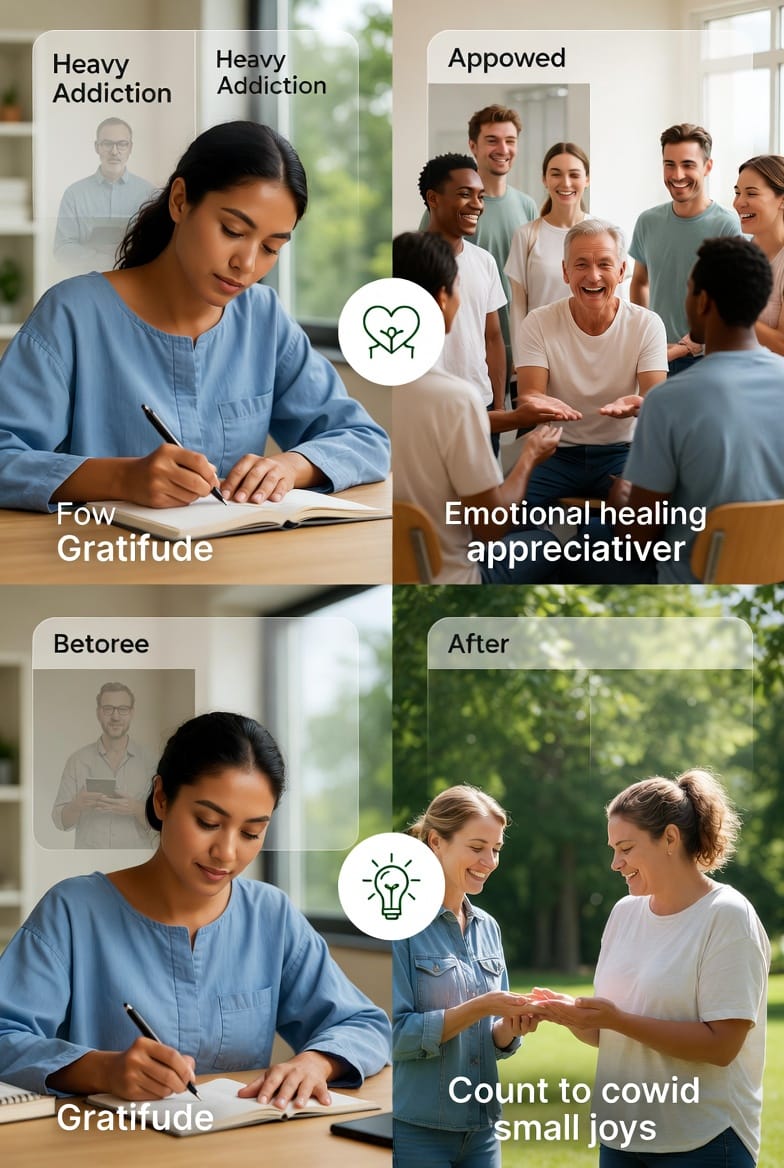
- Daily journaling: Set aside five minutes each morning or evening to write three specific things you are grateful for. Be detailed – instead of “I am grateful for my family,” write “I am grateful for my sister’s encouraging text that reminded me I am not alone.”
- Sharing at meetings: During group sessions, openly share one gratitude moment from your day. This builds community and reinforces your own positive focus.
- Writing appreciation letters: Compose short notes of thanks to people who have supported your recovery journey. You do not even need to send them; the act of writing shifts your mindset powerfully.
- Counting small joys: Throughout the day, pause to mentally note simple pleasures – a warm cup of coffee, a bird’s song, a clear-headed conversation. These micro-moments accumulate into major emotional strength.
These exercises are flexible and can be adapted to your lifestyle. The key is making them a non-negotiable part of your day.
Overcoming Challenges When Starting a Gratitude Practice
Beginning any new habit can feel awkward, especially in recovery when energy and motivation may be low. Some individuals worry that gratitude feels forced or insincere at first. This is completely normal and does not mean the practice will not work for you.
Start small. Even one sentence in a journal counts. If negative thoughts intrude, acknowledge them gently and then redirect to a single positive. Over time, the brain adapts, and the practice becomes natural and rewarding.
Another common hurdle is forgetting to practice amid busy recovery schedules. Setting a daily reminder or pairing gratitude with an existing routine – such as morning coffee or evening reflection – helps establish consistency. Remember, this is a supportive tool, not a test of willpower. Progress, not perfection, is what matters.
Real-World Transformations Through Gratitude in Recovery
Consider the story of a person who entered rehab feeling overwhelmed by shame and loss. Through daily journaling, they began noticing small positives: the taste of a healthy meal, the reliability of their sponsor, the quiet pride of completing a task sober. Within months, their outlook shifted dramatically. Depression lifted, cravings became more manageable, and sobriety felt sustainable rather than fragile.
Countless individuals in wellness programs experience similar shifts. Gratitude does not erase the past, but it reframes it. It allows you to carry lessons without being defined by pain. This transformation is both reassuring and authoritative – it proves that focusing on positives builds the emotional strength needed for lifelong recovery.
Integrating Gratitude into Your Comprehensive Wellness Program
At dedicated recovery centers, the gratitude practice is not an afterthought; it is integrated into holistic wellness programs alongside counseling, support groups, and healthy lifestyle guidance. This comprehensive approach ensures that emotional healing receives equal attention to physical sobriety.
Participants learn to use gratitude as a daily anchor. Group sessions reinforce the habit through shared experiences, while individual coaching helps personalize exercises. The result is a well-rounded recovery plan that addresses mind, body, and spirit.
If you are currently in treatment or supporting someone who is, introducing gratitude exercises can accelerate progress. The practice complements other therapeutic tools, creating deeper and more lasting change.
Long-Term Benefits of a Consistent Gratitude Practice
Over months and years, the rewards of gratitude compound. Individuals report stronger relationships, improved self-esteem, and a renewed sense of purpose. Depression symptoms continue to fade as the brain remains wired for positive focus. Most importantly, sobriety becomes more secure because emotional triggers lose their power when met with a grateful perspective.
This habit also enhances overall life satisfaction. By focusing on positives rather than deficits, you create a mindset that attracts more good experiences. Recovery stops feeling like mere survival and becomes a meaningful journey of growth.
Getting Started Today: Your First Steps Toward Emotional Healing
You do not need special equipment or advanced skills to begin. Grab a notebook, open your phone notes, or simply pause for a moment of reflection. Ask yourself: What is one thing I am grateful for right now? Write it down. Feel the subtle shift in energy.
Commit to this for thirty days. Track how your mood, outlook, and resilience change. The gratitude practice in recovery is gentle yet profoundly effective. It meets you exactly where you are and guides you toward where you want to be.
Transform Your Mindset Through Gratitude
The gratitude practice in recovery offers a reliable path to emotional healing. By shifting focus from deficits to positives, you rewire your brain, reduce depression, and fortify your sobriety. This therapeutic habit is accessible, effective, and life-changing when practiced consistently.
You have the power to begin today. Small daily steps lead to profound transformation. If you are ready to deepen your recovery journey and explore structured support, our wellness program is here to guide you every step of the way.
Reduce Depression & Strengthen Sobriety – Call Now